
Why Chinese Electric Cars Can Be Cheaper in the UK Than the EU

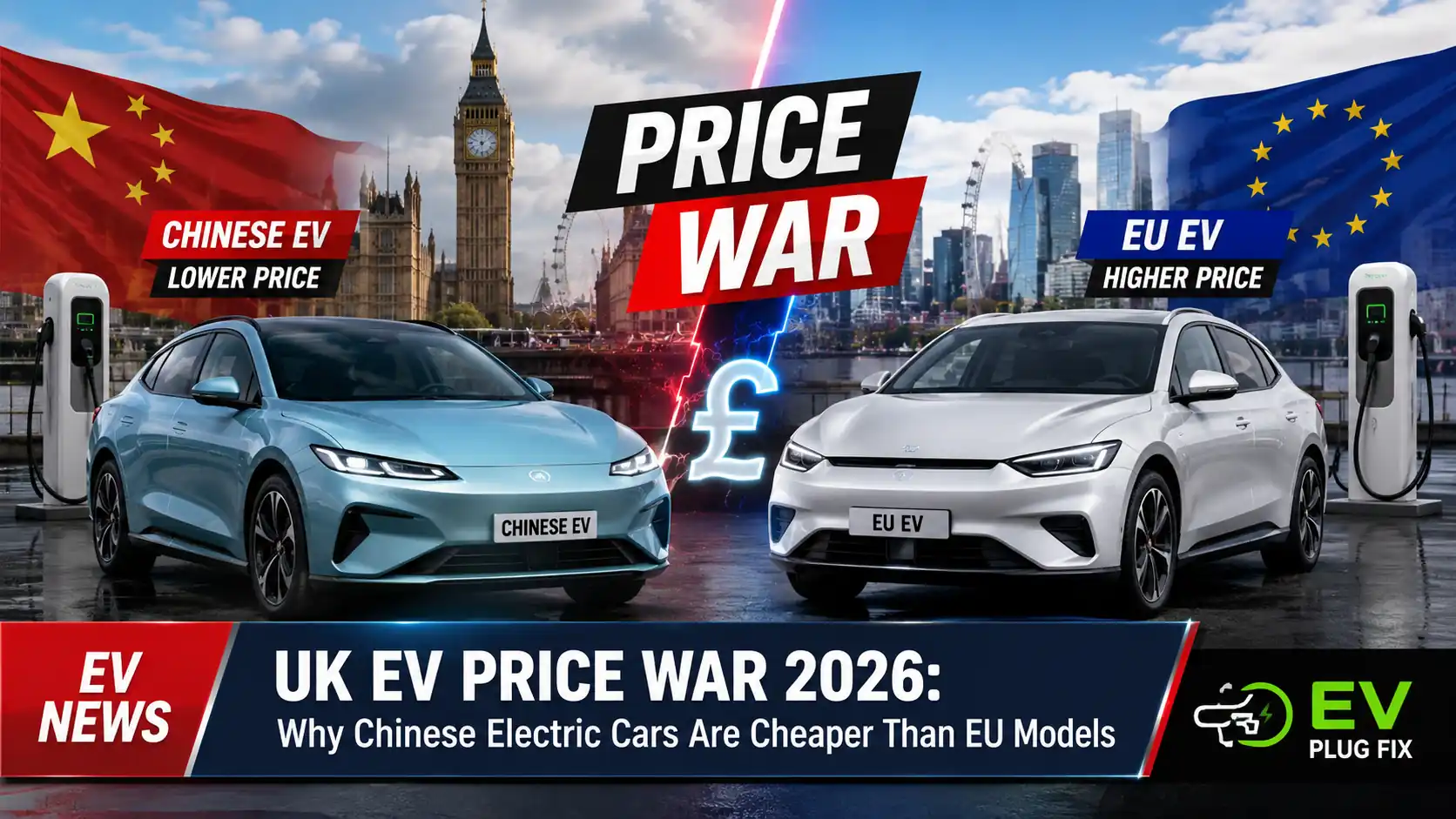
Chinese electric cars are adding price competition to the UK EV market, with brands including BYD, MG and XPENG offering models across a growing range of price points. One reason some China-built EVs can be priced more aggressively in Britain than in European Union markets is a significant difference in trade policy.
The EU imposes additional countervailing duties on battery-electric vehicles imported from China following its anti-subsidy investigation. As of August 2026, the UK has not imposed an equivalent China-specific BEV countervailing measure.
That difference can reduce the tariff burden facing a manufacturer selling a China-built EV in Britain, but it does not guarantee that the same car will have a lower UK showroom price. VAT, specification, incentives, exchange rates, discounts and manufacturers’ regional pricing decisions can all outweigh a simple tariff comparison.
Why the UK and EU Tariff Difference Matters
The European Commission concluded its anti-subsidy investigation into China-made battery-electric vehicles in October 2024 and imposed definitive countervailing duties. In January 2026, Commission guidance stated that the anti-subsidy duties remained in place; the definitive rates established in October 2024 range from 7.8% to 35.3% depending on the exporter.
Those countervailing duties sit on top of the EU’s normal customs treatment for passenger cars imported from China. For an affected manufacturer, the additional charge can increase the landed cost of a vehicle or reduce the margin available for discounts and other sales incentives.
Britain applies its own customs regime. Electric passenger cars imported without preferential tariff treatment are generally covered by a 10% UK customs rate, but, as of August 2026, there is no EU-style additional countervailing duty specifically targeting China-made BEVs.
| Trade issue | United Kingdom | European Union |
|---|---|---|
| Normal passenger-car tariff | Generally 10% where no preference applies | Generally 10% for cars imported from China |
| Additional China-BEV measure | No equivalent China-specific BEV countervailing measure as of August 2026 | Definitive countervailing duties generally range from 7.8% to 35.3%, depending on the exporter |
| Potential pricing consequence | Importer may have more room for price reductions or incentives | Additional duties can raise landed cost or absorb part of the manufacturer’s margin |
The European Commission publishes information on the measures through its trade and economic security guidance, while the applicable UK commodity code and duty can be checked using the government’s Trade Tariff service.
Why a Tariff Difference Does Not Equal a Showroom-Price Difference
A tariff is a cost faced within the supply chain, not a rule telling a manufacturer what retail price to charge. An importer can pass the cost to customers, absorb some of it in its margin, reduce equipment, change the model mix or compensate through finance and dealer incentives.
This is why a clean like-for-like UK-versus-EU retail comparison is difficult. The same model name may be sold with different batteries, equipment or trim structures, while UK advertised prices usually include UK VAT and on-the-road items and EU prices reflect the taxes and registration practices of the individual member state. Exchange-rate movements add another variable.
Rather than treating a converted euro price as proof that a vehicle is cheaper or more expensive in Britain, it is safer to view the tariff regime as one of the mechanisms affecting manufacturers’ pricing freedom. The broader competitive context is also shaped by Europe’s changing EV market and the strategies of major manufacturers.
BYD’s DOLPHIN SURF illustrates the level of competition in Britain without proving a direct UK-EU price gap. As of August 2026, BYD lists the DOLPHIN SURF Active at £18,675 on the road. Its current UK conditional-sale campaign shows a retailer-discounted price of £17,955.63 and 0% APR over 36 months with a minimum 30% customer deposit, for qualifying orders placed during the promotion period.
List price, promotional transaction price and finance cost are therefore separate figures. Subsidised finance can make a UK offer substantially more attractive even when the manufacturer’s official list price has not fallen. Buyers should compare the cash price, APR and total amount payable rather than judging an offer from the monthly payment alone.
Common Tariff Misconceptions
Not every China-made EV faces an extra 35.3% EU duty
The 35.3% figure is the top end of the definitive countervailing-duty range, not a universal surcharge. Rates vary according to the exporter covered by the Commission’s trade decision, so two vehicles manufactured in China can face different additional duties.
Price undertakings can create exceptions
The EU system is also more nuanced than simply applying the published duty rate to every affected vehicle indefinitely. In January 2026, the Commission issued guidance on how exporters could propose price undertakings, including commitments involving a minimum import price.
At least one such undertaking had already been accepted by August 2026. On 10 February 2026, the Commission accepted an undertaking from Volkswagen (Anhui) Automotive Company and its related EU party, SEAT. Under that arrangement, the China-built CUPRA Tavascan can be imported into the EU at or above an agreed minimum import price and is exempt from the countervailing duty while the undertaking is complied with. The agreement also includes import-volume and investment commitments.
There is therefore no single compulsory minimum showroom price covering Chinese EVs generally. Price undertakings are assessed individually and, where accepted, can provide an alternative to payment of the normal countervailing duty. The Commission explains the accepted CUPRA arrangement in its February 2026 announcement.
Routing a Chinese EV through Britain does not make it UK-origin
The UK-EU Trade and Cooperation Agreement contains rules of origin governing when qualifying UK-EU trade can receive preferential tariff treatment. Transitional rules for electric vehicles and batteries continue through 31 December 2026, before stricter requirements are scheduled to apply from 1 January 2027.
Those rules do not provide a route for a China-built vehicle to escape EU measures simply by passing through Britain. Origin depends on where and how a vehicle and its components are produced, not the port or country through which the finished car is shipped. The UK government’s rules-of-origin announcement explains the transitional UK-EU arrangement.
What UK Buyers Should Compare in Practice
The UK’s Electric Car Grant can change the comparison again. Under the main eligibility framework, cars must have an RRP of £37,000 or below. Government rules also allow certain variants in the same qualifying interpolation family to meet the price requirement up to a maximum of £42,000. Eligibility additionally depends on the government’s sustainability criteria and approval of the specific vehicle.
As of August 2026, eligible Band 1 cars can receive a maximum £3,750 discount and Band 2 cars a maximum £1,500. The approved-model list can change, so buyers should check the current government Electric Car Grant list rather than assuming that a vehicle qualifies simply because it costs less than £37,000.
That matters when comparing a Chinese EV with a rival built elsewhere. A lower list price does not necessarily produce the lowest final purchase price if another model receives a government grant, manufacturer contribution or larger retailer discount. Buyers focused on the lower end of the market can also compare affordable electric cars under €30,000 by price, range and overall value.
Ownership costs should also be considered without assuming that Chinese EVs as a group will behave alike. EV insurance costs, resale values, servicing coverage and repair support vary substantially between individual models, brands and locations. Get an insurance quote for the exact car and check the warranty, charging capability and nearby servicing arrangements before ordering.
Current pricing should not be treated as permanent. Manufacturers can change margins and finance campaigns, exchange rates can move, the UK could alter its trade-remedy policy and production locations may change. The scheduled January 2027 tightening of UK-EU EV rules of origin is not, by itself, a new UK tariff deadline for China-built electric cars. These changes also sit within a wider global EV market outlook shaped by investment, production and industry competition.
Bottom Line
Chinese electric cars can be cheaper in the UK than in EU markets partly because, as of August 2026, Britain does not impose the EU’s additional China-specific BEV countervailing duties. But tariffs do not translate mechanically into retail prices: taxes, specifications, grants, exchange rates, discounts and manufacturer strategy all affect the final figure. UK buyers will get a more useful comparison by checking the current transaction price and total finance cost of the exact models they are considering rather than converting headline prices from another European market.
Source Transparency
This article uses primary information from the European Commission on the definitive China-BEV countervailing measures, its January 2026 price-undertaking guidance and the February 2026 Volkswagen (Anhui) undertaking; UK government information on customs tariffs, UK-EU electric-vehicle rules of origin and the Electric Car Grant; and current BYD UK pricing and finance information. Trade measures, grant eligibility, vehicle prices and finance campaigns can change, so time-sensitive details should be checked with the relevant authority or manufacturer before purchase.