
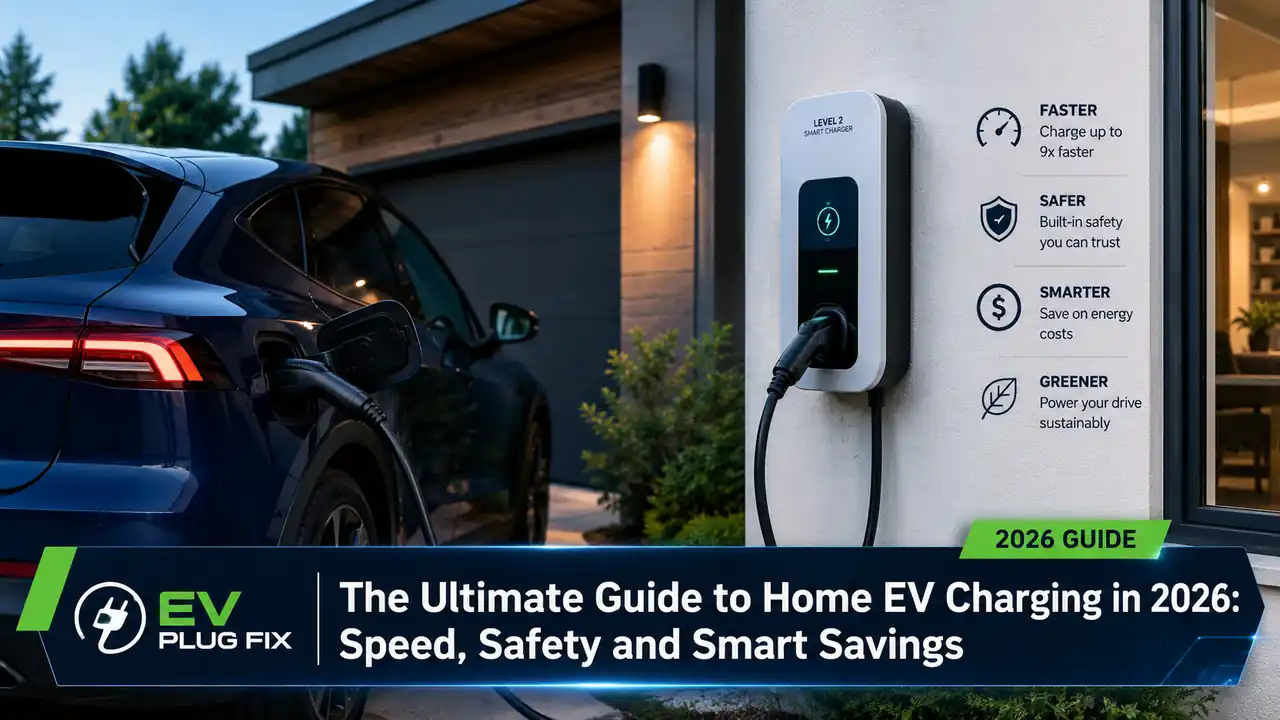
Home EV charging is less complicated than it first appears, but choosing the biggest wallbox on the shelf is not necessarily the best approach. The useful question is how much energy you need to replace while the car is parked, then whether the vehicle and home’s electrical system can support the charging power you are considering.
For many drivers, overnight charging provides plenty of time to replace a normal day’s energy use. Matching the charger to that routine can avoid paying for electrical capacity or equipment that delivers little practical benefit.
How Home EV Charging Works
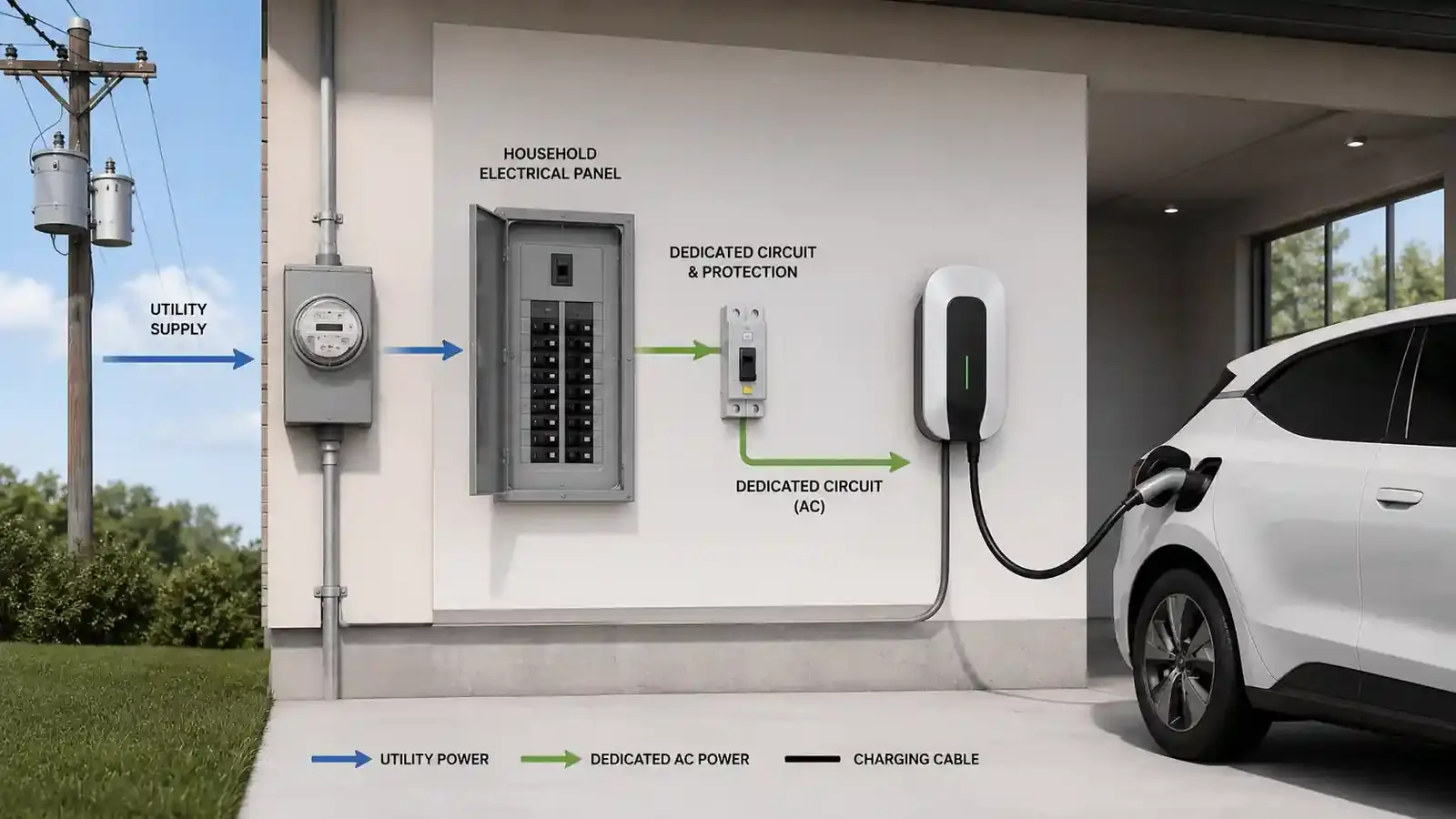
Most dedicated home chargers supply alternating current (AC) to the vehicle. The equipment commonly called the charger or wallbox is technically EV supply equipment (EVSE): it provides a controlled electrical connection and communicates the available charging current. The vehicle’s onboard charger converts that AC electricity into the DC electricity required by the battery.
Actual AC charging power is therefore limited by the lowest-capacity part of the chain: the home’s electrical supply and circuit, the EVSE, or the vehicle’s onboard charger. Installing a more powerful wallbox cannot make the car exceed its own AC charging limit.
When a Dedicated Wallbox Makes Sense
Some drivers can manage with lower-power portable charging, particularly with a plug-in hybrid, modest daily mileage or plenty of time between journeys. Household voltages and charging terminology vary by region, so North American terms such as “Level 1” and “Level 2” do not translate neatly to every market.
A dedicated AC wallbox becomes more attractive when substantial energy needs to be replaced regularly. It can provide higher charging power through a purpose-designed installation and may add useful functions such as scheduling, energy monitoring or load management.
Before choosing one, establish three things: your typical daily energy use, the vehicle’s maximum AC charging rate and the power the home can safely provide.
7kW vs 11kW vs 22kW Home Charging
In markets using 230/400-volt electrical systems, wallboxes are commonly available at around 7 kW for single-phase supplies and 11 kW or 22 kW for suitable three-phase installations. These are EVSE ratings rather than guaranteed charging speeds.
| Nominal EVSE power | Typical supply arrangement | Where it fits |
|---|---|---|
| About 7 kW | Single-phase | Overnight charging for many everyday driving patterns |
| 11 kW | Three-phase | Vehicles supporting 11 kW AC charging where a suitable supply is available |
| 22 kW | Three-phase | Situations where both the vehicle and installation can use the extra power |
The practical advantage of moving from 7 kW to 11 kW or 22 kW depends on how much energy you need to add and how long the vehicle stays parked. If overnight parking already provides ample time, a higher rating may change little in day-to-day use.
Estimating Home Charging Time
A useful first estimate is:
Energy to add (kWh) ÷ actual charging power (kW) = approximate charging time in hours.
If the vehicle needs 35 kWh and is charging at 7 kW, the simple calculation gives about five hours. Actual charging time can be somewhat longer because of charging losses, temperature, vehicle behavior and changes in power during a session.
Daily energy use is usually more useful than an empty-to-full calculation. If a day’s driving consumes 15 kWh, that is roughly the energy that needs replacing that night whether the battery’s usable capacity is 50, 80 or 100 kWh.
Check the Electrical Installation Before Buying
A wallbox is only one part of the project. A qualified electrician should assess the property before a new home EV charger installation is completed.
The assessment should establish whether sufficient supply capacity is available and whether the panel or consumer unit, cable route, conductors, circuit protection and earthing arrangements are suitable for the proposed EVSE. An empty breaker position by itself does not prove that enough electrical capacity is available.
EV charging can place a substantial load on a residential circuit for hours at a time, so installation requirements should come from the electrical rules applicable where the charger is installed. IEC 61851 provides general requirements for conductive EV charging systems, while residential wiring and protection rules are governed by national and local requirements.
Smart Charging, Load Management and Electricity Costs
Smart functions are most valuable when they solve a specific household problem. Scheduling can move charging into cheaper time-of-use tariff periods, while energy monitoring can show how much electricity the EV is consuming.
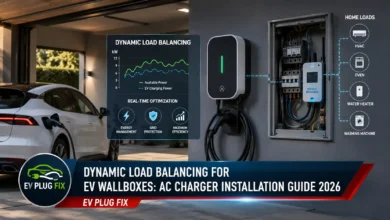
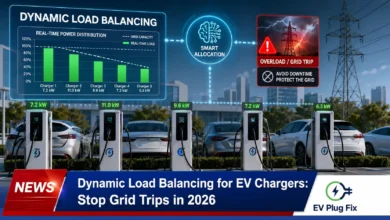
Dynamic load management addresses a different problem. A compatible system can monitor household demand and reduce the power allocated to the EV when other large electrical loads are operating, then allow charging power to rise again as demand falls. In some installations, that can make better use of existing electrical capacity rather than sizing everything around simultaneous peak demand.
Home charging cost itself is straightforward to estimate:
Energy added in kWh × your electricity price per kWh = approximate energy cost.
There is no useful universal home-charging price because tariffs vary widely. A smart wallbox also does not guarantee savings: scheduling only reduces the electricity bill when the applicable tariff makes electricity cheaper at certain times or another energy-management strategy creates a real benefit. For a broader comparison of electricity expenses away from and at home, see home vs public charging costs.
Solar integration can be useful in homes with photovoltaic generation, although the way chargers coordinate with solar, batteries and household energy-management systems varies between products.
Home Charging Safety: The Essentials
Home EV charging should be treated as an electrical installation rather than simply an appliance purchase. Choose equipment carrying the certification or conformity markings required in your market, and have the circuit designed and installed according to the applicable electrical code and the EVSE manufacturer’s instructions.
The installer should account for appropriate conductor and connection ratings, circuit and shock protection, earthing and the environment in which the equipment will operate. Outdoor EVSE also needs a suitable enclosure rating for its expected exposure.
Surge protection, weather resistance and other safety claims should be evaluated as parts of the overall installation rather than substitutes for correct electrical design. Requirements can differ substantially between countries and jurisdictions.
Hardwired or Plug-In?
Where local rules and the selected equipment allow either arrangement, a plug-in wallbox can simplify removal or replacement. Hardwiring eliminates the high-current plug-and-socket connection and may be required or preferred for some higher-power installations.
The important point is that the complete connection — wiring, receptacle where used, terminations and protective equipment — must be suitable for sustained EV charging. Follow the EVSE manufacturer’s installation instructions and the electrical rules that apply locally.
Choosing the Charger Location
Start with where the vehicle normally parks. The charging cable should reach the inlet comfortably without being stretched, routinely driven over or creating an unnecessary trip hazard.
Also consider the cable route from the electrical panel. A convenient wallbox position can become expensive if reaching it requires a long or difficult electrical run.
For an outdoor installation, confirm that the EVSE is rated for the environment. If a second EV is reasonably likely in the future, choosing a mounting position that can serve both parking spaces may prevent unnecessary relocation later.
Choosing Features Without Overbuying
Scheduling, energy monitoring and dynamic load management are often more useful than a long list of app features. Network connectivity can add convenience, but check whether essential charging still works if the internet connection or cloud service becomes unavailable.
Future-proofing deserves similar restraint. If running new cable or opening finished walls is expensive, preparing conduit or infrastructure for a later upgrade may be worthwhile. That does not necessarily mean installing the highest-power EVSE or upgrading the electrical service before a vehicle actually needs it.
FAQ
Can I charge an EV from a regular household outlet?
Low-power charging may be possible when the vehicle manufacturer supplies or approves portable charging equipment for the local household outlet. Whether it is appropriate for regular use depends on the outlet, circuit, charging equipment and applicable electrical rules. Avoid improvised adapters or extension arrangements that are not approved for the application.
Is 7kW enough for home EV charging?
For many drivers, approximately 7 kW can replace normal daily energy use during an overnight parking period. Compare the energy you typically use each day with the time the car is normally parked at home.
Will a 22kW wallbox charge every EV faster?
No. A higher EVSE rating only provides a benefit when the vehicle and home installation can use the additional AC power.
Do I need to charge my EV to 100% every night?
Usually not. Recommended everyday charging limits vary by vehicle and battery system. Follow the vehicle manufacturer’s guidance for routine charging and use a higher state of charge when it is useful for the journey ahead.
Does a smart charger always reduce electricity costs?
No. Smart scheduling can reduce costs when your tariff offers cheaper charging periods. With a flat electricity tariff, shifting the same energy to another time may provide little or no direct price advantage.
Bottom Line
The best home EV charging setup is the one that reliably replaces the energy you use without demanding unnecessary equipment or electrical upgrades. Start with your daily driving, the vehicle’s AC charging capability and the home’s available electrical capacity.
If roughly 7 kW comfortably restores your normal daily use overnight, moving to 11 kW or 22 kW may provide little practical advantage. Higher power becomes more useful when the vehicle supports it, the electrical installation can supply it and shorter charging windows genuinely matter.
After choosing an appropriate power level, focus on the features that solve real problems: tariff scheduling for cheaper electricity, dynamic load management where household capacity is constrained, energy monitoring when consumption matters, and sensible infrastructure preparation for future needs.
Source Transparency
This guide separates broadly applicable charging principles from installation rules that vary by market. Technical references include the International Electrotechnical Commission’s IEC 61851 requirements for conductive EV charging systems, U.S. EPA guidance on residential EV charging, and European Commission information on sustainable mobility, buildings and smart charging.
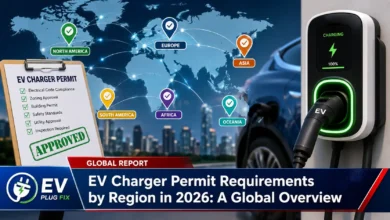
Electrical supply systems, terminology, permits and installation rules vary by country and sometimes by local jurisdiction. Confirm the vehicle’s AC charging capability and EVSE specifications with the relevant manufacturer documentation, and have the proposed installation assessed against the electrical requirements that apply at the property.