
EV Charger Standards & Compliance
-
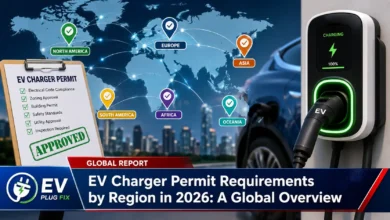
EV Charger Permit Requirements by Region: A Global Guide
There is no universal permit rule for installing a home EV charger. What matters is the work being done and…
Read More » -
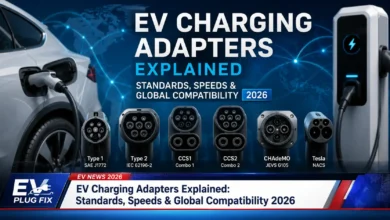
EV Charging Adapters Explained: Standards, Speeds and Compatibility
An EV charging adapter can solve a connector mismatch, but matching two plug shapes does not guarantee that a charging…
Read More » -
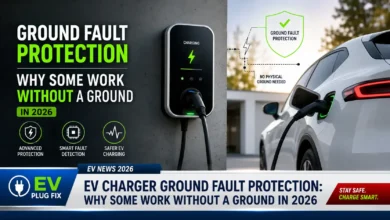
EV Charger Ground Fault Protection: Can You Charge Without a Ground?
Modern EV charging equipment includes sophisticated fault protection, but that normally does not make an ordinary ungrounded residential circuit suitable…
Read More » -
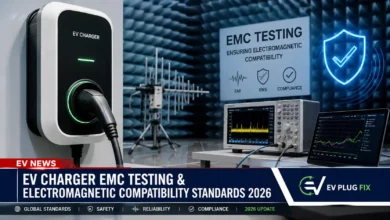
EV Charger EMC Testing and Electromagnetic Compatibility Standards
EV charger EMC testing answers two practical questions: does the equipment create excessive electromagnetic interference, and can it keep operating…
Read More » -
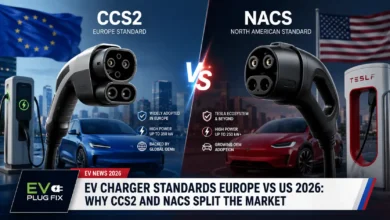
EV Charger Standards in Europe vs US: CCS2, J3400 and CCS1 Explained
An EV sold in Europe can use a different charging inlet from the version of the same model sold in…
Read More » -
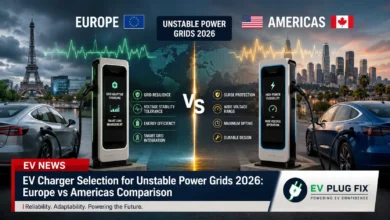
How to Choose an EV Charger for an Unstable Power Grid
If your electricity supply suffers from voltage sags, outages, surges or limited electrical capacity, you do not necessarily need a…
Read More » -
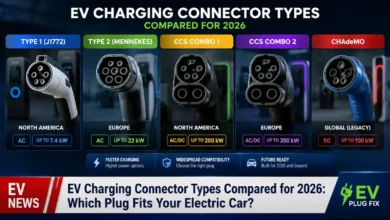
EV Charging Connector Types Compared: Which Plug Fits Your Electric Car?
Electric-car charging plugs are becoming more standardized, but there is still no single connector used everywhere. The plug that fits…
Read More » -
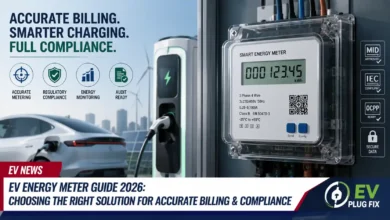
EV Energy Meter Guide: Accurate Charging Billing and Compliance
An EV energy meter records the electricity used during charging, but the right meter depends on what the measurement will…
Read More » -
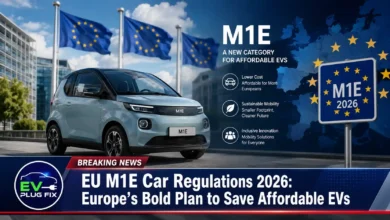
EU M1E Small Electric Car Rules: What the Proposal Could Change
Europe’s M1E initiative is designed to improve the economics of small electric cars, but it is not yet a finished…
Read More »