Best EV Winter Tyres for Range, Grip and Safety

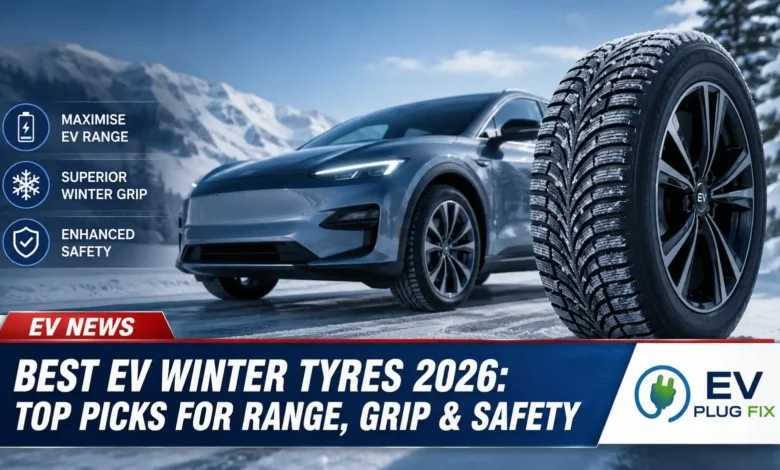
The best winter tyre for an electric car is not necessarily the one with the biggest EV label on its sidewall. It is the tyre that fits the vehicle correctly, carries the required load and speed ratings, and performs well in the winter conditions you actually encounter.
EV-specific tyres can add useful features such as designs intended to reduce rolling resistance, constructions developed for EV applications and noise-reducing foam. Those features can matter, but they come after the fundamentals: correct size, adequate load capacity and dependable braking and traction on snow, ice or cold wet roads.
There is also no single winter tyre that is best for every EV and every climate. A driver facing months of packed snow and ice has different priorities from someone whose winter is dominated by cold rain, slush and occasional snowfall. The five tyres below are editorial recommendations based on their documented characteristics and intended applications; they are not a head-to-head ranking from one comparative test covering every model under identical conditions.
| Tyre | Best suited to | Why consider it |
|---|---|---|
| Nokian Tyres Hakkapeliitta R5 EV | Severe northern winters | EV-specific model with SilentDrive acoustic foam and technology focused on ice grip and rolling efficiency |
| Hankook iON i*cept | Drivers wanting an EV-specific winter tyre | Dedicated EV winter range with snow, noise and rolling-resistance performance among its design priorities |
| Michelin Pilot Alpin 5 SUV | Performance EVs and SUVs | Performance-oriented winter tyre available in fitments suitable for some electric SUVs |
| Continental WinterContact TS 870 P | Cold, wet and mixed European winters | Designed for snow, wet roads and slush, with attention to wet braking, aquaplaning resistance and rolling efficiency |
| Pirelli Ice Friction | Ice, snow and EV-focused fitments | Friction winter tyre with ELECT and PNCS technologies available in selected sizes |
What matters most when choosing winter tyres for an EV?
Electric cars can place different demands on tyres than some combustion-powered vehicles, but that does not mean every EV requires a tyre marketed specifically for electric vehicles. A conventional premium winter tyre can be entirely appropriate when it meets the vehicle manufacturer’s fitment requirements and suits the conditions in which it will be used.
Start with size and load capacity
Check the tyre specification on the vehicle’s tyre placard and in the owner’s manual before comparing brands. A replacement tyre must have an appropriate size, load index and speed rating for the vehicle and comply with applicable local requirements.
Do not assume that every EV automatically needs an XL tyre. Many EV fitments use XL or other higher-load constructions, particularly on heavier cars and SUVs, but the correct requirement is the one specified or approved for your particular vehicle. An EV-specific logo does not compensate for an inadequate load rating.
Choose for your actual winter
Winter conditions vary dramatically. Frequent ice and packed snow may favour a Nordic-style friction tyre designed for severe cold, while drivers dealing mainly with cold rain, slush and occasional snow may prefer a Central European winter tyre with a strong emphasis on wet braking and aquaplaning resistance.
The 3PMSF mountain-and-snowflake symbol identifies tyres that have met a standardized snow-performance requirement. It is a useful indicator when shopping for winter tyres, but the symbol alone should not be assumed to satisfy every country’s winter-tyre law. Rules covering winter tyres, minimum tread depth, studs and required markings vary by jurisdiction and sometimes by season, so check the requirements that apply where you drive.
Consider rolling resistance, but not at the expense of grip
Tyres influence energy consumption because energy is lost through rolling resistance. In an EV, differences in efficiency may also be visible in the vehicle’s energy-consumption and estimated-range figures, alongside other factors that influence regenerative braking efficiency.
In markets using the EU tyre label, buyers can compare standardized ratings for fuel efficiency or rolling resistance, wet grip and external rolling noise. Snow- and ice-related symbols may also appear where applicable. The label is more useful than relying solely on broad advertising descriptions such as “range optimized.”
Low rolling resistance is worth considering, but winter braking and traction remain safety priorities. The lowest-resistance tyre is not automatically the most appropriate choice for the weather and roads you encounter.
Recommended EV winter tyre options
Nokian Tyres Hakkapeliitta R5 EV: designed for severe winter conditions
The Nokian Tyres Hakkapeliitta R5 EV is a winter tyre developed specifically with electric vehicles in mind. It is aimed at demanding northern winter conditions, including snow and ice, rather than primarily cold and wet roads.
Nokian says the R5 EV combines its Green Trace compound with an EV-specific design intended to provide low rolling resistance and winter performance. Its Arctic Grip Crystals are incorporated into the tread compound to help provide grip on ice as the tyre wears.
Another distinguishing feature is Nokian’s SilentDrive technology. The manufacturer installs acoustic foam on the tyre’s inner liner to reduce tyre-cavity noise, a refinement that can be particularly noticeable in vehicles with quiet electric powertrains.
Nokian has published comparative rolling-resistance claims for the Hakkapeliitta R5 family, but manufacturer figures should not be interpreted as a guaranteed percentage increase in driving range for every EV. Vehicle efficiency, tyre dimension, inflation pressure, temperature, road surface and driving speed all influence real-world energy consumption.
Hankook iON i*cept: dedicated EV winter option
Hankook’s iON range is designed around electric vehicles, and the iON i*cept is its winter line. Hankook lists winter performance, snow traction, noise reduction and rolling resistance among the range’s design priorities. Buyers should confirm the markings and specification of the exact size offered in their market.
This makes the iON i*cept a more relevant option for a dedicated-winter comparison than the Hankook iON FlexClimate. The FlexClimate is an all-season product rather than a dedicated winter tyre. It may be suitable for year-round use in appropriate climates, but it should not automatically be treated as an equivalent alternative when prolonged snow, ice or severe cold is the main concern.
Michelin Pilot Alpin 5 SUV: performance-oriented winter option
The Michelin Pilot Alpin 5 SUV is not an EV-only tyre. It is a performance-oriented winter tyre available in SUV fitments, including applications relevant to electric vehicles.
Michelin positions the Pilot Alpin 5 family for winter control across snow-covered, wet and dry roads. Michelin has also developed an NE0 version of the Pilot Alpin 5 SUV for the electric Porsche Macan, showing that specific versions can be engineered for a particular EV application.
This type of tyre is particularly relevant to drivers who want performance-oriented winter capability without choosing a Nordic friction tyre intended primarily for persistent ice and severe cold. Confirm that the exact dimension, load rating and specification are approved for the vehicle rather than choosing on model name alone.
Continental WinterContact TS 870 P: suited to wet and variable winters
The Continental WinterContact TS 870 P is designed for winter conditions including snow, wet roads and slush. Continental highlights its tread and compound technologies for snow grip, wet braking and aquaplaning resistance.
Continental also identifies the TS 870 P as suitable for electric vehicles and promotes reduced rolling resistance and abrasion among its development objectives. That makes it a relevant option for EV drivers whose winters involve substantial rain and slush as well as snowfall.
Performance should still be assessed in the exact tyre dimension being considered. EU label grades and independent test results can differ between sizes and specifications, so a result for one version should not automatically be applied to the entire TS 870 P range.
Pirelli Ice Friction: winter friction tyre with selected EV technologies
The Pirelli Ice Friction is a friction winter tyre developed for ice, snow and wet winter surfaces. Selected sizes incorporate Pirelli’s ELECT technology for electric and plug-in vehicles, while PNCS acoustic technology is also available in selected fitments.
Pirelli says PNCS uses sound-absorbing material inside the tyre to reduce cabin noise. Pirelli also says the Ice Friction range is rated C for rolling resistance, while all sizes available at product launch were rated A for external noise on the EU label.
Pirelli cites UTAC comparative testing from 2025 in size 235/60 R18 in support of specified wet and winter performance claims. Results from one tyre dimension and test programme should not be generalized into a claim that every Ice Friction size will produce the same comparative stopping-distance or handling result.
Do EVs actually need EV-specific winter tyres?
No. An electric vehicle needs tyres that meet the vehicle manufacturer’s requirements and perform appropriately for the conditions in which the car will be driven.
EV-specific winter tyres can nevertheless offer useful refinements. Manufacturers may develop constructions for particular EV fitments, tune compounds and tread designs with rolling efficiency in mind, or use acoustic foam to reduce tyre-cavity noise. These features can make an EV-focused tyre attractive, but they are not prerequisites for safe winter driving.
A high-quality conventional winter tyre with the correct dimensions, load capacity, speed rating and winter characteristics may be a better choice than an EV-branded product that is poorly matched to the local climate or vehicle specification.
How much do winter tyres affect EV range?
There is no reliable universal percentage. Changing tyres can affect an EV’s energy consumption, but tyre construction is only one part of the winter-range equation. Ambient temperature, battery temperature and thermal management, cabin heating, road conditions, wind, speed and tyre pressure can all affect efficiency.
This is why claims that winter tyres always reduce range by a fixed 10 or 15 percent, or that an EV-specific tyre restricts the loss to a particular percentage, should not be applied universally without a defined vehicle, tyre dimension and test procedure.
When comparing tyres sold in Europe, the EU tyre label provides a standardized way to compare rolling-efficiency information. It should be considered alongside wet grip, winter capability, vehicle fitment and credible independent testing rather than used as the only buying criterion.
EV winter tyre buying checklist
- Confirm the exact size: Use dimensions approved for your vehicle and wheel combination.
- Check the load index: Meet the vehicle manufacturer’s requirement rather than assuming an XL marking alone proves suitability.
- Check the speed rating: Follow the vehicle manufacturer’s specifications and applicable local winter-tyre rules.
- Match the tyre to the climate: Prioritize snow and ice capability for severe northern winters, or wet and slush performance where winter conditions are milder.
- Check winter markings: Look for 3PMSF and any additional snow or ice designation relevant to your market, while also checking local legal requirements.
- Compare rolling resistance: Lower resistance may help efficiency, but it should not override braking, traction or fitment requirements.
- Consider noise: Acoustic foam may improve cabin refinement, although it is a comfort feature rather than a safety requirement.
- Check the exact fitment: Technologies such as Pirelli ELECT or PNCS may be available only in selected dimensions.
Installation and winter maintenance
Winter tyres cannot deliver their intended performance if inflation pressures are neglected. Check pressure when the tyres are cold and follow the vehicle manufacturer’s specification for the relevant load and wheel setup. Because tyre pressure changes with temperature, periodic checks become particularly important as winter temperatures fall.
When changing to seasonal winter tyres, a matched set of four is generally the appropriate configuration because it helps maintain consistent grip characteristics between the front and rear axles. Follow the tyre and vehicle manufacturers’ requirements, particularly when the vehicle has staggered front and rear sizes or other fitment-specific instructions.
Inspect tread depth and tyre condition throughout the season. Legal minimum tread-depth requirements differ between jurisdictions, and sufficient remaining tread is important for maintaining the tyre’s ability to deal with snow, slush and standing water.
Essential Questions & Expert Answers
Are XL winter tyres mandatory for electric cars?
No. XL tyres are common on EVs, but they are not universally required. Use the load index and construction specified or approved for your particular vehicle and wheel size.
Can I use normal winter tyres on an EV?
Yes, provided the tyres are suitable for the vehicle and meet its size, load, speed and other fitment requirements. EV-specific tyres may incorporate features aimed at efficiency, noise or particular EV applications, but an EV designation is not inherently necessary.
Are all-season tyres enough for an EV in winter?
That depends on the climate, local law and the capabilities of the particular tyre. A winter-rated all-season or all-weather tyre may be practical where winters are moderate and the tyre carries the markings required in that jurisdiction. Drivers who regularly encounter prolonged ice, heavy snow or severe cold have more reason to choose a dedicated winter tyre designed for those conditions. Always check local winter-equipment rules because an all-season or all-weather designation does not automatically make a tyre legally acceptable everywhere.
Should I choose the winter tyre with the lowest rolling resistance?
Not automatically. Rolling resistance affects efficiency, but winter tyres are safety equipment first. Snow and ice traction, wet braking, vehicle compatibility and load capacity should be considered alongside efficiency.
Bottom Line
There is no universal best EV winter tyre, and the products in this guide should be treated as recommended options rather than a definitive one-to-five ranking. The Nokian Tyres Hakkapeliitta R5 EV is particularly relevant to severe snow and ice conditions, while Hankook’s iON i*cept offers a dedicated EV winter range. The Michelin Pilot Alpin 5 SUV is aimed more toward performance-oriented winter use, Continental’s WinterContact TS 870 P is relevant to wet, slushy and mixed winters, and Pirelli Ice Friction provides an ice-and-snow-focused option with EV and noise-control technologies available in selected fitments.
Do not buy on model reputation or an EV logo alone. Start with your vehicle’s approved tyre size, load capacity and other fitment requirements, identify the winter conditions you actually face, and then compare braking, snow or ice performance, rolling resistance, noise and independent test results for the closest available tyre size.
Source Transparency
This guide was checked against manufacturer information from Nokian Tyres, Hankook, Michelin, Continental and Pirelli, together with European Commission information on the EU tyre label. The five recommended tyres are editorial examples selected for their documented characteristics and intended winter applications; they are not presented as the results of a single independent comparison test covering all five products under identical conditions.
Descriptions of proprietary compounds, acoustic systems, EV-specific designs, rolling resistance and related technologies are presented as manufacturer claims rather than independent findings unless otherwise stated. Where a manufacturer cites third-party testing, the relevant tyre size and test context should be considered before applying the result to another fitment.
Specific performance can vary by tyre size, vehicle, temperature, road surface, inflation pressure and test method. Availability and fitments also vary by country. Before purchasing, verify the exact tyre specification against the vehicle manufacturer’s requirements and check current winter-tyre regulations that apply where the vehicle will be used.