
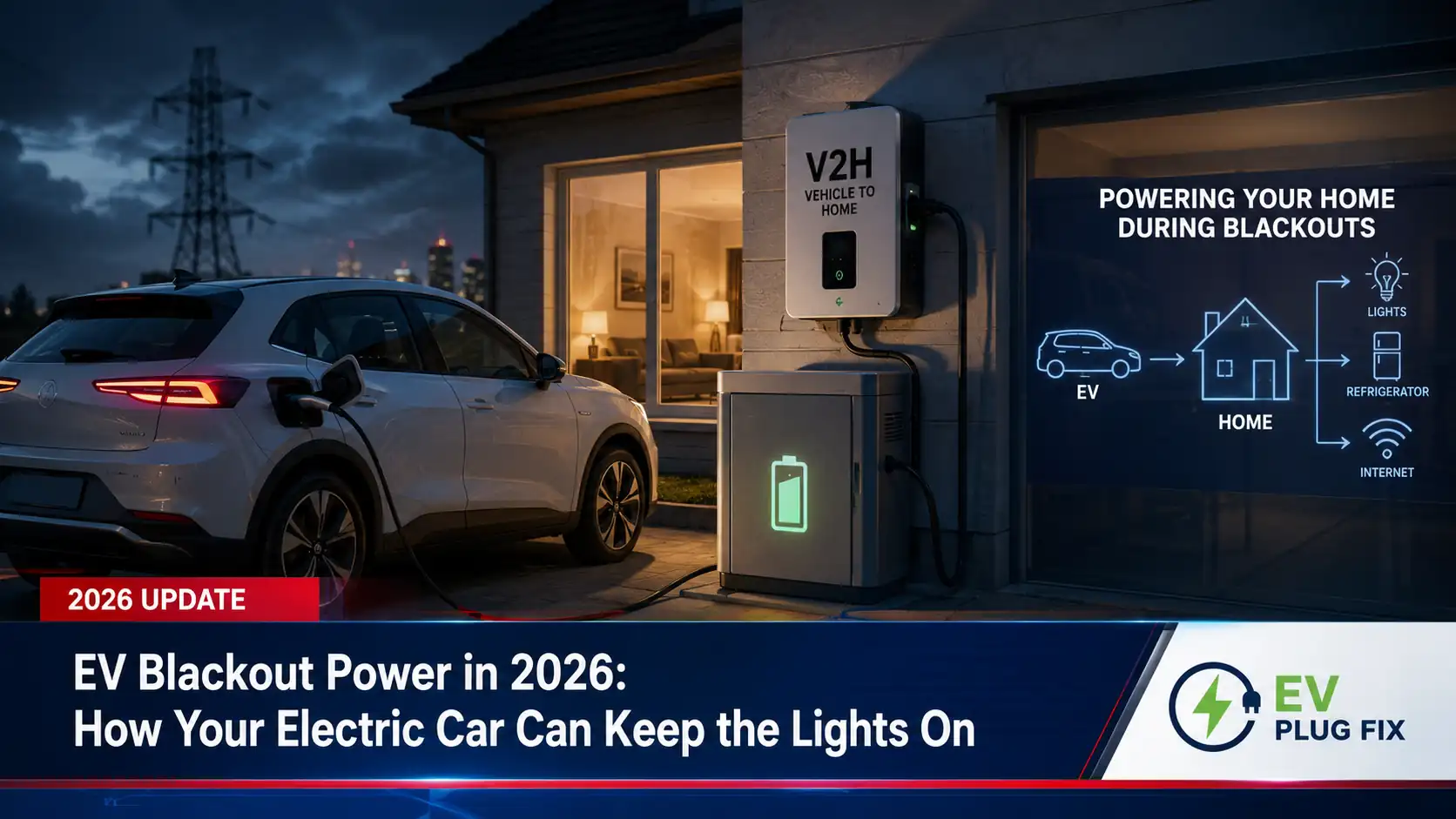
An electric vehicle can store enough energy to become a substantial source of emergency power, but battery size alone does not determine whether it can keep a house running. Some EVs can power appliances through outlets or adapters, while others can feed a home’s electrical system when paired with the required bidirectional equipment and grid-isolation hardware.
For homeowners considering EV blackout power, the key distinction is between vehicle-to-load, vehicle-to-home and vehicle-to-grid technology. The exact vehicle model year, enabled software, discharge capability and residential equipment must form a supported system; sharing the same charging connector is not enough.
V2L, V2H and V2G Are Not the Same Thing
| Technology | Where EV Energy Goes | Typical Blackout Role |
|---|---|---|
| V2L | Individual appliances or equipment | Running selected loads such as refrigerators, lights, tools and electronics |
| V2H | Home electrical system | Backing up selected circuits or, with some systems, much of the home |
| V2G | Utility grid | Exporting energy for grid services where an eligible program and interconnection arrangement exist |
Vehicle-to-load, or V2L, supplies AC electricity to individual devices through an onboard outlet or vehicle adapter. V2L is generally simpler than a permanently integrated V2H installation because it can supply individual loads without integrating the vehicle into the home’s electrical system.
Vehicle-to-home, or V2H, connects the EV to household wiring through purpose-built equipment. Depending on the design, power conversion may occur in the vehicle or in external hardware. A backup installation must also isolate the property from the utility grid before energizing household circuits during an outage.
Vehicle-to-grid, or V2G, allows electricity to flow from the vehicle into the wider grid. A vehicle may be technically capable of bidirectional operation without being eligible for V2G service. Utility programs, tariffs, approved equipment and interconnection rules determine whether grid export can actually be used. For a broader comparison of these architectures, see how V2L, V2H and V2G differ in practice.
What a V2H Installation Requires
A conventional Level 2 charger does not become a home-backup system simply because the EV connected to it has a large battery. A residential V2H installation may require:
- An EV specifically enabled for bidirectional discharge.
- A supported bidirectional charger or vehicle connection system.
- Grid-isolation or transfer equipment.
- Electrical-panel integration and circuit protection.
- Software that manages charging, discharge and battery-reserve settings.
- Permits, inspections and utility approval where applicable.
Grid isolation is fundamental to outage operation. A backup source must not unintentionally energize utility wiring that line crews may expect to be de-energized. Purpose-built home-backup systems detect or respond to a grid outage, separate the home’s electrical system as required and then supply the permitted household loads.
The practical lesson is simple: evaluate V2H as a complete energy system rather than as a feature of the charging connector alone.
Which EVs Can Provide Home Backup?
Several manufacturers now offer genuine residential backup systems in the United States. They differ substantially in architecture, required equipment and supported vehicles, so the examples below should be treated as ecosystem examples rather than a universal list of every bidirectional EV.
Ford F Lightning
Ford marketed the F Lightning with Intelligent Backup Power using the Ford Charge Station Pro and Home Integration System. When the required equipment is installed, the system can disconnect the home from the grid during an outage and use energy stored in the truck to supply the property.
The Lightning also offers Pro Power Onboard on equipped trucks. This is a separate form of exportable power that supplies tools, appliances and other loads through vehicle outlets without requiring the truck to energize the home’s normal electrical circuits.
That difference makes the Lightning a useful illustration of V2L-style power and integrated home backup coexisting in the same vehicle platform.
GM Energy V2H
GM has taken a broader portfolio approach. Its residential V2H system uses the GM Energy PowerShift Charger with the GM Energy V2H Enablement Kit and an eligible GM electric vehicle.
GM has identified supported versions across Chevrolet, GMC and Cadillac EV ranges, including vehicles from the Silverado EV, Equinox EV, Blazer EV, Sierra EV and Hummer EV families as well as several Cadillac electric models. Support can vary by model year, vehicle specification and software, so the current GM Energy eligibility list should be checked for the exact vehicle under consideration.
The important distinction from ordinary home charging is the additional home-energy equipment: buying a GM EV that appears on a bidirectional-capability list does not eliminate the need for the PowerShift and home-integration components required by the residential system.
Tesla Cybertruck
Tesla uses the Powershare name for Cybertruck’s energy-export functions. With the required residential equipment, Powershare Home Backup can use the truck as a household backup source during a grid outage.
Tesla specifies a maximum continuous real-power output of 11.52 kW for Powershare Home Backup. That figure is a system maximum rather than a promise that every installation will continuously supply 11.52 kW under every condition.
Tesla also describes more than three days of backup using an example household consumption level of 30 kWh per day. Actual duration depends on available vehicle charge, household demand, reserve settings and system losses.
Cybertruck can also supply individual loads from its onboard power outlets, giving it an appliance-level backup option without requiring full home integration.
Kia EV9
Kia’s current U.S. owner information identifies the 2024 and 2025 EV9 as supported for its V2H feature. The system uses the Wallbox Quasar 2 bidirectional charger together with additional residential equipment. Supported model years may change as Kia expands or revises the program.
The charger alone is not sufficient for blackout operation. Kia documentation says outage backup requires additional equipment, including the Wallbox Power Recovery Unit, as part of the properly configured installation.
The system can also preserve a selected battery reserve, allowing the owner to limit how much traction-battery energy is used by the house rather than sacrificing all available driving range to an outage.
What About the Kia EV6?
Kia says U.S. V2H capability for the EV6 is expected in late 2026. As of August 30, 2026, that remains a future manufacturer target rather than a reason to assume that V2H is already enabled on every EV6.
Anyone considering an EV6 specifically for household backup should recheck Kia’s current documentation before purchasing the vehicle or home hardware because the stated launch window is approaching and availability could change.
Many EVs Offer V2L Without Full V2H
Full household backup is not necessary for every outage. Hyundai and Kia, among other manufacturers, sell EVs that can supply external electrical loads even when they are not designed to energize a home’s main electrical system.
Within the vehicle’s rated output, V2L may be enough to keep a refrigerator operating, recharge communications equipment, run lights or supply other essential devices. For a homeowner whose main objective is preventing spoiled food and keeping phones, laptops and a few small appliances working, this can be considerably less complicated than installing V2H.
The limitation is distribution. V2L does not inherently energize ordinary wall outlets throughout the house. Improvised backfeeding through homemade adapters or so-called suicide cords is dangerous. Feeding portable power into household circuits requires equipment specifically designed and installed for that purpose.
How Long Can an EV Power a House?
Runtime depends on two different specifications: how many kilowatt-hours of battery energy are available for export and how many kilowatts the house is drawing at a given moment.
A useful estimate is:
Backup hours = usable exported battery energy in kWh ÷ average household load in kW
If an EV makes 60 kWh available after preserving the owner’s chosen driving reserve and the backed-up loads average 1 kW, the theoretical result is about 60 hours. At an average 2 kW load, the same usable energy would last about 30 hours.
Real-world duration will normally be lower than the simple calculation because power conversion, system standby consumption, temperature, battery-management limits and changing household demand all affect the result.
This is also where the distinction between kWh and kW matters. Kilowatt-hours measure stored energy and help determine runtime. Kilowatts measure instantaneous power and determine how many loads the system can operate together.
A vehicle may therefore contain enough energy to run a home for days while still being unable to start several high-demand appliances simultaneously. Central air conditioning, electric resistance heating, water heaters, ranges, dryers and well pumps can place substantial demands on a backup system.
Put Manufacturer Runtime Claims in Context
Published backup estimates can vary dramatically because manufacturers use different assumptions about household consumption. Tesla’s Cybertruck example, for instance, uses approximately 30 kWh per day.
U.S. Energy Information Administration data show that average U.S. residential electricity consumption in 2024 was 865 kWh per customer per month, equivalent to about 28.4 kWh per day. That figure is useful context, not a recommended emergency-power budget.
A home that switches off electric heating, air conditioning, clothes drying and other large loads may consume far less during an outage. A heavily electrified home in extreme temperatures may need much more.
The most useful preparation is to examine smart-meter, home-energy-monitor or utility interval data and identify the consumption of the circuits that will actually remain in service during a blackout.
Keep Enough Battery for Driving
Using every available kilowatt-hour for the house may maximize backup duration, but it can leave the EV with too little range for an evacuation, medical trip or journey to another charging location.
There is no universal reserve percentage. The sensible amount depends on local conditions, likely outage duration, weather, access to another vehicle and how far the driver might need to travel.
Where the home-energy system provides a configurable battery-reserve setting, choose it before severe weather or another foreseeable outage rather than waiting until the grid has already failed.
Can Solar Recharge the EV During a Blackout?
Sometimes, but rooftop solar by itself does not guarantee either home power or EV charging when the grid goes down. Conventional grid-connected solar systems are normally designed to stop exporting power during an outage unless additional equipment allows the property to operate safely as an electrical island.
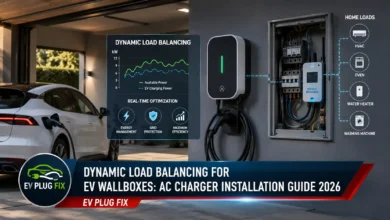
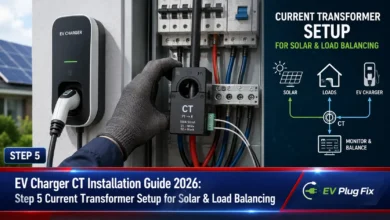
A system intentionally designed to coordinate solar generation, home loads, an EV and bidirectional equipment may use daytime solar to reduce battery discharge and, in some configurations, recharge storage. The interaction between solar generation and charger demand is also central to solar EV charging load balancing. Whether energy can flow into the EV during islanded operation depends on the design of the specific equipment.
Owners with existing rooftop solar should therefore confirm that the solar inverter, home-energy controls and V2H equipment are designed to work together during grid outages rather than assuming that adding a bidirectional charger will automatically enable blackout solar operation.
What ISO 15118 Means for Bidirectional Charging
ISO 15118:2022, which now also has Amendment 1:2026, defines communication messages and sequence requirements that include bidirectional power transfer between electric vehicles and charging equipment.
This provides an important technical framework for increasingly standardized communication, but the standard does not make every supporting EV interchangeable with every bidirectional charger. The vehicle must implement the required functions, the charging hardware must provide the appropriate power-conversion architecture, and the complete installation must meet relevant electrical and grid-interconnection requirements.
Common standards should make future systems easier to develop and integrate, but consumers still need to verify a supported vehicle-and-home-energy combination rather than treating a shared connector or standards reference as proof of V2H capability.
What About New Bidirectional Chargers?
The market is expanding beyond the first manufacturer-specific systems. Enphase, for example, has demonstrated its DC-based IQ Bidirectional EV Charging Platform for applications including EV charging, home energy use and backup power.
As of August 2026, Enphase is targeting volume production beginning in the fourth quarter of 2026. That makes the platform an emerging option rather than equipment homeowners should assume is already available for any EV they own.
As new chargers reach the market, vehicle support remains the deciding factor. A new bidirectional charger cannot enable home discharge from an EV whose hardware, firmware or manufacturer implementation does not support the required energy flow.
Will V2H Damage the EV Battery?
Using the traction battery for home power adds charge and discharge activity, so battery aging is a legitimate consideration. It is not accurate, however, to reduce the issue to a claim that V2H either damages an EV battery or has no effect at all.
Battery aging depends on cell chemistry, temperature, time spent at high or low states of charge, depth of discharge, cycling frequency, power demand and the battery-management strategy used by the vehicle. In particular, high state of charge and battery degradation are closely related considerations when evaluating long-term battery use.
Occasional blackout backup is also a different use case from repeatedly cycling the battery for daily electricity-price arbitrage or grid services. The amount of additional battery throughput can be very different.
Before relying on a vehicle for regular bidirectional operation, review the automaker’s current warranty and owner documentation for that vehicle and the supported equipment. A third-party configuration should not be assumed to receive the same warranty treatment as the manufacturer’s approved system.
What to Check Before Buying an EV for Blackout Backup
| Question | Why It Matters |
|---|---|
| Does the EV offer V2L, true V2H or both? | V2L is primarily for individual loads; V2H integrates with household circuits. |
| What is the maximum export power? | kW output determines which appliances can operate together. |
| How much battery energy can be exported? | Usable kWh and the chosen driving reserve determine potential runtime. |
| Which charger and home hardware are required? | A vehicle alone rarely provides integrated household backup. |
| Is the exact model year and software version supported? | Bidirectional capability can differ within the same model family. |
| Will the system work with existing solar? | Solar equipment must support the intended islanded operating configuration. |
| What electrical work is needed? | Panel layout, service capacity and backup-load selection can change installation complexity. |
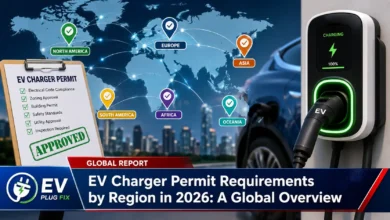
| Are permits or utility approvals required? | Local electrical and interconnection requirements can affect whether and how the system may be installed. |
If appliance-level emergency power meets your needs, V2L may offer the simpler route. If you want the EV to energize normal household circuits automatically when utility power fails, concentrate on vehicles with an established V2H ecosystem, consider whether V2H bidirectional charging is worth it for your use case and obtain an installation assessment before buying the associated hardware.
Essential Questions & Expert Answers
Can every electric car power a house?
No. Every EV carries a large traction battery, but many vehicles are designed only to accept charging power. Integrated home backup requires a vehicle designed and enabled for the required form of bidirectional discharge, plus the appropriate residential equipment.
Do I need a bidirectional charger for blackout power?
For integrated V2H, you need the bidirectional or home-integration architecture specified for the vehicle. Some systems use an external bidirectional DC charger, while others rely partly on power electronics in the EV. V2L through onboard outlets or an approved adapter is a separate application and does not require a V2H charger.
Can an EV run an air conditioner during an outage?
Some V2H systems may have enough output for air-conditioning equipment, but battery capacity alone cannot answer the question. The system’s maximum continuous output, motor starting requirements and other household loads all need to be considered. Large HVAC equipment should be assessed as part of the backup-system design.
Can I plug my EV into a normal house outlet and send power backward?
No. A normal charging outlet is not a safe or approved way to backfeed household wiring. Home energy export requires equipment designed for that purpose with appropriate transfer, isolation and protection functions.
Can V2H work when the utility grid is completely down?
Yes. Properly configured V2H systems can be specifically designed for blackout operation. They must be able to separate the home from the failed utility grid and establish a safe source of power for the supported household loads.
Is V2H the same as having a stationary home battery?
No. An EV may contain a large amount of stored energy, but it can support the home only while the vehicle is present and connected. A stationary battery remains at the property and may also be more tightly integrated with solar or daily home-energy management. Some systems may ultimately use both types of storage.
Can V2L power my refrigerator overnight?
Potentially, yes, if the refrigerator’s operating and starting requirements remain within the vehicle’s rated outlet or adapter capacity. The total load from everything connected to the vehicle must stay within the manufacturer’s specified export limit.
Does a bidirectional charging connector guarantee V2H?
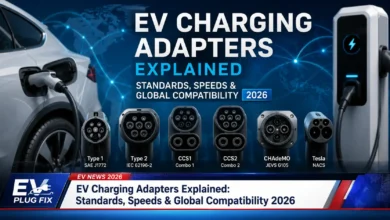
No. The connector is only one part of the system. Bidirectional operation also depends on vehicle hardware and software, charging equipment, communication support, home electrical controls and the approved operating configuration.
Bottom Line
An EV can be an excellent source of blackout energy, but there are two very different ways to use it. V2L is primarily an appliance-level solution: it can keep selected essentials operating without turning the vehicle into the home’s electrical supply. True V2H goes much further by using the traction battery to energize household circuits, but it requires a deliberately matched combination of vehicle, bidirectional hardware, electrical controls and installation.
Ford’s F Lightning, GM Energy-supported EVs, Tesla’s Cybertruck and the 2024 Kia EV9 show that residential EV backup is already a commercial technology rather than merely a future concept. They also show why buying on battery size alone is a mistake: each uses its own equipment, software and installation architecture.
Before choosing an EV for blackout backup, determine whether V2L is sufficient or genuine V2H is required, compare maximum export power as well as battery capacity, confirm support for the exact model year and software, investigate the required home hardware and check how the installation will interact with solar, permitting and utility requirements. Those details determine whether an EV can actually keep your home running when the grid goes dark.
Source Transparency
This article was checked against current manufacturer information from Ford, GM Energy, Tesla, Kia, Wallbox and Enphase, along with technical information from the U.S. Department of Energy, U.S. Energy Information Administration and ISO. Vehicle support, software capabilities, product availability and utility or permitting requirements can change, so homeowners should confirm the current documentation for their exact vehicle and installation before purchasing bidirectional equipment.
Manufacturer backup-duration figures are presented as estimates rather than guaranteed runtimes. Actual duration depends on household demand, available battery charge, reserve settings, temperature, conversion losses and system configuration. EVPlugFix has not independently tested the vehicles or residential energy systems discussed in this article.