EV Charger Permit Requirements by Region: A Global Guide

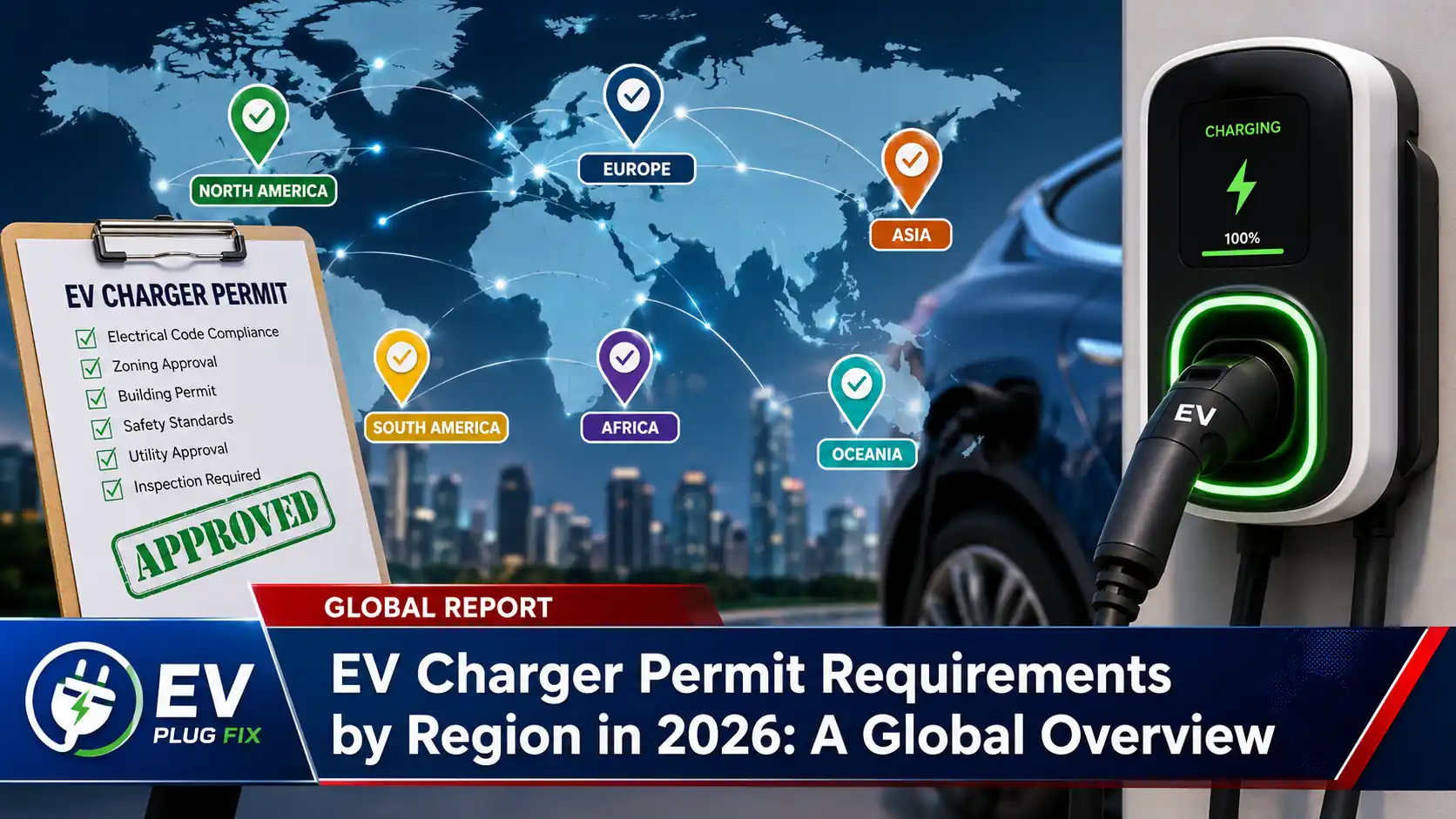
There is no universal permit rule for installing a home EV charger. What matters is the work being done and the rules governing the property. A portable charger used with an existing compliant outlet may involve no new electrical work, while a hardwired wallbox, dedicated circuit, panel upgrade or higher-capacity connection can trigger electrical permits, notifications, inspections or electricity-network procedures.
Property and location matter too. Apartment installations can require approval for shared infrastructure, and equipment affecting a pavement, public space or protected building can introduce planning or highway requirements. The fastest way to understand what applies is therefore to identify the installation type first, then check the authorities responsible for electrical work, the electricity connection and the property.
Which EV Charger Installation Are You Planning?
Before looking at regional rules, place the project into one of these common situations:
- Portable charger using an existing outlet: there may be no new electrical work to permit, although the outlet and circuit still need to be suitable for sustained EV charging.
- New dedicated circuit or hardwired wallbox: this commonly brings electrical permitting, notification, certification or inspection requirements into the project.
- Panel, switchboard or service upgrade: expect additional electrical work and potentially involvement from the electricity distributor or network operator.
- Apartment, condominium or strata installation: electrical requirements can be joined by owner, landlord, building-management or common-property approval.
- Equipment affecting public space: chargers, posts, trenches or cables involving a pavement, sidewalk or right-of-way can trigger planning, highway or municipal requirements beyond the electrical installation itself.
Quick Comparison of EV Charger Approval Systems
| Region | What homeowners should expect | Main authority to check |
|---|---|---|
| United States | New circuits, hardwired chargers and service upgrades commonly bring local electrical or building permitting requirements. | City or county permitting authority and utility |
| Ontario, Canada | When a contractor installs the charger, a Licensed Electrical Contractor files an ESA Notification of Work before electrical work begins. | Electrical Safety Authority and local utility |
| Great Britain | Electrical compliance and the electricity-network connection process apply separately from planning rules. Some installations also have OZEV grant conditions. | Installer, DNO and relevant planning authority |
| Germany | Charging equipment must be reported to the network operator before commissioning. Prior network consent applies when combined rated capacity exceeds 12 kVA. Relevant new non-public chargers above 4.2 kW are also covered by the Section 14a EnWG controllable-consumption framework. | Distribution network operator and electrical installer |
| Australia | Dedicated chargers require licensed electrical installation; documentation and any additional approvals depend on the state, network and project. | Licensed electrician, electricity network and relevant state or local authority |
| Japan | Electrical work must comply with applicable electrical legislation, technical standards and electrician-qualification requirements. Additional supply or property procedures depend on the installation. | Qualified electrical contractor, electricity supplier and relevant authority |
What Can Trigger a Permit, Notification or Approval?
The paperwork is easier to understand when it is divided by the authority responsible for it.
Electrical work
- installing a new dedicated charging circuit;
- hardwiring a wall-mounted charger;
- installing a new high-current receptacle;
- changing a panel, consumer unit or switchboard;
- adding or changing electrical protection equipment;
- installing three-phase equipment or modifying the existing electrical installation.
Utility or electricity-network requirements
- increasing the property’s electrical service or connection capacity;
- connecting a charger above a network operator’s notification or approval threshold;
- adding a substantial new electrical load;
- installing dynamic load balancing or controllable-demand equipment where network rules apply.
Property, building and planning requirements
- altering shared electrical infrastructure in an apartment, condominium or strata property;
- mounting equipment on shared or protected property;
- installing charging equipment in or next to a public right-of-way;
- crossing a pavement or sidewalk with infrastructure;
- carrying out civil works or building alterations that fall within local planning or building rules.
A project can fall into more than one category. Electrical approval, for example, does not automatically settle a separate property or planning question.
United States: EV Charger Permits Are Primarily Local
The United States has no single nationwide residential EV charger permit. Electrical and building codes are adopted and enforced through state and local systems, so the process can differ between cities and counties.
The U.S. Department of Energy’s Alternative Fuels Data Center advises that charging-equipment installations must comply with applicable state and local codes and notes that local permits may be required. The National Electrical Code contains EV charging provisions in Article 625, while the authority having jurisdiction determines how the applicable code is enforced locally.
A typical permanently installed Level 2 project can involve a dedicated circuit, electrical permit and inspection. A panel or service upgrade can add utility coordination, further permitting requirements and additional EV charger installation costs.
California’s expedited permit framework
California illustrates how state law can influence a process that remains locally administered. AB 1236 and AB 970 establish an expedited framework for local EV charging station permitting.
For projects involving one to 25 charging stations, the statutory framework provides five business days for the application-completeness review. Once an application is complete, the framework provides a 20-business-day approval timeframe, with California guidance describing qualifying applications as deemed approved within the statutory process when the applicable requirements are satisfied. For projects involving 26 or more charging stations, the corresponding periods are 10 business days for completeness review and 40 business days for approval.
For a residential reader, the practical point is that California limits how qualifying EV charging permit applications are processed; it does not remove electrical safety requirements. Homeowners still need to follow the procedures of the city or county serving the property.
Canada: Electrical Requirements Are Provincial
Canada’s electrical safety framework is administered through provincial and territorial systems rather than one national residential charger permit. Utilities and municipalities can also become involved where a project changes the electrical connection or affects building or planning requirements.
Ontario
Ontario’s Electrical Safety Authority uses a Notification of Work process for electrical installations. Where a homeowner hires a contractor to install an EV charger, the work must be handled by a Licensed Electrical Contractor, which files the required Notification of Work with ESA before starting the electrical installation.
ESA commonly describes this notification as an electrical permit, but homeowners should not confuse it with a separate conventional building-style permit that they personally obtain from ESA. The Licensed Electrical Contractor is responsible for filing the electrical notification for contracted work.
After accepted electrical work is completed, the relevant documentation, including a Certificate of Acceptance where issued, should be retained with the property’s records.
Other provinces and territories have their own electrical regulators and procedures, so Ontario’s process is an example rather than a Canada-wide rule.
Great Britain: Electrical, Network and Planning Rules Are Separate
Installing a home charger in Great Britain can involve several distinct systems. Electrical installation requirements, Distribution Network Operator procedures and planning rules each answer a different question.
Private charge points within the scope of the Electric Vehicles (Smart Charge Points) Regulations 2021 must satisfy the applicable product requirements. These rules concern covered charge points sold for domestic or workplace use and do not replace the electrical requirements governing their installation.
Electrical installation requirements
The installation must comply with the electrical requirements applicable to the work. OZEV specifications for relevant grant-supported installations refer to standards and guidance including BS EN 61851, BS 7671 and the IET Code of Practice for Electric Vehicle Charging Equipment Installations.
Those references are specifically relevant to the applicable OZEV grant specifications. They should not be read as a complete statement of every legal requirement governing every privately funded charger installation.
Connect and notify or apply to connect
The electricity-network process is not limited to OZEV-funded installations. The installer needs to assess the proposed EV charging load and determine which Distribution Network Operator route applies.
An installation that satisfies the relevant connection criteria can follow the connect and notify process, under which the qualifying equipment can be connected and the DNO subsequently notified in accordance with the applicable procedure. Where the installation does not qualify for that route, the installer must use the apply to connect process and obtain the necessary network response before proceeding with the connection.
OZEV-authorised installers can have additional notification, evidence and record-retention obligations under the conditions of the relevant grant scheme. Those scheme requirements sit alongside, rather than define, the general network-connection process.
Planning permission in England
In England, permitted development rights allow many domestic EV charging installations to proceed without a conventional planning application when the installation meets the applicable conditions.
That protection has limits. Listed buildings, particular siting arrangements, shared property, equipment outside the permitted-development conditions and installations involving public space can require additional consideration. Scotland, Wales and Northern Ireland have separate planning frameworks.
Homes without off-street parking require particular care. Electrical permission to install charging equipment does not by itself authorize a cable, channel or other infrastructure affecting a public pavement or highway.
European Union: National Rules Still Determine Home Wallbox Procedures
The European Union regulates important aspects of charging infrastructure, buildings and the wider EV market, but homeowners do not apply for a single EU residential wallbox permit.
Electrical installation rules, distribution-network procedures, building regulations and planning law continue to operate through national and local systems. Germany therefore has different requirements from France, Spain, Italy and other EU member states.
The EU Alternative Fuels Infrastructure Regulation is particularly important to publicly accessible charging infrastructure, but it does not create one universal residential wallbox permitting procedure across the EU.
Germany: Network registration, consent and Section 14a EnWG
Germany’s rules demonstrate why a home charger can require electricity-network action even where the issue is not described as a municipal EV charger permit.
Under Section 19 of the Low Voltage Connection Ordinance, EV charging equipment must be reported to the network operator before commissioning. Prior consent from the network operator is required when the combined rated capacity of the charging equipment within an electrical installation exceeds 12 kVA.
The statutory provision expresses the consent threshold in kVA. Bundesnetzagentur consumer information commonly describes the practical distinction as charging equipment up to 11 kW requiring notification and equipment above 11 kW requiring network-operator consent. These descriptions reflect the same regulatory area but use different ways of presenting the threshold, so homeowners should follow the network operator’s current connection procedure for the specific installation.
There is also an important rule for newer installations. Under the Section 14a EnWG framework, non-public EV charging equipment with a grid connection capacity above 4.2 kW that is commissioned in the low-voltage network from 1 January 2024 generally falls within the rules for controllable consumption devices. Relevant equipment must be registered with the network operator and technically capable of network-oriented control under the applicable framework.
This does not mean the network operator routinely switches a home charger off. The Section 14a system establishes conditions under which consumption can be temporarily controlled for grid purposes while applying the regulatory arrangements associated with participating controllable devices.
Apartment installations can add another layer because permission to modify shared electrical infrastructure or common property is separate from the electricity-network process. Larger projects may therefore need both property approval and an appropriate multi-unit dwelling charging strategy.
Australia: Electrical Licensing and State Rules Matter Most
Australia has no single residential EV charger permit that works identically in every state and territory. Electrical work is regulated through state and territory systems, while distribution networks and councils can impose requirements relevant to the connection or property.
Australian Government guidance explains that a dedicated home charger connected to the home’s electrical installation must be installed by a licensed electrician. Depending on the property, the project can also require switchboard work or changes to the electricity supply.
Documentation requirements vary between jurisdictions. A network can also become involved when the installation affects the property’s connection, available capacity or other network requirements.
Apartment and strata projects bring property approval into the process as well. Changes to common electrical infrastructure cannot be treated in the same way as installing equipment entirely within a detached homeowner’s property.
Japan: Electrical Qualifications and Technical Compliance Are Central
Japan’s system is better understood through its electrical safety and installer requirements than through the idea of one nationwide municipal home-charger permit.
Electrical installation work that falls within the relevant statutory framework is governed by Japan’s Electrician Act and associated electrician-qualification requirements. Electrical installations must also comply with the applicable technical standards established under Japan’s electrical safety framework.
The exact work required for a charger can determine which qualification, electrical procedures and electricity-supply arrangements apply. A project that changes the available supply or other connection conditions can also require coordination with the electricity supplier.
For a homeowner, the useful first step is therefore to have an appropriately qualified electrical contractor assess the proposed charger, existing electrical installation and supply arrangement rather than looking for a single national EV-charger permit threshold.
Does a Plug-In EV Charger Need a Permit?
If portable charging equipment is simply connected to an existing compliant outlet and no electrical installation is altered, there may be no new electrical work requiring a permit or notification.
The answer changes when the outlet is part of the project. Installing a new receptacle, replacing wiring, changing circuit protection or modifying the panel or switchboard can bring the work within local electrical approval and inspection procedures.
An existing outlet also needs to be suitable for the intended charging load. Its physical condition, wiring, circuit protection and applicable electrical requirements matter when it will supply an EV for extended periods.
Do Higher-Power Chargers Need More Approval?
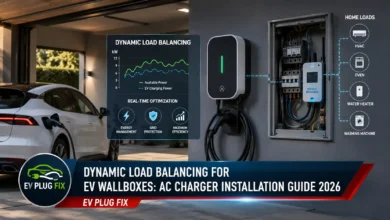
Higher charging power often makes network involvement or electrical upgrades more likely, but there is no worldwide power threshold at which every charger suddenly requires a permit.
The charger’s maximum rating is only one part of the calculation. The home’s available supply, existing loads, phase configuration, circuit design, the vehicle’s onboard AC charging limit and any energy-management equipment can all affect the installation.
A charger also does not have to operate permanently at its maximum nameplate rating. Where permitted by the equipment and local rules, an installer may configure an appropriate lower current or use a compliant load-management arrangement. Whether that is suitable should be determined from the electrical design and applicable network requirements.
A Practical Pre-Installation Checklist
- Identify the charger. Record the exact model, maximum current, supply requirements and whether it will be hardwired or plug-connected.
- Check the vehicle. A higher-rated AC wallbox cannot make a vehicle exceed the limits of its onboard AC charger.
- Assess the existing electrical installation. Determine whether the service, panel, switchboard, circuit protection and proposed cable route can support the charging load. A detailed home EV charger installation guide can help clarify the cable, breaker and electrical-capacity considerations involved.
- Identify the electrical authority. Find out whether the work requires a permit, notification, inspection or completion certificate.
- Check the electricity-network procedure. Establish whether the charger can be connected and notified or whether advance approval is required.
- Confirm property and planning requirements. This is particularly important for tenants, apartments, condominiums, strata properties, listed buildings and installations affecting public space.
- Submit required paperwork at the correct stage. Some approvals must be obtained before installation, while other systems require notification after qualifying work is connected.
- Keep the records. Retain electrical certificates, permits, notifications, network correspondence, inspection records and relevant installer documentation.
What Happens If Required Approval Is Skipped?
The consequences depend on the jurisdiction and the missing requirement. There is no sound basis for claiming that every unpermitted charger automatically voids a home insurance policy or manufacturer warranty.
Non-compliant electrical work can nevertheless create practical and legal problems. An authority can require inspection or corrective work, unsafe wiring can require disconnection or replacement, and missing installation records can complicate later alterations or a property transaction.
An insurer investigating electrical damage may also examine whether the installation complied with applicable requirements and whether any defect contributed to the loss. Warranty consequences depend on the manufacturer’s actual terms and installation instructions.
FAQ
Do I need a permit to install a Level 2 EV charger?
Often some form of regulatory process applies, but it may not be called a permit. A Level 2 installation commonly requires a dedicated circuit or hardwired electrical work, which can trigger a permit, electrical notification, inspection, certification or network procedure depending on the jurisdiction.
Can I install a home EV charger myself?
Local electrical law determines who may perform the work. Some jurisdictions permit homeowners to carry out certain electrical work subject to permits and inspections, while others require an appropriately licensed or qualified electrical contractor for the relevant installation.
Does using an existing outlet require a permit?
Simply connecting portable charging equipment to an existing compliant outlet may involve no new electrical work. Installing a new outlet or modifying its circuit is different and can trigger electrical permitting, notification or inspection requirements.
Do I need utility or network approval for a home EV charger?
It depends on the electricity network and installation. Some systems allow qualifying chargers to be connected and then notified, while others require advance approval at specified loads or connection conditions. Germany, for example, requires charging equipment to be reported to the network operator before commissioning and requires prior consent when combined rated charging capacity exceeds 12 kVA. Relevant new non-public charging equipment above 4.2 kW also falls within the Section 14a EnWG framework when the applicable conditions are met.
Does a tenant need permission to install an EV charger?
A fixed charger normally involves changes to the property or electrical installation, so landlord or property-owner procedures can apply. Apartment, condominium and strata projects may additionally affect common property or shared electrical infrastructure. The precise rights and approval process depend on local law.
Bottom Line
Start with the installation rather than the word “permit.” Determine whether the project uses an untouched existing outlet, adds a dedicated circuit, requires a hardwired wallbox, changes the property’s electrical capacity, affects shared property or extends into public space. That quickly identifies which authorities are likely to matter.
In the United States, the city or county permitting authority is usually the starting point. Canadian homeowners need the applicable provincial or territorial electrical process. In Great Britain, the electrical installation, DNO connection route and planning position need to be considered separately. German installations require particular attention to network registration, the Section 19 NAV consent threshold and, for relevant newer chargers, Section 14a EnWG. Australian requirements depend heavily on state electrical rules and network procedures, while Japan emphasizes qualified electrical work and compliance with its electrical safety framework.
Confirm those requirements before electrical work begins and keep the resulting installation and approval records. That approach is more reliable than assuming every Level 2 charger either always needs a conventional permit or never does.
Source Transparency
This guide was checked against government and regulatory material available in August 2026. Key sources include the U.S. Department of Energy Alternative Fuels Data Center for U.S. charging and permitting guidance; California state guidance covering the AB 1236 and AB 970 expedited permitting framework; Ontario government and Electrical Safety Authority material covering EV charging installations and Notifications of Work; UK government and electricity-network guidance covering smart charge points, OZEV specifications, DNO connection procedures and planning; Germany’s Low Voltage Connection Ordinance, Section 14a EnWG framework and Bundesnetzagentur consumer guidance; Australian government material on home charging and licensed electrical work; and Japanese government material covering electrical safety legislation, technical standards and electrician qualifications.
This is a selected-region comparison rather than an exhaustive description of every national, state, provincial or municipal EV charger rule. Requirements can change and many are administered locally, so the authority responsible for the specific property remains the final source for the procedure that applies to an installation.