Investing in EV charging infrastructure in 2026 is no longer simply a question of buying chargers and connecting them to the electrical grid. The more important question is whether the charging site you build today will still be competitive, expandable and profitable several years from now.
That distinction matters because the EV charging industry is developing quickly. Global electric car sales exceeded 20 million in 2025, representing about one-quarter of all new cars sold, and the International Energy Agency expects global electric car sales to reach around 23 million in 2026. At the same time, charging technology is moving toward higher power, smarter energy management, improved interoperability and bidirectional charging.
For an investor or charging-site operator, this creates both an opportunity and a risk. A well-designed charging station can grow with demand for years. A poorly planned installation can become a stranded asset when additional power, new software capabilities or more charging ports become necessary.
Future-proofing an EV charging investment means preparing the site for growth without paying for all of that growth on day one. The goal is to create an infrastructure foundation that can accommodate higher utilization, additional chargers, changing communication standards, smarter energy management and new EV capabilities without requiring a complete rebuild.
Why Future-Proofing EV Charging Infrastructure Matters in 2026
The charging market is entering a period in which simply adding more charging points is not enough. The infrastructure must also manage power intelligently and communicate reliably with vehicles, charging-management systems, payment platforms and, increasingly, energy-management systems.
According to the IEA’s Global EV Outlook 2026, the average power of public charging points increased from just over 40 kW in 2024 to nearly 50 kW in 2025. Ultra-fast charging above 250 kW is also expanding, while newer charging technologies are moving toward even higher power levels.
This creates an important planning challenge: a site designed around today’s charging requirements may have insufficient electrical capacity or physical infrastructure when vehicles capable of faster charging become more common.
At the same time, the IEA expects electricity demand from EVs to continue growing substantially through 2035. Smart charging and vehicle-to-grid technologies could help manage some of the resulting pressure on electricity networks by shifting or controlling charging loads.
In other words, the future charging station will not simply be a collection of power outlets. It will increasingly be an intelligent energy asset.
What Makes an EV Charging Investment Future-Proof?
A future-proof EV charging installation combines several elements rather than relying on one particular charger model.
| Area | Future-Proofing Strategy | Long-Term Benefit |
|---|---|---|
| Electrical infrastructure | Reserve capacity and plan for future upgrades | Reduces the cost of adding charging capacity |
| Civil infrastructure | Install spare conduit, ducts and equipment locations | Avoids expensive excavation later |
| Charger hardware | Use modular and serviceable architectures | Allows staged expansion and easier repairs |
| Communication | Use open standards and documented compatibility | Reduces vendor lock-in |
| Energy management | Deploy dynamic load management and smart charging | Uses available grid capacity more efficiently |
| Connectivity | Plan resilient communication and failover | Reduces charging and payment interruptions |
| Software | Support remote monitoring and updates | Extends operational life |
| Business model | Expand based on measured utilization | Avoids premature overbuilding |
1. Design the Electrical Infrastructure for the Future
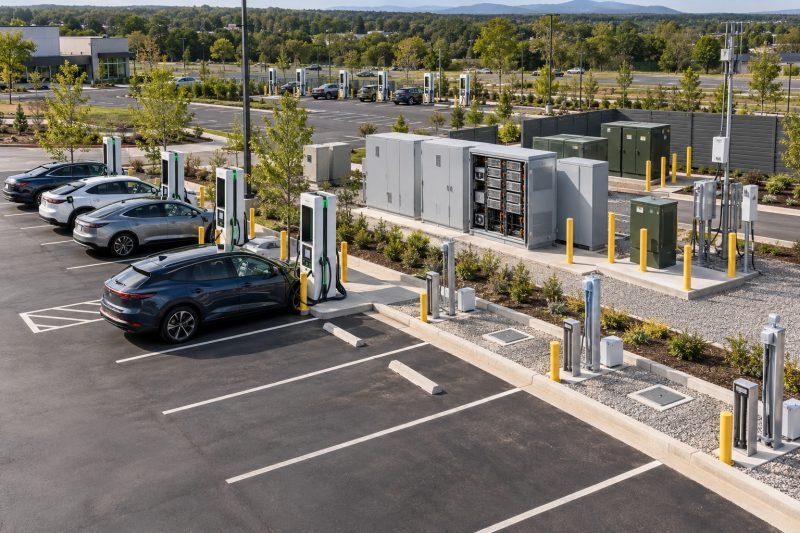
The electrical connection is often the hardest and most expensive part of an EV charging project to upgrade after construction.
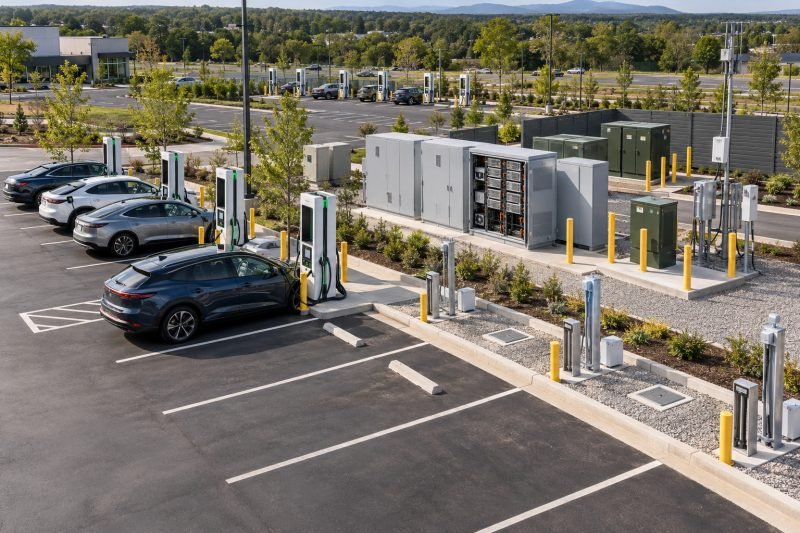
A site might initially require four DC chargers, but if utilization grows rapidly, the operator could eventually want eight, twelve or more charging points. The additional load may require a larger transformer, upgraded switchgear, new feeders or utility work.
That is why the electrical design should consider the site’s potential end state, even if the initial equipment represents only the first phase.
Reserve Electrical Headroom
There is an important difference between installing unused charging capacity and preparing the electrical infrastructure for future charging capacity.
The first approach can tie up capital unnecessarily. The second can make future expansion much easier.
A good project plan should therefore identify:
- Current electrical service capacity.
- Expected initial charging load.
- Potential future charging load.
- Transformer and switchgear limitations.
- Utility upgrade requirements and lead times.
- Available panel and feeder capacity.
- Expected demand charges.
- Future renewable-energy or battery-storage integration.
The U.S. Department of Energy’s Alternative Fuels Data Center specifically recommends considering both the number and type of charging units required in the near and long term, proximity to incoming electricity, metering requirements and future expansion when selecting a charging site.
2. Prepare the Civil Infrastructure Before You Need It
Electrical and civil construction becomes much more expensive when performed after a parking area, driveway or commercial property has already been completed.
For this reason, spare conduit can be one of the simplest and most valuable future-proofing investments.
Even if only four chargers are installed initially, the site design can potentially include additional underground pathways leading toward future charging locations. Pull boxes, equipment foundations and appropriate cable routes can also be considered during the first construction phase.
The principle is straightforward:
Install the infrastructure that is difficult to add later, then add the expensive charging equipment when demand justifies it.
This approach is consistent with EV-ready planning guidance from the U.S. Department of Energy, which highlights upgrading electrical infrastructure and running cables to support future charging needs.
3. Build a Charging Site That Can Expand in Phases
One of the biggest mistakes in EV charging investment is assuming that maximum capacity on day one is always the best financial decision.
It often is not.
If a location currently needs six charging ports but the investor installs twenty ports immediately, a significant amount of capital may remain underutilized for years. The site could also face higher electrical and operational costs without generating proportional revenue.
A phased strategy can be more efficient:
- Build the initial charging capacity required by current demand.
- Prepare electrical and civil infrastructure for future capacity.
- Collect real-world utilization data.
- Identify measurable expansion triggers.
- Add chargers or power modules when those triggers are reached.
This approach aligns capital expenditure with actual market growth instead of relying entirely on forecasts.
4. Choose Modular EV Charging Hardware
Hardware architecture has a major influence on how easy a charging station is to upgrade.
Traditional fixed-capacity equipment can make future expansion more difficult. Modular systems can provide a different path by allowing power capacity to be increased or components to be replaced in stages, depending on the manufacturer’s architecture.
Modularity can also improve serviceability. If a system is designed around replaceable power modules, a failure in one module may not require replacing the entire charging system.
When evaluating a modular charger, ask:
- Can additional power modules be added later?
- Can failed modules be replaced individually?
- Does the charger continue operating if one module fails?
- Are replacement modules expected to remain available?
- Can firmware support higher capabilities over time?
- Can the system be expanded without replacing the complete cabinet?
These questions are often more important for long-term investment value than simply comparing the maximum advertised charging power.
5. OCPP 2.1: A Major Part of Future-Ready Charging
Software interoperability is becoming one of the most important elements of EV charging infrastructure.
The Open Charge Alliance describes OCPP as a standardized communication method between charging stations and central systems. The objective is to enable interoperability between charging equipment and management systems from different vendors and reduce dependence on proprietary platforms.
OCPP 2.0.1 introduced significant improvements over OCPP 1.6, including better device management, security, smart charging and ISO 15118 support. OCPP 2.1, released in January 2025, extends that foundation further.
As of 2026, OCPP 2.1 is particularly relevant to future-proofing because it includes support for technologies such as ISO 15118-20, bidirectional charging, distributed energy resource control, battery swapping and additional authorization and payment functionality. OCPP 2.1 Edition 1 was also published by IEC as IEC 63584-210:2025.
What This Means for an Investor
The important point is not simply to select equipment because the specification says “OCPP.”
Ask exactly which OCPP version is supported, which functions are implemented, whether the implementation is certified where relevant, and which features are available through the selected backend.
The Open Charge Alliance currently lists OCPP 2.1 Edition 2 and OCPP 2.0.1 Edition 4 among its latest published editions, including updates and test cases.
A future-proof procurement specification should therefore identify the precise protocol version and required functionality instead of accepting a generic interoperability claim.
6. Do Not Ignore ISO 15118 and Plug & Charge
ISO 15118 is another important part of the future charging ecosystem.
The standard defines communication between an electric vehicle and EV charging equipment and supports functions related to identification, charging control, payment, load management and other aspects of the charging interaction. ISO 15118-20 also defines requirements for bidirectional power transfer.
For investors, support for the ISO 15118 ecosystem can therefore be relevant when planning equipment expected to remain in service for many years.
However, future-proofing does not mean assuming every vehicle will support every feature immediately. Vehicle compatibility, charger capabilities, market requirements and software implementations still need to be checked individually.
7. Prepare for Smart Charging and V2G
Smart charging is increasingly important because adding more EVs does not necessarily mean every vehicle should charge at maximum power at the same time.
A smart charging system can adjust charging power according to factors such as site load, electricity tariffs, grid conditions, vehicle requirements and operational priorities.
This can help an operator serve more vehicles without immediately increasing the site’s maximum electrical demand.
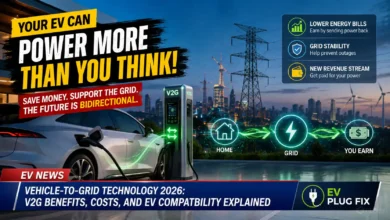
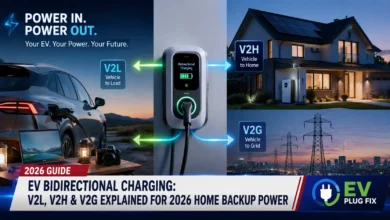
The next step is bidirectional charging, commonly associated with terms such as V2H, V2B and V2G.
Vehicle-to-grid technology allows compatible vehicles to send energy back toward the grid, while vehicle-to-home or vehicle-to-building applications can use the vehicle battery to support local loads.
The IEA notes that commercial V2G offerings for private EV owners began appearing in 2025, although vehicle availability, regulation and standards remain uneven across markets.
For a charging investment expected to operate for a decade or longer, it can therefore be valuable to consider whether the hardware and software architecture could eventually participate in bidirectional energy management.
8. Understand OCPI and EV Roaming
OCPP deals primarily with communication between the charging station and its central management system. OCPI addresses a different part of the ecosystem: communication between mobility service providers, charge point operators and roaming partners.
The current OCPI version is 2.3.0. The specification supports functions including roaming, authorization, reservations, tariffs, billing, real-time charging-point information, session information and smart charging.
OCPI 2.3.0 also introduces additional capabilities around regulatory requirements, payment terminals, booking and vehicle information, while improving extensibility.
For a public charging business, interoperability at this level can affect how easily drivers from different networks can access the station.
A charging station that is technically powerful but difficult for drivers to discover, access or pay for may still underperform commercially.
9. Make Connectivity Part of the Infrastructure Plan
A networked charger depends on communication just as much as it depends on electricity.
The charger may need connectivity for authorization, payments, remote monitoring, pricing, firmware updates and communication with the charging-management platform.
A connectivity failure can therefore become a revenue problem even when the physical charger is completely functional.
Depending on the site, operators may want to evaluate cellular connectivity, wired internet, Wi-Fi, redundant connections or local fallback capabilities.
The exact solution depends on the location and business model, but the underlying principle is the same: do not allow a single communication failure to take an otherwise healthy charging asset offline.
10. Remote Diagnostics and Software Updates Extend Asset Life
A future-proof charger should be easier to manage remotely than the charging equipment of the past.
Remote diagnostics can allow operators to identify faults before sending a technician to the site. Remote firmware and software updates can also reduce the need for physical intervention when new capabilities or security fixes become available.
When evaluating a charger, consider whether the manufacturer provides:
- Remote fault monitoring.
- Remote diagnostics.
- Firmware updates.
- Configuration management.
- Event and alarm history.
- Remote restart capabilities where appropriate.
- Performance and utilization reporting.
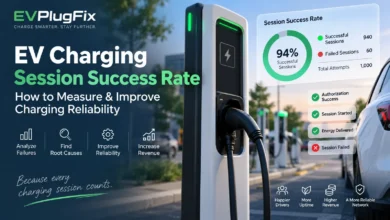
The U.S. Department of Energy notes that collecting and analyzing charging-station uptime and utilization data is a key part of successful charging-station management. Those data can also help determine whether additional charging infrastructure is justified.
11. Treat Uptime as an Investment Metric
Many charging projects focus heavily on the number of chargers installed but pay less attention to how reliably those chargers operate.
For a commercial charging station, a charger that is technically installed but frequently unavailable is not equivalent to a fully operational charger.
Operators should therefore track:
| Metric | Why It Matters |
|---|---|
| Uptime | Shows how consistently chargers are available |
| Utilization | Shows whether installed capacity is being used |
| Peak simultaneous sessions | Helps determine actual electrical demand |
| Queue frequency | Shows when customers are encountering capacity limits |
| Energy delivered | Measures actual charging activity |
| Revenue per port | Helps evaluate investment productivity |
| Demand charges | Shows the financial impact of peak electrical demand |
| Repair time | Measures operational responsiveness |
These numbers provide a much better foundation for expansion decisions than simply guessing how many EVs might use the site in the future.
12. Build Cybersecurity Into the Investment
Connected EV chargers are networked energy devices, so cybersecurity should be treated as part of infrastructure planning rather than an optional software feature.
A future-proof charging system should have a clear approach to authentication, secure communication, access control, software updates and vulnerability management.
This becomes increasingly important as chargers become connected to payment systems, vehicles, building-management systems, distributed energy resources and utility networks.
The wider EV ecosystem is also moving toward stronger interoperability and secure data exchange. The Joint Office of Energy and Transportation emphasizes the importance of connected and secure charging infrastructure that can communicate across charging stations, vehicles, utilities and payment systems.
13. Plan for Maintenance and Spare Parts Before Installation
Future-proofing is not only about technology. It is also about serviceability.
A charger can support the latest protocol and still become a poor investment if a failed power module takes months to replace.
Before signing a procurement contract, ask the manufacturer or supplier:
- How long will replacement parts be available?
- Which components are considered field-replaceable?
- What is the typical service response time?
- Are spare power modules stocked regionally?
- Who performs warranty repairs?
- What happens when the warranty expires?
- Can firmware support continue after the hardware is discontinued?
A long-term service agreement can sometimes be more valuable than a small reduction in the initial equipment price.
14. Calculate Total Cost of Ownership, Not Just Purchase Price
The purchase price of a charger is only one part of the investment.
A more realistic financial model should consider:
- Charging equipment.
- Electrical infrastructure.
- Civil construction.
- Utility connection costs.
- Software and network fees.
- Payment processing.
- Electricity consumption.
- Demand charges.
- Maintenance.
- Replacement components.
- Connectivity.
- Downtime and lost revenue.
- Future expansion costs.
This is why a charger that costs slightly more at purchase can sometimes be the better long-term investment if it provides greater interoperability, better serviceability and easier expansion.
15. Use a Data-Driven Expansion Strategy
The best expansion strategy is neither “install everything now” nor “wait until the site is completely full.”
Instead, define measurable thresholds before the project launches.
For example, an operator could establish internal triggers based on sustained utilization, repeated queueing during peak periods, increasing revenue per port, electrical demand constraints or declining customer satisfaction.
When those conditions are reached, the next expansion phase can be activated.
Example of a Phased EV Charging Investment Strategy
| Phase | Focus | Investment Objective |
|---|---|---|
| Phase 1 | Initial chargers | Validate demand and customer behavior |
| Phase 2 | Additional ports or power modules | Respond to sustained utilization |
| Phase 3 | Electrical expansion | Support higher charging demand |
| Phase 4 | Advanced smart charging | Optimize energy costs and peak demand |
| Phase 5 | Bidirectional and energy integration | Prepare for emerging energy-market opportunities |
16. Future-Proofing Does Not Mean Buying the Most Powerful Charger
This is one of the most important points for investors to understand.
A 350 kW charger is not automatically a better investment than a 150 kW charger. The correct choice depends on the vehicles using the site, dwell time, traffic patterns, available grid capacity, electricity costs and business model.
The IEA reports that only a minority of the global EV stock can currently take advantage of charging above 250 kW, although the number of compatible vehicles and the deployment of ultra-fast charging are growing.
That means charging power should be selected according to the site’s actual and expected demand rather than simply choosing the largest specification available.
17. The Future-Proof EV Charging Checklist
Before approving an EV charging investment, use this checklist:
- Current and future EV demand has been modeled.
- Electrical capacity has been assessed for future phases.
- Utility upgrade timelines are understood.
- Spare conduit and future equipment locations have been considered.
- Parking and traffic flow allow future expansion.
- Dynamic load management has been evaluated.
- Charging hardware has a clear upgrade path.
- Power modules can be replaced or expanded where applicable.
- OCPP version and supported functions have been verified.
- ISO 15118 capabilities have been evaluated.
- OCPI and roaming requirements have been considered for public networks.
- Remote diagnostics and software updates are available.
- Connectivity resilience has been evaluated.
- Cybersecurity requirements are documented.
- Spare-parts availability has been confirmed.
- Maintenance response times are defined.
- Uptime and utilization data will be collected.
- Expansion triggers have been defined before the site becomes congested.
- Total cost of ownership has been calculated.
- Future smart-charging and bidirectional-energy opportunities have been considered.
Frequently Asked Questions
What does it mean to future-proof an EV charging station?
Future-proofing means designing the charging site so it can accommodate higher utilization, additional chargers, new software capabilities and changing energy requirements without requiring a complete reconstruction.
Should I install all my EV chargers at once?
Not necessarily. A phased deployment can be more financially efficient when demand is uncertain. The key is to prepare the electrical and civil infrastructure for future expansion while installing charging capacity according to measurable demand.
Is OCPP 2.1 better for future-proofing?
OCPP 2.1 is the latest OCPP version listed by the Open Charge Alliance and builds on OCPP 2.0.1 with additional capabilities including bidirectional charging, DER control, ISO 15118-20 support and expanded authorization and payment functions. However, buyers should verify the exact features implemented and the certification or testing status of the equipment they are purchasing.
Why is spare conduit important for EV charging?
Spare conduit provides a prepared pathway for future electrical cables. Installing it during the original construction can avoid expensive excavation and pavement work when additional chargers are needed.
What is the difference between OCPP and OCPI?
OCPP primarily handles communication between charging stations and charging-management systems. OCPI focuses on communication and interoperability between charging networks, mobility service providers and roaming partners. Both can contribute to a more flexible charging ecosystem.
Should an EV charging station support ISO 15118?
For equipment intended to operate for many years, ISO 15118 support can be an important future-readiness consideration because the standard covers advanced communication between EVs and charging equipment, including functions related to identification, charging control and bidirectional power transfer in ISO 15118-20. Actual functionality still depends on vehicle, charger and software compatibility.
How do I know when to expand an EV charging site?
Use operational data. Sustained high utilization, frequent queues, increasing energy throughput and strong revenue per port can indicate that additional capacity may be justified. The decision should also consider electricity demand charges and the available electrical infrastructure.
Conclusion: Build the Infrastructure Today That Can Grow Tomorrow
The future of EV charging will not be defined only by faster chargers. It will be defined by infrastructure that can adapt.
Electric vehicles are increasing in number, charging power is rising, software standards are evolving, and charging stations are becoming part of a much larger energy ecosystem. The IEA expects global EV sales to reach around 23 million in 2026, while charging technologies continue moving toward higher power and smarter grid integration.
For investors, the answer is not to predict exactly which technology will dominate ten years from now. The better strategy is to build flexibility into the investment.
That means reserving electrical capacity, preparing civil infrastructure, selecting modular hardware, using open communication standards, supporting modern charging protocols, maintaining reliable connectivity, collecting utilization data, planning for cybersecurity, and establishing a clear service and spare-parts strategy.
It also means resisting the temptation to overbuild. The strongest charging investments can grow in stages, allowing capital expenditure to follow real customer demand.
A future-proof EV charging investment is therefore not the biggest charging station you can build today. It is the charging infrastructure that can continue to evolve without forcing you to start over.
Sources and Further Reading
- International Energy Agency — Global EV Outlook 2026
- International Energy Agency — Electric Vehicle Charging
- Open Charge Alliance — OCPP 2.0.1 and OCPP 2.1
- EVRoaming Foundation — OCPI 2.3.0
- International Organization for Standardization — ISO 15118-20
- U.S. Department of Energy — Alternative Fuels Data Center: EV Charging Infrastructure
- U.S. Department of Energy — Charging Infrastructure Operation and Maintenance
- Joint Office of Energy and Transportation — EV Charging Data and Communications Interoperability
Related EV Charging Guides