How to Choose an EV Charger for an Unstable Power Grid

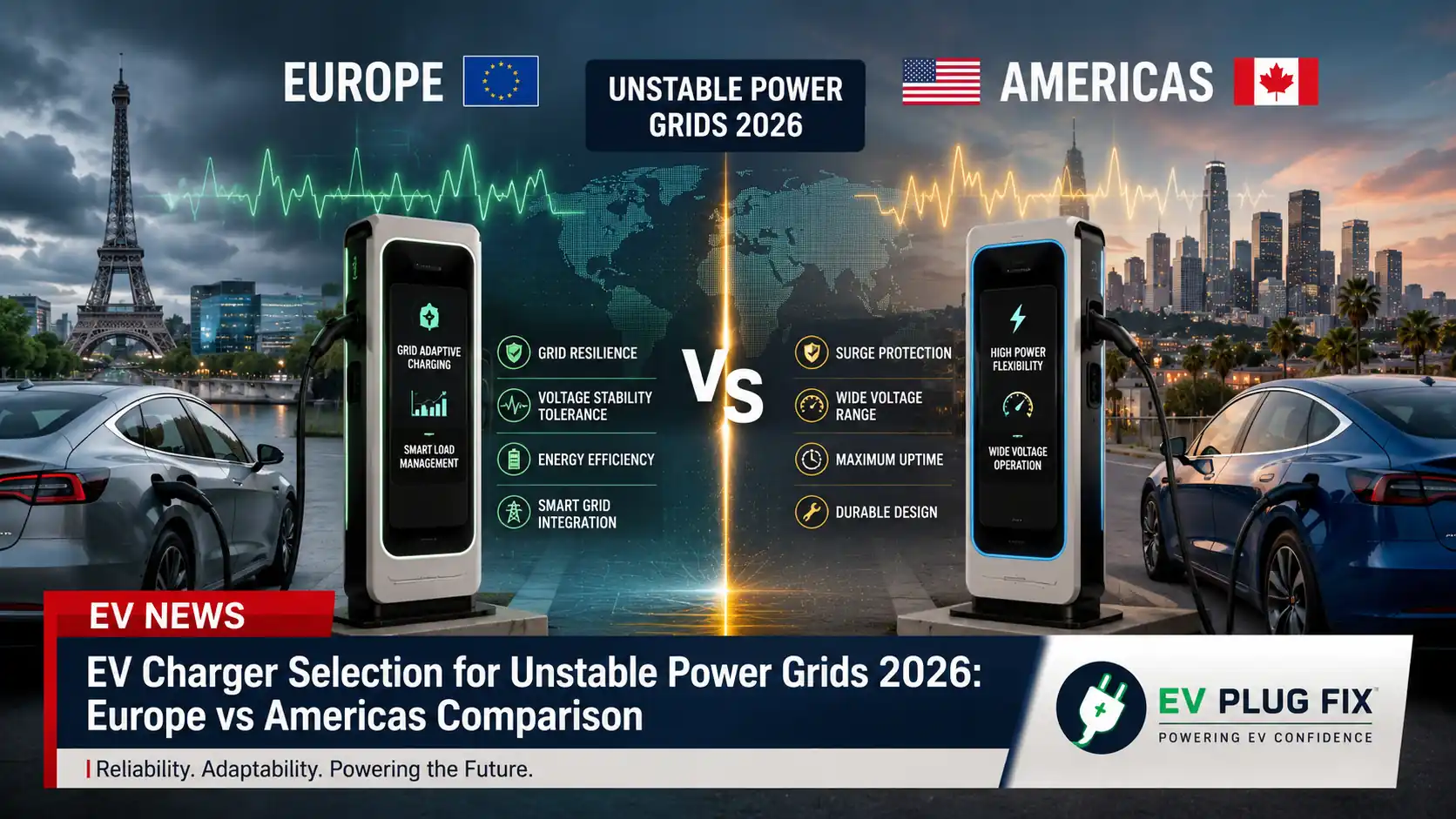
If your electricity supply suffers from voltage sags, outages, surges or limited electrical capacity, you do not necessarily need a special category of EV charger. You do need to choose the EVSE and its installation more carefully.
Start with the conditions at the charging site. If instability is suspected, have the supply checked rather than relying on labels such as “unstable-grid charger” or assuming that equipment designed for one country will work safely in another. Then compare the measured supply with the charger’s documented electrical limits and protection behavior.
| Problem | What to check before buying |
|---|---|
| Low or high voltage | Permitted input range, protective shutdown and restart behavior |
| Lightning or switching surges | Appropriate installation-level surge protection |
| Frequent outages | Documented restart behavior and backup-system compatibility if needed |
| Limited electrical capacity | Adjustable charging current or dynamic load management |
| Questionable wiring or grounding | Electrical inspection and correction before installing the EVSE |
First separate charger features from installation problems
This distinction makes choosing an EV charger for an unstable power grid much easier. Some problems can be handled by the EVSE itself. Others require work elsewhere in the electrical system.
The EVSE can monitor operating conditions, stop charging when a fault occurs, limit available charging current, report faults and, on some models, restart automatically after acceptable power returns. It can also participate in dynamic load management where the supporting equipment is installed.
The electrical installation must deal with issues such as inadequate wiring, poor connections, grounding faults, unsuitable circuit protection, service-capacity limitations and properly coordinated surge protection. Persistent abnormal utility voltage may require investigation by the electricity provider or an electrician rather than a different wallbox.
The specifications that matter most
Check the permitted supply voltage, frequency and phase
Read the technical specification or installation manual before buying. It should state the voltage, frequency, phase arrangement and maximum current the EVSE is designed to accept.
Do not assume that a wide advertised voltage range makes a charger universally compatible. If the supply at the property repeatedly falls outside the manufacturer’s permitted range, find the cause instead of trying to defeat the equipment’s protection.
Find out what happens during voltage faults
A charger used on an unreliable supply should enter a safe state when its input conditions are outside its permitted limits. The more important buying question is what happens next.
Check whether the manufacturer documents undervoltage and overvoltage behavior, whether charging can resume when normal conditions return and whether particular faults require manual intervention. If none of this is explained in the manual, that is a reason to consider another product.
Treat surge protection as an installation issue
Protection against sustained abnormal voltage and protection against short transient surges are not the same thing. Lightning and switching events can require dedicated surge protective devices in the building’s electrical installation.
The appropriate SPD arrangement depends on the supply, local wiring rules, lightning exposure and existing protective system. An electrician should determine what protection the site requires rather than choosing an SPD solely from the charger’s power rating.
Look for adjustable current or dynamic load management
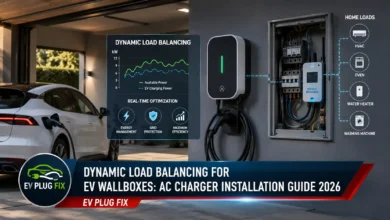
If the building has limited spare electrical capacity, an EVSE with configurable charging current can make installation easier. Dynamic load balancing goes further by reducing EV demand when other large loads are operating.
These features help manage the capacity of the property. They do not correct chronically poor utility voltage, so a charger marketed as solving both problems should be treated cautiously.
Prefer useful diagnostics over unnecessary smart features
Frequent interruptions are easier to troubleshoot when the charger explains why charging stopped. Useful fault indicators, app notifications or event logs can help distinguish a power interruption from overheating, a vehicle-communication error or an installation fault.
Scheduling can also be useful if charging is more reliable or cheaper at particular times, but scheduling is not electrical protection against an unexpected surge or outage.
Verify certification for the market where it will be installed
Choose equipment with recognized safety certification or approval appropriate to the country and electrical system where it will actually operate. In North America, ANSI/UL 2594 is among the relevant standards for AC EV supply equipment. IEC-based markets commonly use requirements derived from the IEC 61851 family together with national installation rules.
Certification is more useful than marketing terms such as “industrial grade,” “voltage-proof” or “designed for unstable power” when those phrases are not backed by clear technical documentation.
Regional compatibility in one check
Regional differences matter because voltage, frequency, phase configuration, connector standards and certification are not identical worldwide. They do not tell you whether a particular neighborhood has good or poor power quality.
| Market consideration | What to verify |
|---|---|
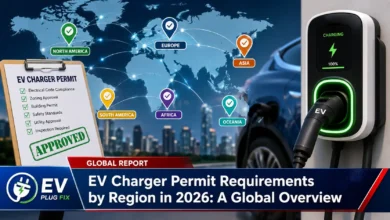
| Europe and other IEC-based markets | Applicable nominal voltage and frequency, single- or three-phase support, connector compatibility and national IEC-based installation requirements |
| United States and Canada | Compatibility with the actual supply, including common 120/240 V residential systems or other supplies such as 208 V where applicable, plus recognized local certification |
| Latin America and the Caribbean | Country-specific voltage, frequency, grounding, connector requirements, certification or approval and local service support |
Do not use a plug adapter as proof that equipment designed for another electrical system is suitable. The EVSE itself must be rated and approved for the supply and installation.
The vehicle still controls battery charging
During normal AC charging, the EVSE provides and controls access to AC power and communicates the available current to the vehicle. The vehicle’s onboard charger converts AC to DC power required by the battery, while the vehicle’s charging controls and battery-management system manage the battery.
For that reason, an abnormal AC supply will commonly cause charging to stop or a fault to be recorded rather than simply feeding uncontrolled electricity into the traction battery. Severe electrical faults can still damage equipment, which is why correct protection and installation matter.
Installation quality can outweigh the charger specification
An expensive EVSE cannot make unsafe wiring safe. EV charging can place a substantial sustained load on the circuit, so conductor sizing, terminals, grounding and protective devices must be appropriate for the configured charging current and local electrical requirements.
If you suspect poor power quality, ask an electrician to measure the voltage at the site and determine whether the problem comes from the utility supply, the building service or voltage drop inside the property. This is particularly important if problems become worse when other large electrical loads operate.
Overheated plugs, discoloration, damaged receptacles, buzzing connections or repeated protective-device trips should be investigated rather than managed indefinitely by turning the charging current down.
Outages, backup power and voltage regulators
A conventional EVSE cannot charge during a blackout unless another energy source supplies the installation. If continued charging during outages is important, the backup system must provide suitable voltage, frequency, grounding and enough continuous power for the chosen charging rate.
A small household UPS is not a practical substitute for a properly engineered EV charging backup system. Battery storage, a generator or another source may be able to support charging, but the EVSE, vehicle, inverter and transfer arrangement all need to be compatible. Where the vehicle and charging equipment support it, EV blackout power can also form part of a broader backup-power strategy.
Automatic voltage regulators are also not a default solution for EV charging. A regulator or transformer placed ahead of a high-power EVSE must be correctly sized for the continuous load and designed to work with the property’s electrical and protection systems.
If the incoming voltage regularly falls outside acceptable limits, document the problem first. An electrician or utility can then determine whether the cause is the supply network, an overloaded service, excessive voltage drop or another fault. A properly engineered regulator may be useful in a specific installation, but a claimed “built-in AVR” is not something every EV charger needs.
Final buying checklist
- Measure the site: If voltage instability is suspected, obtain actual voltage measurements rather than relying on descriptions such as “weak power.”
- Read the EVSE specification: Confirm permitted voltage, frequency, phase and current.
- Check fault behavior: Find documented information about undervoltage, overvoltage, shutdown and restart behavior.
- Verify local certification: Make sure the equipment is approved or certified for the market where it will be installed.
- Plan surge protection: Have the required installation-level surge protection assessed for the site.
- Match charging demand to the service: Choose adjustable current or dynamic load management where electrical capacity is limited.
- Check backup compatibility if required: Confirm that the EVSE can operate correctly with the intended inverter, generator or storage system.
- Have the circuit assessed: Ask a qualified electrician to verify wiring, grounding, protective devices, connections and available capacity before installation.
Bottom Line
The best EV charger for an unstable power grid is one whose electrical specifications and protective behavior are clearly documented and matched to the actual charging site. A wide voltage claim or a long list of smart features is less important than knowing exactly how the EVSE behaves when the supply is abnormal.
Choose the charger for the problems it can genuinely solve: safe fault response, adjustable current, load management and useful diagnostics. Let the electrical installation solve the problems that belong there, including wiring defects, grounding, surge protection, inadequate service capacity and backup-power design.
If you can obtain only three things before buying, make them the EVSE installation manual, reliable information about the site’s electrical supply and an electrician’s assessment of the proposed charging circuit. Those will tell you far more than a broad regional label or an unsupported claim that a charger is designed for unstable grids.
FAQ
Can voltage fluctuations damage an EV charger?
Voltage outside the EVSE’s permitted operating limits can cause shutdowns and, in severe electrical events, can damage equipment. Correctly selected protection and a sound electrical installation reduce that risk.
Will unstable household voltage directly damage the EV battery?
During AC charging, the vehicle’s onboard charger and battery-management systems control the battery-charging process. Supply problems can interrupt charging or damage electrical equipment, but routine AC voltage variations should not simply be assumed to pass directly into the battery.
Will an EV charger restart after a blackout?
It depends on the charger, vehicle and type of interruption. If automatic recovery matters to you, verify the restart behavior in the manufacturer’s current documentation before buying.
Does an EV charger need its own surge protector?
The required surge-protection arrangement depends on the entire electrical installation and local rules. Built-in protection may not replace installation-level SPDs, so the site should be assessed as a complete system.
Can lowering the charging current help when voltage is low?
Reducing current can reduce voltage drop caused by a heavily loaded circuit or undersized installation, but it does not repair persistently abnormal utility voltage. Repeated low-voltage conditions should be measured and investigated.
Should I buy an EV charger with a built-in voltage regulator?
Not automatically. First determine why the voltage is outside the acceptable range. If voltage regulation is genuinely required, the solution should be engineered for the EV charging load and the site’s electrical system rather than chosen from a marketing feature alone.
Source Transparency
This guide uses established EV charging and electrical-installation standards as background rather than treating them as a shopping checklist. Relevant references include the IEC 60364 requirements for installations supplying electric vehicles, the IEC 61851 electromagnetic-compatibility requirements for off-board charging equipment and the IEC 61643 requirements for surge protective devices used on AC low-voltage systems.
For North American equipment, UL Solutions’ EV charging infrastructure guidance identifies ANSI/UL 2594 among the relevant standards for electric vehicle supply equipment.
Individual EVSE voltage limits, fault behavior, restart logic, internal protection and backup-power compatibility vary by product. Check the current manufacturer’s installation manual before purchase, and follow the national and local electrical requirements that apply where the charger will be installed.