
EV Tyre Selection 2026: Essential Guide for Range, Noise & Safety
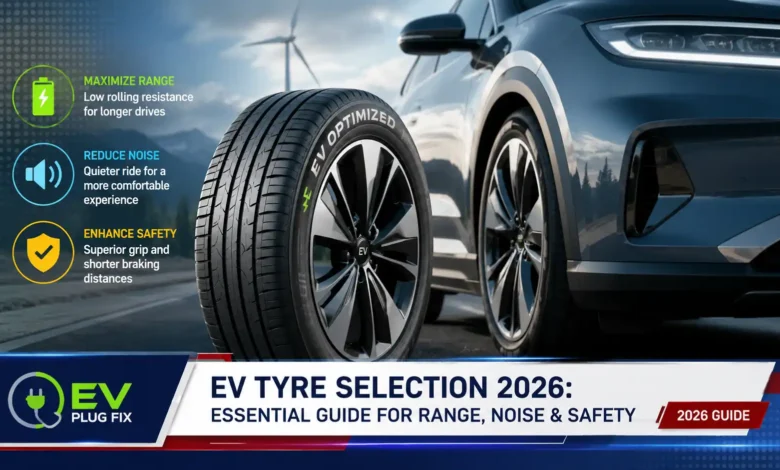
EV tyre selection demands more attention than conventional car tyres because electric vehicles place unique demands on their rubber. Unlike internal combustion engine vehicles, EVs deliver instant torque, weigh significantly more due to battery packs, and operate with minimal engine noise that makes tyre roar more noticeable. Choosing the right tyres for 2026 involves balancing rolling resistance, noise reduction, reinforced sidewalls, and load index ratings to maximize both performance and safety.
The electric vehicle tyre market has evolved rapidly, with manufacturers developing specialized compounds and technologies specifically for EV applications. Whether you drive a Tesla Model Y, Ford Mustang Mach-E, or any other electric vehicle, understanding these four critical factors will help you make an informed decision.
Rolling Resistance: The Range Killer You Can Control
Rolling resistance represents the energy lost when your tyre deforms as it rolls. For EV owners, this directly translates to reduced range. Low rolling resistance tyres require less energy to maintain movement, essentially giving you extra kilometres from every charge. The EU tyre label grades fuel efficiency from A (best) to E (worst), with most EV-focused tyres achieving A or B ratings.
Industry testing shows that switching from a poorly rated tyre to an A-rated low rolling resistance model can improve range by 5-10%. Manufacturers now publish rolling resistance coefficients, with values around 6-8 kg/t considered optimal for electric vehicles. Premium brands invest heavily in rubber compounds and tread designs that reduce friction without compromising grip.
Noise Reduction Technology: Preserving EV Cabin Quiet
EVs run nearly silently, which means tyre noise becomes the dominant sound source inside the cabin at highway speeds. This acoustical challenge prompted tyre manufacturers to develop specialized noise-reduction technologies. The EU tyre label ranks external rolling noise from A (quietest) to C (loudest), with A-rated tyres reducing perceived cabin noise by up to 6 decibels compared to C-rated alternatives.
Leading Noise Reduction Systems in 2026
ContiSilent (Continental)
Uses a polyurethane foam layer bonded to the inner tyre surface to absorb road noise vibrations. Reduces interior noise by up to 9 dB compared to non-treated tyres.
B-Silent (Bridgestone)
Features noise-absorbing foam technology that dampens cavity resonance. Particularly effective at frequencies between 200-250 Hz where EV cabin noise is most noticeable.
PNCS (Pirelli)
Pirelli Noise Cancelling System uses tuned foam inserts designed specifically for each tyre size. Reduces acoustic pressure at the driver’s ear by up to 50%.
“The quietest tyres aren’t just about comfort – they reduce driver fatigue on long journeys and allow you to appreciate the premium EV experience that electric vehicles promise.”
Reinforced Sidewalls: Supporting Your EV’s Weight
Electric vehicles typically weigh 400-600 kg more than their petrol or diesel equivalents of similar dimensions. The battery pack alone adds substantial mass, placing extra stress on tyre sidewalls during cornering, braking, and even straight-line driving. Standard passenger tyres often cannot handle this increased load, which is why reinforced tyres become essential for EV applications.
Look for tyres marked “Extra Load” (XL) or “Reinforced” on the sidewall. These tyres feature strengthened sidewalls and increased air pressure capacity to support heavier vehicles. Standard passenger tyres usually carry load indexes from 82 to 97 (approximately 475 kg to 730 kg per tyre), while reinforced EV tyres typically start at load index 94 and above, supporting 670 kg or more per tyre.
Load Index: Matching Your Vehicle’s Requirements
The load index rating indicates the maximum weight each tyre can support at its recommended pressure. For heavy electric vehicles, selecting the correct load index is non-negotiable. The number on your registration certificate represents the minimum requirement – you can always choose a higher rating for added safety and durability.
| Load Index | Weight Capacity (kg) | Typical EV Application | Recommended For |
|---|---|---|---|
| 94 | 670 | Compact EVs (e.g., Nissan Leaf) | Standard daily driving |
| 96 | 710 | Mid-size EVs (e.g., Tesla Model 3) | Occasional heavy loads |
| 98 | 750 | Large EVs (e.g., Tesla Model Y) | Frequent full occupancy |
| 100+ | 800+ | SUVs & Luxury EVs (e.g., Audi e-tron) | Maximum safety margin |
Making Your EV Tyre Selection for 2026
When choosing EV tyres, consider these practical factors beyond the technical specifications:
- Driving style: Aggressive acceleration and braking accelerate tyre wear. Choose tyres with higher treadwear ratings if you enjoy spirited driving.
- Climate conditions: All-season EV tyres now offer excellent performance, but dedicated winter tyres remain necessary for cold climates.
- Manufacturer recommendations: Many EV manufacturers recommend specific tyre models that have been tested with their vehicles for optimal performance.
- Tyre pressure monitoring: Proper inflation is more critical for EV tyres due to the increased weight. Consider investing in aftermarket TPMS if your vehicle doesn’t include it.
“The right EV tyres transform your driving experience. Beyond safety and range, they determine how your vehicle handles, brakes, and responds to driver inputs. Never compromise on tyre quality for your electric vehicle.”
Future-Proofing Your EV Tyre Investment
As EV technology evolves, tyre manufacturers continue developing innovative solutions. The shift toward sustainable materials, quieter compounds, and extended tread life continues to accelerate. Models launched in 2026 increasingly feature advanced silica compounds that reduce rolling resistance while improving wet grip – eliminating the traditional trade-off between efficiency and safety.
Budget-conscious EV owners might be tempted to opt for cheaper standard tyres rather than EV-specific options. However, most automotive experts agree that the long-term benefits – including better range, reduced noise, and extended tyre life – justify the modest price premium for purpose-built EV rubber.
EV Tyre Maintenance Checklist
- Check tyre pressure monthly – EV weight makes proper inflation critical for range and safety
- Inspect tread depth regularly using a tread depth gauge
- Monitor for uneven wear patterns indicating alignment or pressure issues
- Rotate tyres every 10,000 km to ensure even wear distribution
- Replace tyres before reaching the legal minimum tread depth of 1.6mm
![Portable EV charger plugged into a modern electric vehicle with cable coiled properly for travel storage ]](https://evplugfix.com/wp-content/uploads/2026/07/portable-ev-charger-care-road-trip-2026-390x220.webp)