
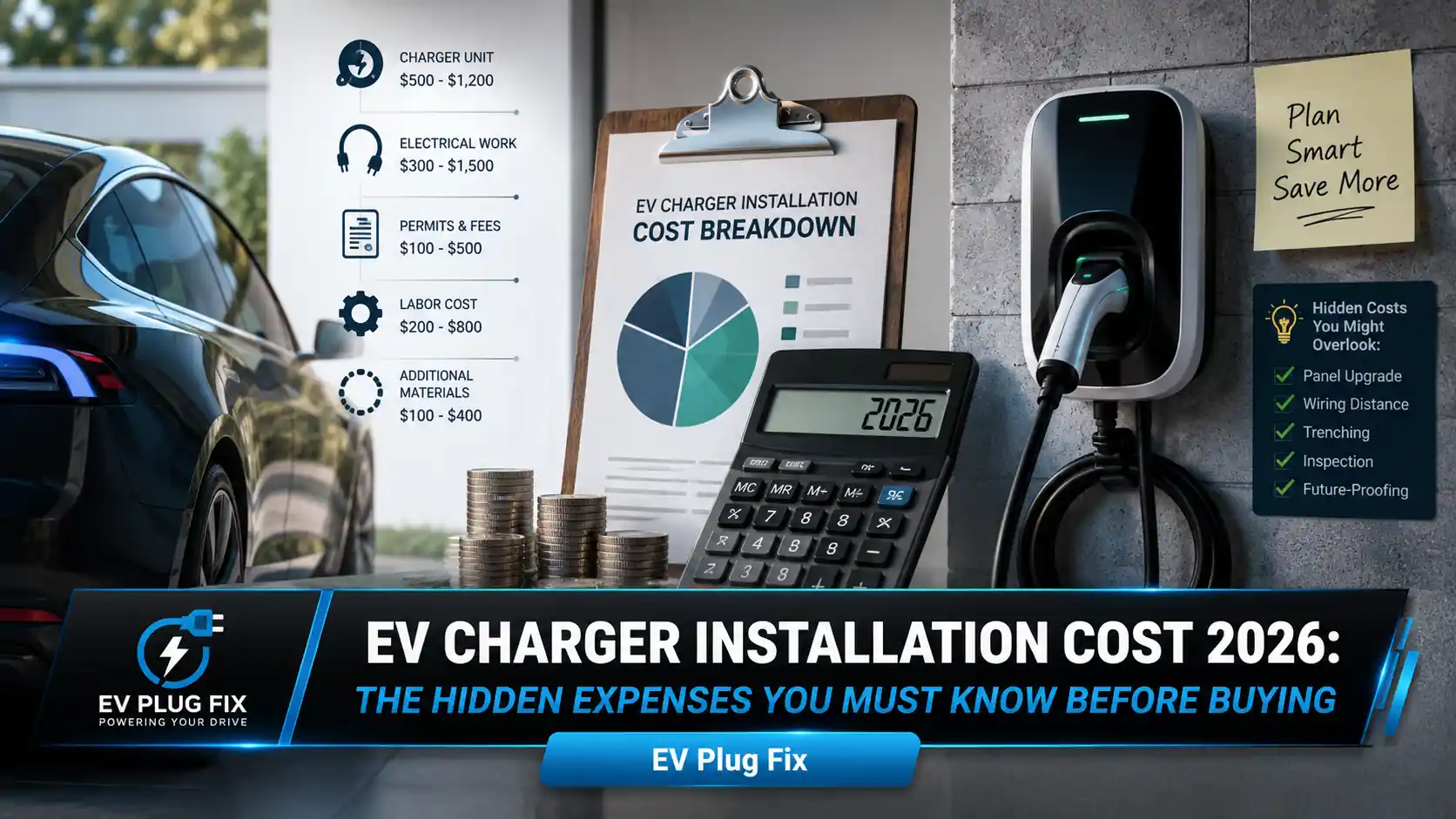
The price of a home EV charger is only part of the project. The larger variable is often the work required to supply enough power to the parking space safely: a new circuit, a long cable run, panel work, permits or excavation can all change the final bill.
Before choosing a charger, it is therefore worth having an electrician assess the available electrical capacity, the proposed charging rate and the route from the panel to the vehicle. Those three details reveal most of the expenses that are easy to miss when comparing charger prices online.
What an EV Charger Installation Quote Should Include
A simple installation may involve little more than the charger, a dedicated circuit and labor. More difficult properties can require additional electrical or construction work.
| Cost item | What can increase the price |
|---|---|
| Charging equipment | Higher power ratings, connectivity, energy monitoring and other features. |
| Dedicated circuit | Wiring, circuit protection and related equipment sized for the intended charging load. |
| Electrical capacity | Panel changes, service upgrades or load-management equipment when spare capacity is limited. |
| Cable route | Long distances, finished walls, masonry, crawl spaces or difficult access. |
| Outdoor or detached parking | Weather-rated equipment, conduit, trenching, pedestal mounting and surface restoration. |
| Permits and inspection | Local application, inspection and administrative fees that may or may not be included in the electrician’s price. |
Charging Power and Electrical Capacity
In North America, the U.S. Department of Energy’s Alternative Fuels Data Center describes Level 1 charging as 120-volt AC and Level 2 charging as 208- or 240-volt AC. Level 1 can be inexpensive when a suitable existing outlet and circuit are available and its slower charging speed is sufficient. The Alternative Fuels Data Center notes that many drivers can meet normal daily charging needs this way.
Level 2 generally requires suitable higher-voltage wiring, but the label does not describe one fixed power level. The charging current you choose affects circuit size and can influence whether the existing electrical system has enough capacity.
An older or heavily loaded home does not automatically need a complete service or panel upgrade. The electrician should assess the proposed EV load alongside existing household demand. Depending on the result, the practical solution may be a lower charging setting, modest panel work, dynamic load balancing or, where genuinely necessary, a larger electrical service.
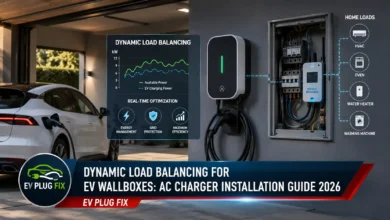
Load-management systems can reduce EV charging when household demand is high and increase it again when capacity becomes available. Where permitted and compatible with the installation, that can be less disruptive than upgrading the entire service. BC Hydro, for example, specifically supports eligible EV power-management equipment through its home charging program.
There is also little reason to pay for electrical work that provides more AC charging power than the vehicle can use or the driver’s routine requires. Check the car’s maximum AC charging rate and how long it normally remains parked before deciding on circuit size.
Cable Runs, Outdoor Parking and Trenching
Distance from the electrical panel to the parking space can change a quote quickly because longer routes require more cable and labor. Costs rise further when wiring must cross finished rooms, masonry or other difficult areas.
Detached garages and outdoor parking can add conduit, excavation, weather-rated fittings, pedestal mounting and restoration of paving or landscaping. If you have flexibility over charger placement, ask the electrician to compare two practical locations. A shorter or easier route can reduce installation work without affecting everyday usability.
Outdoor charging itself is not unusual. The U.S. Department of Energy notes that residential charging equipment can be installed outside when equipment suitable for outdoor use is selected.
Permits and Other Quote Extras
Permit and inspection requirements vary by location, so confirm whether they are included in every quote. Also ask whether any utility approval or other application work is required rather than assuming the headline labor price covers the entire project.
Apartment and condominium installations can add another layer of approval because a landlord, building manager, homeowners association or similar body may need to approve work in shared parking or common electrical areas.
How Much Should You Budget?
For U.S. homeowners, Qmerit’s published 2026 figures put Level 2 home installations at roughly $749 to $2,500, with an average around $1,700. EnergySage, drawing on Qmerit installation data, cites a broader range of about $800 to $3,000 before the charging equipment itself.
These are reference figures, not universal prices. Local labor rates, electrical rules, permits and the condition of the property can move a quote significantly. They should not simply be converted into another currency and treated as a local estimate.
Instead of trying to place every installation into a fixed price band, ask for the major variables to be priced separately. A useful quote should show the charger or installation hardware, circuit and wiring work, panel or service work if needed, load management, permits, and any trenching or building work. That makes competing quotes much easier to compare.
A straightforward job usually has enough existing capacity and a short, accessible cable route. Costs become less predictable once longer wiring, outdoor work or electrical modifications are required, while projects involving service upgrades, major excavation or shared-building infrastructure need property-specific pricing.
Rebates Can Reduce the Net Cost
Rebates and tax incentives can materially change what you ultimately pay, but they should be checked immediately before ordering equipment because eligibility and deadlines change.
In the United States, current IRS guidance says the amended residential Alternative Fuel Vehicle Refueling Property Credit applies to qualifying equipment placed in service through June 30, 2026, so installations after that date should not assume the federal credit is available. State and utility programs may still apply.
Other countries use different eligibility rules. For example, current UK OZEV guidance includes support for certain renters and flat owners, while France’s Advenir individual charging-point support applies to qualifying collective residential buildings rather than detached houses. In Canada, programs vary by province and utility, with BC Hydro providing one current example.
Before You Buy the Charger
- Have an electrician check available electrical capacity and recommend a sensible charging current.
- Confirm the vehicle’s maximum AC charging rate before paying for higher-power infrastructure.
- Choose the charger location with the cable route in mind.
- Ask whether load management could avoid more expensive electrical upgrades.
- Make sure the quote identifies permits, trenching, outdoor mounting and restoration separately where relevant.
FAQ
Is a plug-in charger cheaper than a hardwired charger?
Not necessarily. A plug-in charger still requires a suitable receptacle and circuit if one is not already available. Depending on local electrical requirements and the charging current, hardwiring may be simpler or more appropriate. Compare the cost of the complete home charger installation rather than the connection method alone.
Can I install a home EV charger myself?
Requirements differ by jurisdiction, but adding a higher-power charging circuit involves electrical safety and code requirements. Where required, use a properly qualified or licensed electrician and complete the necessary permits and inspections.
Bottom Line
The biggest surprises in EV charger installation cost usually come from the house rather than the charger: limited electrical capacity, a difficult cable route, permits, outdoor construction or trenching. Get those conditions assessed before committing to charging hardware.
Ask for a quote that separates the major electrical and construction items, and choose a charging rate that matches the vehicle and your actual overnight charging needs. Then check available charging incentives before purchase rather than assuming an incentive mentioned in an older guide still applies.
Source Transparency
This article uses guidance from the U.S. Department of Energy’s Alternative Fuels Data Center for residential charging characteristics, the IRS for the U.S. 30C charging-property credit, UK government guidance for chargepoint grants, France’s Advenir program and BC Hydro for Canadian home-charging support. U.S. installation-cost references are based on figures published by Qmerit and EnergySage. Installation prices are not presented as universal global averages because labor, permitting, electrical standards and property conditions vary by location.