
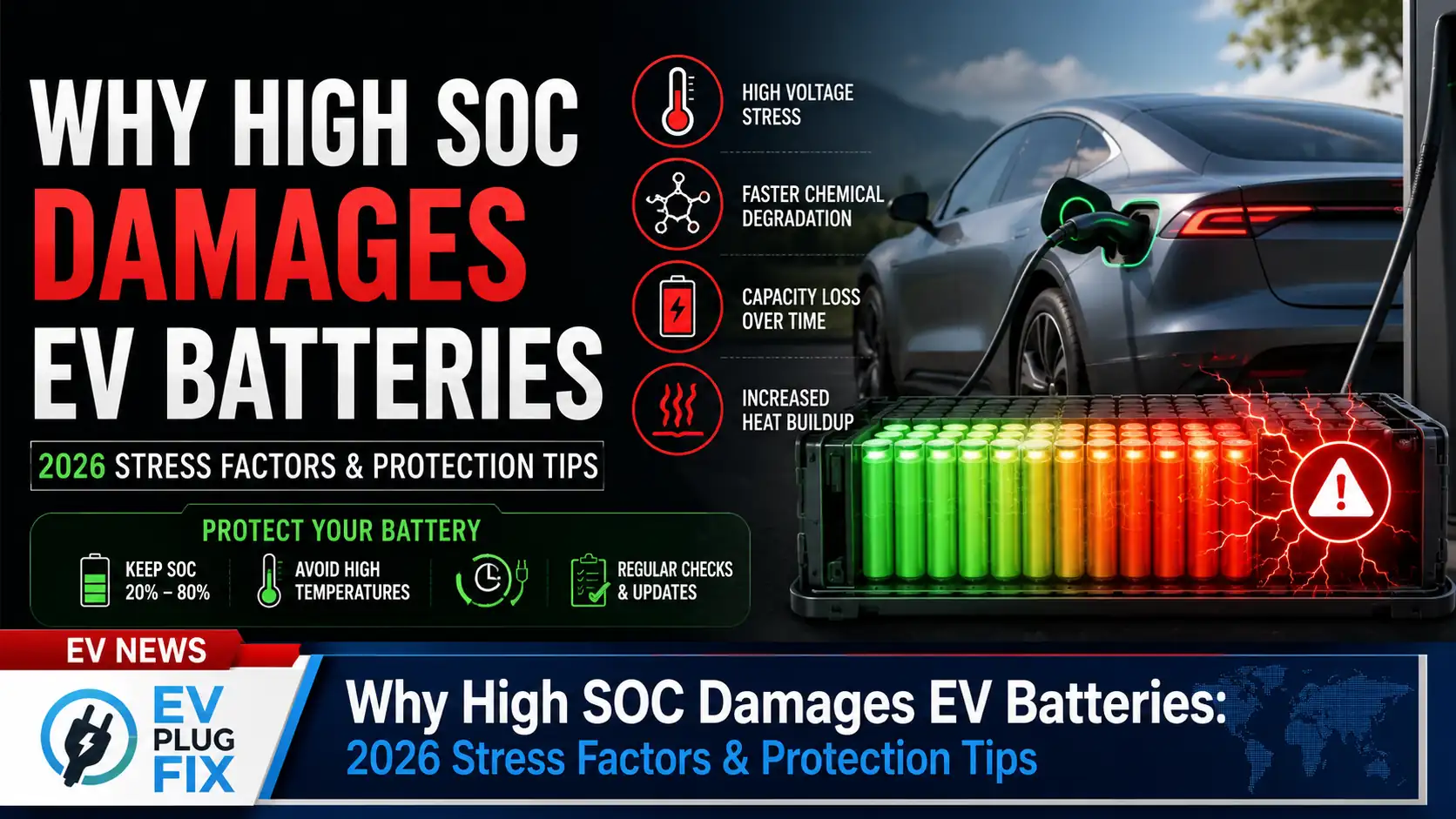
Charging an electric car to 100% is part of normal EV use when the extra range is useful. The battery-health concern is not simply touching the maximum displayed charge level. For many lithium-ion batteries, aging can accelerate when the pack spends frequent or prolonged periods at a high state of charge, especially when it is also hot.
That distinction makes charging habits more important than a single percentage. Charging to 100% shortly before a long journey is different from filling the battery and leaving the vehicle parked at that level for days. The appropriate everyday target also depends on the vehicle, battery chemistry and the manufacturer’s instructions.
Why High State of Charge Can Increase Battery Aging
EV batteries age both while they are being used and simply with the passage of time. The latter is known as calendar aging, and state of charge can influence how quickly it occurs.
When a lithium-ion cell is held near the upper end of its charge range, its electrodes are under conditions that can encourage additional chemical reactions inside the cell. Over time, those reactions can consume usable lithium, increase internal resistance and reduce the amount of energy the battery can store. These aging mechanisms help explain why EV battery life over many years depends on more than mileage alone.
Different battery chemistries and cell designs respond differently, so there is no single charge percentage at which damage suddenly begins. The useful takeaway for an owner is simpler: regularly leaving a battery near full charge can be harder on many lithium-ion packs than keeping them at a more moderate level when the additional range is not needed.
Why Heat Makes High SOC More Significant
Temperature has a major influence on battery aging because higher temperatures generally speed up chemical reactions inside a lithium-ion cell. Combining sustained heat with a high state of charge can therefore create less favorable conditions for long-term battery health.
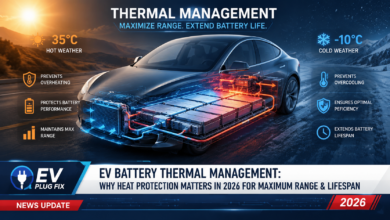
This does not mean a fully charged EV must immediately be moved into a cool garage or that occasional parking at 100% will ruin the battery. It means that unnecessary, repeated exposure matters. If a manufacturer recommends a lower daily charge target, avoiding prolonged parking at maximum charge is particularly sensible during hot conditions. How the vehicle controls pack temperature is covered in more detail in this guide to EV battery thermal management.
Should You Use an 80% Daily Charge Limit?
An 80% limit is common advice, but it should not be treated as a rule for every electric vehicle. Automakers set charging recommendations around the chemistry, usable battery window, thermal-management system and battery-control strategy used in each vehicle.
Chevrolet, for example, recommends an 80% charge target for the Blazer EV, Equinox EV and Silverado EV to help promote battery health and regenerative-braking performance. Its guidance for the 2027 Chevrolet Bolt is different: Chevrolet says that model should regularly be charged to 100% because it uses newer battery technology with different charging recommendations.
Ford recommends a 90% maximum charge level for most of its EVs during routine use, while guidance can differ for LFP-equipped models. Ford says LFP-equipped Mustang Mach-E models can be charged to 100% more frequently, and 100% can also be used when additional range is needed for a longer trip.
Tesla recommendations also depend on the vehicle and battery configuration. Rather than applying the same percentage to every EV, owners should use the charge limit and battery-care instructions provided for their specific vehicle.
How LFP Batteries Change the Charging Advice
Lithium iron phosphate, or LFP, batteries have different characteristics from the nickel-rich battery chemistries used in many other EVs. Some manufacturers permit or recommend more frequent charging to 100% on LFP-equipped vehicles.
One reason is that the relatively flat voltage profile of LFP cells can make estimating state of charge more difficult. Reaching a full charge at intervals can help the battery-management system maintain an accurate estimate of available energy on vehicles whose manufacturers specify that procedure.
LFP chemistry does not make battery aging disappear, however. The correct charging routine is the one specified for the particular vehicle rather than a blanket rule based only on the chemistry label.
How Charging Rate Interacts With High SOC
DC fast charging puts more electrical and thermal demand on a battery than slower charging, but its effect cannot be separated from battery temperature, state of charge and the vehicle’s control systems.
Modern EVs manage these conditions automatically. Charging power usually changes throughout a fast-charging session and commonly falls as the battery approaches a high SOC. The vehicle may also heat or cool the pack before and during charging. This changing power profile reflects the transition between constant current and constant voltage charging.
High charging rates, unfavorable temperatures and high SOC can combine to increase battery stress. Under some conditions, rapid charging can also increase the risk of lithium plating, in which lithium is deposited on the negative electrode instead of being stored normally. High SOC by itself does not mean plating is occurring; temperature, charging current, chemistry and battery-management controls all matter.
For road trips, there is no need to avoid DC charging simply because it is faster. Use it when the journey requires it and let the vehicle manage charging power and battery temperature.
What the Battery Management System Does
The percentage displayed on an EV dashboard does not necessarily represent the absolute physical limits of the battery cells. Manufacturers can reserve some capacity outside the driver-accessible range, and the size of that buffer varies between vehicles.
The battery-management system monitors factors such as cell voltage, temperature and charging current. It can adjust charge power, control heating or cooling, balance cells and stop charging at the designed upper limit.
Those protections help keep the battery within its intended operating range, but they cannot eliminate normal aging. A battery can be operating safely while still aging faster under prolonged high temperature and high SOC than it would under less demanding conditions.
Practical Charging Guide
| Situation | Practical Approach | Reason |
|---|---|---|
| Routine daily driving | Use the manufacturer’s recommended everyday charge target | Provides useful range without unnecessary time at very high SOC |
| Long trip | Charge higher or to 100% when permitted and useful | The additional energy will soon be used rather than left in the battery |
| Charging before departure | Use scheduled charging where available | A high charge can finish closer to the time you plan to drive |
| Extended parking | Follow the manufacturer’s storage instructions | Storage recommendations vary between vehicles |
| Hot conditions | Avoid unnecessary prolonged parking at maximum SOC | Heat can accelerate battery-aging reactions |
| DC fast charging | Use it when needed and allow the vehicle to manage the session | The BMS adjusts charging power and battery temperature according to pack conditions |
Essential Questions & Expert Answers
Does charging an EV to 100% damage the battery?
Reaching 100% occasionally is not the same as damaging the battery. For many lithium-ion packs, the greater longevity concern is repeatedly leaving the vehicle at a very high SOC for extended periods. Follow the charging guidance for your specific EV.
Should I always stop charging at 80%?
No. Recommended daily limits vary between vehicles and battery types. Use the target specified by the manufacturer rather than applying a universal percentage.
Is it better to charge to 100% just before a trip?
If the vehicle permits a full charge and you need the range, completing it closer to departure reduces the time the battery spends sitting at its highest SOC. Scheduled charging or departure settings can make this easier where available.
What charge level should I use for long-term storage?
Check the owner’s manual. Manufacturers can specify different storage charge levels and may also provide instructions about whether the vehicle should remain plugged in.
Is high SOC more harmful than fast charging?
They are different battery stress factors. High SOC is especially relevant when a battery remains highly charged for a long time, while fast charging adds higher electrical and thermal demands. Their effects depend on temperature, chemistry and how the vehicle manages the battery.
Bottom Line
High state of charge is mainly a battery-longevity concern when exposure is frequent or prolonged, particularly when the pack is also hot. Occasional charging to 100% for usable range is normal when the vehicle manufacturer permits it.
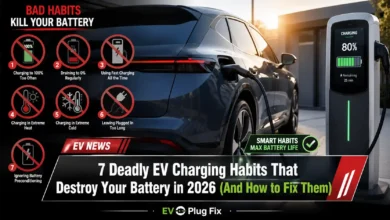
For everyday driving, use the charge target recommended for your specific EV. When you need more range, charge higher without treating the displayed 100% level as something that must always be avoided. The most useful habit is to limit unnecessary time at very high SOC rather than obsess over a universal percentage. A broader look at charging habits that affect battery degradation can help put high-SOC exposure alongside other everyday charging factors.
Source Transparency
This article separates general lithium-ion aging principles from vehicle-specific charging instructions. The battery-aging discussion reflects established research showing that state of charge, temperature, charging conditions and cell chemistry interact, so a single degradation rate or charge threshold cannot responsibly be applied to every EV.
Vehicle-specific examples are based on manufacturer charging guidance from Chevrolet, Ford and Tesla. Chevrolet recommends an 80% target for the Blazer EV, Equinox EV and Silverado EV while providing different guidance for the 2027 Bolt. Ford recommends a 90% maximum charge level for most of its EVs during routine use, allows 100% when additional range is needed and provides different guidance for LFP-equipped Mustang Mach-E models. Tesla charging recommendations vary according to vehicle and battery configuration.
Unsupported claims from the original draft, including universal degradation multipliers, fixed annual degradation rates for DC fast charging, generalized hot-storage degradation figures and universal battery-replacement price ranges, have not been retained because they cannot be applied reliably across different EV batteries and operating conditions.