
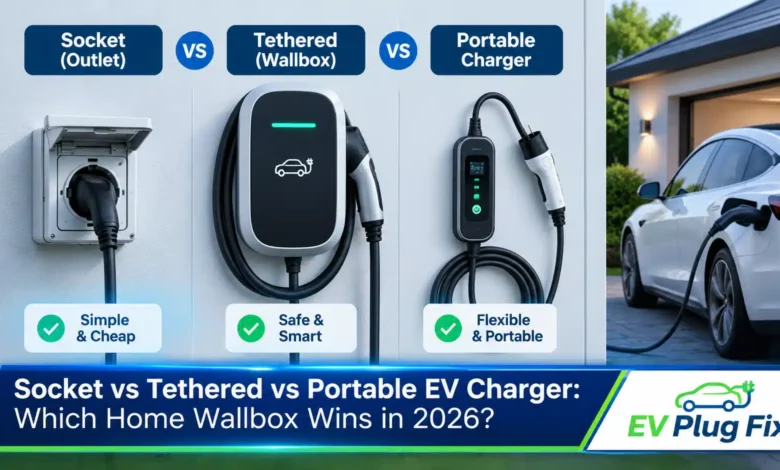
Choosing between a socketed, tethered and portable EV charger is mainly a question of how and where you expect to charge. A tethered wallbox offers the simplest daily routine, a socketed wallbox gives you a removable cable, and a portable EVSE is useful when the charging equipment itself needs to move.
For most homeowners with dedicated parking, the real contest is socketed versus tethered. Portable equipment serves a different purpose and makes the most sense for travel, secondary locations or situations where a permanent installation is impractical.
Socketed vs Tethered vs Portable EV Chargers at a Glance
| Feature | Socketed Wallbox | Tethered Wallbox | Portable EVSE |
|---|---|---|---|
| Charging cable | Detachable | Permanently attached to EVSE | Normally part of the portable charging assembly |
| Daily convenience | Good, but the cable connects at both ends | Excellent: take the connector and plug in | Varies with the supply arrangement |
| Permanent installation | Normally used as a fixed wallbox | Normally used as a fixed wallbox | Not necessarily, although the supply must still be suitable |
| Cable replacement | Usually straightforward because the cable is separate | Attached cable may require servicing or replacement | Depends on product design |
| Connector flexibility | Flexible within the socket and charging system it supports | Vehicle connector is set by the attached cable | Set by the EVSE, supplied connector and any approved adapters |
| Best fit | Drivers who prefer a removable cable | Frequent home charging with maximum convenience | Travel, backup charging or locations without practical fixed EVSE |
What Is a Socketed EV Charger?
A socketed, or untethered, wallbox has a charging socket instead of a permanently attached vehicle cable. You connect a separate charging cable between the wallbox and the EV.
The main advantage is that the cable is independent of the charging unit. If it is damaged, becomes too short for a changed parking arrangement or simply wears out, it can normally be replaced without replacing the wallbox. Removing the cable can also leave a tidier installation when the charger is not being used.
The trade-off is an extra step. Unless you leave the cable connected, you need to retrieve it and plug it into both the wallbox and the vehicle each time you charge.
Does a socketed wallbox work with every EV?
No. A removable cable provides some flexibility, but the station-side socket still follows a particular charging interface. In markets where Type 2 socketed wallboxes are common, for example, the cable must be compatible with that wallbox as well as the vehicle.
The same principle applies when buying equipment for North America or other regions. SAE J1772, SAE J3400 and other charging systems use different connector arrangements. A socketed charger should therefore be chosen around the standards supported by the wallbox, cable and vehicles you actually expect to use.
Adapters can work in specific combinations, but physical fit alone is not enough. Follow the EV and EVSE manufacturers’ compatibility guidance and observe the electrical ratings of the equipment involved.
What Is a Tethered EV Charger?
A tethered wallbox has its vehicle cable permanently attached. For a household that repeatedly charges in the same parking position, this is usually the most convenient arrangement: take the connector from its holder and plug it into the car.
The downside is that the cable becomes part of the installation. Damage may require the attached cable assembly to be serviced or replaced, and the cable remains visible unless the wallbox provides effective storage or cable management.
What Is a Portable EV Charger?
A portable EVSE contains the control and protection functions needed for charging but connects to an electrical supply through a cord and plug rather than being permanently installed at one location. Depending on the market, vehicle and equipment, portable charging may use a standard household supply or a higher-voltage outlet designed for greater loads.
The U.S. Department of Energy’s home charging guidance describes both 120-volt Level 1 charging and 240-volt Level 2 equipment and emphasizes the need for an appropriate electrical circuit and suitable equipment.
Portable EVSE is most useful when mobility itself is valuable: for travel, temporary accommodation, a second property or backup charging. Portability does not make an unsuitable outlet safe. The receptacle, wiring, circuit protection, grounding arrangements and charging equipment all need to be appropriate for the intended load and local electrical requirements.
Which Is Best for Everyday Home Charging?
For regular charging at a home with dedicated parking, a tethered wallbox is usually the simplest choice. The cable is always at the parking space, so charging involves fewer steps and there is no separate lead to store in the vehicle or garage.
A socketed wallbox is more appealing when you value a clean installation or want the charging cable to remain a separately replaceable component. It can also suit households already accustomed to carrying a compatible cable for public AC charging.
Charging speed should be considered separately from cable configuration. The usable AC charging rate comes from the combination of the property’s electrical capacity, circuit, EVSE output and the vehicle’s onboard charger. A socketed and tethered wallbox with equivalent electrical capabilities can deliver the same power to the same vehicle.
How Much Charging Power Do You Actually Need?
Buying the wallbox with the largest advertised kW figure is not automatically useful. If the vehicle’s onboard AC charger accepts less power than the EVSE can provide, the car will remain at its own charging limit. The building supply and charging circuit can impose lower limits as well.
This is particularly relevant to AC wallboxes rated up to 22 kW. Using that level normally requires a suitable three-phase supply and a vehicle capable of accepting the corresponding three-phase AC input. Where either is absent, the available charging rate will be lower.
In the United States, residential charging commonly uses 120-volt Level 1 or 240-volt Level 2 equipment. The Department of Energy’s charging overview explains the distinction between these charging levels.
Special Cases: Renters, Two EVs and Solar
Renters and homes without dedicated parking
A portable EVSE can remain viable when a permanent wallbox is not permitted, but only if there is lawful access to a suitable electrical supply close to the vehicle. Renting alone does not make portable charging practical, and an improvised extension lead is not a substitute for an appropriately designed charging arrangement.
In an apartment or shared parking area, a fixed socketed or tethered wallbox may still be possible if the property owner or building management allows it and electrical capacity, cable routing, metering and responsibility for the equipment can be resolved. Where those conditions cannot be met, portable charging is useful only if an approved and suitable outlet is genuinely available.
Two-EV households
If both cars use the same connector, two tethered chargers can provide the easiest daily routine. A socketed unit can be attractive where compatible detachable cables allow the household to accommodate different vehicles within the same regional charging system.
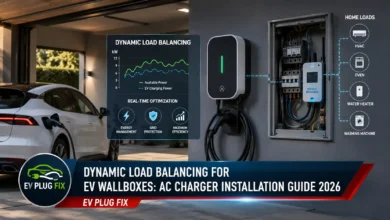
For two EVs, however, power sharing may matter more than the cable arrangement. If the electrical supply cannot support both chargers at their maximum output simultaneously, compatible load-management equipment can allocate available capacity between them. Check that the specific chargers can coordinate with each other or with the required energy-management hardware before buying.
Homes with solar panels
Solar panels rarely determine whether the cable should be socketed or tethered. If you want the EV to charge from surplus photovoltaic generation, concentrate instead on the wallbox’s energy-management capabilities and the additional metering or sensors it requires.
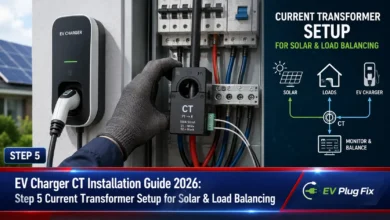
Scheduled charging and solar-surplus charging are not the same feature. A charger designed to follow surplus generation normally needs information about electricity flowing between the solar system, household loads and the grid.
Fixed Wallbox or Portable EVSE?
A portable charger is sometimes marketed as needing “no installation,” but only the EVSE itself is portable. The outlet and circuit supplying it still need to be suitable for EV charging.
A fixed wallbox provides a purpose-designed charging point at the parking space and is generally the more convenient solution for frequent home use. It does not necessarily mean that the entire electrical service must be upgraded. A qualified installer can assess the available capacity, proposed charging current and whether load management can provide the required charging without unnecessary electrical work.
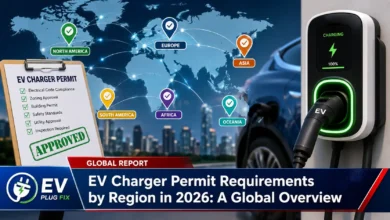
Installation rules differ between countries and jurisdictions, so local electrical requirements should be confirmed before either a new wallbox or a dedicated outlet for portable charging is installed.
How to Choose Between Socketed, Tethered and Portable Charging
- Check your EV and connector. Confirm the vehicle’s AC connection and maximum AC charging capability.
- Check the property. Determine the electrical capacity and parking arrangement before choosing an EVSE rating.
- Choose your preferred routine. Pick tethered for the fewest daily steps or socketed when a removable cable is more useful.
- Choose portable only when mobility matters. Every outlet used must still be suitable for EV charging.
- Compare the features you actually need. Load management, solar charging, scheduling and connectivity vary by product.
- Think about the next likely EV. A socketed charger offers cable flexibility within its supported charging system, not universal compatibility with every connector standard.
Bottom Line
Choose a tethered wallbox for maximum everyday convenience. It is usually the strongest fit when you have dedicated parking, charge frequently and expect to use the same compatible vehicle connector for the foreseeable future.
Choose a socketed wallbox for detachable-cable flexibility. It makes sense when you want the cable to be removable, independently replaceable or stored away when the charger is not in use.
Choose a portable EVSE primarily when mobility or the lack of a practical permanent installation is the deciding requirement. It can be valuable for travel, backup use and secondary charging locations, but it still depends on a suitable electrical supply.
Once you have chosen the physical format, compare charging power, load management, solar integration and other features separately. Those factors can have a larger effect on how well the charger works in your home than whether its cable is permanently attached.
FAQ
Is a tethered EV charger faster than a socketed charger?
No. The attached or detachable cable arrangement does not set the charging rate. With equivalent electrical capacity, EVSE output and vehicle capability, either design can provide the same AC charging power.
Can I change from Type 2 to SAE J3400 just by changing the cable?
Not as a general rule. The wallbox socket, cable, vehicle connection and charging system must all be compatible. A removable cable is not a universal converter between different regional charging standards.
Is a portable EV charger safe for everyday use?
A suitable portable EVSE can be used regularly when its manufacturer permits that use and it is connected to an appropriately installed and rated supply. The outlet and circuit are important because EV charging can place a sustained load on the electrical system.
Is a 22 kW wallbox worth buying for home use?
Only if the property can supply that level of AC power and the vehicle can accept it. A 22 kW AC wallbox normally relies on a suitable three-phase supply, while an EV with a lower onboard charging limit will continue to charge at that lower rate.
Do I need a smart charger if I have solar panels?
Not simply because the home has solar. If you want charging power to respond automatically to surplus photovoltaic generation, choose equipment specifically designed for solar-aware charging and check what meters, sensors or energy-management hardware it needs.
Is a socketed EV charger better for future cars?
It can make future cable replacement easier, but it does not guarantee compatibility with every future EV. The replacement vehicle still needs to work with the wallbox’s electrical and communications interface, either directly or through an approved compatible arrangement.
Source Transparency
This comparison draws on technical and regulatory guidance rather than manufacturer marketing claims. Key references include the U.S. Department of Energy’s Alternative Fuels Data Center guidance on home EV charging, its overview of EV charging equipment, the SAE J3400 specification for the North American Charging System and European alternative-fuels infrastructure rules relevant to Type 2 charging interoperability.
Individual charger features, electrical requirements and vehicle compatibility vary by product and jurisdiction. Before purchasing or installing equipment, confirm the vehicle manufacturer’s specifications, the EVSE documentation and the electrical requirements that apply where the charger will be used.