Tesla Autopilot Review: Features, Safety and Limitations

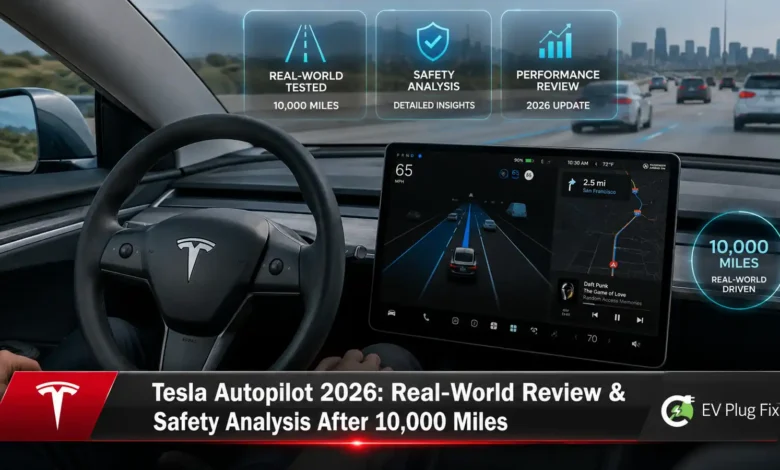
Tesla Autopilot is easy to misunderstand because the name suggests more automation than the system actually provides. In its basic form, Autopilot combines Traffic-Aware Cruise Control with Autosteer, assisting with speed, following distance and steering while the driver remains responsible for the vehicle.
Tesla describes these functions as driver assistance requiring active supervision. Basic Autopilot is a Level 2 advanced driver-assistance system, not autonomous driving, so the driver must continue monitoring the road and be ready to take control.
What Tesla Autopilot Includes
Basic Autopilot centers on two functions:
- Traffic-Aware Cruise Control: maintains a selected speed while adjusting the vehicle’s speed in response to traffic ahead.
- Autosteer: provides steering assistance to help keep the vehicle within its lane when the required operating conditions are met.
When Autosteer is active, Traffic-Aware Cruise Control operates with it. Feature availability and behavior can vary by vehicle, hardware, software version, model year and market, so the manual available for the specific vehicle is the appropriate reference for current operating instructions.
Autopilot should also be distinguished from Full Self-Driving (Supervised). FSD (Supervised), where available, provides a broader set of assisted-driving capabilities, but Tesla still requires the driver to remain attentive and ready to intervene.
Where Autopilot Is Intended to Work
Tesla describes Autosteer as intended for use on controlled-access roads, such as highways and freeways, with a fully attentive driver. The system relies on cameras and other vehicle inputs to identify lane markings, vehicles and relevant road conditions.
On a suitable highway, Traffic-Aware Cruise Control can manage speed and following distance while Autosteer provides lane-centering assistance. Depending on traffic and operating conditions, the vehicle can slow significantly or stop while the assistance remains engaged.
This can reduce repetitive accelerator, brake and steering inputs, particularly during long highway journeys or congested traffic. It does not create an opportunity to use a phone, stop watching traffic or otherwise disengage from driving.
Autopilot Is Not FSD (Supervised)
Confusion between Autopilot and FSD (Supervised) can create unrealistic expectations about what a Tesla equipped only with basic Autopilot is supposed to do.
Basic Autopilot provides Traffic-Aware Cruise Control and Autosteer. FSD (Supervised), where offered and enabled, extends assisted driving to a broader range of roads and driving situations.
Complicated urban navigation, intersection handling and other city-driving tasks associated with FSD (Supervised) should therefore not be presented as capabilities of basic Autopilot.
For buyers, the important question is which package is installed on the specific vehicle and which functions that package currently supports in their market. Neither package should be interpreted as permission for the driver to stop supervising the vehicle.
Conditions That Can Limit Autosteer
Autosteer’s availability and performance depend on the vehicle being able to interpret its surroundings reliably. Tesla warns that restricted camera visibility and difficult environmental or road conditions can affect driver-assistance features.
Obstructed or dirty cameras, poor visibility and unclear lane markings can reduce performance or prevent a feature from being available. Road geometry, construction zones and other unusual conditions can also demand greater driver attention.
A system that behaves predictably on one clear stretch of highway should not be assumed to behave identically after road or weather conditions change. Drivers need to respond to the vehicle’s warnings and remain prepared to steer, brake or accelerate themselves whenever necessary.
Driver Monitoring and Overconfidence
Level 2 assistance creates a particular human-factors challenge: the vehicle can control steering and speed for extended periods while the driver remains responsible for supervising the road.
Tesla uses driver-engagement monitoring, visual and audible warnings, and restrictions intended to discourage misuse. Depending on the vehicle and configuration, monitoring can involve steering-wheel input and cabin-camera-based attention monitoring. Tesla’s documentation also describes consequences when drivers repeatedly ignore attention warnings.
Driver engagement has also been a regulatory concern. The U.S. National Highway Traffic Safety Administration investigated crashes involving Tesla Autopilot and examined whether the system’s controls were sufficient to prevent foreseeable misuse. Tesla’s 2023 Autosteer recall introduced additional controls and alerts intended to encourage drivers to follow the system’s operating restrictions.
The practical lesson is simple: a long stretch during which Autopilot needs no correction does not predict what will happen at the next merge, obstruction, unusual lane layout or sudden traffic event. Supervision has to continue even when the system appears highly capable.
Autopilot vs. Full Self-Driving (Supervised)
| Capability | Basic Autopilot | FSD (Supervised) |
|---|---|---|
| Traffic-aware speed control | Yes | Yes |
| Steering assistance | Autosteer | Broader assisted-driving functionality |
| Typical scope | Primarily controlled-access roads under appropriate conditions | Broader range of supported roads and driving situations where available |
| City-driving functions | Not part of basic Autopilot’s intended capability | Available in supported markets and configurations |
| Active driver supervision | Required | Required |
| Autonomous driving | No | No |
Tesla’s package names, included functions and regional availability have changed over time. Used-car buyers should verify what is actually installed and enabled on a particular vehicle rather than treating “Autopilot” as a generic description of every Tesla driver-assistance feature.
How Autopilot Differs From Other Highway Assist Systems
Tesla is one of several manufacturers offering advanced highway driver assistance. Ford BlueCruise and General Motors Super Cruise, for example, can also automate steering and speed control under defined operating conditions.
The systems should not be compared solely by asking which one does “more.” Their operating models differ. Some competing systems permit hands-free driving on compatible roads while using driver-monitoring technology, whereas Tesla’s Autosteer operating instructions require the driver to remain engaged and ready to take control.
For buyers, more useful comparison points include road coverage, driver-monitoring requirements, hands-on versus hands-free operation, vehicle eligibility, feature availability and how the system responds when operating conditions are no longer satisfied.
What to Check Before Buying a Tesla for Autopilot
Two similar-looking used Teslas may not have identical driver-assistance capabilities. Hardware, software, model year, configuration, purchased options and regional availability can all matter.
Before buying, check the vehicle’s touchscreen for its installed Autopilot or self-driving package and confirm what the included functions currently support in your market. Do not rely solely on a seller’s use of terms such as Autopilot, Enhanced Autopilot or Full Self-Driving.
During a test drive, learn how the available assistance engages and disengages, what its visual and audible warnings mean, and which driving tasks immediately return to the driver when assistance becomes unavailable. Those details are more useful than judging the system by the sophistication of its on-screen visualization or assumptions about AI in electric vehicles.
Bottom Line
Tesla Autopilot is best understood as supervised speed and steering assistance rather than a substitute for the driver. On suitable controlled-access roads, Traffic-Aware Cruise Control and Autosteer can reduce routine driving inputs while the person behind the wheel continues to monitor the road.
If Autopilot matters to a purchase decision, verify the exact package and functions on the individual vehicle, along with current regional availability and operating instructions. Buy the vehicle for the assistance it provides now rather than assumptions about what a future software update might eventually enable.
FAQ
Does Tesla Autopilot drive the car by itself?
No. Basic Autopilot is a driver-assistance system. The driver remains responsible for monitoring the vehicle and surrounding traffic and must be prepared to intervene.
What is included in basic Tesla Autopilot?
Basic Autopilot includes Traffic-Aware Cruise Control and Autosteer on applicable vehicles. Availability and behavior can vary by vehicle, hardware, software and market.
Is Tesla Autopilot Level 2?
Yes. Basic Autopilot is Level 2 driver assistance: the vehicle can provide combined steering and acceleration or braking assistance, but the driver remains responsible for supervising the driving environment.
Can basic Autopilot handle city streets?
Basic Autopilot should not be confused with FSD (Supervised). Its core functions are Traffic-Aware Cruise Control and Autosteer, with Autosteer intended primarily for controlled-access roads such as highways and freeways. FSD (Supervised), where available, provides broader assisted-driving capabilities.
Do you have to keep your hands on the wheel with Autopilot?
Tesla’s Autosteer instructions require drivers to keep their hands on the steering wheel, remain attentive to traffic and road conditions, and be prepared to take immediate control.
Sources and Methodology
This review evaluates Tesla Autopilot from published operating instructions, safety documentation and regulatory material rather than presenting unverified first-hand testing or owner anecdotes as evidence.
- Tesla Model 3 Owner’s Manual — Traffic-Aware Cruise Control
- Tesla Model 3 Owner’s Manual — Autosteer
- Tesla Support — Full Self-Driving (Supervised)
- Tesla Support — Autosteer Driver Misuse Recall Information
- NHTSA — Autopilot Investigation EA22002
Tesla can change software behavior, package contents and feature availability through product and software updates. Functionality also varies by vehicle and market, so owners should follow the operating instructions displayed for their vehicle and current software.