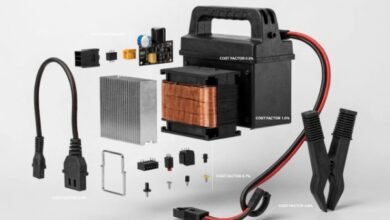


A 4-stage battery charger is not automatically better than a 3-stage charger. While a 3-stage charger uses Bulk, Absorption, and Float to charge and maintain a battery, a 4-stage charger adds one extra phase—such as Equalization, Precharge, Recovery, or Storage—which only helps if your battery chemistry and application actually require it.
The stage count printed on a product box does not define charging quality. Different manufacturers use different definitions for multi-stage charging, and a properly engineered 3-stage charger with accurate voltage and temperature control will routinely outperform a poorly regulated 4-stage model.
Key Takeaways: 3-Stage vs. 4-Stage Battery Chargers
- Core 3-Stage Sequence: Bulk (controlled current), Absorption (controlled voltage), and Float (long-term maintenance).
- No Universal “4th Stage”: Depending on the brand, stage four may be Equalization (for flooded batteries), Precharge, Recovery, Diagnosis, or Storage.
- Chemistry Matters Most: Standard flooded equalization settings can permanently damage sealed AGM, Gel, or LiFePO4 batteries.
- Procurement Rule: Evaluate voltage accuracy, absorption termination logic, thermal protection, and batch consistency—not stage count alone.
For automotive accessory distributors, importers, and private-label brands purchasing hundreds or thousands of units, choosing the wrong charging algorithm can lead to incomplete charging, excessive battery heat, premature battery degradation, customer complaints, and unnecessary warranty costs.

Who Should Compare 3-Stage and 4-Stage Battery Chargers?
While individual vehicle owners often compare 3-stage and 4-stage chargers for maintenance use, this guide is specifically structured for automotive accessory wholesalers, battery charger importers, distributors, private-label brands, procurement managers, and engineers selecting chargers for commercial distribution.
Unlike an individual buyer purchasing a single unit, a B2B buyer must evaluate the complete commercial and technical performance of a product line, including:
- Charging accuracy across different battery conditions.
- Compatibility with flooded, AGM, Gel, and LiFePO4 batteries.
- Thermal stability during extended charging cycles.
- Protection against reverse polarity, short circuits, and overtemperature.
- Product consistency between manufacturing batches.
- Warranty exposure, after-sales support, and return rates.
As General Manager of Parwatt New Energy, I regularly review battery charger specifications and samples for automotive applications. One recurring purchasing mistake is assuming that a 4-stage label automatically indicates a more advanced product.
It does not. The fourth stage might be equalization, precharge, recovery, diagnosis, or storage maintenance—and in some designs, a manufacturer simply splits an existing process into an extra marketing label.
What Are the Three Main Battery Charging Stages?
The most widely recognized charging sequence for conventional lead-acid batteries consists of three primary phases: Bulk, Absorption, and Float. Together, they restore battery capacity while controlling voltage and current. In power electronics terms, the first two phases mirror the principles of constant-current and constant-voltage (CC-CV) charging.
1. Bulk Charging: Delivering Controlled Current
Bulk is the initial high-current charging phase. The charger supplies current according to its rated output and the battery’s ability to accept charge.
During this stage:
- Battery voltage gradually increases.
- The charger supplies its available regulated current when conditions permit.
- Charging continues until the programmed absorption-voltage threshold is reached.
- Actual charging current depends on battery condition, temperature, and charger limitations.
For example, a 10A charger may deliver close to 10A to a suitable partially discharged battery, but it does not force 10A into every connected battery. Likewise, a 20A charger does not guarantee twice the charging speed of a 10A model—battery capacity, initial state of charge, temperature, and charge acceptance all influence total charging time.
2. Absorption Charging: Completing the Charge
Once the battery reaches its programmed absorption voltage, the charger holds a controlled constant voltage while the charging current gradually tapers down. This stage is critical because a battery reaches its absorption-voltage threshold well before it is 100% charged.
A properly designed absorption algorithm accounts for:
- Absorption voltage setpoint.
- Maximum absorption duration (timeout).
- Charging current taper threshold.
- Battery chemistry and capacity.
- Temperature and operating conditions.
Terminating absorption too early leaves the battery chronically undercharged (accelerating sulfation in lead-acid cells), whereas holding absorption too long at an unsuitable voltage causes gassing, heat, and premature wear.
3. Float Charging: Maintaining Battery Charge
After the absorption phase, lead-acid chargers reduce output voltage to a lower maintenance level known as float charging. Its purpose is to offset self-discharge without applying continuous high absorption stress.
Float charging is essential whenever batteries stay connected for extended periods, such as:
- Automotive battery maintenance.
- Emergency backup systems.
- Marine battery installations.
- Workshop battery storage.
- Seasonal vehicles and equipment.
The correct float voltage depends on battery construction, temperature, and manufacturer specifications. A generic 12V value should never override the battery manufacturer’s datasheet.
What Is the Fourth Stage of a 4-Stage Battery Charger?
Unlike the conventional Bulk–Absorption–Float sequence, the fourth stage has no single universal definition across manufacturers. Depending on the architecture, the extra stage performs one of several distinct functions:
| Additional Stage | Purpose | Main Verification Requirement |
|---|---|---|
| Equalization | Controlled high-voltage phase for suitable flooded batteries to balance cells and reduce electrolyte stratification. | Voltage limits, duration, battery compatibility, and activation conditions. |
| Precharge | Applies limited current to low-voltage batteries before normal bulk charging begins. | Entry voltage, current limit, and timeout. |
| Recovery | Attempts to restore charge acceptance in selected deeply discharged batteries. | Recovery method, safety limits, and termination conditions. |
| Diagnosis | Evaluates battery voltage response or internal state before or during charging. | Measurements and pass/fail decision thresholds. |
| Pulse Maintenance | Applies controlled charging pulses under specified maintenance conditions. | Pulse voltage, duration, duty cycle, and proven application suitability. |
| Storage Maintenance | Drops maintenance voltage further during prolonged idle periods to minimize corrosion and gassing. | Storage voltage and periodic refresh recharge logic. |
The critical question is not whether a charger has four stages, but what changes electrically when that fourth stage activates.
Equalization Charging: An Important Fourth-Stage Configuration
Equalization is one of the best-known fourth-stage functions. In suitable flooded lead-acid batteries, a controlled equalization cycle helps balance cell state of charge and reverse electrolyte stratification. For example, IOTA’s IQ4 system runs Bulk, Absorption, Float, and an automatic Equalization cycle after the battery remains in Float for seven days.
However, equalization is not safe for every lead-acid design.
Important: Never apply conventional flooded-battery equalization voltage to sealed AGM or Gel batteries unless explicitly authorized by the battery manufacturer. Overvoltage causes gassing, dry-out, and permanent capacity loss in sealed VRLA batteries.
Precharge and Recovery as Additional Charging Functions
Some 4-stage chargers introduce a low-current phase before Bulk charging when connecting a deeply discharged lead-acid battery. Instead of pushing full rated current immediately, the charger limits current and monitors voltage recovery.
A properly engineered precharge stage should include:
- A clearly defined low-voltage entry threshold.
- A controlled current limit.
- A strict maximum recovery timeout.
- Continuous voltage monitoring.
- Automatic fault shutdown if the battery fails to recover.
Recovery modes should never be marketed as a guarantee to repair damaged batteries. Units with internal shorts or severely degraded plates cannot be safely recovered.
3-Stage vs. 4-Stage Battery Charger: Direct Comparison
| Comparison | 3-Stage Charger | 4-Stage Charger |
|---|---|---|
| Typical sequence | Bulk → Absorption → Float | Three primary phases plus an extra phase (Equalization, Precharge, Storage, etc.) |
| Fourth-stage function | Not applicable | Manufacturer-specific (Equalization, Precharge, Recovery, Diagnosis, or Storage) |
| Charging speed | Depends on current rating and charging algorithm | Not automatically faster |
| Battery compatibility | Depends on programmed voltage/current profiles | Depends on programmed profiles and safe gating of stage 4 |
| Control complexity | Simpler to implement and validate across batches | Requires extra state-transition validation and fault testing |
| Maintenance capability | Supports long-term maintenance through Float | May add Storage voltage reduction or periodic refresh cycles |
| Purchase price | Often lower bill of materials (BOM) | May cost more depending on components and control features |
| Qualification requirements | Verify three primary stages and safety protections | Verify all stages, transition triggers, timeouts, and safeguards |
| Main purchasing risk | Poor regulation or premature absorption termination | Paying extra for an unused or unsafe fourth-stage feature |
From a procurement standpoint, reviewing car battery charger wholesale pricing factors helps buyers see whether a higher unit cost pays for genuine component quality and precision regulation or merely an extra marketing stage.
How Different Manufacturers Define Multi-Stage Charging
Comparing published documentation from established brands shows why stage counts cannot be treated as standardized engineering metrics:
| Manufacturer | Documented Charging Approach | Important Difference |
|---|---|---|
| IOTA IQ4 | Bulk, Absorption, Float, Equalization | Adds a periodic equalization cycle after extended Float under documented operating conditions. |
| Victron Energy Quattro | Bulk, Absorption (with Battery Safe), Float, Storage | Uses an adaptive 4-stage curve where Battery Safe ramps voltage as part of calculated absorption, and Storage lowers float voltage after 24 hours of inactivity. |
| Mastervolt 3-Step+ | Bulk, Absorption, Float | Uses three core charging phases with manufacturer-specific adaptive control and timing features. |
Reference documentation:
- IOTA IQ4 Four-Stage Charging Guide.
- Victron Quattro Charging Manual.
- Mastervolt 3-Step+ Charging Technology.
How Battery Chemistry Changes the Charging Algorithm
Treating all 12V batteries as electrically identical is one of the costliest mistakes in charger procurement. Each chemistry has distinct voltage limits, current acceptance, and thermal rules.
Flooded Lead-Acid Batteries
Flooded batteries use liquid electrolyte and tolerate higher controlled voltages under proper ventilation. Their profile must manage bulk/absorption limits, float voltage, electrolyte temperature, gassing, and manufacturer-approved equalization.
AGM Batteries
Absorbent Glass Mat (AGM) batteries are sealed VRLA designs where electrolyte is suspended in glass-fiber separators. They require strict voltage regulation because overcharging vents gas and permanently dries out the cell. Always verify a dedicated, documented AGM profile.
Gel Batteries
Gel batteries use immobilized silica-gel electrolyte and are even more sensitive to excess voltage than AGM. Overvoltage creates permanent gas pockets inside the gel, reducing capacity. Flooded profiles must never be applied to Gel batteries.
LiFePO4 Batteries
Lithium iron phosphate (LiFePO4) packs—commonly 12.8V nominal using four cells in series—require a dedicated lithium charging profile. Unlike lead-acid batteries, LiFePO4 cells do not suffer from sulfation and must never receive lead-acid equalization or desulfation pulses.
In practice, many standalone LiFePO4 chargers operate primarily as a 2-stage CC-CV process (Bulk current followed by Constant Voltage absorption and cut-off), rather than requiring continuous float charging—though some integrated systems retain a lower float setpoint for load-sharing or cell balancing. For example, Victron specifies 14.2V absorption and 13.5V float for its 12.8V Lithium Smart range, though exact limits always depend on the battery’s Battery Management System (BMS) and temperature restrictions.
For additional background on lithium chemistry fundamentals, see Why EVs Use Lithium-Ion Batteries.
| Battery Type | Nominal System | Main Charging Concern | Procurement Priority |
|---|---|---|---|
| Flooded Lead-Acid | 12V class | Gassing, electrolyte stratification, and maintenance | Accurate absorption, float, and optional approved equalization |
| AGM | 12V class | Overvoltage and irreversible electrolyte dry-out | Dedicated AGM voltage profile without automatic equalization |
| Gel | 12V class | High sensitivity to overvoltage and gas pockets | Strict Gel absorption and float limits |
| LiFePO4 | 12.8V nominal (4S) | BMS cut-off compatibility and low-temperature limits | Dedicated lithium CC-CV algorithm with no desulfation/equalization |
Charging Voltage Accuracy: More Important Than Stage Count
A 4-stage charger with poor voltage regulation will damage batteries faster than an accurate 3-stage unit. During qualification, buyers should measure and verify:
- Voltage regulation accuracy across stages.
- Output ripple specifications.
- Current regulation accuracy.
- Stability across varying AC input voltages.
- Thermal drift at elevated ambient temperatures.
- Actual voltage delivered at the battery terminals.
Why Cable Voltage Drop Matters
Voltage measured inside the charger housing is higher than the voltage reaching the battery due to resistance in output cables and clamps. For example, delivering 10A through a total cable resistance of 0.05Ω causes a significant drop:
Voltage Drop = Current × Resistance = 10A × 0.05Ω = 0.5V
In a 12V system, a 0.5V error can prevent full absorption or delay stage transitions. Always verify voltage directly at the battery terminals during testing.
Temperature Compensation and Thermal Protection
Lead-acid charging voltage requirements shift with temperature—rising in cold conditions and dropping in heat. VRLA battery datasheets commonly specify a negative temperature compensation coefficient (typically around -3mV to -5mV per cell per °C; for instance, roughly -4mV per cell per °C in documented AGM and Gel specifications, or about -24mV/°C for a 6-cell 12V battery relative to 25°C).
When evaluating temperature compensation, confirm with the supplier:
- Whether sensing is internal (ambient) or via an external battery terminal/case sensor.
- Supported compensation temperature range and programmed coefficient.
- Whether compensation applies to both absorption and float stages.
- Fail-safe behavior if the sensor disconnects or fails.
- That lead-acid thermal compensation is disabled in LiFePO4 modes, where low-temperature charge cut-off is required instead.
Protection Functions Every Battery Charger Should Have
Safety and fault-handling circuitry directly impact field reliability and product liability. Evaluate and verify:
- Reverse-polarity protection (spark-free electronic protection preferred).
- Output short-circuit protection.
- Overvoltage and overtemperature protection.
- Abnormal battery voltage and open-circuit detection.
- Maximum charging timeout protection per stage.
- Input AC surge/undervoltage protection.
- Mode-selection safeguards to prevent accidental chemistry mismatches.
Never rely on a supplier’s marketing checklist—request lab fault-test logs showing both shutdown behavior and safe recovery once the fault clears.
How B2B Buyers Should Test 3-Stage and 4-Stage Chargers
Before approving a production sample, run a repeatable five-part bench evaluation rather than a quick power-on check:
Test 1: Partially Charged Battery
Connect a known partially discharged battery and log initial terminal voltage, bulk current, time to reach absorption, current taper behavior, and charger/battery temperatures against the supplier’s published curve.
Test 2: Deeply Discharged Battery
Within safe operating limits, verify low-voltage detection, precharge/recovery entry thresholds, current limiting, and timeout cut-off. Confirm the charger rejects severely shorted or unrecoverable batteries rather than overheating.
Test 3: Nearly Full Battery
Confirm whether absorption terminates cleanly via current taper, timer, or adaptive logic—and transitions smoothly into Float (or cut-off for LiFePO4).
Test 4: Thermal Performance
Run the charger at full rated output until thermal equilibrium is reached. Measure ambient, enclosure, internal component (where accessible), and battery temperatures, checking for excessive derating or thermal shutdown.
Test 5: Protection and Fault Recovery
Induce controlled reverse polarity, short circuit, and overtemperature conditions to verify safe shutdown and proper automatic or manual reset behavior.
B2B Battery Charger Qualification Checklist
Request the following technical documentation before approving a charger for private labeling, import, or wholesale distribution:
| Specification | Information to Request |
|---|---|
| Battery compatibility | Supported flooded, AGM, Gel, and lithium battery types. |
| Charging stages | Complete definitions and sequence of every operating phase. |
| Output current | Rated current, maximum continuous current, and current regulation method. |
| Charging voltage | Voltage limits and tolerances for every battery mode and stage. |
| Absorption control | Termination conditions, maximum timers, and current taper thresholds. |
| Additional stage | Exact electrical purpose, entry conditions, voltage/current limits, and timeout. |
| Temperature compensation | Sensor location, supported range, coefficient, and LiFePO4 handling. |
| Protection | Reverse polarity, short circuit, overvoltage, and thermal fault-test reports. |
| Charging curve | Measured voltage and current graphs across a full charging cycle. |
| Thermal testing | Thermal stabilization data under representative ambient conditions. |
| Quality consistency | Production line calibration procedures and batch QC inspection records. |
| Compliance | Applicable safety reports, car battery charger certifications by target market, and EMC documentation. |
If a supplier cannot define its charging algorithm in measurable electrical terms, the stage count is meaningless.
Choosing the Right Charger for Different Applications
| Application | Important Charger Characteristics | Reason |
|---|---|---|
| Automotive battery maintenance | Accurate Float control and chemistry profiles | Units often remain connected for weeks or months. |
| Emergency automotive charging | Suitable current rating and safe low-voltage detection | Users frequently connect deeply discharged batteries. |
| Motorcycles and powersports | Selectable low-current charging modes | Small-capacity batteries overheat if charged at high amperage. |
| Marine batteries | Chemistry-specific profiles and continuous-duty reliability | Operating conditions and battery banks vary widely. |
| Fleet maintenance | Rugged enclosure, repeatability, and thermal stability | Chargers run daily across mixed vehicle batteries. |
| Professional workshops | Higher continuous current and reliable diagnostics | Technicians need predictable, repeatable behavior. |
| LiFePO4 systems | Dedicated lithium CC-CV profile and BMS compatibility | Lead-acid charging logic is incompatible with lithium cells. |
When Is a 3-Stage Battery Charger the Better Choice?
A 3-stage charger is often the smarter commercial choice for mainstream automotive maintenance and standard lead-acid applications. If a unit delivers tight voltage regulation, reliable absorption termination, and stable Float voltage, paying extra for an unnecessary fourth stage adds BOM cost and validation risk without improving real-world performance.
When Does a 4-Stage Battery Charger Make Sense?
A 4-stage charger adds genuine value when the fourth stage solves a real operational need—such as scheduled equalization for flooded fleet/marine batteries, controlled precharge for deeply discharged lead-acid units, or a Storage phase that lowers float voltage during seasonal storage.
Common B2B Buying Mistakes
- Choosing by stage count alone: Assuming “4-stage” guarantees higher accuracy or safety than “3-stage.”
- Comparing inconsistent labels: Treating two suppliers’ “4-stage” labels as identical without checking their curves.
- Ignoring battery chemistry: Approving a flooded lead-acid charger for AGM, Gel, or LiFePO4 distribution.
- Testing only full batteries: Failing to test Bulk current stability, absorption taper, and low-voltage precharge behavior.
- Overlooking thermal derating: Skipping high-ambient thermal stability testing.
- Accepting vague marketing claims: Relying on terms like Smart Repair or Intelligent Desulfation instead of measured voltage/current logs.
How Charging Algorithm Quality Affects Warranty and After-Sales Costs
For importers and distributors, the lowest factory unit price rarely delivers the lowest total cost. Poorly regulated chargers drive costly product returns, support overhead, and premature battery complaints.
| Technical Improvement | Commercial Benefit |
|---|---|
| Accurate voltage regulation | Predictable charging performance across battery brands. |
| Correct absorption termination | Lower risk of chronic undercharging or overcharging returns. |
| Controlled maintenance / storage voltage | Safe long-term connection without battery dry-out. |
| Defined recovery timeout | Prevents unsafe heating on failed batteries. |
| Thermal protection and calibration QC | Lower field failure rates across manufacturing batches. |
Evaluating battery charger warranty claims and supplier root causes demonstrates why investing in verifiable algorithm quality protects long-term distributor margins far more effectively than chasing the lowest factory quote.
Frequently Asked Questions About 3-Stage and 4-Stage Battery Chargers
Is a 4-stage battery charger better than a 3-stage charger?
Not necessarily. A 4-stage charger adds an extra phase such as equalization, precharge, or storage, which is only beneficial if your application needs it. A well-engineered 3-stage charger with accurate voltage regulation can outperform a poorly configured 4-stage model.
What are the four stages of battery charging?
There is no single universal definition. Common sequences include Bulk, Absorption, Float, and Equalization; Bulk, Absorption, Float, and Storage; or Precharge, Bulk, Absorption, and Float.
What is the fourth stage of a 4-stage battery charger?
Depending on the manufacturer, the fourth stage may be Equalization, Precharge, Recovery, Diagnosis, Pulse Maintenance, or Storage Maintenance. Always check the charging curve and technical manual to verify what changes electrically.
Does a 4-stage charger charge faster than a 3-stage charger?
No, not automatically. Charging speed depends on output current rating, battery capacity, initial state of charge, temperature, and battery charge acceptance—not the number of stages.
Can a 4-stage charger damage an AGM or Gel battery?
Yes, if it applies high-voltage equalization designed for flooded batteries or exceeds the sealed battery’s absorption voltage limits. Always use a verified AGM or Gel charging profile.
Can I use a 3-stage battery charger for LiFePO4 batteries?
Only if the charger includes a dedicated LiFePO4 profile compatible with the battery’s voltage limits and BMS requirements. Standard lead-acid charging algorithms should not be used for lithium batteries.
What is the difference between Equalization and Desulfation?
Equalization is a controlled overcharge used on suitable flooded lead-acid batteries to balance cells and reduce electrolyte stratification. Desulfation refers to techniques aimed at breaking down sulfate crystals on plates. They are distinct processes and are not safe for every battery type.
Can I leave a 4-stage battery charger connected all the time?
Only if the charger is specifically rated for continuous maintenance, matches the connected battery chemistry, and follows the battery manufacturer’s float or storage guidelines.
How do I know whether a battery charger is really 4-stage?
Request the complete voltage/current charging curve, stage-transition criteria, timers, and protection limits from the supplier, and verify them on a test bench rather than relying on box labeling.
Final Verdict: Choosing the Right 3-Stage or 4-Stage Battery Charger
A 4-stage battery charger is not inherently faster, safer, or superior to a 3-stage charger. For distributors, importers, and private-label brands, the qualification process should follow a disciplined sequence:
- Identify the target battery chemistry and customer use case.
- Request the complete charging algorithm, voltage/current limits, and transition rules.
- Verify temperature compensation and protection behavior.
- Bench-test partially charged, deeply discharged, and nearly full batteries.
- Log actual terminal voltage, current, temperatures, and stage transitions.
- Verify compliance certifications, batch QC procedures, and warranty exposure.
Stage count should be one of the last specifications you evaluate, not the first. The best charger for a commercial product line is the one whose charging behavior is measurable, repeatable, and accurately matched to your customers’ batteries.
Technical References and Manufacturer Documentation
- IOTA IQ4 – Four-Stage Battery Charging Guide.
- Victron Energy – Adaptive Three-Stage Charging.
- Victron Energy – Quattro Adaptive 4-Stage Charging Manual.
- Mastervolt – 3-Step+ Charging Technology.
- U.S. Battery – Battery Charging Instructions.
- ATB Power – AGM and Gel Battery Operating Manual.
- Victron Energy – Lithium Smart Battery Charging Recommendations.