EV Charging kWh Explained: How Much Energy Your Electric Car Really Needs in 2026
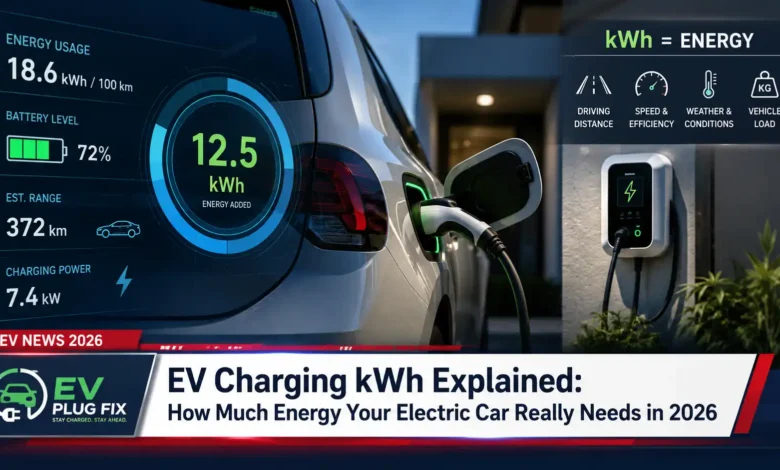
How many kWh to charge an EV is the single most important metric for any electric vehicle owner looking to manage energy costs, plan road trips, and maximize battery longevity in 2026. While the raw number varies significantly based on your vehicle’s efficiency, driving habits, and even outdoor temperature, understanding the kilowatt-hour equation puts you in full control of your EV ownership experience. Let’s cut through the confusion and examine exactly what determines your car’s energy appetite, from the chemistry inside your battery pack to the type of charger you plug into each night.
EV Battery Capacity and Real-World kWh Consumption
Every electric vehicle on the road today stores energy in a lithium-ion battery pack measured in kilowatt-hours. This figure represents the total energy capacity available for propulsion. Today’s EV battery packs range from approximately 40 kWh in smaller city cars to over 200 kWh in heavy-duty electric trucks. But raw capacity only tells half the story—efficiency determines how far that energy actually takes you.
Most modern EVs consume between 0.25 and 0.33 kWh per mile driven, translating to roughly 3 to 4 miles of range for every kilowatt-hour stored. A 75 kWh battery pack, for instance, delivers about 225 to 300 miles under ideal conditions. However, real-world factors consistently push these numbers higher or lower. Aggressive acceleration, highway speeds exceeding 65 mph, hilly terrain, and extreme cold can increase your kWh per mile by 15 to 30 percent. Winter driving often demands 20 percent more energy simply to heat the cabin and maintain optimal battery temperature. For specific winter performance data, check out our Kia EV6 winter range test results.
For drivers calculating daily needs, a typical 40-mile commute requires approximately 10 to 13 kWh of energy. That’s less than the capacity of most entry-level EV batteries, meaning many owners complete their daily routines using just a fraction of their total battery reserves. Understanding this baseline helps determine whether a Level 1 charger at home can meet your needs or if upgrading to Level 2 makes practical sense. Our comprehensive Home EV Charger Guide can help you make the right decision for your driving patterns.
Charging Levels Compared: How Much kWh Can You Realistically Add?
The speed at which you can replenish those kilowatt-hours depends entirely on your charging equipment. Three distinct charging levels exist, each delivering vastly different power outputs and requiring different time commitments.
Level 1 Charging (120V)
Delivers approximately 1.4 to 1.9 kW of power through a standard household outlet. This adds about 3 to 5 miles of range per hour, or roughly 1.0 to 1.5 kWh per hour. A full 60 kWh battery could take 40 to 50 hours to charge from empty. Best suited for plug-in hybrids or drivers covering fewer than 30 miles daily.
Level 2 Charging (240V)
Provides 7 to 20 kW of power, adding 18 to 28 miles of range per hour. This translates to approximately 6 to 10 kWh per hour of charging. Most EV owners install Level 2 chargers at home, enabling a full charge in 4 to 10 hours. This level represents the sweet spot for convenience and cost-effectiveness. For professional installation guidance, explore our Level 2 EV Charger Installation resources.
Level 3 DC Fast Charging
Delivers 50 kW to over 350 kW of direct current power. These stations can add 100 to 200 miles of range in just 20 to 30 minutes, pumping 50 to 200 kWh into compatible batteries. While indispensable for road trips, frequent DC fast charging can accelerate battery degradation due to increased heat generation.
⚡ Expert Insight: For 2026, the most cost-effective strategy involves using Level 2 charging for 90 percent of your daily needs and reserving DC fast charging exclusively for long-distance travel. This approach minimizes battery stress while keeping your electricity costs predictable and low.
How Much Does It Cost to Charge Based on kWh Consumption?
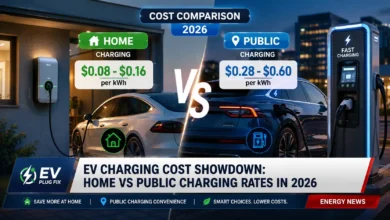
Calculating your EV charging cost follows a simple formula: total kWh used multiplied by your local electricity rate. With average U.S. residential electricity prices hovering between $0.14 and $0.22 per kWh in 2026, a full 75 kWh charge costs roughly $10.50 to $16.50. That same energy would propel most EVs 250 to 300 miles, making the per-mile cost significantly lower than gasoline-powered vehicles.
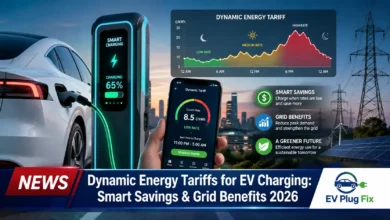
Regional variations create substantial savings opportunities. Utility companies in states like California, New York, and Massachusetts offer time-of-use plans where off-peak rates drop to $0.08 to $0.12 per kWh. Scheduling your Level 2 charger to operate during these windows can cut your monthly charging bill by 30 to 40 percent. Implementing EV Load Shifting Strategies can further optimize your savings by automatically adjusting charge times based on utility pricing signals. Some EV owners pair their chargers with home solar installations, effectively eliminating their per-mile energy costs altogether.
Public charging networks present a different cost structure. DC fast chargers typically charge between $0.30 and $0.50 per kWh, nearly triple residential rates. A 50 kWh fast-charging session could cost $15 to $25, still competitive with gasoline for comparable range but significantly more expensive than home charging. Subscription plans from networks like Tesla Supercharger, Electrify America, and EVgo offer discounted rates for frequent users, reducing per-kWh costs by 10 to 20 percent.
| Charging Location | Average Cost Per kWh | Cost for 30 kWh (≈100 miles) | Best Use Case |
|---|---|---|---|
| Home (Standard Rate) | $0.14 – $0.22 | $4.20 – $6.60 | Daily commuting, overnight charging |
| Home (Off-Peak Rate) | $0.08 – $0.12 | $2.40 – $3.60 | Scheduled overnight charging |
| Level 2 Public Charger | $0.20 – $0.35 | $6.00 – $10.50 | Workplace charging, shopping centers |
| DC Fast Charging | $0.30 – $0.50 | $9.00 – $15.00 | Road trips, emergency top-ups |
Practical Charging Strategies for Maximum Efficiency
Optimizing your EV charging routine involves more than simply plugging in when the battery runs low. Strategic habits can extend battery life, reduce costs, and ensure you never find yourself stranded with an empty pack.
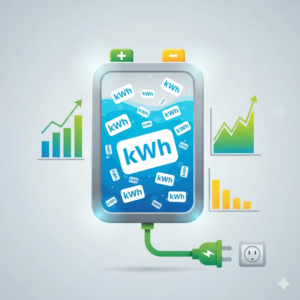
Visual breakdown of how many kWh each charging level delivers and how it translates to driving range
Maintain the 20-80 Percent Rule
Lithium-ion batteries experience the least stress when kept between 20 and 80 percent state of charge. Charging to 100 percent regularly or allowing the battery to drop below 10 percent accelerates chemical degradation. Most EV manufacturers recommend limiting daily charging to 80 percent and reserving full charges for trips requiring maximum range. This simple practice can extend your battery’s useful life by several years.
Precondition Your Battery Before Fast Charging
Many modern EVs include preconditioning features that warm the battery to optimal temperature before arriving at a DC fast charger. This reduces charging time and protects battery health. Using your vehicle’s navigation system to route to a charger automatically triggers preconditioning, ensuring your battery accepts the maximum possible kWh during each session.
Schedule Charging During Off-Peak Hours
Most Level 2 home chargers support scheduling features that automatically begin charging at your preferred time. Setting your charge window to start after 11 PM and end before 6 AM captures the lowest electricity rates while ensuring your vehicle is ready for morning departure. Smart chargers can also integrate with home energy management systems to optimize charging based on real-time grid demand and renewable energy availability. For advanced solar integration, explore our guide on PV Surplus Charging to maximize renewable energy usage.
“The cost difference between charging at peak versus off-peak hours can exceed $500 annually for average drivers. That’s real money that stays in your pocket just by adjusting your charging schedule.”
— EV Energy Analyst, 2026 Industry Report
Charging Infrastructure Expansion in 2026 and Beyond
The EV charging landscape has transformed dramatically over the past five years. Government investments and private sector initiatives have accelerated deployment of Level 2 and DC fast chargers across highways, urban centers, and rural communities. The U.S. Department of Energy reports that publicly accessible charging ports now exceed 180,000 nationwide, with thousands more coming online each month. Tesla’s Supercharger network alone accounts for over 25,000 connectors, many now compatible with non-Tesla vehicles through the adoption of the North American Charging Standard. Understanding Cross-Brand EV Charging Compatibility is essential as connector standards continue to evolve across manufacturers.
Europe maintains an even denser network, with the Netherlands, Germany, and the UK leading in charger-to-vehicle ratios. The European Union’s Alternative Fuels Infrastructure Regulation mandates that major highways feature fast chargers every 60 kilometers by 2027, dramatically reducing range anxiety for cross-continental travel. Meanwhile, China continues its aggressive rollout, adding more than 500,000 new public chargers annually as EV adoption surges past 40 percent of new car sales.
Emerging technologies promise to reshape charging efficiency further. Wireless induction charging for passenger vehicles is entering limited commercial deployment, with pilot programs in several U.S. cities demonstrating the convenience of parking-based charging. Battery-swapping stations, popularized by NIO in China, are expanding globally, offering three-minute full battery replacements as an alternative to traditional plug-in charging. While these innovations remain niche in 2026, they signal a future where charging becomes increasingly seamless and integrated into everyday life. Regular EV Charging Maintenance Guide practices will become even more critical as these advanced systems proliferate.
🔌 2026 Update: Several automakers have announced new vehicle-to-home (V2H) and vehicle-to-grid (V2G) capabilities in their 2026 model year EVs. These features allow your car’s battery to power your home during outages or sell energy back to the grid during peak demand periods, transforming your EV from a transportation asset to a mobile energy storage system.
Making Sense of Your EV’s kWh Needs
Understanding how many kWh to charge an EV ultimately comes down to three variables: your daily driving distance, your vehicle’s efficiency rating, and your charging equipment. Most drivers find that a 60 to 75 kWh battery comfortably covers their weekly needs with one or two overnight Level 2 sessions, costing less than $20 per week in electricity. For the average American driving 35 miles per day, that translates to roughly $3.50 daily—a fraction of what gasoline would cost for equivalent range.
Smart charging habits, off-peak scheduling, and occasional DC fast charging for road trips create a balanced approach that minimizes costs and maximizes convenience. With charging infrastructure expanding and battery technology improving each year, the economics of EV ownership continue to tilt decisively in favor of electric power. Whether you’re considering your first EV or looking to optimize your current routine, mastering your kilowatt-hour calculations puts you firmly in the driver’s seat of your energy future.