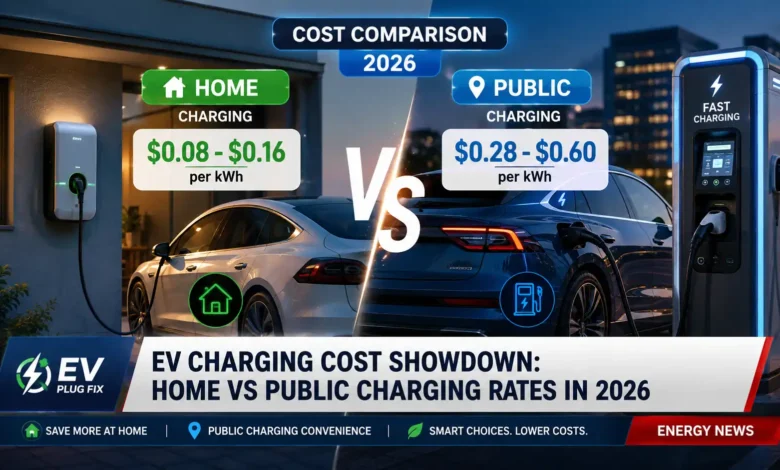
EV Charging Cost Showdown: Home vs Public Charging Rates in 2026
As electric vehicles become increasingly central to the global energy transition, the infrastructure supporting them must evolve beyond simple “plug and play” functionality. The modern EV charging ecosystem is a complex web of hardware, software, and data exchange, where the intelligence of the grid meets the demands of the driver. Understanding this intricate system is essential not just for manufacturers and infrastructure operators, but for everyday EV owners who want to maximize charging efficiency, extend battery longevity, and ensure bulletproof reliability.
1. What Is the EV Charging Communication Handshake?
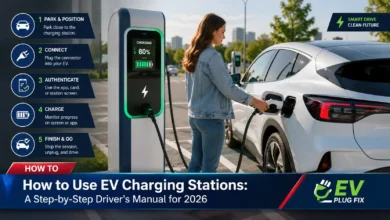
At the heart of this ecosystem lies a critical handshake between the vehicle and the charging station. This isn’t merely about delivering electricity; it’s about a high-speed digital negotiation that occurs in milliseconds before power flows. During this handshake, the vehicle’s Battery Management System (BMS) and the EV Supply Equipment (EVSE) establish crucial operational parameters:
- Power Level Negotiation: Matching the maximum voltage and current the station can supply with what the vehicle can safely receive.
- Identity & Authentication: Verifying user authorization and billing permissions securely.
- Real-Time Battery Telemetry: Monitoring State of Charge (SoC), temperature, and internal cell health.
- Safety Protocols: Testing isolation resistance and grounding before releasing high-voltage DC current.
The communication layer determines how fast your car charges, whether it can interact with smart energy grids, and how the station handles peak load demands. Much like the foundational rules that govern internet traffic, these interactions are built upon specific EV charging communication protocols that standardize how cars and chargers exchange vital data in real-time.
2. Why Protocols Matter to the Everyday EV Owner
For an EV owner, the practical implications of these communication protocols are tangible and immediate:
A seamless handshake means your vehicle starts charging instantly at the optimal rate, protecting your battery’s chemistry from thermal stress while minimizing dwell time at public stalls. Conversely, a communication failure can result in frustrating “charging paused” errors, unexpected disconnects, or slower-than-expected charging speeds.
As vehicles become more sophisticated, they are essentially acting as mobile energy storage units. The continuous dialogue they maintain with smart chargers dictates how effectively they integrate with home solar systems, battery storage, and utility demand-response programs.
3. Core EV Charging Standards & Protocols Breakdown
Modern electric mobility relies on several complementary hardware and software standards:
| Protocol / Standard | Primary Function | Use Case |
|---|---|---|
| PWM (IEC 61851 / SAE J1772) | Basic analog signaling via Control Pilot (CP) pin | AC Level 1 & Level 2 Charging |
| ISO 15118 | High-level digital communication via Powerline Communication (PLC) | DC Fast Charging, Plug & Charge, V2G |
| OCPP (Open Charge Point Protocol) | Back-end communication between charger and management network | Network operations, billing, remote monitoring |
| DIN 70121 | Early DC fast-charging digital protocol | Legacy CCS DC Fast Charging stations |
4. Smart Charging & Cost Savings via TOU Rates
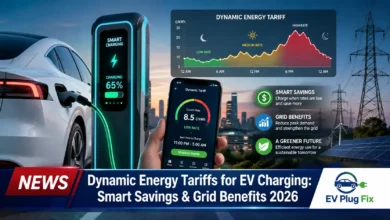
Advanced communication standards enable **Smart Charging**, allowing EV chargers to defer high-power draws to off-peak grid hours. By taking advantage of Time-of-Use (TOU) electricity pricing, EV owners can automatically schedule overnight charging when power is cheapest and greenest.
5. Plug and Charge (ISO 15118) and the Seamless Future
The landscape of EV charging is shifting rapidly with the widespread adoption of Plug and Charge technology (ISO 15118) and advanced smart-grid integrations. This development delivers a future where authentication is automatic, billing is completely invisible, and the grid can balance loads dynamically without driver intervention.
Under ISO 15118, cryptographic Public Key Infrastructure (PKI) secures the communication link between vehicle and charger. Simply plugging in the cable initiates identity verification, session authorization, and payment processing automatically. For those interested in the technical nuances behind this evolution, exploring the EV charging communication protocols provides a foundational understanding of the current standards, their limitations, and the roadmap toward a fully interconnected EV infrastructure.
6. Troubleshooting Handshake Errors and Real-World Friction
However, the reality of public and residential charging isn’t always smooth. Intermittent connectivity, firmware mismatches between car and station, physical port wear, and regional standard variations (such as CCS vs. CHAdeMO vs. NACS) can create friction during the handshake process.
Common Causes of Handshake Failures:
- Signal Noise or Poor Contact: Damaged or dirty Control Pilot (CP) or Proximity Pilot (PP) pins preventing digital signaling.
- Protocol Timeout: The vehicle’s ECU takes too long to respond to the charger’s initialization query.
- Adapter Incompatibilities: Passive hardware adapters failing to properly translate PLC signals across different standard interfaces.
This is where the role of skilled technicians and cloud-based smart software platforms becomes invaluable. Modern charging stations are increasingly equipped with automated remote diagnostics that can identify protocol handshake issues in real-time, often clearing software hangs before they result in a physical service call. The ultimate goal is to make charging an EV as reliable as plugging in a toaster, despite the extreme complexity underneath.
7. Vehicle-to-Grid (V2G) and Bi-Directional Power Flow
Looking ahead, the integration of Vehicle-to-Grid (V2G), Vehicle-to-Home (V2H), and Vehicle-to-Load (V2L) technologies will further amplify the critical role of these communication standards. Your EV will no longer act as a passive consumer of electricity; it will function as an active distributed energy resource capable of selling power back to the grid during peak demand events.
Bi-directional power flow requires a far more robust, ultra-secure, and low-latency communication layer to accurately synchronize voltage frequencies, track dynamic energy prices, and execute financial micro-transactions without compromising vehicle readiness.
8. Frequently Asked Questions (FAQ)
Q1: Why is there a 5-to-10 second delay before my EV starts charging?
This delay is the physical execution of the communication handshake. During these seconds, the charger and car perform insulation safety checks, lock the charging cable, negotiate voltage limits, and authorize payment.
Q2: Can a communication handshake failure damage my vehicle’s battery?
No. The handshake process is designed specifically as a safety mechanism. If communication fails or parameters do not align perfectly, the system defaults to a fail-safe state and prevents high-voltage current from flowing.
Q3: Does the Tesla/NACS connector use different communication protocols than CCS?
While physical connector shapes differ between NACS and CCS, NACS natively adopts the same ISO 15118 Powerline Communication (PLC) protocol used by CCS for fast charging, ensuring software-level compatibility across systems.