Kia EV6 Cold Weather Battery Test 2026: Real Range After Weeks Unplugged
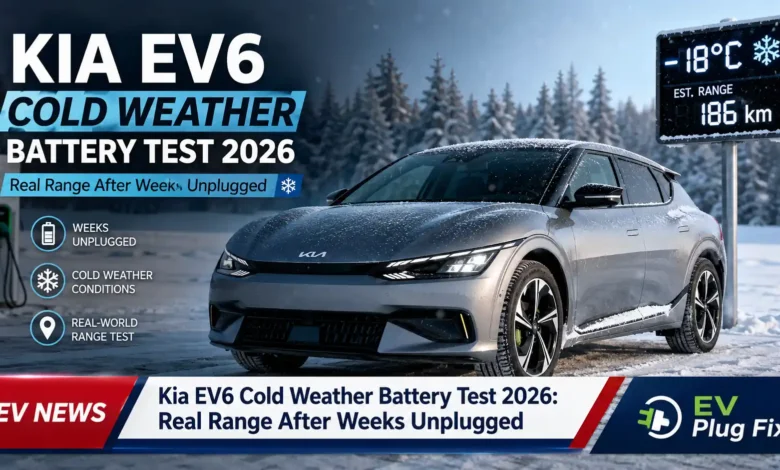
The Kia EV6 winter storage test delivered a surprising result: after 28 days unplugged in a freezing detached garage, the electric vehicle retained nearly all of its charge. Our writer left his Kia EV6 parked with an 80% charge in a garage where temperatures averaged in the 30s °F, dipping as low as 12°F on some nights. Upon return, the car displayed 78% charge with 180 miles of range—a negligible loss of just 2% over nearly a month .
This real-world experiment challenges the persistent fear among EV skeptics that an unplugged electric car will suffer catastrophic battery drain during cold-weather storage. The high-voltage battery pack proved remarkably resilient, dispelling concerns about returning to a dead vehicle after a long vacation or business trip.
🔍 Expert Insight: The Kia EV6’s 800-volt E-GMP architecture includes advanced battery management that minimizes parasitic drain when the vehicle is parked. However, always consult your owner’s manual for specific long-term storage recommendations, as practices vary by manufacturer.
Kia EV6 Winter Storage Test: 28 Days Unplugged in Freezing Weather
To conduct the test, the Dual-Motor AWD Wind model—EPA-rated at 282 miles of range—was charged to 80% and left completely unplugged from December 15 to January 10. The owner intentionally avoided checking the Kia smartphone app during the trip, as remotely waking the vehicle would have activated systems and potentially drained the 12-volt battery .
The results were clear: modern EVs are far more resilient during storage than many assume. Even in sub-freezing temperatures, the main battery maintained its charge, and the vehicle started without issue upon return. This experience suggests that leaving an EV parked in cold weather for several weeks is unlikely to result in a dead battery, though best practices still apply. For homeowners considering a dedicated charging solution, a Level 2 EV Charger Installation in your garage can provide convenience and peace of mind year-round.
“My EV6 handled being parked for weeks better than many older gas-powered cars I’ve owned would have done.”
— InsideEVs Editor
Why the 12-Volt Battery is the Real Winter EV Concern
While the main lithium-ion battery showed impressive resilience in the storage test, the humble 12-volt accessory battery remains the most common source of EV headaches in cold weather. This $200 component powers essential systems like infotainment, passive entry, and cellular connectivity—and can leave you stranded even with a fully charged main battery .
“I think there are just some misconceptions,” Steven Elek, senior automotive data analyst at Consumer Reports, told InsideEVs. “People are like, oh, it’s a rolling battery. My battery should never go dead. But that’s just not how they work.”
Consumer Reports reliability data shows 12-volt batteries as consistent trouble spots for EVs like the Hyundai Ioniq 5, Kia EV6, Rivian R1S, and Rivian R1T. Hyundai, Kia, and Genesis have all issued recalls for issues with the system that charges the 12-volt battery, while Rivian redesigned its 12-volt maintenance system for the second-generation R1 .
How EV 12-Volt Systems Work in Cold Weather
EVs typically use a DC-to-DC converter to step down voltage from the main battery pack (300 to 900 volts) to charge the 12-volt battery at approximately 14 volts . Most manufacturers employ a simple strategy: when the vehicle is on, the high-voltage system charges the 12-volt battery. When off, the vehicle enters a low-power state that should last weeks without draining the battery.
However, issues arise with vehicles that use more power when switched off. Rivian’s original R1S and R1T models, for example, experienced “vampire drain” from connectivity features and security systems, causing the entire high-voltage system to repeatedly wake up and feed the 12-volt battery . This constant cycling can lead to premature 12-volt battery failure.
| EV Model | Reported 12V Issues | Manufacturer Response |
|---|---|---|
| Hyundai Ioniq 5 / Kia EV6 | ICCU charging system failures | Multiple recalls to address charging unit |
| Rivian R1S / R1T (Gen 1) | “Vampire drain” from security features | Redesigned maintenance system for Gen 2 |
| Volkswagen ID.3 | 12V battery issues | Addressed through software updates |
Winter EV Range Loss: What to Expect in 2026
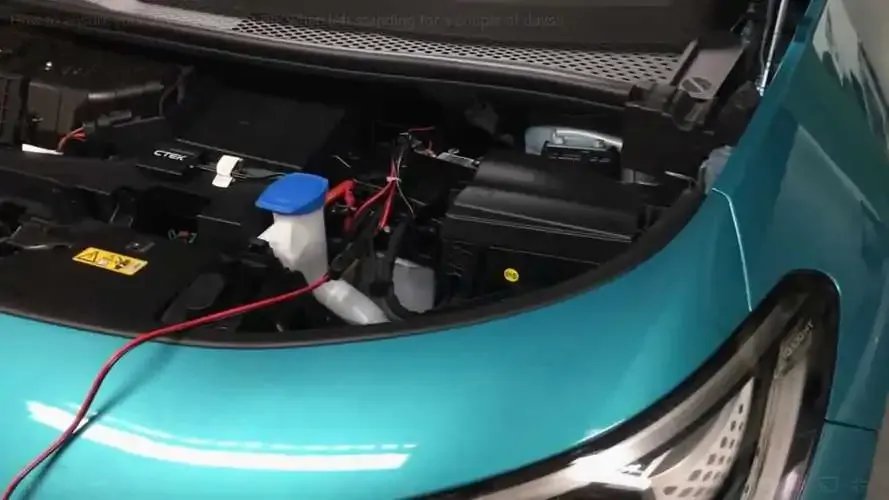
The instrument cluster showed minimal range loss after nearly a month in freezing temperatures.
While the Kia EV6 battery test demonstrated excellent storage performance, driving in cold weather presents different challenges. Most EV owners report a 15-30% range loss in freezing temperatures compared to mild weather, with highway speeds and cabin heating further reducing efficiency . Proper home charging infrastructure can help mitigate these concerns; a Level 2 EV Charger Installation ensures your vehicle starts each day with a full battery, even in winter conditions.
For the Kia EV6 specifically, real-world winter driving data shows:
- Long-Range RWD: 220-250 miles in freezing temperatures at highway speeds
- Long-Range AWD: 200-230 miles in similar conditions
- EV6 GT: 160-190 miles, with the steepest winter range penalty
The typical winter efficiency for Kia EV6 drivers lands between 2.0 and 3.0 mi/kWh in sustained sub-freezing conditions, versus 3.5-4.5 mi/kWh in summer . This aligns with broader EV industry data showing cold-weather range loss beginning around 40°F .
⚠️ Important: Battery preconditioning is critical for winter charging performance. Navigate to a DC fast charger using the built-in navigation system to activate battery warming—third-party apps like CarPlay won’t trigger preconditioning .
Essential Winter EV Storage and Driving Tips
Following best practices can maximize your EV’s performance and battery health during winter months:
- Check your owner’s manual for specific storage recommendations. Kia advises charging the high-voltage battery once every three months during long-term storage .
- Use battery preconditioning when navigating to DC fast chargers in cold weather to achieve optimal charging speeds .
- Rely on heated seats and steering wheel instead of cabin heating when possible—these use far less energy than the main climate system .
- Park in a garage or covered area when possible to reduce battery temperature extremes. A Level 2 EV Charger Installation in your garage makes it easy to maintain optimal charge levels regardless of outdoor conditions.
- Disable unnecessary features like Sentry Mode or constant app checking to minimize parasitic drain during long storage periods .
The Bottom Line on EV Winter Performance
Modern EVs like the Kia EV6 are far more winter-capable than popular perception suggests. The 28-day unplugged storage test demonstrates that high-voltage batteries maintain their charge remarkably well in cold conditions. However, the 12-volt battery deserves greater attention, as it remains the weak link in EV reliability during winter months.
Automakers continue to learn from early challenges, with improved designs and software updates addressing 12-volt system issues across the industry . As one J.D. Power analyst noted, “It’s a learning curve. Anytime you introduce new technology and features, it takes a while to get right. This is one of the growing pain points we see with the electric vehicles.”
For EV owners, the message is clear: don’t fear winter travel or extended parking. The technology works, and with some simple precautions, your EV will handle cold weather as well as—or better than—many traditional gas vehicles. Investing in proper home charging infrastructure through a Level 2 EV Charger Installation ensures you’re always prepared for whatever weather comes your way.