Can Any EV Use Any Charger? Cross-Brand EV Charging Compatibility in 2026
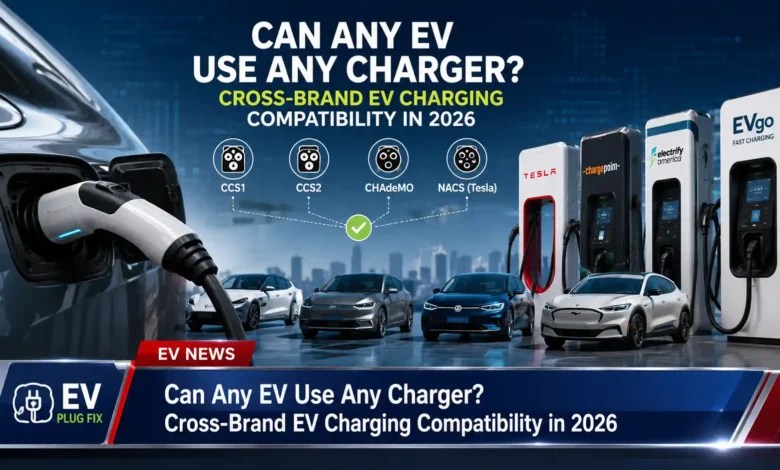
EV charger cross-brand compatibility in 2026 is a topic that has evolved from a simple “yes or no” to a nuanced landscape defined by the North American Charging Standard (NACS). The straightforward answer is that cross-brand compatibility is increasingly the norm, but whether your specific electric vehicle can use a specific charger depends on the connector type it supports and, for some, the availability of a reliable adapter. Understanding these factors is essential for both current EV owners and those considering joining the electric revolution.
The electric vehicle charging landscape is undergoing its most significant transformation since the first mass-market EVs hit the road. For over a decade, the industry was fragmented by multiple competing connector types and protocols. In North America, the Society of Automotive Engineers’ J1772 standard served as the workhorse for AC charging on non-Tesla vehicles, providing a foundation of compatibility across brands like Nissan, BMW, Kia, and Volkswagen . However, this landscape has shifted dramatically with the emergence of NACS as the de facto industry standard.
The 2026 EV Charging Standard Revolution: NACS Takes Over
Between May 2023 and early 2024, nearly every major automaker announced plans to adopt NACS for their North American electric vehicles, a transition that is in full swing by 2026 . This massive industry shift includes Ford, General Motors, Rivian, Volvo, Mercedes-Benz, Nissan, Honda, Hyundai, Kia, BMW Group, Toyota, Subaru, and the Volkswagen Group . Stellantis, the last major holdout, confirmed its adoption in late 2025 and began enabling Supercharger access for its BEVs in early 2026 . This standardization effort represents a deliberate move toward greater interoperability, allowing most new EVs sold to use the same charging connector for a seamless experience at standardized charging networks .
“This standardization effort represents a deliberate move toward greater interoperability. The NACS connector offers several advantages over traditional J1772 infrastructure, including a more compact design and enhanced support for fast charging capabilities.”
NACS vs. J1772 vs. CCS1: A 2026 Compatibility Guide
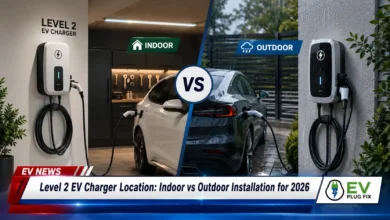
For current EV owners with vehicles using older standards, solutions exist to bridge the compatibility gap. Many EV charger brands already support multiple connector types to accommodate diverse vehicle lineups, and some chargers are designed with dual-connector capabilities for both J1772-equipped and NACS-enabled vehicles . Level 2 EV Charger Installation at homes, workplaces, and public charging stations demonstrates broader compatibility compared to DC fast chargers and are designed to work with most mainstream EVs when equipped with the correct connector types .
| Feature | NACS (SAE J3400) | J1772 / CCS1 |
|---|---|---|
| Primary Use | Unified AC & DC Fast Charging | J1772: AC only; CCS1: DC Fast Charging (bulky combo) |
| 2026 Market Position | Industry Standard for new EVs | Legacy Standard for older vehicles |
| Physical Design | Compact, lightweight, 5-pin design | Larger, heavier, Frankenstein architecture |
| Smart Features | ISO 15118, Plug & Charge, V2G Ready | Basic PWM handshake, limited functionality |
| Native Supercharger Access | Yes, seamless integration | Requires an NACS to CCS1 adapter |
Using Adapters for Cross-Brand EV Charging
For owners of older model EVs or non-NACS vehicles, adapters provide a practical workaround to access the expanding network of Superchargers and NACS-enabled stations . Lectron, a key aftermarket and OEM supplier, has shipped “almost 400,000” charger adapters and works with Ford, Mercedes-Benz, GM, VW, Audi, and Porsche .
The key is knowing which adapter you need:
- NACS to CCS1 Adapter: For non-Tesla EVs with a CCS1 port to charge at Tesla Superchargers . Automakers like Toyota have engineered their own certified adapters for this purpose .
- CCS to NACS Adapter: For Tesla vehicles to charge at CCS fast-charging stations .
Stellantis, for example, now offers the ‘Free2move Charge NACS-CCS1 DC Adapter’ for its customers to access Superchargers, though the company does not support third-party adapters .
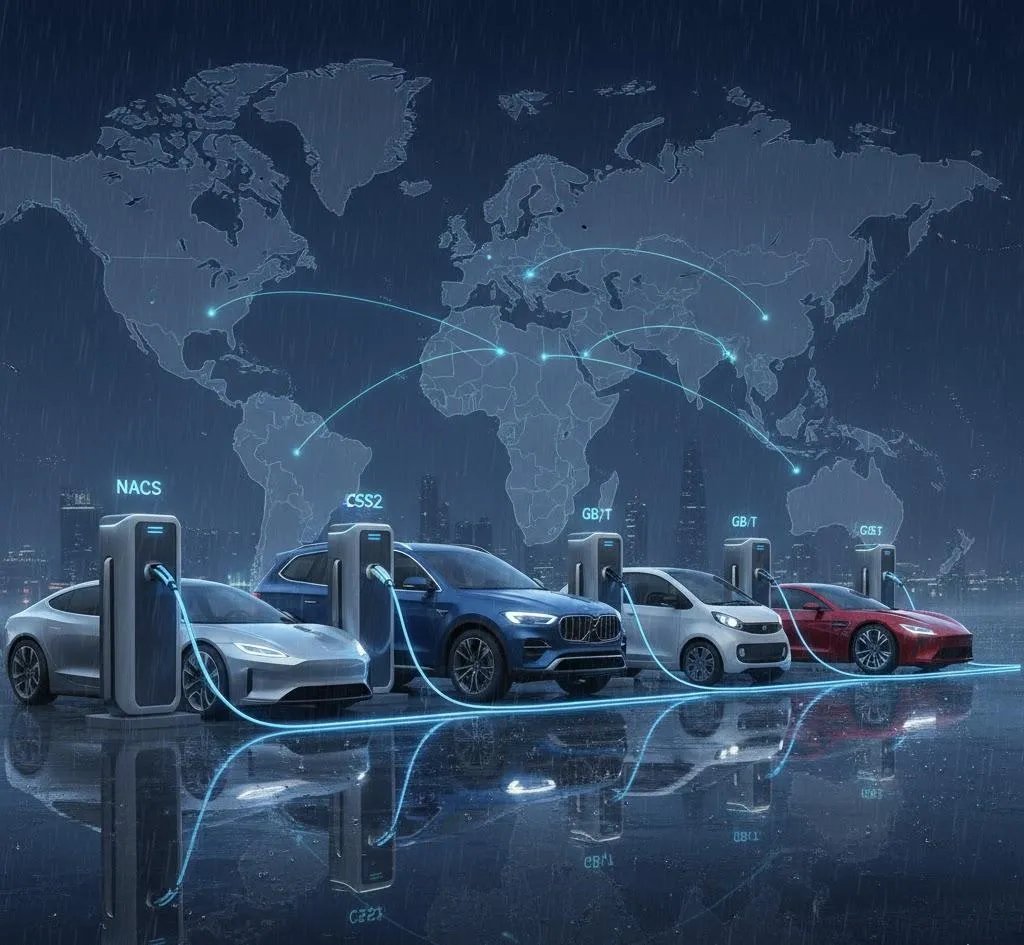
A Lectron NACS to CCS1 adapter in use, bridging the gap between legacy EVs and the new charging standard.
Regional Variations in EV Charging Standards
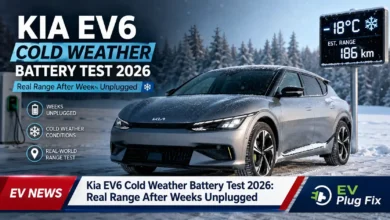
Global EV charging standards differ significantly, which complicates cross-brand compatibility for international travel. Europe has standardized on the CCS2 connector combined with the Type 2 AC connector, which is incompatible with North American standards without specialized equipment . China maintains its own standard, the GB/T interface . Japan presents another distinct scenario with the legacy CHAdeMO fast-charging interface, though NACS is beginning to penetrate the market as a challenger . For drivers concerned about seasonal performance, understanding your vehicle’s charging behavior in cold weather is equally important — the Kia EV6 winter range can be significantly affected by temperature, making garage charging solutions more critical.
Global EV Connector Comparison (2026)
North America
- NACS (SAE J3400): Primary standard
- CCS1: Legacy Fast Charging
- Type 1 (J1772): Legacy AC Charging
Europe
- CCS2: Universal Standard (DC)
- Type 2 (Mennekes): AC Destination Charging
China & Asia
- GB/T: Chinese National Standard
- CHAdeMO: Legacy Standard in Japan
Practical Considerations for Buying an EV Charger in 2026
For those currently shopping for an EV charger, cross-brand compatibility is a key factor. First, identify your vehicle’s charging port type—whether it’s NACS, J1772, or CCS1—by consulting your owner’s manual . This critical step ensures you purchase equipment that works with your current vehicle.
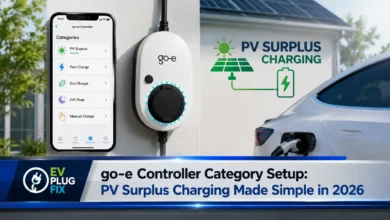
Second, future-proofing your investment is essential. Given the industry-wide shift toward NACS in North America, selecting a charger that supports NACS now provides compatibility with the growing majority of new EVs entering the market. Charger brands like ChargePoint, Feyree, and Emporia support J1772 standards and are increasingly offering NACS options to provide flexibility for multi-vehicle households . For those interested in optimizing their home charging setup with renewable energy integration, the go-e Controller Setup offers advanced PV charging capabilities that work across multiple EV brands.
The harmonization of EV charging standards ultimately benefits all stakeholders: vehicle owners gain more charging options, charging network operators can serve broader customer bases, and the EV industry continues its acceleration toward mainstream adoption . As standards mature and adoption rates increase, cross-brand EV charging will transform from a complicated puzzle into a seamless, taken-for-granted aspect of EV ownership.