Bidirectional EV Charging Technology in 2026: How V2G & V2H Are Reshaping Energy Independence
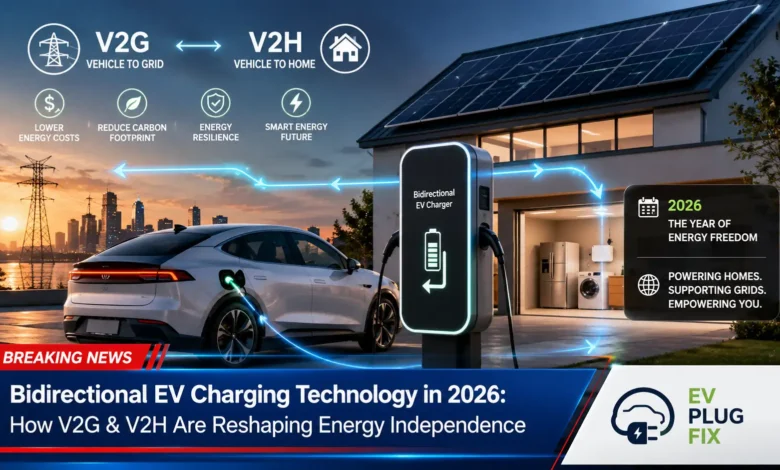
Bidirectional EV charging technology is rapidly transforming electric vehicles from mere transportation devices into dynamic, income-generating energy assets that can power homes and stabilize the electricity grid. This innovation represents a paradigm shift in how we interact with energy, moving beyond the traditional one-way flow of electricity from the grid to the car, and into a future where your vehicle becomes a cornerstone of a smarter, more resilient energy ecosystem. By enabling a two-way conversation between your EV and the power network, bidirectional charging unlocks significant potential for cost savings, emergency preparedness, and a more sustainable energy infrastructure, making it one of the most compelling developments in the EV sector today.
What Exactly Is Bidirectional EV Charging and How Does It Work?
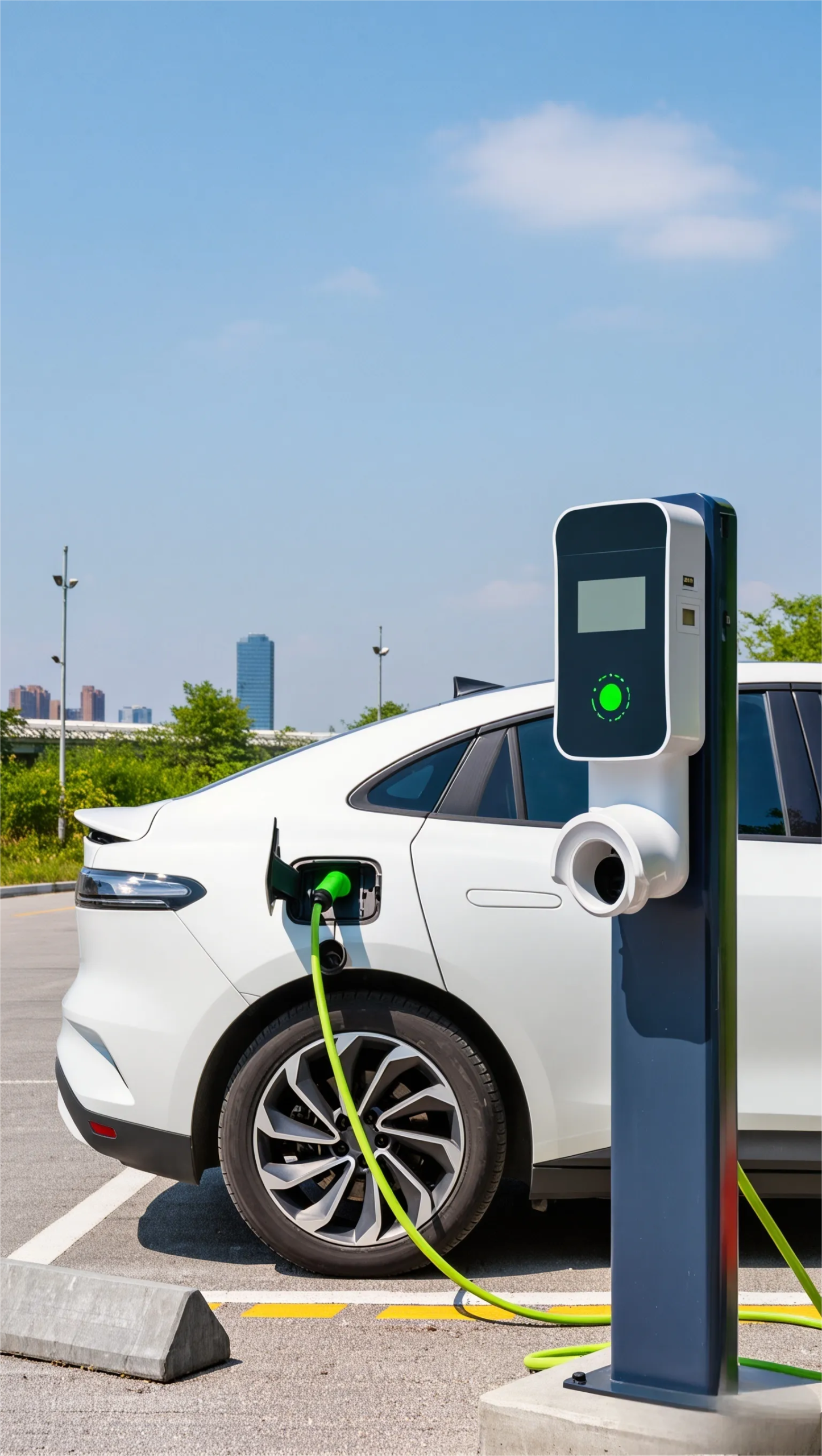
At its core, bidirectional EV charging allows electricity to flow not only from the grid to your vehicle’s battery—the standard charging process—but also in reverse, from your car back to your home, a building, or even the public electricity grid. This is a fundamental departure from traditional EV chargers, often called unidirectional chargers, which only convert alternating current (AC) from the grid into the direct current (DC) that an EV battery stores. Bidirectional technology leverages a more sophisticated system to manage this two-way flow safely and efficiently.
The magic happens thanks to a component known as an onboard inverter or, in some systems, an external bidirectional charger. This device acts as a traffic controller for electricity. When charging, it converts AC from the wall to DC for the battery. For discharging, it does the reverse, converting the battery’s DC power back into AC, which is the standard form of electricity used in homes and the grid. This process is orchestrated by a complex interplay of software and hardware, with the Tesla, Ford, and Hyundai, among others, developing their own implementations.
The Engine Under the Hood: Power Electronics and Converters
For engineers and tech enthusiasts, the real sophistication lies in the power electronics. Modern bidirectional EV chargers utilize advanced converter topologies to manage this energy flow. A typical system involves an AC-DC converter that manages the interface with the grid and a DC-DC converter to regulate the power going into and out of the battery. According to recent research, topologies like the CLLC resonant converter and the Dual Active Bridge (DAB) are becoming industry standards for their efficiency and ability to handle high power levels across a wide voltage range. These systems are critical in supporting both 400-volt and the newer 800-volt battery architectures found in vehicles like those from Porsche and Hyundai.
Furthermore, the rise of wide-bandgap semiconductors, such as Silicon Carbide (SiC) and Gallium Nitride (GaN), has been crucial for increasing the efficiency and power density of these chargers. By using these advanced materials, engineers can design systems that operate at higher switching frequencies, reducing the size of passive components like transformers and inductors, while simultaneously generating less heat. This makes the entire system lighter, more efficient, and more reliable, facilitating the integration of V2X technology. For homeowners considering the installation of such advanced systems, understanding Wallbox Installation Costs is an important first step in the planning process.
Exploring the Applications: V2G, V2H, V2L, and V2B
Bidirectional charging is a broad concept that encompasses several distinct applications, each serving a unique purpose and offering different benefits. These are often grouped under the umbrella term V2X, or Vehicle-to-Everything. The primary use cases you’ll encounter in 2026 are Vehicle-to-Grid (V2G), Vehicle-to-Home (V2H), and Vehicle-to-Load (V2L).
Vehicle-to-Grid (V2G) is the application that perhaps holds the most transformative potential. It involves sending power from your EV back into the public electricity grid. This is a critical function for grid operators, as EVs can act as a massive, distributed battery network that can be used to balance supply and demand. In this model, you can charge your car when electricity is cheap (off-peak, or when renewable energy is abundant) and sell it back to the grid at a higher price during peak demand times, a process called energy arbitrage. An IEA report highlights that revenues from V2G charging could range from several hundred to over $1,000 per year for EV owners.
Vehicle-to-Home (V2H) is a more immediate and practical application for many homeowners. V2H allows your EV to power your house, functioning as a massive backup battery during a power outage. This application is gaining significant traction in 2026 as it offers energy independence without the need to navigate complex grid regulations. It can also be used to lower electricity bills by allowing the home to draw power from the car during peak pricing periods, storing excess solar energy during the day for use at night. For instance, a mid-sized EV with a 60 kWh battery could power essential home circuits—like refrigeration, lighting, and internet—for one to two days. Optimizing this process often requires a thorough understanding of Dynamic EV Load Balancing to ensure your home’s electrical system can safely manage the power flow.
Vehicle-to-Load (V2L) is the most straightforward and widely deployed form of bidirectional technology. It uses the EV’s battery to power external devices and equipment via standard AC outlets built into the vehicle. This is fantastic for camping, powering tools at a job site, or running appliances during a picnic. Models from Hyundai and Kia have been early popularizers of V2L.
Finally, Vehicle-to-Building (V2B) is a commercial-scale application where a fleet of EVs can power an entire building, much like V2H but on a larger scale. This can help businesses reduce their energy costs and improve their sustainability profile. Implementing V2B solutions at scale often involves strategies like EV Peak Shaving to manage demand charges and optimize energy consumption during business hours.
The Regulatory Landscape and Market Momentum in 2026
After years of pilot projects, 2026 is a landmark year for bidirectional charging, with significant regulatory and market developments signaling its commercial maturity. A crucial breakthrough was the reform of Germany’s Energy Industry Act in late 2025. This reform removed the double charge on electricity fed back to the grid, and from April 2026, new rules under the MiSpeL process simplified technical implementation and removed the requirement for a second meter. This makes V2G economically viable and technically far easier to deploy.
At the European level, the AFIR regulation adds further momentum. Since January 2026, all new public charging points must support the ISO 15118-2 standard, which is a prerequisite for smart charging. The requirement will be extended to the more advanced ISO 15118-20 standard from January 2027, which enables full grid integration with bidirectional energy flow and cross-manufacturer interoperability. This means that newer EVs and chargers will be built with bidirectional capabilities baked in, making the technology ubiquitous. This regulatory push is driving significant growth across the EU EV Charging Network, ensuring that infrastructure keeps pace with these advanced capabilities.
These regulatory tailwinds are complemented by impressive commercial offerings. Since February 2026, BMW and E.ON have offered a complete V2G package, including a wallbox, tariff, and smart meter, with a bonus of up to €720 a year. Elli, a Volkswagen subsidiary, is working with Otovo to test a system that can cut charging costs by up to 75 percent. The long-term goal is to aggregate hundreds of thousands of vehicle batteries into a virtual power plant. This demonstrates a clear shift from pilot projects to market-ready solutions. These developments highlight the broader Smart EV Charging Benefits that are becoming increasingly accessible to consumers.
Addressing the Fears: Battery Degradation and Safety
One of the most common concerns among potential adopters of bidirectional charging is its impact on EV battery health. The fear is that constantly cycling the battery, especially with the deep discharges potentially involved in V2G, will significantly shorten its lifespan. However, recent independent studies provide reassuring data. A comprehensive study by RWTH Aachen University and The Mobility House found that the additional aging caused by V2G use is quite minimal. After ten years of regular V2G use, the additional degradation was estimated to be just 1.7 to 5.8 percentage points.
This is because modern Battery Management Systems (BMS) are incredibly sophisticated. They are designed to manage state-of-charge and temperature limits meticulously to minimize stress from increased cycling. Furthermore, for applications like V2H, the homeowner typically reserves a minimum driving range, so the battery is never fully drained. The required investment of €100 to €300 for a V2G setup is offset by annual revenues of more than €600, making the economic proposition far outweigh the marginal impact on battery longevity.
Safety is another paramount concern. Bidirectional systems are designed with strict cybersecurity and safety protocols. Standards like ISO 15118 and OCPP 2.0.1 ensure that only authenticated vehicles can communicate with the grid, protecting the integrity of the electricity system. Additionally, during a power outage, a V2H system is designed to isolate the home from the grid, preventing any electricity from your car from feeding back and endangering utility workers fixing power lines. Proper EV Leakage Protection is also a critical component of these safety systems, ensuring that any fault currents are promptly detected and neutralized.
Is Your EV Ready? Compatibility and What to Look For
As of 2026, not every EV is bidirectional-capable, but the list is growing rapidly. The key to unlocking V2G functionality lies in the vehicle’s communication protocol. Early deployments used the CHAdeMO standard, but usage is declining outside of Japan. The global industry is coalescing around the Combined Charging System (CCS) standard, which supports full bidirectional V2G through the ISO 15118-20 communication protocol.
The Tesla North American Charging Standard (NACS) is still relatively new, with V2G capabilities not yet fully specified. However, the momentum behind CCS, particularly in Europe, is making it the de facto standard for interoperability. For Tesla owners, understanding the specific Tesla Model 3 Charging Time and compatibility with bidirectional systems is essential when considering an upgrade.
When researching new EVs, look for the V2L or V2H designation. While the ISO 15118-20 standard was only added to CCS in 2022, many newer models from major manufacturers are already V2G-ready or will be enabled via over-the-air software updates. Automakers like Ford (with its F-150 Lightning), Hyundai (Ioniq 5 and 6), Kia (EV6 and EV9), and Volkswagen are leading the charge. Furthermore, with new regulations mandating ISO 15118-20 support, the future is clear: nearly all new EVs will feature this capability.
The Economic Impact: Why V2G Matters for Grid Stability and Your Wallet
The economic potential of V2G is staggering. According to Transport & Environment, V2G technologies could save more than €100 billion in European system costs between 2030 and 2040, with Germany alone seeing annual savings of up to €8.4 billion. These savings come from a reduced need for costly grid expansion and a more efficient utilization of renewable energy sources.
At a household level, the benefits are tangible. The BMW and E.ON deal illustrates that EV owners can earn a significant annual bonus. By charging when electricity is cheap and selling it back when demand (and prices) is high, users can effectively offset the cost of their vehicle and reduce their overall energy bills. This dynamic is also explored in academic research, where advanced algorithms like Time-of-Use tariff-based control and Artificial Neural Network controllers are being developed to optimize these economic benefits, making the system smarter and more profitable for the user.