Tesla Charging Standards in 2026: NACS vs CCS2 Explained for Owners
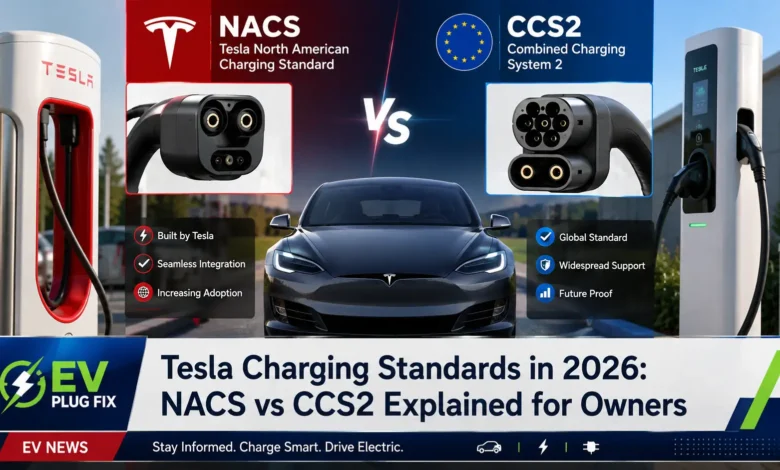
Tesla charging standards are not a one-size-fits-all proposition in 2026, with a stark regional divide that directly impacts how owners power up their vehicles. In North America, Tesla vehicles utilize the proprietary North American Charging Standard (NACS), while European Teslas are mandated to use the Combined Charging System Type 2 (CCS2). This fundamental difference in Tesla charger types shapes everything from home charging speeds to Supercharger access and the feasibility of cross-continent travel. When choosing a home charging solution, understanding your regional standard is crucial—our Home EV Charger Guide helps navigate these regional differences.
“The divergence between Tesla’s NACS in North America and the CCS2 standard in Europe is more than a technicality; it’s a reflection of regional regulatory frameworks and infrastructure strategies that profoundly affect the daily ownership experience.”
North American Charging Standard (NACS): Tesla’s Homegrown Ecosystem
In North America, Tesla drivers benefit from the NACS connector, a sleek, unified port designed for both AC and DC charging. This system supports single-phase AC charging up to 7.4 kW for home or destination charging, and blistering DC fast-charging speeds at Superchargers—reportedly up to twice as fast as the CCS1 standard common among other EVs on the continent. The NACS plug’s smaller, lighter design improves ergonomics and ease of use, making daily charging a more convenient experience. For homeowners considering a dedicated charging setup, proper Level 2 EV Charger Installation ensures you maximize the benefits of your Tesla’s charging capabilities.
| Feature | North America (NACS) | Europe (CCS2) |
|---|---|---|
| Connector Type | Proprietary NACS | Combined Charging System Type 2 |
| Home Charging (AC) | Single-phase up to 7.4 kW | Three-phase up to 11 kW |
| DC Fast Charging | Supercharger Network (Proprietary) | Extensive CCS2 Public Network |
| Interoperability | Limited to Tesla network (adapters for CCS1) | High with other EVs and public chargers |
| Adapter Needed for Europe | Yes, or a port retrofit | Yes, for North American DC charging |
The European Mandate: Why Teslas Use CCS2
Regulatory policy in the European Union has driven the adoption of the CCS2 standard, creating a unified, interoperable EV charging landscape. For Tesla, this means equipping all its vehicles sold in Europe with a CCS2-compliant port. Unlike the North American NACS, the European Tesla charging standard supports three-phase AC charging at up to 11 kW, significantly faster than the single-phase system used in the US. This speed advantage is a direct benefit of the European infrastructure, allowing for more efficient home and public AC charging. For DC fast charging, the CCS2 connector integrates DC pins directly into the Type 2 plug, enabling high-powered charging without needing a proprietary connector. Understanding EV Charging kWh Guide helps owners track and optimize their energy consumption across different charging standards.
🇪🇺 Important Notice for European Owners
The EU mandate for CCS2 ensures that Tesla owners can seamlessly use thousands of public charging points without the hassle of adapters. This is a significant advantage for road trips and daily commuting across borders, leveraging the continent’s robust, standardized infrastructure. For cross-border travelers, understanding Cross-Brand EV Charging Compatibility is essential when navigating different charging networks.
Practical Implications for Tesla Owners in 2026
For owners considering importing a Tesla or traveling with their vehicle between regions, these are not abstract technicalities. A North American Tesla in Europe will face significant challenges. While it can use some AC charging stations with the correct adapter, accessing the vast network of European CCS2 fast chargers typically requires either a costly port retrofit or a bulky adapter that may not support full charging speeds. EV Charging Cable Guide provides valuable insights into the cables and adapters needed for various charging scenarios.
Key Differences for Owners
- Charging Speed: European Teslas charge faster at home using three-phase AC power (11 kW vs 7.4 kW).
- Charger Access: European owners enjoy seamless access to public networks; North American owners rely on Tesla’s exclusive Supercharger network, though access is expanding to other EVs.
- Cross-Continent Travel: A European Tesla can charge on North American AC power relatively easily, but an American Tesla in Europe faces significant hurdles without modifications.
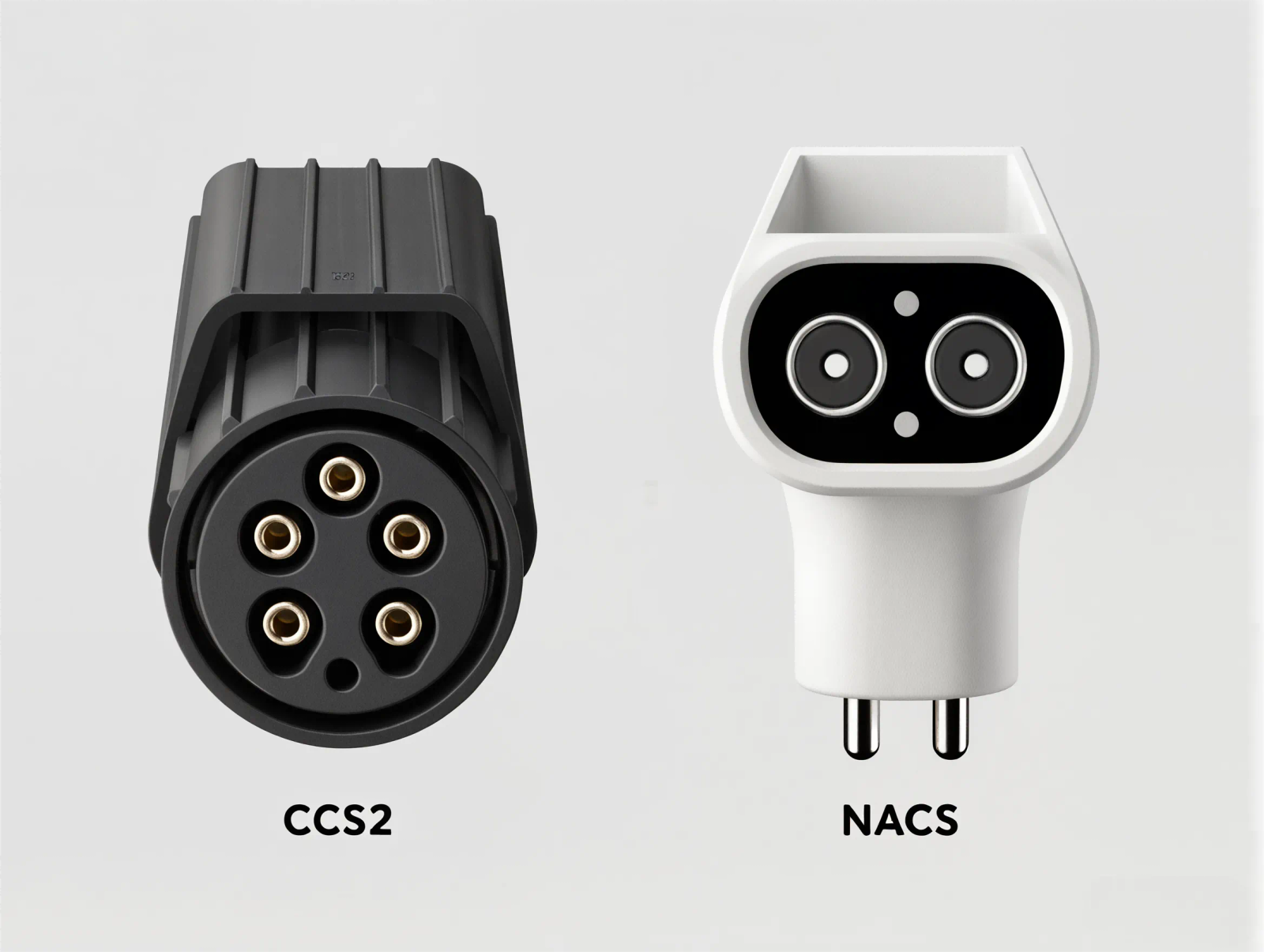
European Teslas rely on the widespread CCS2 network for fast, interoperable charging across the continent.
Future Outlook: Coexistence or a Unified Standard?
As the EV landscape matures, the question of whether Tesla charging standards will converge is a major industry topic. The NACS connector, with its superior design, has gained interest from some global automakers and may see broader adoption outside North America. However, the deep regulatory roots and massive infrastructure investments in the CCS2 standard across Europe create a formidable barrier to change. EV Load Shifting Strategies are becoming increasingly important as charging infrastructure continues to evolve and expand globally.
The most likely scenario for the foreseeable future is regional coexistence. In North America, the NACS standard is becoming the de facto plug, with many automakers planning to switch to it. In Europe, the CCS2 standard is firmly entrenched and continues to be the regulatory backbone for EV charging. This means Tesla owners will need to remain aware of their region and plan accordingly for any international travel. The era of a single, global EV charging plug is still a distant reality. Regular EV Charging Maintenance Guide practices help ensure your charging equipment remains in optimal condition regardless of the regional standard.
🎓 Expert Analysis: What This Means for EV Adoption
For the average EV driver, the existence of two major Tesla charging standards highlights a broader fragmentation in the global EV market. While this can cause confusion, it has also spurred innovation and competition. The key takeaway for consumers is to understand your local infrastructure and to make informed purchasing decisions, especially if you plan on moving or traveling internationally with your Tesla.