EV Mode 2 Charging Explained: Portable Charger Safety and Setup for 2026
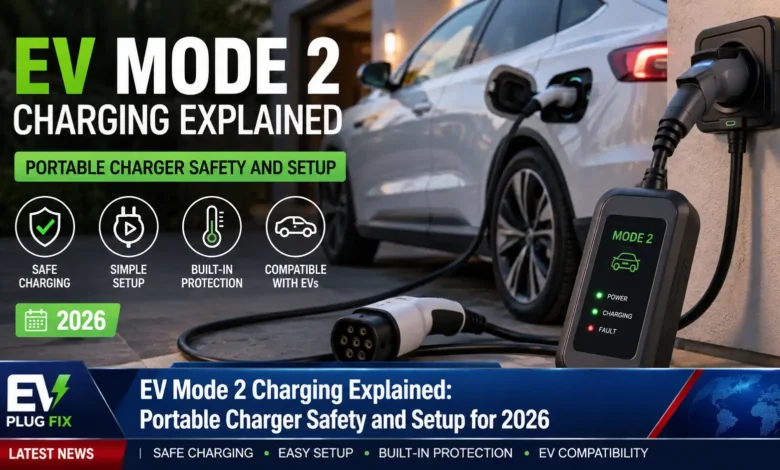
Mode 2 EV charging bridges the gap between a standard household plug and a dedicated wallbox, offering a flexible, user-installable solution for electric vehicle owners. Unlike its predecessor, Mode 1, which lacks any communication between the vehicle and the power source, Mode 2 uses a specialized cable with an in-cable control box (IC-CPD). This smart unit acts as the brain of the operation, facilitating essential communication and providing crucial protection against electric shocks, safeguarding both you and your EV. For those considering a permanent solution, our Home EV Charger Guide provides valuable insights into wallbox installations.
Why Mode 2 Matters in 2026
According to recent data, over 35% of Americans live in multi-unit dwellings like apartments and condos, where installing a permanent hardwired charger isn’t always feasible . Mode 2 charging offers a viable alternative, turning any compatible outlet into a personal charging station without requiring landlord approval or costly electrical upgrades. This is a significant development in the push for accessible EV infrastructure. To maximize efficiency in such setups, exploring EV Load Shifting Strategies can help you optimize your charging schedule and reduce electricity costs.
What is EV Mode 2 Charging? Key Principles and Safety
Mode 2 charging, defined under the IEC 62752 and IEC 61851-1 standards, is a method of connecting an EV to the AC mains supply using a standard socket outlet . The defining characteristic is the In-Cable Control and Protection Device (IC-CPD)—the control box integrated into the charging cable itself .
This IC-CPD is not just a safety device; it is the core of the Mode 2 system, providing:
- Residual Current Protection (RCD): A built-in residual current device protects the user from electric shocks caused by system faults or accidental contact with live components . Many modern IC-CPDs feature at least a Type A RCD with a DC detection auxiliary circuit, or a more robust Type B RCD for comprehensive protection .
- Overcurrent and Overvoltage Protection: The control box monitors the current and voltage, automatically cutting off the power supply in the event of an anomaly to prevent damage to the vehicle or the electrical system .
- Temperature Monitoring: Overheating is a risk with sustained high-current draws. High-quality Mode 2 chargers have built-in temperature sensors that can reduce the charging power or stop the process entirely if the plug or cable gets too hot .
- Pilot Communication: The cable communicates with the vehicle to establish a safe connection and adjust the charging current based on the capacity of the connected circuit, a feature known as the Control Pilot (CP) function .
Mode 2 vs. Mode 3: Mobile Power vs. Fixed Installation
The primary distinction between Mode 2 and Mode 3 charging lies in the connection to the building’s electrical supply. Mode 3 charging involves a permanent, hardwired wallbox that is directly connected to the building’s distribution board, requiring professional installation by a certified electrician. If you’re leaning toward a fixed solution, understanding the options for Level 2 EV Charger Installation in your garage can help you make an informed decision.
In contrast, Mode 2 charging stations are not hard-wired, offering total freedom. You can install the “station” yourself, simply by plugging it into a compatible socket. This portability is its greatest asset. For instance, the go-e Charger Gemini flex is a prime example of a mode 2 charger that functions as a mobile unit and also comes with a wall mounting plate, effectively serving as a 2-in-1 charger that can be easily removed and taken on trips. To see how it stacks up against other mobile options, check out our go-e Gemini flex Comparison for detailed specifications.
Real-World Performance: A Look at 2026’s Best Portable EV Chargers
The market for portable EV chargers has exploded. In 2026, choosing the right one means understanding your power needs, outlet access, and budget. The table below compares some of the top contenders, including dual-voltage units that offer the ultimate flexibility for both home and travel.
| Charger Model | Type | Max Charging Speed | Power Connection | Key Features |
|---|---|---|---|---|
| Battery Tender eCharge 32A | Dual-Voltage Portable | 28.5 miles/hour | NEMA 14-50 / 120V Adapter | True 120V/240V flexibility, portable, ideal for travel and home |
| BENY 2-in-1 Portable | Portable + Wall-mount | Up to 22kW | Variable (7.4kW – 22kW) | Adjustable power, IP65/IP55 protection, deployed in Egypt for smart mobility |
| Ring Automotive Type 2 | Portable | ~3 kWh | Standard 3-pin plug | Excellent build quality, good value, but limited cable length |
| Juice Booster 2 | Portable | Up to 22 kW | Standard/Adaptor | Editor’s pick, durable, versatile, but expensive |
Getting Started: Your Guide to Mode 2 Charging Setup
In Mode 2 charging, the charging station is not hard-wired to the building’s power supply, making it a user-friendly solution. You can plug it into a standard outlet and start charging. However, the required outlet type determines your charging speed:
- Standard 120V/230V Household Socket (Level 1): This is the slowest method, typically delivering 2.3 kW and adding 3-7 miles of range per hour . It’s best for topping up overnight, especially for daily commuters who drive under 40 miles . However, using an extension cord with a portable charger is highly discouraged, as it can lead to overheating and create a fire hazard .
- Red CEE Socket (240V Level 2): This industrial-style socket provides a dedicated circuit for high-power appliances. When you connect a Mode 2 charger like the go-e Charger Gemini flex to a red CEE socket, you tap into significantly faster charging, often at 11 kW or more . This is the fastest way to charge your EV via a portable unit, rivaling the speed of many fixed wallboxes. For those looking to integrate solar power into their charging routine, our guide on PV Surplus Charging explains how to use excess solar energy for your EV.
Choosing the Right Mode 2 Charger for Your Needs
Not all Mode 2 chargers are created equal. When selecting your EVSE, consider the following:
- Plug Type (NEMA Configuration): Check which outlets are available at your regular charging spots. NEMA 14-50 (RV/range) and NEMA 6-50 (welder) are common for 240V .
- Cable Length: Measure the distance from your parking spot to the outlet. A short cable can be a significant hindrance .
- Safety Certifications: Ensure the unit is UL listed (UL 2594 or UL 2231) and has a suitable IP rating (at least IP65) for outdoor use .
- Smart Features: Many portable chargers, like the go-e Gemini flex, now offer advanced features like Wi-Fi or 4G connectivity for app control, energy monitoring, and even local API integration for home energy management systems. Understanding go-e Controller Setup can help you unlock these smart capabilities for more efficient home charging.
“One Deployment Expert can deliver and set-up with zero customer contact. Our personal record is 4 minutes.”
Safety First: Avoiding Common Mode 2 Charging Pitfalls
While Mode 2 chargers have built-in safety features, the end-user is responsible for the socket and the overall setup. The residual-current device in the cable protects the vehicle and user, but it does not protect the household outlet itself . Regular maintenance of your entire charging ecosystem is crucial, which is why consulting an EV Charging Maintenance Guide can help you identify potential issues before they become hazards.
Important Safety Notice
Never plug your Mode 2 charger into a damaged or worn outlet. Avoid using extension cords, and ensure the outlet’s circuit is properly grounded and rated for the draw of the charger. Also, protect the control unit from direct sunlight to prevent it from overheating and reducing the charging speed .
For apartment or condo dwellers without access to a dedicated 240V circuit, a portable Level 1 charger can be a lifesaver. Units like the Battery Tender eCharge 16A can add over 7 miles of range per hour from a standard 20A outlet, enough for most daily commutes .