Can You Charge a Tesla with a Portable Generator? 2026 Safety & Power Guide
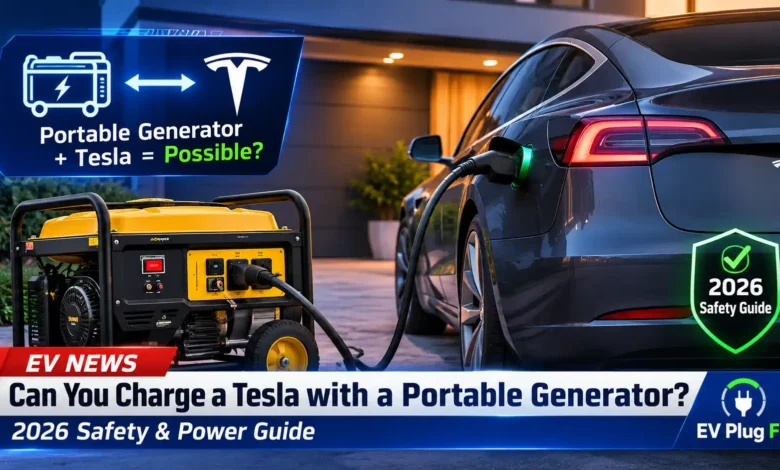
Charging a Tesla with a portable generator is entirely possible in 2026, but it requires careful planning, the right equipment, and a solid understanding of power quality to avoid damaging your vehicle’s sensitive charging system. Whether you’re facing a sudden power outage, planning an off-grid camping trip, or simply want an emergency backup strategy, this guide cuts through the noise to deliver actionable, safe advice for EV owners. For those new to EV ownership, our Home EV Charger Guide provides a solid foundation on charging basics.
What Exactly Is a Portable Generator for EV Charging?
A portable generator is a compact, mobile power station that burns gasoline, diesel, or propane to produce alternating current (AC) electricity. While these devices are common on construction sites and campsites, not all generators are created equal when it comes to powering a Tesla. Your EV’s onboard charger expects a stable, clean AC supply—similar to what you’d get from your home wall outlet. Understanding the difference between Stationary vs Mobile Chargers can help you decide when a portable solution makes sense.
The challenge lies in the fact that Tesla chargers are sophisticated electronic devices. They don’t just accept any electricity; they demand pure sine wave output to function safely and efficiently. Many budget-friendly portable generators produce what’s called a modified sine wave, which can cause electrical interference, overheating, and even permanent damage to your Tesla’s charging components.
| Generator Power Output | Estimated Charge Speed (Miles Per Hour) | Best Use Case |
|---|---|---|
| 1.5 kW – 2.5 kW | 5 – 9 miles | Slow emergency top-up; not recommended |
| 3 kW – 4 kW | 10 – 15 miles | Ideal for emergency range extension |
| 5 kW+ | Up to 20 miles | Faster backup charging; supports Level 2 speeds |
Is It Really Possible to Charge a Tesla with a Generator?
Yes, in theory and practice—but with significant caveats. Your Tesla converts AC electricity from the grid into DC power stored in its battery. A portable generator produces AC power, so electrically speaking, it can work. However, the generator must produce at least 3 kilowatts (kW) of continuous output to avoid overloading. For a better understanding of charging speeds and energy measurement, check out our EV Charging kWh Guide.
Low-power generators (under 2 kW) will struggle to supply enough juice. You might see your Tesla’s charging system refuse to start, or worse, the generator could trip its circuit breaker mid-charge. For a reliable experience, aim for a pure sine wave inverter generator with a minimum of 3,000 running watts.
What Are the Critical Factors for Generator EV Charging?
1. Power Quality: Pure Sine Wave vs. Modified Sine Wave
This is the most overlooked factor. Tesla chargers are designed to work with the smooth, sinusoidal waveform provided by the utility grid. Modified sine wave generators produce a stepped, choppy waveform that introduces electrical noise.
Using a modified sine wave generator may cause your Tesla to display charging errors, or it could stress the onboard charger, leading to premature failure. In worst-case scenarios, the vehicle’s protection systems may completely reject the power source. If you encounter error messages, our EV Charger Error Codes resource can help you decode what they mean.
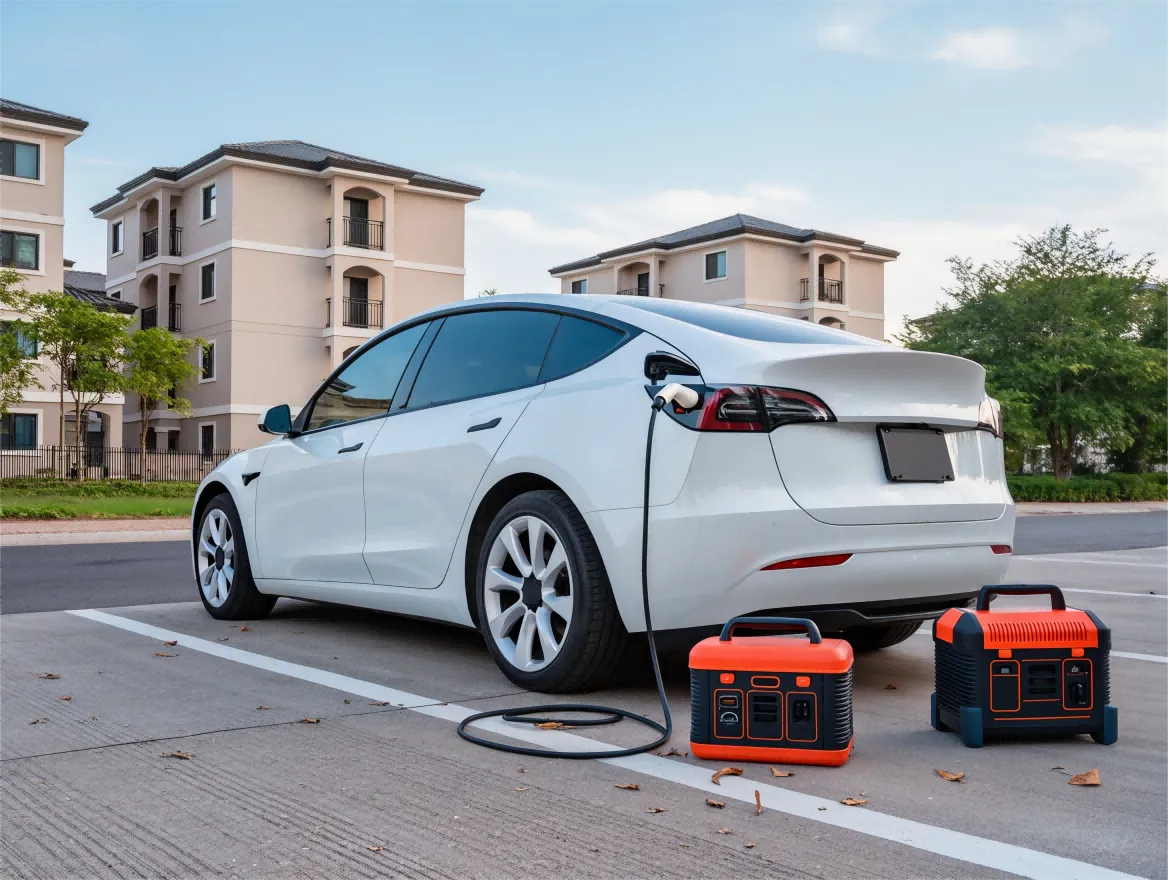
The difference between pure and modified sine wave output can make or break your EV charging attempt.
2. Grounding and Electrical Safety
Portable generators must be properly grounded to prevent electrical shock hazards. Many newer inverter generators are “floating neutral” types. For EV charging, you may need a neutral-to-ground bonding plug to ensure the Tesla Mobile Connector detects a proper ground. Without this, the charger will refuse to start. For more comprehensive safety information, refer to our Home EV Charging Safety guide.
3. Fuel Type and Runtime
Gasoline generators are common but noisy and require frequent refueling. Propane generators burn cleaner and can be stored longer, but they typically produce slightly less power. Consider your runtime needs: a 3 kW generator running at full load will burn roughly 1 gallon of gasoline per hour.
Step-by-Step: How to Charge Your Tesla with a Portable Generator
- Select the right generator: Choose a pure sine wave inverter generator with at least 3 kW continuous output and a THD below 5%.
- Prepare your charging cable: Use the official Tesla Mobile Connector or a high-quality EVSE (Electric Vehicle Supply Equipment) compatible with your vehicle. Our EV Charging Cable Guide can help you choose the right cable for your needs.
- Verify connections: Ensure the generator’s 120V or 240V outlet matches your charging plug. You may need a TT-30 to 14-50 adapter for RV-style outlets.
- Ground the generator: Connect a proper grounding rod or use a neutral-ground bonding plug if the generator is floating neutral.
- Start the generator: Allow it to run for 2-3 minutes to stabilize voltage and frequency before plugging in.
- Connect the charger: Plug the Mobile Connector into the generator outlet, then connect to your Tesla.
- Monitor charging: Keep an eye on both the generator’s load meter and the Tesla’s touchscreen for any errors.
“Charging a Tesla with a portable generator is a lifeline, not a lifestyle. It’s perfect for emergencies but inefficient for daily use. Always prioritize pure sine wave output and proper grounding to protect your investment.”
When Does Generator Charging Make Sense in 2026?
- Emergency power outages: When the grid fails and you need enough range to reach the nearest Supercharger.
- Off-grid adventures: Camping or overlanding trips where electrical hookups are unavailable.
- Construction or remote work sites: Keeping your EV charged while working in areas without charging infrastructure.
- Short-term backup: Occasional use when your primary charging method is temporarily unavailable.
What Are the Hidden Costs and Efficiency Issues?
Charging a Tesla with a portable generator is significantly more expensive than using grid power. A 3 kW generator burns about 0.9 gallons of gasoline per hour, producing roughly 10-15 miles of range. At average gas prices, you’re looking at $1.50 to $2.00 per gallon—translating to $0.15 to $0.20 per mile. Compare that to home charging at $0.03 to $0.05 per mile, and the cost difference is stark.
Additionally, generator charging is slow. A 3 kW setup adds about 10 miles of range per hour. To fully charge a 75 kWh Tesla battery, you’d need over 24 hours of continuous generator operation—impractical for most scenarios. For those considering more sustainable alternatives, our article on PV Surplus Charging explores how solar energy can offset these costs.
✅ When It Works
- Short emergency top-ups
- Remote locations with no alternative
- Power outages lasting 1-2 days
❌ When to Avoid
- Daily or regular charging
- Full battery recharges
- Areas with available Superchargers
Final Verdict: Should You Charge Your Tesla with a Portable Generator?
If you’re prepared with the right equipment—a pure sine wave inverter generator delivering at least 3 kW, proper grounding, and a high-quality EVSE—then yes, charging your Tesla with a portable generator is a viable emergency solution in 2026. However, it’s not a substitute for home charging or Supercharging. Think of it as a safety net: useful when you absolutely need it, but inefficient and costly for routine use.
As battery technology and portable solar solutions improve, we may see more sustainable off-grid options. For now, a high-quality portable generator remains a practical backup tool for adventurous EV owners and those facing unpredictable power outages. Just remember: safety first, pure sine wave second, and always monitor your setup closely. Regular maintenance of your charging equipment is essential—our EV Charging Maintenance Guide offers valuable tips to keep everything in top condition.