EV Fast Charger Types Compared: 50kW vs 120kW vs 350kW Charging Speeds 2026
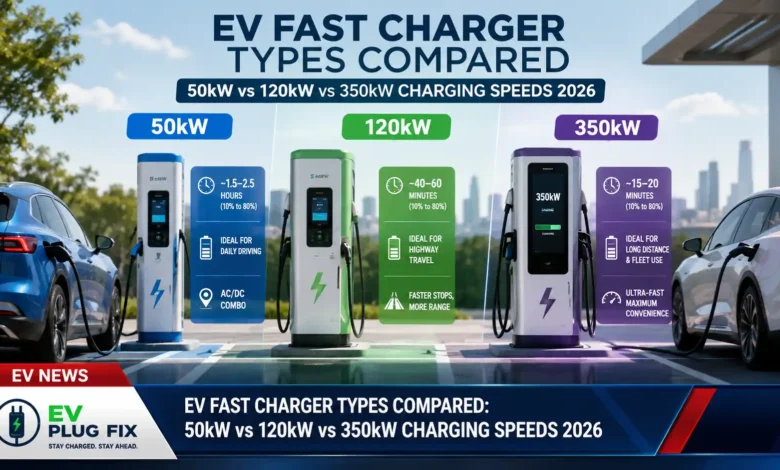
EV fast charger types determine how quickly you can get back on the road, and understanding the differences between 50kW, 120kW, and 350kW DC charging stations is essential for every electric vehicle owner in 2026. The European charging network has expanded dramatically, but not all fast chargers deliver the same experience. Whether you’re navigating urban streets or planning cross-continent road trips, the type of DC fast charger you choose directly impacts your travel time and overall EV ownership satisfaction. For drivers considering their first electric vehicle, understanding EV Charging Time at home versus public stations provides valuable context for daily usage planning.
Public DC chargers are far more common than High-Power Charging (HPC) units across Europe. They’re cheaper to install and place less strain on local power grids, making them ideal for shopping centres, parking lots, and urban areas where drivers typically spend 30 to 60 minutes. HPC chargers, however, are strategically positioned along major highways to enable rapid turnaround during long-distance journeys. Let’s examine exactly how these EV fast charger types perform using real-world data.
EV Fast Charger Types: Breaking Down DC Charging Speeds
When discussing EV fast charger types, we’re specifically referring to DC (direct current) charging stations that bypass the vehicle’s onboard charger and send power straight to the battery. This distinction matters because AC chargers—even at 22kW—can’t compete with the speeds offered by DC infrastructure. The current European landscape features three primary power categories:
- 50kW DC Chargers: The entry-level fast charging standard, widely available in urban and suburban locations
- 120kW DC Chargers: Mid-range units offering significant speed improvements without extreme infrastructure demands
- 350kW Ultra-Rapid Chargers: The current pinnacle of public charging technology, primarily reserved for highway corridors
Each EV fast charger type serves distinct use cases. The 50kW units dominate city centres because they balance installation costs with practical charging times for daily commuters. The 350kW behemoths, meanwhile, require substantial grid upgrades and sophisticated thermal management but deliver unprecedented convenience for travellers. When installing home charging equipment, understanding EV Charger Circuit Breaker requirements ensures your electrical panel can safely handle the load.
Real-World Charging Times: Audi e-tron 50 Test
To understand how these EV fast charger types perform in practice, we’ve analysed charging data for the Audi e-tron 50, which features a 71 kWh battery pack. This popular EV represents a sweet spot in the market—large enough to benefit from fast charging but not so massive that it skews results. The industry-standard metric measures charging time from 20% to 80% state of charge, the optimal window for battery health and maximum charging speed.
| Charger Type | Power Output | 20% → 80% Charge Time | Best Use Case |
|---|---|---|---|
| Standard DC Fast Charger | 50 kW | ~45-50 minutes | Urban charging, shopping trips |
| Enhanced DC Charger | 120 kW | ~20-25 minutes | Regional travel, commercial areas |
| Ultra-Rapid HPC | 350 kW | ~12-15 minutes | Highway corridors, long-distance routes |
The numbers tell a compelling story. Switching from a 50kW to a 120kW EV fast charger type cuts charging time by more than half, transforming a coffee-and-wait scenario into a quick restroom break. The leap to 350kW offers diminishing returns—only saving an additional 8 to 10 minutes—but for drivers on tight schedules, every minute counts. For a deeper understanding of charger capabilities at different power levels, our EV Charging Levels Guide provides a comprehensive visual comparison.
Where to Find Each EV Fast Charger Type in Europe
Europe’s charging infrastructure has evolved to distribute these EV fast charger types strategically based on driver behaviour patterns. Understanding this geography helps you plan routes more effectively.
50kW Chargers: The Urban Workhorses
You’ll find 50kW DC chargers at supermarkets, retail parks, and municipal car parks across the UK, Germany, France, and beyond. Their relatively modest power draw means they can be installed in greater numbers without overwhelming local electrical capacity. For example, many Tesco Extra locations now feature banks of 50kW units alongside destination chargers, enabling shoppers to add meaningful range during a 45-minute grocery run. If you encounter issues with these public units, the EV Charger Troubleshooting Guide offers helpful diagnostic steps that apply to both home and public charging scenarios.
120kW Chargers: The Flexible Middle Ground
This EV fast charger type bridges the gap between urban convenience and highway capability. Service stations along major A-roads frequently install 120kW units, recognising that drivers on regional journeys need faster turnaround than city dwellers but don’t require ultra-rapid infrastructure. The Ionity and Fastned networks have deployed thousands of these chargers across Europe’s secondary road networks.
350kW HPC Chargers: The Highway Champions
Ultra-rapid 350kW chargers are strategically positioned every 150 to 200 kilometres along Europe’s major motorways. The EU’s TEN-T regulation now mandates these high-power corridors, ensuring that drivers can traverse the continent with confidence. You’ll find them at dedicated charging hubs near Autobahn exits, French péage stations, and Italian autostrada service areas. For drivers based in Austria, understanding local requirements like MID Wallbox Requirements can help you navigate both public and workplace charging options effectively.
Beyond the Numbers: Charging Curves and Real Performance
While peak power output defines each EV fast charger type, the actual charging experience depends on your vehicle’s charging curve. The Audi e-tron 50, for instance, accepts a maximum of 120kW—so plugging into a 350kW charger won’t deliver 350kW speeds. Instead, the charger communicates with the battery management system to deliver the optimal power profile.
Most modern EVs follow a similar pattern: maximum power delivery between 10% and 50% state of charge, followed by a gradual tapering as the battery approaches 80%. This means the 20% to 80% window we analysed represents the sweet spot for all EV fast charger types. Charging beyond 80% becomes progressively slower, which is why road trip planners recommend charging to 80% and moving to the next charger rather than waiting for 100%. Understanding European EV Charging Standards like Type 2 and CCS2 connectors ensures compatibility across different charger types and networks.
“The difference between 50kW and 120kW chargers is the difference between finishing your coffee and actually enjoying it. For most drivers, 120kW strikes the perfect balance between speed and availability.”
Choosing the Right EV Fast Charger Type for Your Needs
Selecting between these EV fast charger types ultimately depends on your driving patterns and vehicle capabilities. Here’s a practical framework to guide your decision:
- Daily Commuters: 50kW chargers at workplaces or shopping centres provide sufficient top-ups during regular activities
- Weekly Travellers: 120kW units offer the best combination of speed and network coverage for regional journeys
- Long-Distance Adventurers: 350kW HPC chargers become essential when covering 500+ kilometres in a single day
- Fleet Operators: Mixed strategies—using 50kW for depot charging and 350kW for revenue-generating routes
Remember that not all EVs support the full range of EV fast charger types. Check your vehicle’s specifications before relying on ultra-rapid infrastructure. The 2026 market includes models like the Hyundai Ioniq 6, Kia EV6, and Porsche Taycan that can accept 350kW, while many affordable EVs max out at 100-150kW.
The Future of EV Fast Charger Types Beyond 2026
The European charging landscape continues to evolve rapidly. While today’s EV fast charger types range from 50kW to 350kW, manufacturers are already testing 500kW and even 1MW systems for commercial vehicles. For passenger cars, the focus has shifted toward making 350kW chargers more accessible and affordable, with networks like Ionity and Tesla Supercharger leading the expansion.
Solid-state batteries, expected to enter production by 2028, will further transform charging dynamics. These next-generation power packs can accept higher charge rates for longer periods, potentially reducing 20% to 80% times to under 10 minutes even on current 350kW hardware. Until then, understanding today’s EV fast charger types empowers you to make informed choices about route planning and charging strategy.
50kW Tip
Perfect for topping up during weekly shopping—you’ll gain about 150km of range during a 45-minute grocery run in most EVs.
120kW Tip
The sweet spot for regional travel—20-25 minute charging sessions align perfectly with coffee and restroom breaks on A-road journeys.
350kW Tip
Check your vehicle’s maximum acceptance rate before relying on ultra-rapid chargers. Some EVs simply can’t use the full power.
As Europe’s charging infrastructure expands and new EV fast charger types emerge, staying informed about power outputs, vehicle compatibility, and network coverage ensures you get the most from your electric driving experience. The 50kW, 120kW, and 350kW options available today already provide unprecedented flexibility—match them to your needs, and you’ll enjoy seamless journeys across the continent.