European EV Charging Standards 2026: Compliance Guide for Manufacturers & Operators
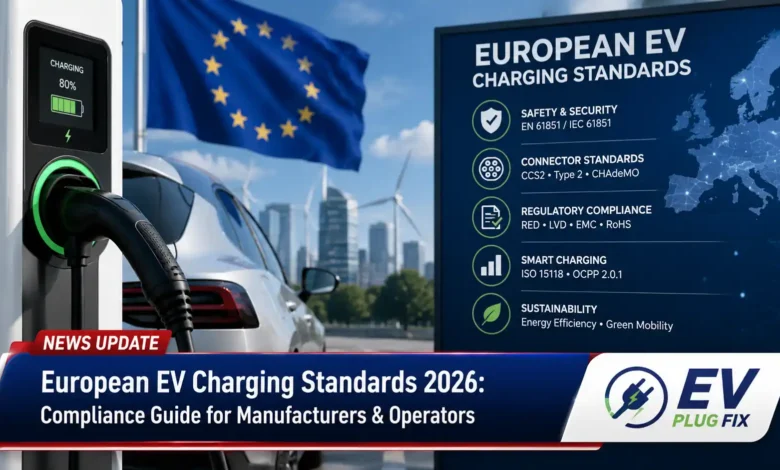
European electric vehicle (EV) charging standards are experiencing their most decisive technical and regulatory transformation in over a decade. Driven by the European Union’s mandatory Alternative Fuels Infrastructure Regulation (AFIR) mandates and updated technical protocols, the continent is radically reshaping how original equipment manufacturers (OEMs), Charge Point Operators (CPOs), and e-Mobility Service Providers (EMSPs) deploy and maintain charging infrastructure. The regulatory framework—anchored by IEC 61851 for foundational safety, IEC 62196 for physical connector interfaces, and ISO 15118 for high-level digital communication—has transitioned from a set of voluntary interoperability guidelines into a strict, legally binding compliance mandate. With the January 8, 2026 enforcement deadline for mandatory ISO 15118-2 support on all newly installed public AC chargers, followed by the January 1, 2027 requirement for ISO 15118-20 bidirectional power transfer capabilities, Europe is shifting from simple energy delivery to a fully connected, intelligent, and secure smart-grid ecosystem.
Europe’s EV Charging Standard Framework: The Technical Foundation
The European EV charging architecture relies on three tightly integrated standard families. Together, they govern physical connections, electrical safety protocols, signal states, and high-level cryptographic communications. Mastering this triad is essential for any equipment manufacturer targeting the European market in 2026 and beyond.
IEC 61851: The Safety and Control Backbone
The IEC 61851 series (specifically EN IEC 61851-1:2019) establishes fundamental safety parameters, signal protocols, and operational state machines for conductive EV charging systems. Communication between the Electric Vehicle Supply Equipment (EVSE) and the vehicle relies on the Control Pilot (CP) signal—a 1 kHz Pulse Width Modulation (PWM) wave operating at ±12V.
- State A (+12V DC): Vehicle disconnected; EVSE standby.
- State B (+9V / -12V PWM): Vehicle connected, not ready to receive power; PWM duty cycle communicates maximum available current (e.g., 10% duty cycle = 6A, 80% = 48A).
- State C (+6V / -12V PWM): Vehicle connected, ready to charge; power contactor closes.
- State D (+3V / -12V PWM): Vehicle ready; ventilation required (hazardous indoor locations).
- State E (0V): Error condition / Short circuit to ground; EVSE instantly trips power.
- State F (-12V): EVSE unavailable / Fault detected.
Simultaneously, the Proximity Pilot (PP) circuit detects physical cable insertion and determines the maximum current-carrying capacity of the cable assembly using specific resistance values (e.g., 150 Ω for 13A, 220 Ω for 20A, 680 Ω for 32A). Compliance with IEC 61851-1 requires robust galvanic isolation, short-circuit protection, residual direct current detecting devices (RCD Type B or Type A + 6mA DC detection), and strict Electromagnetic Compatibility (EMC) testing.
IEC 62196: Physical Connector Standardization
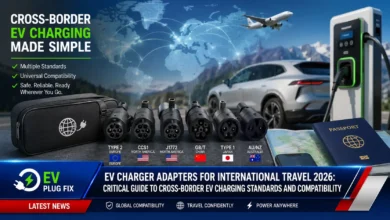
IEC 62196 standardizes mechanical attributes, dimensional tolerances, and electrical contact configurations for plugs, socket-outlets, vehicle connectors, and vehicle inlets. Part 2 dictates AC physical interfaces, while Part 3 defines DC fast-charging systems.
| Connector Type | Standard | Charging Mode | Max Power Capability | EU Market Status & Prevalence |
|---|---|---|---|---|
| Type 2 (Mennekes) | IEC 62196-2 | AC (Mode 3) | 22 kW (Public 3-phase) / 43 kW (Tethered) | Mandatory EU standard for AC charging infrastructure |
| CCS2 (Combined Charging System) | IEC 62196-3 | AC & DC (Mode 3 & 4) | Up to 350 kW – 400 kW (1000V DC / 500A) | Dominant standard; over 85% of all DC fast chargers |
| CHAdeMO | IEC 62196-3 (Rev.) | DC (Mode 4) | Up to 100 kW | Legacy status; phased out under AFIR directives |
The Type 2 (Mennekes) connector remains the universal standard for AC charging across Europe due to its ability to support single-phase and three-phase power supplies. Advanced Type 2 inlets feature integrated microswitches, motorized locking actuators to prevent disconnection under load, and embedded Negative Temperature Coefficient (NTC) thermal sensors to mitigate thermal runaway risks during high-current sessions.
For DC high-power charging (HPC), the Combined Charging System 2 (CCS2) extends the Type 2 interface by adding two dedicated DC power contacts. Capable of delivering continuous currents up to 500A with active liquid cooling, CCS2 provides full backward compatibility with Type 2 AC infrastructure through a single unified vehicle inlet.
ISO 15118: Digital Communication & Smart Grid Integration
ISO 15118 (“Road vehicles — Vehicle to grid communication interface”) represents the cryptographic and functional heart of modern European charging networks. Under AFIR guidelines, ISO 15118 compliance is mandatory for all new public AC EVSEs deployed after January 8, 2026.
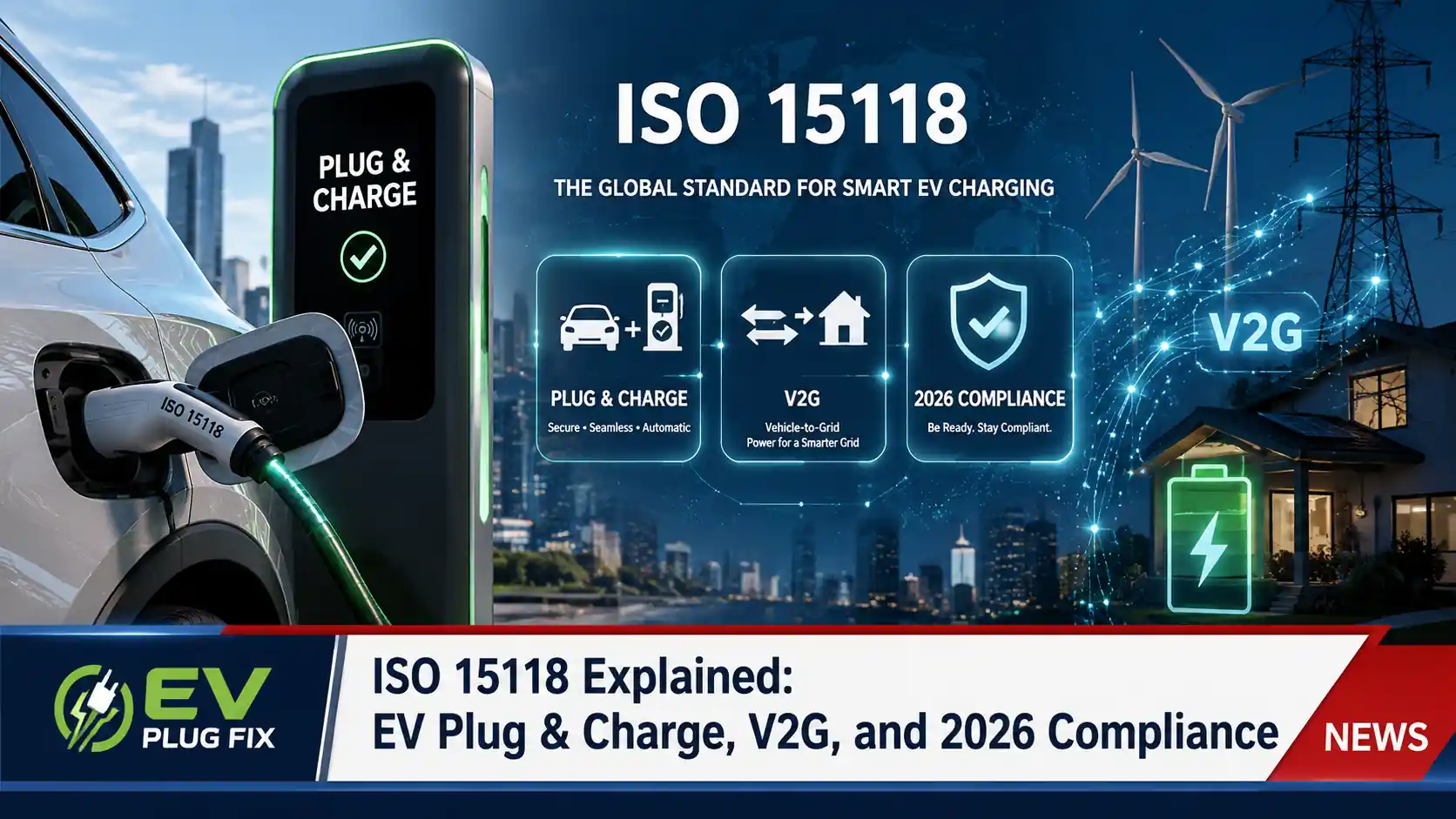
ISO 15118 introduces three core capabilities:
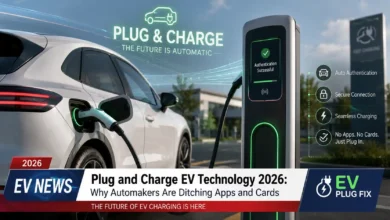
- Plug & Charge (PnC): Eliminates manual authorization via RFID cards or mobile applications. Utilizing a secure Public Key Infrastructure (PKI) with TLS 1.3 encryption, the vehicle and the EVSE perform asymmetric cryptographic handshakes, automatically authorizing sessions and handling billing within seconds of physical connection.
- Dynamic Smart Charging: Enables continuous, real-time negotiation of charging schedules based on grid bottlenecks, dynamic electricity tariffs, transformer capacities, and state-of-charge (SoC) parameters.
- Bidirectional Power Transfer (V2G/V2X): Standardized within ISO 15118-20, this feature enables Vehicles to Grid (V2G), Vehicles to Home (V2H), and Vehicles to Building (V2B) power discharge using standard AC or DC connections.
While ISO 15118-2 laid the foundation for PnC and basic smart charging, ISO 15118-20 introduces mandatory TLS 1.3 security (eliminating legacy fallback ciphers), mutual certificate authentication, dynamic grid services, and native support for bidirectional AC and DC power transfer. Because ISO 15118-20 is not backwards-compatible with ISO 15118-2 at the messaging stack level, manufacturers must implement dual-stack protocol managers within EVSE controller firmware to maintain seamless interoperability with legacy vehicles while satisfying 2027 mandates.
“ISO 15118 is no longer an optional differentiation feature—it is a mandatory regulatory baseline for European market access.” – AMPECO European Regulatory Taskforce
Technical Evolution: Comparing European EV Charging Protocols
To understand how communication protocols have matured, the table below outlines the technological shift from legacy analog signalling to modern cryptographic protocols.
| Feature / Capability | IEC 61851-1 (PWM) | DIN 70121 | ISO 15118-2 | ISO 15118-20 |
|---|---|---|---|---|
| Communication Type | Analog (PWM signal) | Digital (Powerline / PLC) | Digital (PLC / HomePlug Green PHY) | Digital (PLC & Wireless / Wi-Fi) |
| Authentication Method | RFID / App (Manual) | Manual / MAC Address | Plug & Charge (PnC) via PKI | Mutual PnC (TLS 1.3) |
| Smart Grid Integration | Basic (Current limiting) | Static current negotiation | Dynamic scheduling | Real-time dynamic DER integration |
| Bidirectional (V2G) | ❌ Not Supported | ❌ Not Supported | Experimental / Non-standard | ✅ Native AC & DC V2G/V2X |
| Cybersecurity | None (Unencrypted) | Basic transport security | TLS 1.2 (Optional/Mandatory) | TLS 1.3 (Mandatory Strict) |
Interoperability Protocols: Connecting the Charging Ecosystem
For a fully integrated e-mobility grid, hardware standards must interface seamlessly with backend management software, energy management systems (EMS), and grid operators.
OCPP 2.1: The Backbone of Charge Point Management
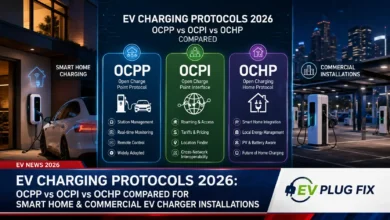
Developed by the Open Charge Alliance (OCA), the Open Charge Point Protocol (OCPP) acts as the universal language between EVSE hardware and the Charge Point Management System (CSMS). While OCPP 1.6J remains widely deployed, OCPP 2.0.1 and the OCPP 2.1 specifications are required to unlock the full potential of ISO 15118.
Key enhancements in OCPP 2.1 include:
- Native ISO 15118-20 Support: Direct routing of V2X charging/discharging schedules and dynamic control signals.
- Distributed Energy Resource (DER) Control: Real-time load management interfaces compliant with grid operator demand-response requirements.
- Enhanced Security Profiles: Strict certificate management workflows, secure firmware updates over-the-air (FOTA), and security event logging.
- Advanced Transaction Handling: Flexible pricing models including dynamic tariff updates, multi-currency support, and offline session resilience.
OCPI and OpenADR: Roaming and Demand Response
The Open Charge Point Interface (OCPI) protocol enables seamless roaming between different CPO networks, granting drivers cross-border access using a single subscription account. Concurrently, OpenADR (Open Automated Demand Response) allows Transmission System Operators (TSOs) and Distribution System Operators (DSOs) to send automated load shedding or throttling signals to charging hubs during grid stress events, maintaining overall grid stability as EV adoption scales.
Cybersecurity Standards: EU Cyber Resilience Act & NIS2 Compliance
As EV charging stations evolve into networked energy nodes, cybersecurity has become a top-tier regulatory priority in Europe. The EU’s Cyber Resilience Act (CRA) and the updated NIS2 Directive classify public EV charging networks as critical infrastructure, imposing strict digital security requirements on manufacturers and operators:
- Hardware Root of Trust (RoT): EVSE mainboards must integrate dedicated Secure Elements (SE) or Trusted Platform Modules (TPM 2.0) to safeguard cryptographic private keys used in ISO 15118 Plug & Charge handshakes.
- Mandatory TLS 1.3 Encryption: Under ISO 15118-20, all high-level digital communication between the EV, EVSE, and back-end CSMS must use TLS 1.3, banning legacy, vulnerable ciphers.
- Software Bill of Materials (SBOM): Manufacturers must maintain a transparent SBOM for all EVSE firmware, enabling rapid security vulnerability patching and Over-The-Air (OTA) updates throughout the 10-year minimum product lifecycle.
- Vulnerability Disclosure Timelines: CPOs and OEMs are legally obligated to report critical cybersecurity incidents to national competent authorities (e.g., ENISA) within 24 hours of discovery.
Compliance and Certification: Bringing EV Chargers to Market
Achieving regulatory compliance for EVSE deployment within the European Economic Area (EEA) requires navigating complex certification workflows.
CE Marking: Mandatory Directives
A CE mark is not a single certification badge, but a formal legal declaration that the product complies with all applicable EU harmonization directives.
- Low Voltage Directive (LVD) 2014/35/EU: Verifies electrical insulation, creepage/clearance distances, protection against electric shock, and thermal limits (evaluated via EN 61851-1 and EN 61851-23/24).
- Electromagnetic Compatibility (EMC) Directive 2014/30/EU: Ensures equipment operates safely without emitting unallowed electromagnetic interference (EMI) or suffering immunity failure (evaluated via EN 61000-6-2 and EN 61000-6-3).
- Radio Equipment Directive (RED) 2014/53/EU: Mandatory for chargers equipped with wireless modules (Wi-Fi, 4G/5G, RFID, Bluetooth).
- RoHS Directive 2011/65/EU: Restricts hazardous substances (e.g., lead, mercury, cadmium) in electronic assemblies.
EU Measuring Instruments Directive (MID) 2026 Updates
In February 2026, the European Council updated the Measuring Instruments Directive (MID) frameworks to harmonize legal metrology for public EV charging. The revised directive enforces strict transparent billing:
- Metrological Traceability: Energy meters inside the EVSE must be certified (Module B + D) to measure kilowatt-hours (kWh) accurately under varying environmental conditions (-25°C to +55°C).
- Field-Replaceable Cables: EVSE charging cables must be field-replaceable upon wear or vandalism without invalidating the metrological calibration seal of the meter. Integrating durable, high-conductivity Copper EV Charging Cables guarantees compliance with strict thermal loss and accuracy guidelines.
- Flexible Data Display: CPOs may present legally binding transaction data on remote digital screens or smartphone apps connected via secure cryptographic signatures, rather than requiring physical glass display windows on the EVSE enclosure.
AFIR Mandates and Deadlines Overview
| Regulatory Date | Mandated Requirement | Enforcement Scope |
|---|---|---|
| April 13, 2024 | Ad-hoc payment solutions (contactless card readers or QR codes) required | All new public DC chargers ≥ 50 kW and major highway nodes |
| January 8, 2026 | Mandatory ISO 15118-2 protocol support & digital communication stack | All newly installed public AC charging points |
| January 1, 2027 | Mandatory ISO 15118-20 support including full V2G bidirectional capability | All public and private EV chargers deployed across the EU |
Infrastructure Deployment: The EU’s Charging Network Expansion
The European Union’s charging infrastructure is accelerating rapidly under AFIR targets. Recent data from Transport & Environment confirms that the EU’s combined public charging capacity exceeds its statutory requirement of 1.3 kW per Battery Electric Vehicle (BEV) by over 180%, with Western European nations leading deployment curves.
Key deployment metrics:
- TEN-T Core Network: High-power charging hubs (minimum 150 kW per dispenser) must be stationed every 60 km along main trans-European transport corridors. Over 80% of the Core network currently satisfies this threshold.
- Central and Eastern European Acceleration: Emerging markets demonstrate aggressive installation trends, with countries like Poland increasing compliance ratios from 20% to nearly 60% within 18 months.
- Grid Integration Focus: Infrastructure development is shifting from raw point counts to high-capacity corridors backed by stationary Battery Energy Storage Systems (BESS) to buffer high-power charging demands.
The ISO 15118 Plug & Charge Sequence Flow
Understanding the sequence of operations during an automated charging session is critical for troubleshooting system integration issues.
- Physical Connection: EV cable is plugged into the CCS2 or Type 2 inlet. Proximity Pilot (PP) detects engagement.
- Basic Communication Setup: Control Pilot (CP) shifts to State B (+9V PWM). Powerline Communication (PLC) link is established via HomePlug Green PHY.
- Cryptographic Handshake: The EV and EVSE establish a secure TLS 1.3 encrypted tunnel. Mutual PKI certificates are verified against the Mobility Operator Sub-CA.
- Contract Authorization: EVSE validates the EV’s e-Mobility Contract Identifier (eMAID) with the backend ecosystem in real time.
- Smart Charging Negotiation: EV transmits battery State-of-Charge (SoC) and energy requirements; EVSE responds with an optimal charging profile based on grid capacity.
- Power Transfer: CP shifts to State C (+6V). Isolation checks pass; contactors close, and high-voltage DC/AC charging commences automatically.
2026 Compliance Checklist for EV Charger Manufacturers
For engineering teams, product managers, and compliance officers bringing EVSE hardware to the European market, this actionable checklist outlines the critical development path:
1. Hardware & Mechanical Engineering
- Integrate Type 2 (AC) or CCS2 (DC) inlets/connectors certified to IEC 62196-2/3.
- Design field-replaceable cable assemblies equipped with calibrated NTC thermal sensors.
- Implement residual direct current detection (6mA DC RCD) alongside Type A RCD protection per IEC 61851-1.
- Ensure structural enclosures meet minimum IP54/IP65 (environmental) and IK10 (vandalism) ratings.
- Integrate an appropriate EV Charger Circuit Breaker and overcurrent protection scheme inside the distribution panel to prevent thermal faults.
2. Firmware & Communication Protocol Stack
- Embed dual-stack controllers capable of running both ISO 15118-2 and ISO 15118-20 protocols concurrently.
- Implement TLS 1.3 cryptographic libraries with Hardware Security Modules (HSM) or Secure Elements for PKI key storage.
- Deploy OCPP 2.0.1 or OCPP 2.1 client stacks with full DER and dynamic smart charging functional blocks.
- Refer to structured diagnostic protocols like an EV Charger Troubleshooting Guide to implement automated fault detection and diagnostic logging within the firmware.
3. Regulatory Certification & Testing
- Conduct safety testing (EN 61851-1, EN 61851-23) through an accredited ISO 17025 laboratory.
- Complete EMC testing (EN 61000 series) for industrial and residential environments.
- Compile the comprehensive CE Technical File and sign the EU Declaration of Conformity (DoC).
- Obtain MID Module B + D certifications for internal energy meters if public billing functionality is enabled.
Critical 2026-2027 Execution Deadlines
🔴 January 8, 2026: ISO 15118-2 compliance is legally mandatory for all newly installed public AC chargers in the EU.
🔴 January 1, 2027: ISO 15118-20 compliance becomes mandatory across all private and public installations to enable standard V2G grid integration.
Manufacturers must audit firmware capabilities immediately to ensure hardware is equipped with sufficient memory and processing power to support multi-protocol TLS handshakes.
Future Trajectory: Standards Evolution Beyond 2026
The evolution of European EV charging standards extends into several next-generation domain areas:
- Megawatt Charging System (MCS): Standardized under IEC 63407, MCS is designed for heavy-duty commercial vehicles, supporting voltages up to 1250V and currents up to 3000A (delivering up to 3.75 MW of power).
- Automated Charging Systems (ACD): Governed by IEC TS 61851-27, new standards define automated underbody, conductive, or robotic docking systems for autonomous fleets and public transit buses.
- Cyber Resilience Act (CRA) Integration: Future EVSE hardware entering Europe must satisfy stringent supply-chain security standards, Software Bill of Materials (SBOM) transparency, and long-term vulnerability patching regimes.
- Advanced Grid Synchronization: Combining ISO 15118-20 dynamic charging profiles with EV Charging Time optimization algorithms allows smart cities to balance grid loads automatically during peak renewable generation windows.
Achieving complete compliance with Europe’s regulatory framework is no longer a downstream checkpoint—it is the central driver of product architecture. Manufacturers and operators that align immediately with AFIR requirements, ISO 15118 protocols, and OCPP 2.1 communication interfaces will secure market access, drive operational efficiencies, and lead the transition toward zero-emission transportation across the European continent.
Frequently Asked Questions (FAQ)
Is ISO 15118 mandatory for private home chargers in Europe?
By January 8, 2026, ISO 15118-2 is mandatory primarily for new public AC charging points under AFIR regulations. However, by January 1, 2027, ISO 15118-20 compliance extends to private chargers to enable smart grid management and bidirectional Vehicle-to-Grid (V2G) power transfer.
What is the difference between DIN 70121 and ISO 15118?
DIN 70121 was an early interim standard derived from early ISO 15118 drafts, supporting basic DC fast charging without Plug & Charge (PnC) or dynamic smart charging capabilities. ISO 15118 replaces DIN 70121 entirely, adding TLS 1.3 cryptographic security, automated billing, and V2G bidirectional capabilities.
Are ad-hoc credit card payment terminals mandatory on all public chargers in Europe?
Yes. Under the AFIR mandate that took effect in April 2024, all new public DC fast chargers with a capacity of 50 kW or higher must be equipped with contactless payment card readers or devices capable of reading QR codes for direct ad-hoc payment without requiring pre-registration or apps.
Will existing EVs work with chargers enforcing ISO 15118-20?
Yes. Fully compliant ISO 15118-20 EVSE hardware features backward compatibility through a multi-protocol firmware stack that falls back to ISO 15118-2, DIN 70121, or IEC 61851-1 PWM signals depending on the capabilities of the connected vehicle.