EV Charging Time Calculator: How Long to Charge 66.5 kWh Battery in 2026
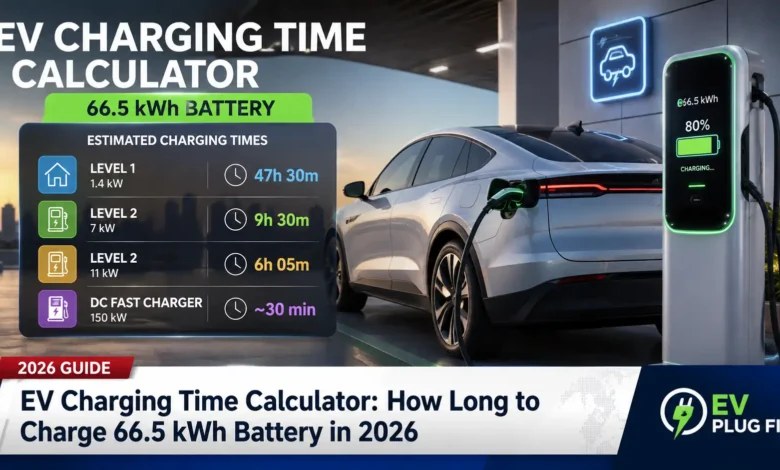
EV charging time for a 66.5 kWh battery with a 22 kW three-phase charger typically takes about 3 hours from zero to full, but that’s not the whole story. The real-world charging experience involves complex battery management systems, tapering charge rates, and strategic considerations that every EV owner needs to understand before their next long trip. For a comprehensive overview of selecting the right equipment for your home, check out our Home EV Charger Guide.
When you plug your electric vehicle into a powerful three-phase charger like the go-e Charger Gemini flex 22 kW, the initial charging phase delivers maximum power, rapidly filling your battery to approximately 80% capacity. However, as the battery approaches full, the charging process intentionally slows down to protect cell health and extend overall battery lifespan. This tapering effect means your actual charging session will take longer than simple math suggests. Understanding EV Load Shifting Strategies can help you schedule these sessions during optimal times to save on energy costs.
Understanding Your 66.5 kWh Battery Charging Time
The fundamental calculation for EV charging time seems straightforward: divide battery capacity by charger power output. For a 66.5 kWh battery and a 22 kW charger, this simple division gives you approximately 3.02 hours. But here’s where the reality diverges from theory.
Modern lithium-ion battery packs employ sophisticated battery management systems (BMS) that regulate charging speed based on multiple factors including temperature, state of charge, and overall battery health. These systems prioritize battery longevity over charging speed, which means your EV will never maintain maximum charging power all the way to 100%. For detailed diagnostics when your system isn’t performing as expected, refer to our guide on EV Charger Error Codes.
Battery Capacity Matters
The 66.5 kWh rating represents your battery’s total energy storage capacity. This figure determines how far you can drive and directly impacts charging time calculations across all charger types.
Charger Output Power
A 22 kW three-phase charger delivers significantly more power than standard single-phase home chargers, reducing overall charging time by approximately 66% compared to 7.4 kW alternatives.
The EV Charging Curve: Why Speed Changes Throughout Your Session
The EV charging curve describes how your vehicle’s charging speed varies during a session. Understanding this curve is essential for accurate trip planning and managing range anxiety during long journeys.
Your electric vehicle will typically accept maximum charging power from 0% to about 80% state of charge. During this phase, the go-e Charger Gemini flex can deliver its full 22 kW output. However, once your battery crosses the 80% threshold, the BMS begins reducing power input to prevent cell degradation and overheating. For a step-by-step guide on configuring your device for optimal performance, see our go-e Charger Setup article.
Understanding the Tapering Effect
When your battery reaches approximately 85-90% capacity, the charging process becomes noticeably slower. This tapering effect serves multiple purposes:
- Battery Protection: High-voltage charging near full capacity can damage lithium-ion cells and reduce long-term battery health
- Heat Management: Slower charging generates less heat, protecting sensitive battery components
- Cell Balancing: The BMS uses slower charging to ensure all individual battery cells achieve uniform charge levels
| Battery State of Charge | Charging Speed (kW) | Time to Reach | Notes |
|---|---|---|---|
| 0% – 80% | 22 kW (maximum) | ~2.4 hours | Fastest charging phase |
| 80% – 90% | 11-16 kW | ~30 minutes | Speed begins tapering |
| 90% – 100% | 3-7 kW | ~45-60 minutes | Extremely slow charging |
Real-World EV Charging Time Examples
Based on extensive testing with the go-e Charger Gemini flex and similar 22 kW three-phase chargers, here’s what you can expect for your 66.5 kWh battery vehicle:
- 0% to 80% charging: Approximately 2.4 hours at maximum power delivery
- 0% to 90% charging: Approximately 3.0 hours including initial taper
- 0% to 100% charging: Approximately 3.5-4.0 hours with full tapering effect
“The final 10% of an EV battery charge is the most time-consuming phase, often taking as long as the first 60% of the charge session.”
Smart Charging Strategies for EV Owners
Understanding your battery charging curve enables smarter charging decisions. Many EV owners and experts recommend charging to 80% for daily use and only charging to 100% when needed for long trips. This approach saves time and extends battery life. To get the most out of your renewable energy integration, explore PV Surplus Charging techniques that align with your solar production.
Factors That Affect EV Charging Time
Beyond your battery capacity and charger output, several other factors influence how long you’ll spend at the charging station:
- Ambient Temperature: Extreme cold or heat can reduce charging efficiency by 15-25%
- Battery Temperature: Cold batteries charge slower until they warm up during the session
- Charger Type: AC vs. DC fast charging significantly impacts total time
- Simultaneous Vehicle Usage: Using climate control or entertainment systems while charging can extend total time
Maximizing Your EV Charging Efficiency in 2026
The electric vehicle industry continues to evolve rapidly, with new technologies making charging more efficient than ever. For owners of vehicles with 66.5 kWh batteries, understanding charging patterns helps optimize daily routines and reduce unnecessary waiting time. Staying informed about the latest developments, including the 2026 EV Tax Credit, can also help you make cost-effective decisions about your charging infrastructure.
Modern EVs and chargers communicate intelligently to optimize charging sessions. The go-e Charger Gemini flex, for example, offers smart features that adjust power delivery based on grid availability and your vehicle’s current state. These innovations reduce overall charging time while maintaining battery health.
Smart Charging Tips for Daily Use
To get the most from your charging experience, consider these practical strategies:
- Schedule charging during off-peak hours to reduce costs and grid strain
- Precondition your battery before fast charging in cold weather
- Avoid charging to 100% regularly—stick to 80% for daily commuting
- Monitor your charging session using smartphone apps for real-time updates
Remember that the 3-hour charging time for a 66.5 kWh battery with a 22 kW charger represents a theoretical minimum. In practice, you should expect approximately 3.5 hours for a full charge and about 2.5 hours for an 80% charge. Adding 30 minutes to your planned charging time ensures you won’t be caught off guard by the tapering effect. Regular upkeep is key to reliable performance, so be sure to review our EV Charging Maintenance Guide for long-term care tips.