Renault ZOE Charging Time 2026: Home Wallbox & DC Fast Charge Speeds
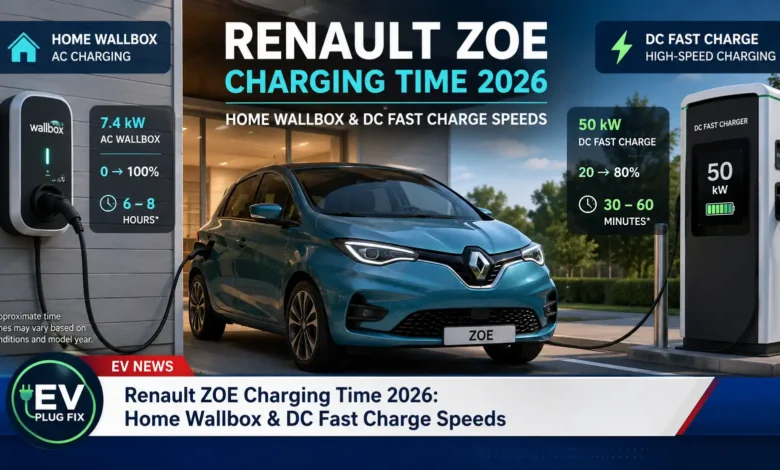
The Renault ZOE charging time in 2026 remains a benchmark for electric vehicle efficiency, and understanding the exact speeds from a home wallbox is key to maximizing your EV experience. Your charging time depends on two main factors: your ZOE’s battery version and the power of your home charger or public station. This guide cuts through the confusion, providing precise charging times for the popular ZOE ZE40 and ZE50 models. For a broader understanding of home charging options, check out our Home EV Charger Guide to find the perfect setup for your needs.
⚡ Expert Analysis: The ZOE’s standout feature is its 22 kW three-phase AC charging capability. Unlike most EVs limited to 7.4 kW or 11 kW, a properly equipped ZOE with a 22 kW wallbox can recharge nearly twice as fast as with an 11 kW charger. This makes it essential to understand Stationary vs Mobile Chargers when deciding on your home installation.
Renault ZOE Home Wallbox Charging Time in 2026
For most owners, home charging is the most convenient and cost-effective method. The time it takes to fully charge your ZOE varies significantly based on the wallbox’s power output and your home’s electrical setup. Before installing a high-power unit, consider reviewing our Level 2 EV Charger Installation guide to ensure your garage is properly equipped.
Here are the exact charging times for a ZOE ZE40 (41 kWh battery) using different home wallbox configurations:
| Wallbox / Adapter Type | Max Power | Charging Time (0-100%) |
|---|---|---|
| Standard 3-pin Household Socket (Emergency) | 2.3 kW | ~18.3 hours |
| Reinforced Green’Up Socket | 3.7 kW | ~11.6 hours |
| Single-Phase 11 kW Wallbox | 3.7 kW | ~11.6 hours |
| Three-Phase 11 kW Wallbox | 11 kW | ~4.2 hours |
| Three-Phase 22 kW Wallbox (e.g., go-e Gemini flex) | 22 kW | ~2.4 hours |
If you drive a newer ZE50 with a larger 52 kWh battery, expect slightly longer times: a standard 7.4 kW wallbox typically takes 9-10 hours for a full charge, while a 22 kW setup reduces this considerably.
The 22 kW Advantage: With a 22 kW wallbox such as the go-e Charger Gemini or Gemini flex, the charging process is almost twice as fast as with an 11 kW home charger. This makes the ZOE one of the fastest-charging EVs at home, provided you have a three-phase power supply. To understand how this compares to other popular models, you might find our go-e Gemini flex Comparison particularly useful for evaluating your options.
DC Fast Charging Times for Renault ZOE
When you’re on the road, the ZOE offers DC fast charging, but it’s capped at a maximum power of 50 kW. This is available only on ZE50 models equipped with the optional CCS Combo connector.
Charging from 0 to 80% at a 50 kW DC station typically takes between 40 and 60 minutes. Some sources report slightly longer times, around 1 hour and 10 minutes, but this can depend on battery temperature, state of charge, and charger condition.
A key detail: the ZOE’s 22 kW AC capability often makes it faster than many EVs when using high-power AC destination chargers, as it can bypass the slower onboard charger limitations found in other models. For those considering different connector types, our Cross-Brand EV Charging Compatibility article provides valuable insights into connector standards.
⚠️ Important Notice: DC fast charging speed slows down considerably once the battery exceeds 80% to protect battery health and optimize long-term energy efficiency. This is standard for all electric vehicles.
ZOE Charging Speed Comparison: AC vs DC
- Home Wallbox (22 kW AC): 0-100% in ~2.5 hours (ZE40).
- Home Wallbox (11 kW AC): 0-100% in ~4.2 hours (ZE40).
- Public Rapid (50 kW DC): 0-80% in ~40-60 minutes.
- Public Fast (22 kW AC): 0-100% in ~3 hours.
The Renault ZOE is equipped with a Chameleon® charger that can accept up to 22 kW AC power. This makes it uniquely versatile, able to charge efficiently on both private wallboxes and public AC stations.
Maximizing Your Renault ZOE Charging Efficiency
To get the most out of your ZOE’s charging capabilities in 2026, consider these actionable tips for both home and public charging. Smart charging strategies like EV Load Shifting Strategies can help you save money and reduce strain on the grid.
Choosing the Right Home Wallbox
If you have a three-phase power supply at home, investing in a 22 kW wallbox like the go-e Charger Gemini flex is the best choice for drastically reducing charge times. For homes with single-phase power, a 7.4 kW wallbox is the standard and will get the job done overnight, with a full charge taking around 9-10 hours for the 52 kWh battery.
Always ensure your installer is certified and your electrical system is compatible with the high power draw. Regular maintenance is also crucial; our EV Charging Maintenance Guide offers expert advice on keeping your equipment in top condition.
Home vs. Public Charging Costs
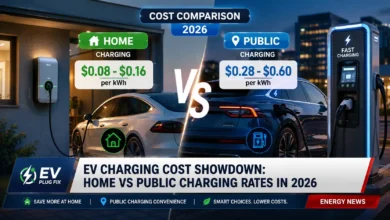
The cost of charging your ZOE is significantly lower at home, especially if you use an off-peak electricity tariff. In some regions, charging at home with a dedicated EV tariff can cost less than one-third of the price of using public rapid chargers, where a full charge might cost €15-25.
Renault ZOE Charging Time Summary (2026)
Here is a quick summary of charging times for the ZOE to help you plan your charging strategy:
🖥️ Home Wallbox (22 kW)
0-100%: ~2.5 hours (ZE40)
0-100%: ~3.5 hours (ZE50)
🏡 Home Wallbox (7.4 kW)
0-100%: ~7-9 hours (ZE40)
0-100%: ~9-10 hours (ZE50)
⚡ DC Rapid (50 kW)
0-80%: ~40-60 minutes (CCS models only)
Adds ~150km range in 30 min
Understanding your Renault ZOE’s charging time is crucial for integrating it into your daily life. With its industry-leading 22 kW AC capability, it remains one of the most flexible and rapidly charging electric vehicles at home, while its 50 kW DC rapid charging ensures you’re never stranded on a long journey. For ongoing insights and updates on EV charging technology, be sure to explore more resources at EVPlugFix.com.