Charging EV in Rain: What’s the Real Risk in 2026? Safety Facts
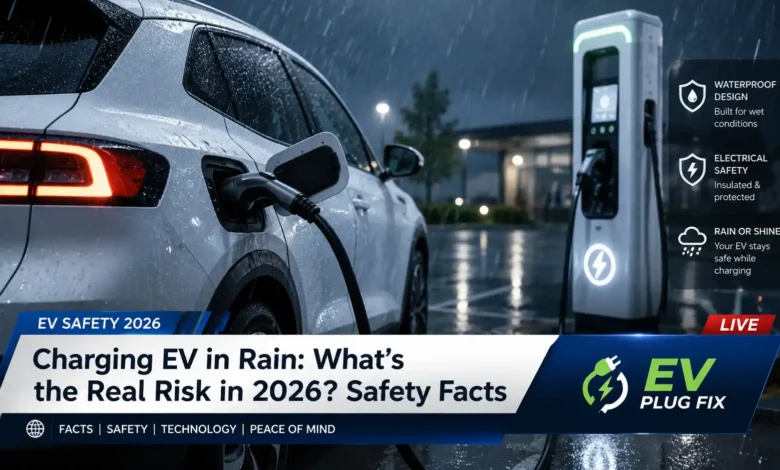
Charging your electric vehicle in the rain is an act performed millions of times daily across the globe, from rain-soaked parking lots in the UK to sudden downpours in the American Midwest. The question of whether it is safe to plug in during wet weather lingers in the minds of many new and prospective EV owners. The immediate answer is a resounding yes, but understanding the sophisticated engineering and multiple safety systems behind this reassurance is what truly empowers an EV driver. This comprehensive article explores the technology, standards, and real-world applications that make charging an EV in the rain perfectly safe in 2026.
The fear of mixing water and electricity is a deeply ingrained safety instinct. It is the same caution that warns us against using a hairdryer near a bathtub or operating a toaster with wet hands. Yet, the electric vehicle and its charging infrastructure are designed with this natural law in mind, incorporating engineering solutions that go far beyond typical consumer electronics. The automotive industry has spent billions ensuring that its products are not only capable but also resilient, and a little rain is simply not a threat.
Millions of EV owners worldwide do it daily without concern, from the rainy streets of London to the snowy conditions of Norway and the coastal storms of California. The absence of widespread safety incidents—despite hundreds of millions of charging sessions occurring globally every year—is a powerful testament to the robustness of the technology. If this were a genuine hazard, the insurance industry, regulatory bodies, and manufacturers would have flagged it long ago.
Before we get into the technical details, let’s be clear: charging your EV in the rain is not just safe, it is a normal and expected part of electric vehicle ownership. Manufacturers and charging network operators like Tesla, Shell, and others state this unequivocally, and the standards in place back them up.
Understanding IP Ratings: The Secret Behind Water Safety
To truly understand why rain is not an issue, it is essential to grasp the concept of Ingress Protection (IP) ratings. These are not just marketing terms; they are international standards that define how well electrical enclosures resist the intrusion of foreign bodies like dust and water. The rating consists of two digits: the first (0) indicates protection against solid particles like dust, while the second (0) indicates protection against liquids. A higher number means better protection.
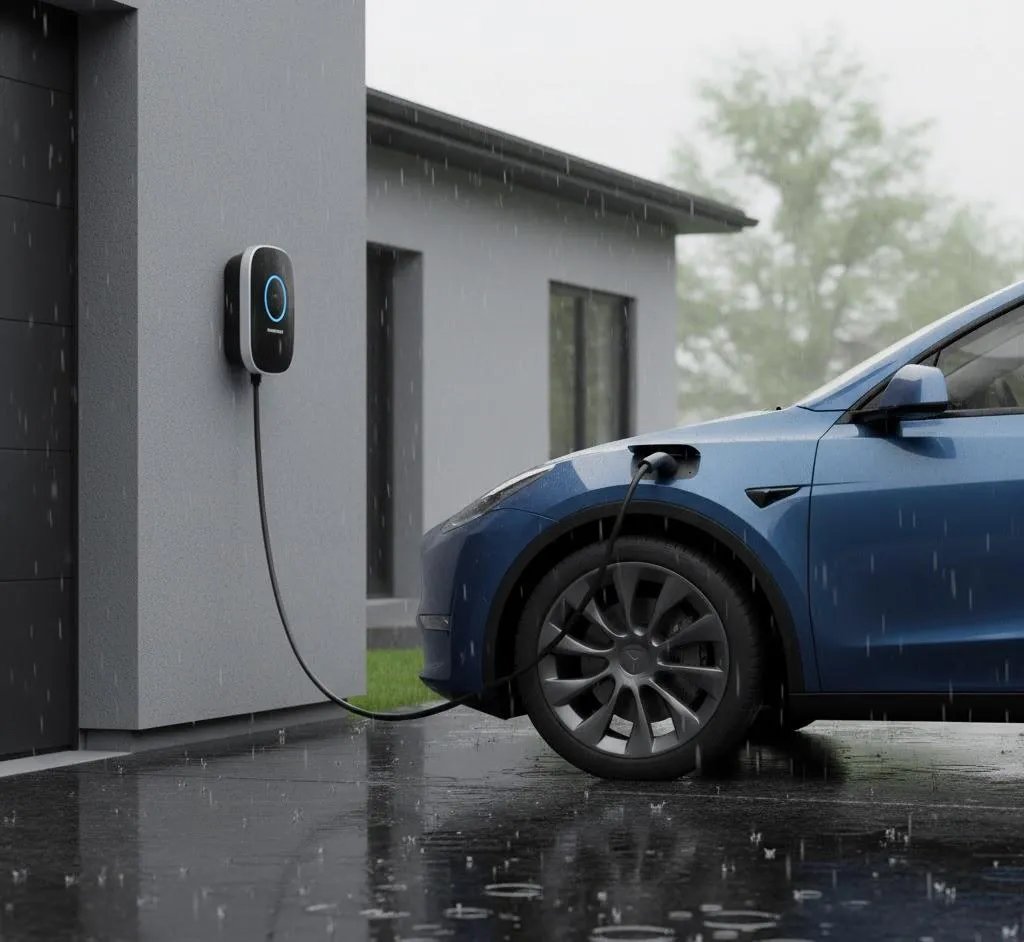
Most home and public EV chargers come with an IP54 or IP55 rating. In plain English, this means the unit is dust-protected and can handle water splashing from any direction. A standard rainy day is nothing for a charger rated IP54 or IP55. For outdoor installations exposed to harsh environments or powerful water jets, you will often find chargers rated IP66 or IP67, which are designed to withstand heavy storms, pressure washing, or even temporary immersion in water.
It is important to note that every EV charger sold in regulated markets must comply with rigorous international standards, such as the IEC 61851 standard, which includes comprehensive waterproofing tests. Regulatory bodies do not simply take manufacturers at their word; they verify that these devices perform as advertised before allowing them on the market. As noted in a guide from charging network operator Eleport, “your EV charger is protected more thoroughly than your smartphone charger”. The connectors themselves, like Type 2 or CCS, are designed so the pins are recessed and insulated, creating a watertight seal when connected. Understanding the specific EV Charging Connectors used in different regions can help you appreciate the engineering behind these waterproof designs.
Layers of Protection: How Your EV Charger Keeps You Safe
Charging an EV in wet conditions is not reliant on a single feature but on multiple, overlapping safety systems. Think of it as a security system with several layers of defense, each designed to act as a fail-safe. If one layer fails, another is there to back it up.
| Safety Feature | Function | Benefit |
|---|---|---|
| Ground Fault Protection (GFCI/RCD) | Monitors for electrical leaks; cuts power in milliseconds if a fault is detected. | Prevents electric shock from moisture ingress. |
| The Digital Safety Handshake (Control Pilot) | Requires EV and charger to communicate before any current flows. | Ensures a safe, secure connection before high-voltage electricity is sent. |
| Sealed Waterproof Connectors | Uses rubber gaskets and recessed pins to form a watertight seal. | Prevents water from entering the electrical contacts. |
| Battery Management System (BMS) | Monitors the battery’s condition in real-time during charging. | Can stop the charging process if it detects anomalies, protecting the battery pack. |
Ground Fault Protection (GFCI/RCD)
This is the unsung hero of electrical safety. Ground Fault Circuit Interrupters (GFCIs), also known as Residual Current Devices (RCDs), are designed to detect even the tiniest electrical leak. If water somehow creates a path for electricity to escape, the device detects it in milliseconds—faster than you can blink—and instantly cuts the power. This is the same technology that protects your outdoor garden outlets and bathroom appliances.
The Safety Handshake
Before any real power flows, the charger and the vehicle engage in a “digital handshake,” also known as the control pilot signal. The charger asks, “Are you ready for power?” and the car responds, “Yes, I am good to go,” only if the connection is secure, grounded, and sealed. If any issue is detected—like a loose connection or moisture—the handshake fails, and no electricity is sent, effectively preventing arcing or shocks.
Sealed Connections and Vehicle Safety
The physical connector itself is engineered to be a waterproof vessel, using high-quality rubber gaskets and molded plastic to create a seal that keeps water out. Once plugged in, these seals compress around all the electrical pins inside. The vehicle is not passive in this process either. Every EV has a Battery Management System (BMS) that constantly monitors charging parameters like temperature and voltage. If the system detects moisture or any anomaly, it will stop charging immediately to protect itself.
Real-World Scenarios: What Actually Happens
It is one thing to talk about theory, but real-world data is what truly matters. The experience of millions of EV owners, from daily commuters in rainy Britain to drivers in snow-covered Norway, confirms the safety of charging in wet conditions. Shell, one of the world’s largest energy companies, confirms on its support site that EV charging technology “is specifically designed to protect the vehicle and drivers from any kind of electrical shock including charging in the rain”.
Charging networks like Eleport and GRIDSERVE also state that their equipment is built for all weather conditions. As GRIDSERVE puts it, they have “designed our entire network with British weather firmly in mind (and let’s be honest, that means a lot of rain)”. Public chargers, installed in open-air parking lots and on city streets, are left exposed to the elements 24/7 and continue to function flawlessly. In countries like Norway, where EV adoption exceeds 90% and the weather is famously harsh, public charging networks operate perfectly year-round. If rain were a problem, these nations would not have embraced the technology so completely. For those considering the broader environmental impact of their EV, it’s worth exploring the EV vs Gas Emissions comparison to see the full lifecycle benefits.
While standard rain is perfectly safe, there is one scenario where common sense applies: extreme flooding. If a charging area is submerged in standing water during a hurricane or flash flood, it is best to avoid using the charger. The issue is not the charger’s design but that the conditions go beyond what any electrical equipment should handle. However, the GRIDSERVE guide for 2026 clarifies that EV battery packs are “typically rated to IP67 or better,” meaning they are “designed to withstand immersion in water up to a metre deep for 30 minutes”. So, a bit of water is fine, but a deep puddle should be avoided.
Expert Advice and Practical Tips for Rainy Day Charging
While charging in normal rain is entirely safe, following a few common-sense practices can make the experience even smoother and give you peace of mind. As highlighted by the Electric Vehicle Association, the only thing you need to worry about is keeping yourself dry.
- Visually Inspect the Equipment: Before plugging in, take a moment to check the charging cable and connector for any visible damage. If you see cracks, exposed wires, or severe wear, do not use that unit and report it to the network operator.
- Wipe Away Excess Moisture: While not strictly necessary for safety, a quick wipe of the charging connector and your car’s charge port with a dry cloth is a good habit. It helps prevent any minor issues and extends the lifespan of the equipment.
- Avoid Standing Water: If the charging bay is flooded or water is pooling deeply around the charger, choose a different spot. Standing water can be conductive, especially if it contains minerals or salt.
- Use an Umbrella (for You, Not the Charger): Keep yourself dry. As noted by a motoring expert from Australia, “the worst thing that happened was that I got soaked”.
- Respect Severe Weather: During a lightning storm, it is advisable to wait until conditions calm down. While lightning strikes are rare, the high voltage can potentially damage the battery management system, even with surge protection.
The Verdict: Why You Can Trust the Technology
The engineering standards governing EV charging are among the most rigorous in the electronics industry. The IEC 61851 international standard requires chargers to pass extensive water and dust resistance tests. Every major charger manufacturer—from Tesla, which explicitly states in its manual that charging can be performed in all weather conditions, to brands like Pod Point, Shell, and Siemens—must comply with these standards. Understanding J1772 vs CCS Charging connector standards is another example of how the industry prioritizes safety and reliability across different charging systems.
Furthermore, the components of an EV charging system are tested to survive extreme conditions: temperatures ranging from°F to 131°F, heavy rain, snow, and impact. This level of testing ensures that your EV charger is not just a piece of consumer electronics but a highly durable piece of infrastructure. The combined use of RCDs, digital communication protocols, and sealed connections means that the chance of an incident is not just low but virtually nonexistent. For homeowners looking to install their own charging solution, following proper Home EV Charger Guide protocols ensures that the installation itself meets the highest safety standards.
So, the next time you are standing in your driveway or at a public charging station on a rainy evening, plug in without hesitation. Your EV and its charger are built for this. They are ready, tested, and safe. The only thing you need to worry about is whether you remembered to bring an umbrella. For those curious about the technology behind onboard charging, the EV On-Board Charger Guide provides deeper insight into how your vehicle manages power delivery in all conditions.