PV Surplus Charging Modes Explained: Grid, Default, or Prefer Power to Grid in 2026
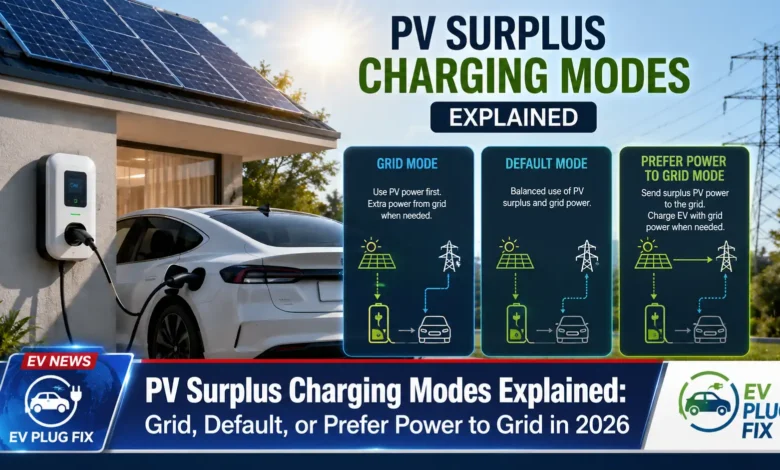
PV surplus charging represents a paradigm shift in how electric vehicle owners can harness their solar energy investment, but understanding the nuanced settings of your charging system—specifically the critical choice between “Prefer power from grid,” “Default,” and “Prefer power to grid”—can dramatically impact both your energy savings and charging efficiency. As solar-integrated EV charging becomes increasingly sophisticated in 2026, these three distinct modes determine how your wallbox interacts with your photovoltaic system, your home battery storage, and the utility grid. The go-e Controller and similar energy management systems have revolutionized this landscape by introducing automatic phase switching that adapts to available solar power, fundamentally changing the economics of home EV charging. For homeowners who have invested in solar panels, the difference between optimal configuration and default settings can mean hundreds of dollars in annual savings versus missed opportunities to maximize self-consumption. Let’s explore exactly how each mode functions, when to use them, and why phase switching has become the game-changer in solar EV charging efficiency.
Understanding PV Surplus Charging Modes: Grid, Default, and Prefer Power to Grid
- The “Prefer power from grid” mode prioritizes using grid electricity when PV production is insufficient, ensuring your EV charges even during cloudy conditions
- “Default” mode represents a balanced approach where your electricity meter alternately runs forward or backward during charging sessions
- “Prefer power to grid” mode prioritizes feeding excess solar energy back to the grid rather than using it for EV charging
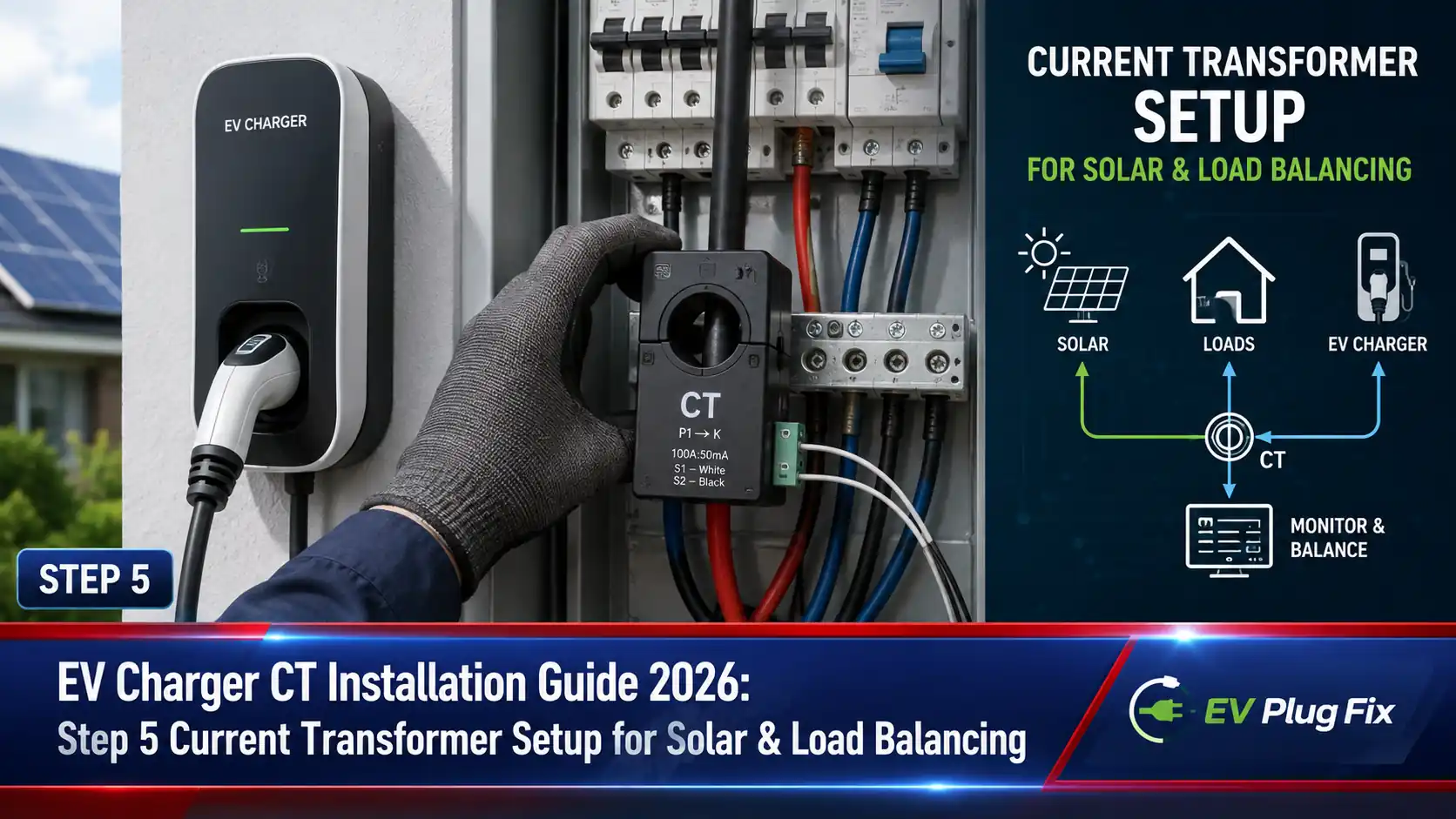
The “Default” mode offers a more dynamic approach where your electricity meter alternately moves forward or backward during charging sessions This creates a hybrid scenario where grid electricity and solar power are effectively mixed, with the system drawing from whichever source makes the most sense at any given moment. Research from the IEEE demonstrates that such dynamic energy management can maintain stable DC link voltage even when solar irradiance fluctuates from 1000 W/m² down to 400 W/m², ensuring reliable EV charging under variable weather conditions This makes “Default” an excellent choice for homeowners who want flexibility without overthinking their energy optimization.Conversely, selecting “Prefer power to grid” activates a mode where as long as the PV surplus isn’t sufficient to reach the next power level, small amounts of excess power are fed back to the utility grid This approach prioritizes grid feed-in over EV charging, which might be beneficial in regions with attractive feed-in tariffs or time-of-use pricing where grid export yields better financial returns than charging your EV. However, this mode generally results in lower self-consumption and may not maximize the value of your solar investment if charging your EV is your primary goal.The key insight is that these modes represent different philosophies about how to manage your solar energy: maximizing self-consumption with occasional grid support (“Prefer power from grid”), balancing grid and solar usage (“Default”), or prioritizing grid feed-in over self-use (“Prefer power to grid”). The optimal choice depends on your specific circumstances, including your electricity tariff structure, feed-in compensation rates, and daily driving patterns.
Mastering Phase Switching: The Secret to PV Charging Efficiency
- Automatic phase switching dramatically improves PV surplus charging efficiency by adapting to available solar power
- Single-phase charging can utilize solar surpluses as low as 1.4 kW
- Three-phase switching typically requires a minimum of 4.2 kW (6 amps at three-phase)
- The go-e Controller intelligently manages phase switching based on available PV surplus
- The go-e Controller tracks home energy usage and automatically starts charging your EV when excess power is available
- The system adjusts between one- and three-phase charging based on solar output
- When solar surplus is between 1.4 kW and 4.2 kW, the EV charges with one phase
- When surplus exceeds 4.2 kW, the system switches to three-phase charging
Practical Configuration: Optimizing Your PV Surplus Charging Setup
Single-phase charging minimum: 6A × 230V = 1.38kW (typically rounded to 1.4kW)
Three-phase charging minimum: 6A × 230V × 3 = 4.14kW (typically rounded to 4.2kW)
You can also configure the priority of your home battery system in the charging equation. Some smart energy management systems, like the SMA Sunny Home Manager, allow you to decide whether the battery or optional loads are supplied with surplus PV power first By ticking “battery before optional,” you ensure your home storage system charges before EV charging begins, which may be beneficial if you need power for evening household consumption. Conversely, prioritizing EV charging might be preferable if you expect to need your car fully charged for morning commutes
Intelligent Energy Management: Dynamic Load Balancing and System Integration
The integration of advanced energy management systems (EMS) has transformed PV surplus charging from a manual, time-consuming process into an automated, intelligent operation. Modern EMS solutions employ sophisticated algorithms to optimize real-time power flow from solar panels, station batteries, and EVs to the grid under changing operating conditions This multi-objective optimization targets maximization of solar energy consumption while maintaining reliable EV charging even under variable irradiance.The go-e Controller excels in this area by monitoring energy flows throughout your building and enabling intelligent control of charging processes based on solar position and current power demand Beyond EV charging, the Controller can monitor consumers like heat pumps, air conditioning systems, or saunas, providing a comprehensive view of your home’s energy usage. For three-phase power grids, you can monitor up to three additional devices such as PV inverters, AC battery storage, and heat pumps, making it a versatile energy management hub
| Feature | Benefit | Best Use Case |
|---|---|---|
| Dynamic load balancing | Prevents overload of house power supply by automatically reducing charging power during detected load peaks | Homes with multiple high-power appliances |
| Automatic phase switching | Enables charging from 1.4 kW surplus (single-phase) up to 4.2kW+ (three-phase) | PV systems with variable output |
| External input integration | Accepts PV and grid power data for surplus charging calculations | Systems without direct inverter communication |
| Multi-device monitoring | Tracks up to 5 additional devices in single-phase or 3 in three-phase grids | Comprehensive home energy management |
Dynamic load balancing deserves special consideration. The go-e Controller prevents overload of your house power supply by automatically reducing charging power for EVs and plug-in hybrids during detected load peaks, then increasing it again when conditions allow This built-in load management ensures your home’s electrical system remains safe even as charging interacts with other high-power appliances like ovens, dryers, or heat pumps. This feature is particularly valuable in homes with limited electrical capacity or older electrical systems.External input integration expands the system’s capabilities significantly. The go-e Controller can accept PV and grid power data through write-only inputs, allowing it to calculate surplus power even without direct inverter communication In typical configurations, values from a separate energy meter or solar inverter are forwarded to the charger, enabling eco-mode charging optimization. This flexibility means the system can work with almost any PV installation, regardless of brand or communication protocol. For those interested in the broader environmental impact of switching to electric, our EV emissions versus gas cars lifecycle analysis provides valuable context on the sustainability benefits of solar-powered EV charging.