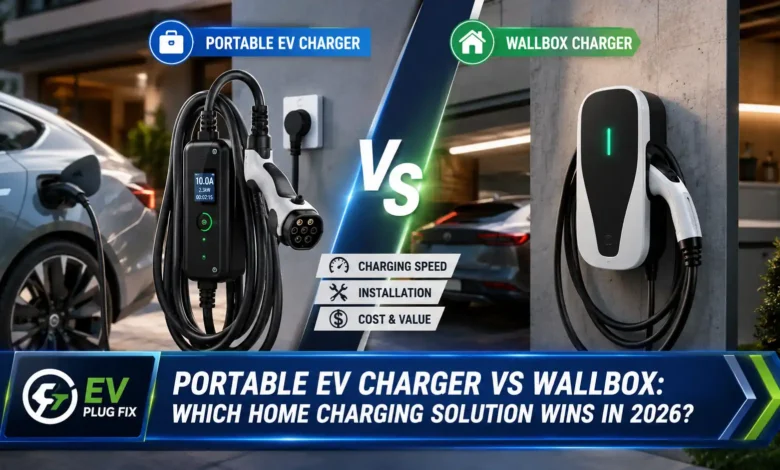
Portable EV Charger vs Wallbox: Which Home Charging Solution Wins in 2026?
Electric vehicle (EV) charging technology is evolving at a remarkable pace. The year 2026 brings a host of innovations designed to make charging faster, smarter, and more efficient than ever before. From advanced power modules to intelligent load management systems, the latest developments address common driver concerns like range anxiety, charging speeds, and grid capacity.
This comprehensive guide explores the top trends shaping the EV charging landscape this year, offering practical insights for both current EV owners and those planning to make the switch.
1. Silicon Carbide (SiC) Power Modules: Boosting Efficiency
One of the most significant breakthroughs in 2026 is the widespread adoption of silicon carbide (SiC) power modules in charging infrastructure. These semiconductor components are transforming how electricity is converted and managed, leading to substantial improvements in EV Charging Efficiency 2026.
Compared to traditional silicon-based systems, SiC technology offers several distinct advantages:
- Reduced Energy Loss: Minimizes heat generation and power waste during the AC-to-DC conversion process.
- Higher Switching Frequencies: Allows for more compact hardware designs without sacrificing power output.
- High-Temperature Performance: Operates reliably under extreme thermal conditions, reducing the need for complex cooling systems.
As a result, EV drivers can expect faster charging times and lower operating costs, while utility providers benefit from reduced strain on the electrical grid.
2. On-Board Chargers (OBC): Single-Phase vs. Three-Phase Systems
Another key area of focus in 2026 is the enhancement of on-board chargers (OBCs). The OBC is the critical component inside the vehicle that converts AC power from household outlets or public destination chargers into the DC power required by the battery.
With more options available on the market, the debate between single-phase and three-phase systems has become highly relevant. To understand which setup best aligns with your driving habits and residential electrical capacity, our EV On-Board Charger Guide breaks down the performance, efficiency, and cost differences.
While single-phase chargers remain a cost-effective and practical solution for daily suburban commutes, three-phase chargers deliver significantly faster charging speeds, making them the preferred choice for high-mileage drivers and modern energy-conscious households.
3. Optimizing the EV Charging Curve
Charging speed is not determined solely by the maximum output of a charger; it is also heavily influenced by the vehicle’s charging curve. This curve dictates how much power a battery can safely accept at different states of charge (SoC).
In 2026, automakers are refining battery management software to maximize charging speeds while preserving long-term battery health. Our detailed EV Charging Curve analysis provides a side-by-side comparison of popular models, illustrating how external factors like ambient temperature and chemistry affect charging sessions. Understanding these curves helps drivers plan highway stops more effectively, avoiding the typical charging slowdown that occurs as the battery nears 80% capacity.
4. Smart Home Charging and Dynamic Load Balancing
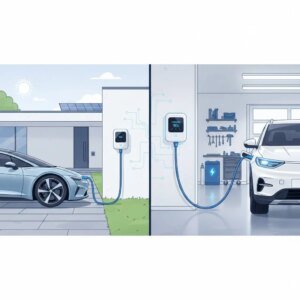
Smart wallboxes are taking center stage in residential setups. Modern home chargers now feature dynamic load balancing and integration options for local renewable energy sources like solar panels.
These intelligent systems automatically adjust the power directed to your vehicle based on real-time household electricity consumption. This prevents circuit overloads when major appliances are running simultaneously. For a detailed look at how these systems operate, read our review of the Smart Wallbox EV Charger. In addition to safety benefits, these devices allow users to schedule charging sessions during off-peak hours, capturing lower utility rates and reducing their overall carbon footprint.
5. Vehicle Compatibility and Network Expansion: BMW & Tesla
For drivers of specific brands, compatibility and real-world charging speeds remain top priorities.
- BMW i3 Performance: The 2026 BMW i3, for example, continues to benefit from updates to its DC fast-charging capabilities, reducing charging times on longer journeys. To see how it performs under real-world conditions, explore our analysis on BMW i3 Charging Time.
- Tesla Supercharger Access: Meanwhile, Tesla’s Supercharger network continues its global expansion. With the growing adoption of the North American Charging Standard (NACS), non-Tesla vehicles can access these locations. Our guide on Tesla Supercharger Compatibility details adapter requirements, payment methods, and communication protocols to ensure a smooth charging experience across different brands.
6. Flexible Tariffs and Portable Charging Solutions
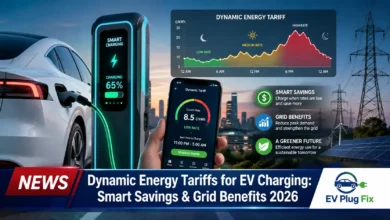
As energy markets become more dynamic, 2026 highlights the importance of flexible pricing and advanced energy management. Manufacturers like go-e are leading this shift, offering software solutions that synchronize charging with real-time electricity rates and solar production.
To learn how to utilize these cost-saving features, refer to our article on go-e Flexible Tariffs. Furthermore, for drivers requiring flexibility away from home, our Mobile Wallbox Charging Guide outlines how portable charging systems can deliver reliable power without compromising safety or performance.
7. EV Charging Security and Software Reliability
As charging stations become increasingly connected to internet networks, cybersecurity has become a critical focus area. Over-the-air (OTA) software updates are now standard across modern hardware, helping protect systems from emerging digital threats.
Our resource on EV Charging Security details how these remote updates function and why they are necessary to maintain a secure charging ecosystem. Keeping charger software updated is essential to safeguard personal data and protect local electrical infrastructure from vulnerabilities.
8. Planning Your Installation: 7kW, 11kW, and 22kW Systems
For homeowners preparing for a dedicated installation, understanding power levels and connector types is a fundamental first step. Whether you are evaluating a 7kW single-phase system or a larger 11kW or 22kW three-phase setup, our EV Charger Comparison Guide helps you select the appropriate configuration based on your home’s electrical service panel and daily range requirements.
By pairing the correct power output with proper load management and connector knowledge (such as J1772, Type 2, or CCS standards), you can build a reliable, future-proof charging setup designed to serve your needs for years to come.