OTA Updates for EV Charging Hardware: Performance & Security in 2026
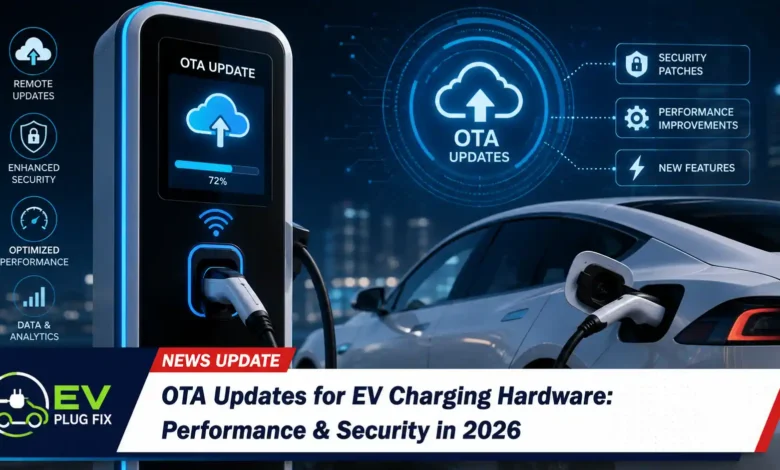
OTA updates for EV charging hardware have evolved from a premium feature to an absolute necessity for any operator looking to remain competitive and cost-effective in 2026. The days of treating an electric vehicle charger as a static, install-and-forget appliance are over. Today, a charging station is a sophisticated, connected computer, and like any computer, it needs regular maintenance, security patches, and performance upgrades. Over-the-air (OTA) technology delivers these updates remotely, eliminating the need for expensive, time-consuming site visits. By the end of this article, you will understand why OTA capability is the cornerstone of a modern, profitable, and reliable EV charging network.
The core value proposition of OTA updates is clear: they represent a paradigm shift from reactive, costly maintenance to proactive, efficient fleet management. Instead of dispatching a technician to every charger for a simple software tweak or security patch, operators can now manage their entire network from a central dashboard. This not only slashes operational expenses—with studies showing remote management can cut costs by up to 25% —but also dramatically improves network uptime, which is a key metric for success. In the United States, the Department of Energy’s NEVI program mandates that public EV chargers maintain at least 97% uptime to qualify for federal funding. OTA updates are instrumental in achieving this high standard.
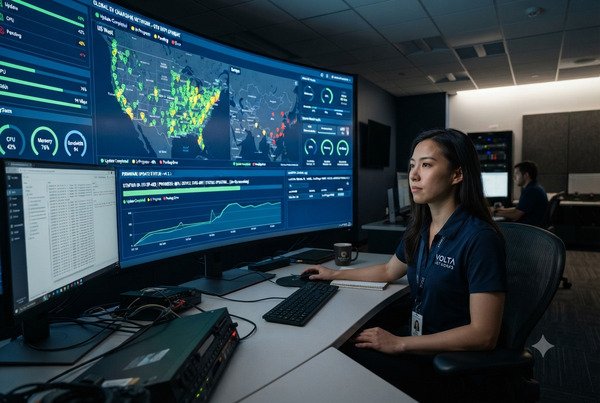
For years, a major barrier to the profitability of charging networks was the “truck roll.” Every minor software glitch, communication error, or configuration issue required a physical visit, costing hundreds of dollars in labor and travel. The long-term sustainability of a large network depended on a remote solution, and that solution is OTA. This technology not only resolves faults but also future-proofs infrastructure, ensuring chargers remain compatible with evolving standards like OCPP and new backend systems.
In this comprehensive analysis, we will dissect the mechanics of OTA updates for EV charging hardware, debunk common myths, and provide a practical roadmap for operators looking to future-proof their investments. Whether you manage a commercial fleet, a public charging network, or even a single home charger, understanding OTA is critical to your success in the electric vehicle revolution.
Why Traditional EV Charger Maintenance Fails
To fully appreciate the power of OTA updates, one must first understand the crippling limitations of the traditional maintenance model. For years, the standard practice for fixing a faulty charger was to send a technician to its physical location. This approach, reliant on what is known in the industry as a “truck roll,” is increasingly unsustainable, especially as the number of charging stations across the globe explodes.
The cost associated with a single service visit can be staggering. When you factor in travel time, labor, vehicle expenses, and administrative overhead, a simple software-related issue—such as a failed charging handshake or a communication time-out—could easily cost an operator hundreds of dollars to resolve. Across a network of hundreds or thousands of chargers, these expenses balloon into millions. The financial burden is so significant that a study by ChargePoint found that just one year of severe connectivity issues could cost large operators up to $10 million in lost revenue.
Beyond the financial drain, the operational impact is equally damaging. In the traditional model, response times are slow. When a fault is detected, the operator must coordinate a technician’s schedule, which can result in days of downtime. During that downtime, the charger is either operating at reduced capacity or is completely offline, frustrating drivers and damaging the network’s reputation for reliability.
Security is another critical vulnerability. EV chargers are connected devices, and like all IoT technology, they are susceptible to cyber threats. Without the ability to apply security patches remotely, a known vulnerability could remain open for weeks or even months until a technician can visit every affected site. This window of exposure creates an unacceptable risk for the entire network.
Finally, the traditional model creates a maintenance backlog. New features, charging algorithms, and compatibility improvements are delayed because rolling them out manually to a dispersed fleet is logistically impossible. As a result, chargers run outdated software, missing out on performance gains and new capabilities. This leads to a fragmented network where different chargers run different software versions, creating a management nightmare.
The Rising Cost of Physical Visits
As charging networks scale, the old model of physical maintenance becomes a significant barrier to growth. Each site visit is a logistical challenge that diverts resources from more strategic initiatives. The high cost of travel and labor can turn a profitable charging network into a money-losing operation. To illustrate the drawbacks of this traditional maintenance approach, consider the following table:
| Problem | What Happens | Cost or Operational Impact | Who Feels It Most |
|---|---|---|---|
| High travel and labor cost | Technician must visit each site | Rising annual maintenance budget | Large commercial networks |
| Slow fault response | Issues remain active for days | Lost sessions and driver complaints | Public and fleet sites |
| Delayed security patches | Vulnerabilities stay open | Higher cyber risk | All connected chargers |
| Late feature updates | Hardware falls behind standards | Reduced competitiveness | Operators competing on reliability |
| Inconsistent fleet status | Different chargers run different versions | Harder network management | Multi-site operators |
This table reflects patterns I see across many projects. At Parwatt, we design our equipment, including the 30kW Power Module and 40kW Power Module, to support remote management so operators can reduce these costs. Traditional maintenance will always be needed for physical repairs, yet many software and configuration tasks no longer require a truck roll.
Common Misconceptions About OTA Updates for Charging Hardware
Despite the clear advantages, several myths persist about OTA updates, causing some operators to hesitate. Understanding the reality behind these misconceptions is crucial for making informed decisions.
One of the most pervasive myths is that a charger is a “finished product” at the time of installation. This is fundamentally false. The EV ecosystem is rapidly evolving, with new standards, cybersecurity threats, and backend platform requirements emerging regularly. A charger without OTA capability is like a smartphone that can’t receive app updates—it quickly becomes obsolete and less secure.
Another common misconception is that OTA updates are inherently risky. While any connected system carries some level of risk, modern OTA designs are built with stringent security controls. These include cryptographic signing, which ensures the firmware comes from a trusted source, and encrypted delivery channels to protect against interception. By using robust security measures, OTA updates are often safer than irregular manual updates performed by different technicians.
Some operators fear that OTA updates will cause frequent downtime or interrupt active charging sessions. This is a valid concern, but one that is easily mitigated. Robust OTA systems support staged rollouts, allowing operators to deploy updates to a small pilot group first to monitor for issues. Furthermore, updates can be scheduled during low-usage windows, allowing active sessions to finish before the charger reboots and installs the new firmware. The actual interruption is typically short and planned.
A fourth myth is that OTA capability is only for large networks. While the cost savings are more dramatic at scale, even a small commercial site or a home charger can benefit. A homeowner gains access to new smart-charging features and improved efficiency without needing a technician’s visit. The long-term value of OTA for any connected charger is undeniable.
Here is a table that addresses these misconceptions:
| Misconception | Reality in 2026 | Result of the Myth | Better View |
|---|---|---|---|
| Charger is finished at installation | Standards and threats continue to evolve | Hardware falls behind | Treat chargers as updatable assets |
| OTA is too risky | Signed and encrypted updates reduce exposure | Delayed security fixes | Proper controls make OTA safer |
| Updates cause frequent downtime | Updates can be scheduled and rolled back | Unnecessary fear of change | Plan updates for low-impact windows |
| Only large fleets need OTA | Home and small sites also benefit | Missed long-term value | OTA helps any connected charger |
| Manual updates are more reliable | Inconsistent field work creates version drift | Harder fleet management | Centralized OTA improves consistency |
I have spoken with operators who initially resisted OTA because of security concerns. After reviewing signed update processes and staged deployment methods, most changed their view. The ability to close vulnerabilities quickly and keep the fleet consistent proved more valuable than the perceived risk.
How OTA Updates Actually Improve EV Charger Performance and Reliability
Moving beyond misconceptions, the practical, day-to-day improvements that OTA updates deliver are substantial. They transform a charging network from a static, reactive system into a dynamic, proactive one.
Bug fixes, for instance, are delivered at lightning speed. When a manufacturer identifies a flaw in the control logic that causes a session to fail, they can prepare a patch and push it to the entire fleet of affected chargers in a matter of days, if not hours. This is a dramatic improvement over the weeks or months it would take to organize a nationwide technician dispatch.
Performance enhancements are another key benefit. OTA updates allow manufacturers to refine charging algorithms to be more efficient, adjust thermal management profiles to prolong hardware life, or improve the user interface to make the charger easier to use. These continuous improvements add significant long-term value to the hardware.
Security is arguably the most crucial aspect. OTA updates are the primary mechanism for closing vulnerabilities. With signed updates and encrypted delivery, operators can ensure their entire fleet is protected against the latest threats, significantly reducing their cyber risk profile.
Practical Benefits Operators Experience
The benefits of OTA updates are tangible and measurable. Here is a list of the main areas where operators see the most significant improvements:
- Faster resolution of software-related faults: Reduce downtime from days to hours.
- Quicker application of security patches: Close vulnerabilities before they can be exploited.
- Ongoing performance and feature enhancements: Improve charger efficiency and user experience over time.
- Maintained compatibility with CPMS and roaming platforms: Ensure your chargers work seamlessly with evolving backend systems.
- Reduced number of physical maintenance trips: Slash operating costs by 25% or more.
- More consistent software versions across the fleet: Simplifies management and troubleshooting.
At Parwatt, we see these benefits firsthand when operators use our remotely manageable equipment. The Battery Buffered Ultra Rapid EV Charger and similar models support the kind of remote control that makes these updates practical. These operational gains compound over the life of the hardware. Reliability improves because problems are corrected before they affect large numbers of drivers. Consistency improves because every charger can run the same validated software version. Both results support higher user satisfaction and lower long-term cost.
What Makes a Robust OTA System for Commercial and Home Chargers
Not all OTA systems are created equal. For an OTA system to deliver on its promises, it must be built on a foundation of security, control, and reliability. A robust system is not just about pushing software; it’s about managing the entire lifecycle of the firmware on your fleet.
The first pillar of a robust OTA system is security. This starts with cryptographic signing. Every update package must be digitally signed by the manufacturer, allowing the charger to verify its authenticity before installation. This prevents malicious actors from pushing counterfeit or corrupted firmware. The distribution channel should use encrypted transport, such as TLS, to protect the update package from interception during transit.
Staged deployment is the second critical element. This involves rolling out an update in phases. Initially, the update is applied to a small test group in a controlled environment, such as a lab. Then, it is deployed to a small pilot group of chargers in the field. Only after the update has proven stable and error-free in these preliminary stages is it rolled out to the entire fleet. This process significantly reduces the risk of a widespread outage.
Automatic rollback capability is a safety net. If an update causes unexpected behavior—such as failing to start a charging session—the system should automatically revert to the previous, known-good firmware version. This quick recovery prevents extended downtime and ensures service continuity.
Finally, centralized management and monitoring are essential for visibility and control. Operators must be able to see the software version of every charger on their network. This not only prevents “version drift”—where different chargers run different firmware—but also allows for targeted updates to specific chargers based on their model, location, or software version.
Essential Design Elements
Here is a comparison table of key OTA capabilities that every operator should look for:
| Capability | Why It Matters | Risk Without It | Benefit With It |
|---|---|---|---|
| Cryptographic signing | Prevents unauthorized firmware installation | Malicious or corrupted updates | Only trusted code runs |
| Staged rollout | Limits the impact of any problems with a new update | Potential fleet-wide failures | Problems found early, minimized impact |
| Automatic rollback | Recovers from a bad update automatically | Extended downtime while a fix is developed | Quick return to normal service |
| Detailed logging | Supports diagnosis and compliance requirements | Unclear update history, making troubleshooting hard | Traceable operations, easier root cause analysis |
| Central fleet view | Enables consistent management across all sites | Version drift across sites, leading to inconsistencies | Uniform software state, simpler management |
Home chargers benefit from the same principles on a smaller scale. A well-designed residential OTA system can deliver security fixes and occasional feature improvements without requiring the owner to schedule a visit. The underlying requirements for signing, safe installation, and recovery remain the same.
| Capability | Why It Matters | Risk Without It | Benefit With It |
|---|---|---|---|
| Cryptographic signing | Prevents unauthorized firmware | Malicious or corrupted updates | Only trusted code runs |
| Staged rollout | Limits impact of problems | Fleet-wide failures | Problems found early |
| Automatic rollback | Recovers from bad updates | Extended downtime | Quick return to service |
| Detailed logging | Supports diagnosis and compliance | Unclear update history | Traceable operations |
| Central fleet view | Enables consistent management | Version drift across sites | Uniform software state |
- Inventory your current chargers: Assess their remote update capabilities.
- Make OTA a procurement standard: Prioritize solutions with signed firmware, rollback, and staging.
- Establish an update policy: Create a clear process for piloting, approving, and monitoring updates.
- Set up centralized monitoring: Ensure you have complete visibility over your network’s software versions.
Frequently Asked Questions
What exactly is an OTA update for an EV charger?
Are OTA updates secure?
Can OTA updates fix hardware problems?
Can an OTA update brick an EV charger?
Why is OCPP important for OTA updates?
Conclusion
In 2026, OTA updates are not a luxury; they are a fundamental requirement for any serious EV charging network operator. The technology transforms charging hardware from static, expensive-to-maintain assets into dynamic, continuously improving investments. By enabling remote fixes, security patches, and performance enhancements, OTA updates slash operational costs, boost network reliability, and future-proof infrastructure against evolving standards. For operators looking to maximize efficiency, implementing load balancing and other advanced features through OTA updates becomes seamless and cost-effective.
At Parwatt, we understand that long-term success in the EV industry depends on the ability to manage and improve your assets remotely. Our chargers and power modules are engineered with robust OTA capability as a core feature, ensuring your network remains efficient, secure, and competitive. Don’t let your chargers become obsolete. Embrace OTA technology and keep your network ready for the future.