Dynamic Load Balancing for EV Charging: Smart Energy Management in 2026
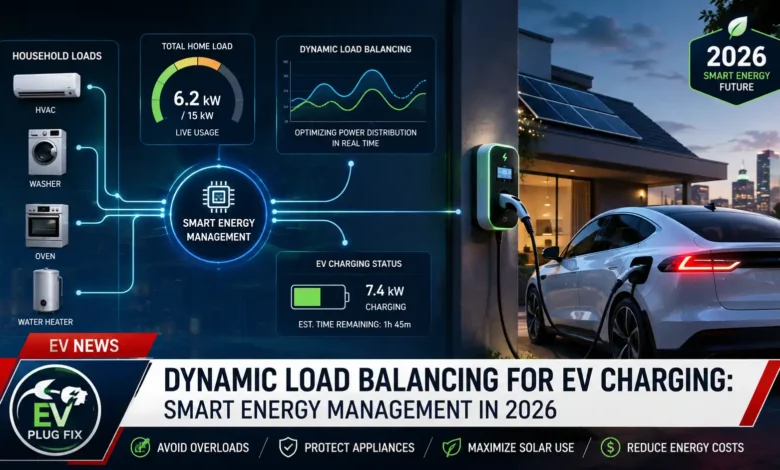
Dynamic load balancing for EV charging is revolutionizing how we manage electrical power, transforming electric vehicle charging from a potential grid liability into a model of energy efficiency and intelligence. At its core, this innovative technology functions like a tireless smart butler for your electrical system, constantly monitoring available power and skillfully distributing it to various connected devices based on real-time needs. Instead of rigidly splitting power equally or overwhelming circuits, dynamic load balancing intelligently allocates electricity where it’s needed most at any given moment, ensuring seamless operation and preventing costly system failures.
To understand this concept better, imagine hosting a gathering where multiple friends need to cook simultaneously. One person wants to use the microwave, another plans to bake in the oven, and a third is ready to use the induction cooktop. If everyone operates their appliances at full power simultaneously, your circuit breaker would almost certainly trip, leaving everyone frustrated. The smart solution is coordinating usage—letting one person use the microwave for 15 minutes, then while they’re finishing, someone else starts the oven, and when the first completes, the next person takes their turn. Everyone gets to cook without overwhelming the home’s electrical system, and that perfectly mirrors the principle of dynamic load balancing.
This intelligent approach to power management contrasts sharply with traditional static load management, which operates on fixed, pre-programmed allocations regardless of real-time conditions. Static systems lack flexibility, often leading to inefficient power distribution or, worse, system overloads. Dynamic load balancing, however, functions like a highly responsive traffic controller, guiding electrical “vehicles” to spread out across different time periods rather than racing down the same road simultaneously. This smooths out charging demand, prevents sudden grid stress, and maximizes the use of existing electrical infrastructure. For homeowners looking to implement this technology, understanding Home EV Charger Installation options is an essential first step.

When electric vehicles first emerged, the immediate concern was their potential strain on power grids. Consider a Friday evening scenario where 15 electric vehicles are simultaneously plugged into charging stations at an office building’s parking lot. Without a smart management system, these cars could collectively draw over 1,000 kilowatts of power—enough to destabilize an entire neighborhood’s electricity supply. However, with dynamic load balancing installed, everything changes dramatically. Selecting the Best Home EV Chargers equipped with load management features can prevent these scenarios in residential settings.
How Dynamic Load Balancing Works in Real Time
The entire dynamic load balancing system operates through a sophisticated three-step process that happens in milliseconds. First, the “eyes” of the system—sensors embedded in every charging station—continuously measure how many vehicles are charging, how much power each consumes, and what other devices in the building are using electricity, such as air conditioning units and lighting. This data is collected every second and transmitted to the central “brain,” the energy management system.
Second, the system’s algorithms spring into action, processing real-time data to make intelligent decisions. The algorithms evaluate critical factors: What’s the current battery percentage on each vehicle—some might be at 20% while others at 60%? Which vehicles are in a hurry and which have flexible charging schedules? After subtracting necessary equipment like AC and lighting from the total available power, how much remains for EV charging? The system prioritizes vehicles with lower battery levels and tight charging windows, while slightly reducing power to those already significantly charged. Understanding the EV Charging Curve helps explain why these prioritization decisions are so important for battery health and charging efficiency.
Third, the system implements its decisions through lightning-fast adjustments. Once the algorithm calculates optimal power distribution, it immediately sends new commands to every charger. This isn’t a once-per-hour process—it happens many times per second. While you’re reading this sentence, the system might have already made hundreds of adjustment decisions. If a vehicle reaches full charge and disconnects, the system instantly detects this change and redistributes that power to remaining vehicles, noticeably accelerating their charging.
This real-time responsiveness represents a quantum leap from traditional charging methods. Recent studies have demonstrated that intelligent load balancing can achieve a 27.6% improvement in station utilization, meaning more vehicles get charged effectively within the same timeframe. Furthermore, peak grid load can be reduced by up to 24.5%, significantly easing pressure on local electrical infrastructure.
The Crucial Importance of Dynamic Load Balancing for Electrical Grids
Many people underestimate the magnitude of power demand from EV charging. A single electric vehicle can draw several times more electricity than an entire household’s daily consumption. When 100 electric vehicles start charging simultaneously in a neighborhood, the impact on the local grid is enormous. Without proper management, serious consequences can unfold: voltage fluctuations, frequency instability, and in worst-case scenarios, blackouts affecting entire communities or regions.
Utilities face a fundamental challenge: they must constantly maintain extra generating capacity on standby to protect against sudden demand spikes. This is an enormous waste of both money and energy efficiency. However, dynamic load balancing functions like an intelligent traffic controller, spreading charging demand across different time periods to prevent sudden grid stress. Research has shown that smart EV charging can reduce peak loads by 10%, making the grid more resilient and efficient. Modern solutions like the Smart Wallbox EV Charger incorporate these grid-friendly features directly into home charging units.
To protect against these risks, utility companies must constantly maintain extra generating capacity on standby—an enormous waste of both money and energy efficiency. This is where dynamic load balancing functions like an intelligent traffic controller. Instead of letting all vehicles race down the same road at once, it guides them to spread out across different time periods. This smoothly distributes charging demand, preventing sudden grid stress while maximizing the use of existing electrical infrastructure.
The financial implications of unmanaged EV charging are substantial. Utilities often impose demand charges on commercial customers based on their highest peak usage. If a fleet or charging plaza draws a significant power spike, these demand charges can be hefty. For example, a 16.8 kW charger in the US could incur approximately $1,600 annually in demand fees at typical rates. Multiply this across many chargers, and operating costs escalate rapidly. Dynamic load balancing mitigates these expenses by smoothing out demand spikes and optimizing power usage. The OCPP Charging Benefits include standardized communication that makes such dynamic adjustments possible across different charger brands.
Practical Applications: Smarter Charging Station Technology
Modern charging systems translate dynamic load balancing principles into action through sophisticated hardware and software integration. Smart meters and sensor systems form the foundation of this technology. Each charging station features metering equipment that precisely measures power consumption every second, while also tracking each vehicle’s current charge level and charging rate.
Central control systems serve as the “brain” of the operation—a tireless 24/7 dispatcher monitoring all charging demands, calculating optimal distribution plans, and sending commands to each charging station. This energy management system ensures efficient power allocation while maintaining grid stability. Advanced AI integration is increasingly common, with systems using predictive modeling to anticipate demand and optimize charging schedules. Studies have shown that AI-enhanced load balancing can achieve 24.5% reduction in peak grid load and 29.8% decrease in user charging costs.
Smart communication networks enable these systems to interact quickly and reliably. Standards like IEEE 2030.5 ensure that charging equipment from different manufacturers can communicate effectively. This interoperability is crucial for creating a cohesive, scalable EV charging infrastructure that functions seamlessly across brands and regions. Understanding EV Charging Connectors and their compatibility is equally important for ensuring your equipment works with the broader charging ecosystem.
Imagine a practical scenario: managing a small company office with a 100-amp electrical service wanting to install three EV charging stations. Without load balancing, each station would try to draw 40 amps simultaneously, immediately tripping the circuit breaker. However, with a dynamic load balancing controller installed, the system detects that the office’s normal operations need 40 amps, leaving 60 amps available for charging. It distributes these 60 amps equally among the three vehicles at 20 amps each, running smoothly.
Then, a shift occurs—perhaps the sun blazes, the AC uses less power, and the office now needs only 30 amps. The system immediately spots this opportunity and reallocates the remaining 70 amps to charging, boosting each vehicle to about 23 amps. By 4 PM, the first vehicle reaches full charge and disconnects. The system instantly recalculates and redistributes its power to the remaining vehicles, accelerating their charging. The entire process runs completely automatically—you don’t need to manually adjust anything.
Key Benefits: Why Dynamic Load Balancing Matters for EV Owners and Operators
From a practical user perspective, dynamic load balancing delivers numerous compelling advantages. First, charging becomes noticeably faster because the system continuously maximizes available power instead of conservatively limiting it like older systems did. Second, infrastructure investment requirements drop significantly. A small company that previously needed to spend $50,000-$100,000 upgrading their circuit to 200 amps for three charging stations might now only need $10,000-$20,000 for a smart load balancing system.
Energy usage becomes smarter and more cost-effective. The system learns when electricity is cheapest—such as late-night off-peak rates—and automatically speeds up charging when renewable energy is abundant, like sunny midday hours. This saves money on electricity bills while being friendlier to the environment. Additionally, the system provides a more stable electrical grid overall, enabling utility companies to predict and manage demand more effectively without constantly preparing expensive emergency power reserves. Maximizing EV Charging Efficiency 2026 is directly tied to these intelligent load management capabilities.
- Faster charging through continuous power optimization
- Reduced infrastructure costs by eliminating expensive electrical upgrades
- Lower electricity bills through smart off-peak and renewable energy usage
- Enhanced grid stability by reducing peak demand stress
- Increased station utilization with up to 27.6% improvement in efficiency
- Financial savings with up to 29.8% reduction in charging costs
Research has confirmed these benefits extensively. A recent study demonstrated that dynamic load management can achieve charging operations with up to 26.7% less charging sockets than static load management, significantly reducing initial investment costs. Furthermore, integrating building residual power and renewable energy can enable DLM strategies to reduce socket requirements by an additional 23.1%.
The Bigger Picture: Grid Stability and Renewable Energy Integration
Now imagine millions of electric vehicles across an entire country equipped with this intelligent system. The implications for grid stability and renewable energy integration are revolutionary. Currently, wind and solar generation fluctuate unpredictably—at noon, the sun shines brightly while wind power might be weak; at night, the sun disappears while wind picks up. Traditional grids handle this by keeping fossil fuel power plants on standby—expensive, inefficient, and environmentally damaging.
However, with dynamic load balancing and smart EV charging, utilities can transform EVs from passive consumers into active grid assets. When wind is strong, systems can automatically increase charging commands so more EVs charge and “store” that excess power in their batteries. When wind drops, they can automatically reduce charging demand or even allow large-battery vehicles to send power back to the grid through Vehicle-to-Grid (V2G) technology.
This approach maximizes renewable energy utilization while maintaining grid stability. It creates a massive virtual battery distributed across millions of EVs, constantly ready to absorb or release energy to maintain grid balance. Research indicates that smart charging effectively shifts load from peak times to off-peak times, reducing grid congestion and costs. One study found that smart charging can integrate up to 62% solar PV in the charging mix, compared to just 24% with direct charging.
The integration of renewable energy into EV charging infrastructure represents a critical step toward sustainable transportation. Charging stations increasingly incorporate photovoltaic (PV) systems and battery energy storage systems (BESS) to reduce dependency on centralized power. These hybrid approaches can improve energy reliability, diminish reliance on the grid, and boost overall energy efficiency while advancing broader sustainability and decarbonization objectives.
Overcoming Challenges: The Road Ahead for Dynamic Load Balancing Technology
Despite impressive advances, dynamic load balancing technology faces several hurdles that require attention. The most significant challenge is interoperability—different manufacturers’ charging stations and control systems often struggle to communicate, like people speaking different languages. The industry is actively working on universal standards, but progress remains slow.
Cybersecurity presents another critical concern. As charging systems become increasingly connected, they become attractive targets for hackers. A successful attack could have serious consequences, potentially disrupting charging services or even affecting grid stability. Implementing robust security measures is absolutely essential, and emerging solutions are incorporating blockchain technology to ensure tamper-proof, secure energy transactions. Research has shown that blockchain integration can deliver a 97.71% improvement in data protection through decentralized frameworks. Comprehensive EV Charging Security measures are becoming a top priority for manufacturers and network operators alike.
Artificial Intelligence integration is advancing rapidly but still has room for improvement. Today’s systems are primarily reactive—they look at current conditions and respond accordingly. Future systems will likely use AI to learn from historical data, check weather forecasts, predict user behavior, and make proactive optimal decisions. This would mean much higher efficiency and smarter charging operations. Recent studies have shown that edge-intelligent systems using lightweight AI models like CNN+LSTM and XGBoost deployed on edge devices can achieve predictive performance reaching R² = 0.92.
Scalability also presents challenges as EV adoption accelerates. Current solutions must handle rapidly growing numbers of vehicles while maintaining performance. Edge computing solutions that process data locally significantly reduce latency and improve system responsiveness and scalability. This approach can achieve an estimated 80% reduction in uplink transmission, mitigating backhaul congestion and making systems more efficient at scale.
- Interoperability Standards: Efforts to create universal communication protocols like IEEE 2030.5 enable different manufacturers’ equipment to work together
- Cybersecurity Enhancement: Blockchain and decentralized frameworks are being deployed to ensure secure, tamper-proof energy transactions
- AI and Predictive Analytics: Machine learning algorithms improve charging predictions and optimize real-time power distribution
- Edge Computing: Localized data processing reduces latency and dependency on centralized cloud platforms
- Vehicle-to-Grid (V2G) Integration: Allows EVs to send power back to the grid, enhancing grid stability and renewable energy use
The Future of Dynamic Load Balancing: What’s Next?
Looking ahead, dynamic load balancing technology will become increasingly sophisticated. Future systems will use AI to anticipate demand proactively instead of just reacting to it. They will learn from historical patterns, incorporate weather forecasts, and predict user behavior to make optimal decisions before situations even arise.
True bidirectional power flow will transform EVs into mobile energy storage units. Instead of merely drawing power from the grid, vehicles will also supply power back to it, helping balance demand and supply dynamically. This vehicle-to-grid (V2G) capability will unlock additional revenue streams for EV owners and further enhance grid stability. Studies project that smart charging with V2G integration can reduce electricity storage requirements by up to 35% while lowering overall system costs by as much as 8%.
Complete automation and optimization will become standard. Systems will automatically choose the cheapest charging times and the cleanest energy sources available. This might mean charging during peak solar generation hours, even if that’s mid-day, rather than waiting for late-night rates. It could also involve dynamic coordination with local renewable energy installations to minimize the carbon footprint of every charge.
Better safety mechanisms will ensure reliable operation even if something fails. Advanced monitoring and self-diagnostic capabilities will detect potential issues before they cause problems, maintaining safe and reliable charging. Meanwhile, machine learning algorithms will optimize charging schedules, load shedding, and power consumption against user profiles and demand profiles, creating truly intelligent systems.
Recent developments in predictive scheduling are showing impressive results. A similarity-based predictive scheduling method has demonstrated a 35% reduction in charging pile occupancy while ensuring final state of charge accuracy below 0.1% for all EVs on the user side. These advances are making EV charging more efficient, reliable, and user-friendly than ever before.
Essential Questions & Expert Answers
What exactly is dynamic load balancing for EV charging?
How does dynamic load balancing save money?
Can dynamic load balancing work with renewable energy sources?
What are the cybersecurity risks with smart EV charging?
Is dynamic load balancing compatible with all EV models?
How does dynamic load balancing differ from static load management?
What is Vehicle-to-Grid (V2G) and how does it relate to load balancing?
How quickly can dynamic load balancing respond to changes?
Do I need to manually manage dynamic load balancing?
What's the environmental benefit of dynamic load balancing?
The Bottom Line: Why Dynamic Load Balancing Matters More Than Ever
Dynamic load balancing represents more than just a technical advancement—it embodies a fundamental shift in how we approach energy management. For decades, our electrical system operated one way: power generated at plants, flowing through substations, arriving at homes with relatively predictable demand. Electric vehicles have fundamentally changed that reality. Suddenly, electricity demand can spike several times within an hour, unpredictably and hard to forecast. Using the old approach would require building massive numbers of new power plants and transmission lines at astronomical costs.
Dynamic load balancing technology lets us handle this challenge with relatively modest investment. By intelligently distributing and scheduling demand, we can accommodate far more electric vehicles while better utilizing renewable energy and building a greener, more efficient energy system. The technology is already proven effective, with studies demonstrating 24.5% reductions in peak grid load, 29.8% decreases in user charging costs, and up to 27.6% improvements in station utilization.
As we look toward a future with millions of electric vehicles on the road, dynamic load balancing will become increasingly essential. It’s the quiet, intelligent system working behind the scenes to ensure your EV charges quickly, your grid stays stable, and our collective transition to sustainable transportation succeeds. When you next plug in your electric vehicle and everything works perfectly, remember that dynamic load balancing is doing its job, optimizing your charging experience and contributing to a cleaner, more efficient energy future for everyone.