Electric Car Charger Selection 2026: Smart Home vs Portable Charging Solutions
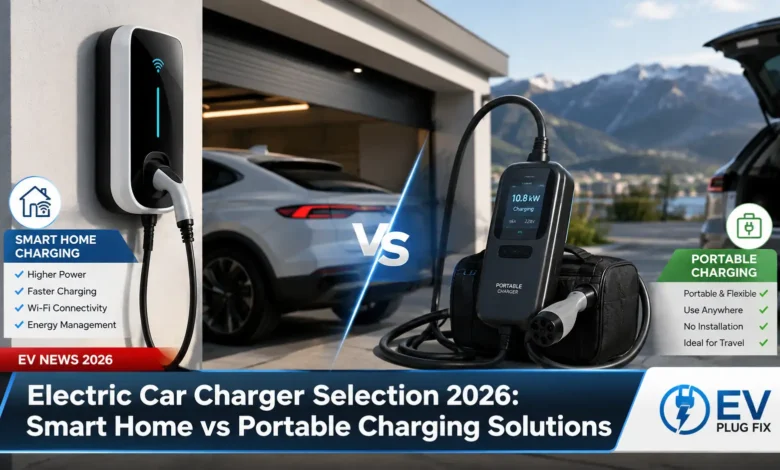
Electric car charger selection in 2026 presents a crucial decision for current and prospective EV owners, balancing the speed and convenience of a fixed home wallbox against the flexibility of a portable charging unit. While both options have their place, the right choice depends entirely on your specific driving habits, home setup, and daily charging needs to provide a convenient, efficient, and future-ready charging experience .
Understanding the Core Difference: Mobile vs. Fixed EV Chargers
At its heart, the decision comes down to mobility versus daily comfort. A mobile electric car charger, often likened to an EV driver’s Swiss Army knife, offers unparalleled freedom. These portable stations allow you to charge your vehicle from various outlets—be it a domestic socket, a reinforced industrial plug (like a CEE 16 A three-phase socket), or even at a friend’s house . They are ideal for drivers who value flexibility, frequently travel, or don’t have a dedicated parking spot.
On the other hand, a fixed charging station, commonly known as a wallbox, prioritizes daily comfort and efficiency. Installed on a dedicated circuit in your garage or driveway, it enables faster, more stable, and fully controllable charging. For most drivers, this represents the ultimate home solution, transforming the charging process into a simple and invisible daily routine that ensures you start each day with a fully charged vehicle .
Charging Speed: How Much Power Do You Really Need?
Charging speed is the most critical factor for many EV owners. It’s essential to understand that the actual charger is technically inside your car, converting the AC power from your home into the DC power that charges the battery. The wallbox is an EVSE—Electric Vehicle Supply Equipment—that delivers power safely . For a comprehensive understanding of your home charging setup, refer to our detailed EV Charging kWh Guide to monitor your energy consumption effectively.
For home charging, the speed is determined by amperage, which dictates how many miles of range you gain per hour.
Level 2 EV Charger Amperage Tiers
| Amperage Tier | Power Output | Approx. Miles/Hour | Required Breaker (NEC 80% Rule) | Best For |
|---|---|---|---|---|
| 16A | ~2 kW | ~7.2 miles | 20A (120V) | Low daily mileage commuters, apartment dwellers, portable solutions |
| 32A | ~7.6 kW | ~28.5 miles | 40A (240V) | Average daily mileage, versatile home/portable option |
| 40A | ~9.6 kW | ~36 miles | 50A (240V) | High-mileage drivers, larger EV batteries |
| 48A | ~11 kW | ~42.25 miles | 60A (240V) | Electric trucks, SUVs, and those wanting the fastest home charging |
It can be helpful to imagine sitting in a movie theater: when the theater is empty, it’s easy to find a seat. But as the theater fills up, we have to take a few moments to find a seat and climb over people. That’s what happens with battery cells at the molecular level .
go-e EV Chargers: A Detailed Look for 2026
go-e has established itself as a major player in the European EV charging market, offering a compelling range of smart wallboxes with a strong focus on connectivity and advanced features. Their product line caters to different needs, from budget-friendly fixed units to top-of-the-line mobile charging stations. For a complete walkthrough of setting up your device, check out our go-e Charger Setup guide.
The go-e Gemini flex 2.0 stands out for its mobile connectivity. Thanks to an integrated SIM card, it enables smart charging functions even without a Wi-Fi connection, a significant advantage for many homes . It supports 4G LTE Cat-1 and offers up to 11 kW of charging power. For those seeking maximum speed, the go-e Gemini flex 2.0 22 kW version delivers up to 22 kW, provided your home has three-phase power and your vehicle can accept it .
For a more stationary solution, the go-e Charger Gemini fix 2.0 offers the same 11 kW charging capability without the mobile flexibility, making it a cost-effective choice for private households .
Beyond the Basics: Smart Features and Cost Savings
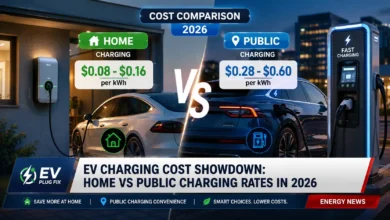
Modern EV chargers are increasingly smart. Features like scheduling charging during off-peak hours can lead to significant cost savings. According to the IEA’s Global EV Outlook 2026, home charging has consistently offered running cost savings compared to internal combustion engine vehicles, with battery electric cars in the United States offering about USD 860 per year in savings in 2025 . Furthermore, with high oil prices in 2026, these savings are projected to increase, potentially reaching over USD 1,300 per year in some scenarios .
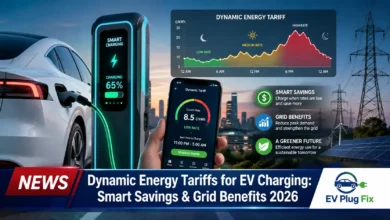
Connectivity is a key differentiator. Chargers like the go-e Gemini flex 2.0 and Gemini 2.0 come with integrated SIM cards, allowing for remote diagnostics, over-the-air updates, and features like PV Surplus Charging that can optimize charging around your solar panel output . To maximize efficiency, you may also want to explore go-e Charger Load Management features that prevent circuit overload.
Making the Final Decision
The best electric car charger for you is the one that matches your lifestyle.
- Choose a Mobile Charger if: You value flexibility, don’t have a dedicated parking spot, frequently travel, or live in a rental .
- Choose a Fixed Wallbox if: You have a garage or driveway, want the fastest and most convenient daily charging experience, and can benefit from smart home integration features .
Before purchasing, always check your vehicle’s onboard charger capacity to ensure you’re not paying for power your car cannot accept. By carefully considering your driving habits and home environment, you can confidently select a charging solution that will serve you well for years to come. For ongoing care, don’t miss our EV Charging Maintenance Guide to keep your equipment in top condition.