Best EV Route Planning Apps for 2026: Expert Picks & Charging Tools
As electric vehicles continue to reshape the automotive landscape, the charging infrastructure behind them has become a critical focal point for both enthusiasts and everyday commuters. One name that consistently stands out in the European and global EV charging market is go-e, a brand celebrated for its innovative, flexible, and user-friendly charging solutions. If you’re currently evaluating which charger best fits your electric lifestyle, you’ve likely come across the go-e Charger. But is it the right choice for your specific needs? In this comprehensive 2026 go-e Charger review, we’ll dive deep into the key features, performance metrics, installation process, and smart functionalities to help you make an informed decision.
This review focuses on the Gemini, go-e’s flagship model, renowned for its dual-socket design (Type 2 and Schuko) and unparalleled adaptability. Whether you’re a homeowner looking to install a permanent wallbox or a driver seeking a versatile mobile charger, the go-e Gemini promises to be a Swiss Army knife in the world of EV charging.
Design and Build Quality
The go-e Gemini immediately stands out with its sleek, modern aesthetic. It’s lightweight yet robust, featuring a durable housing that is both weatherproof (IP56) and dustproof, making it suitable for outdoor installation. At its core, the device offers two charging sockets: a standard Type 2 socket for dedicated EV charging and a Schuko plug for more flexible, albeit slower, charging options. The interface is intuitive, with a clear LCD display that provides real-time information on charging status, current, voltage, and power. The build quality reflects go-e’s commitment to high engineering standards, ensuring it can withstand the rigors of daily use, whether mounted in a garage or thrown in the trunk as a portable companion.
Performance and Charging Speeds
When it comes to performance, the go-e Gemini does not disappoint. It supports single-phase and three-phase charging, delivering a maximum output of up to 22 kW, which is the industry standard for high-capacity home and mobile chargers. This means you can easily replenish your EV’s battery overnight or during work hours without issues. The charger is highly adjustable, allowing you to limit the current from 6A to 32A to match your home’s electrical capacity or to charge more slowly on the go. For those needing to install a permanent solution, understanding the specifics of charging speed relative to your home setup is crucial. You might find it beneficial to compare the Gemini’s capabilities against other models in our dedicated EV Charger Comparison Guide to see how it stacks up against fixed 7kW or 11kW units.
Smart Features and Connectivity
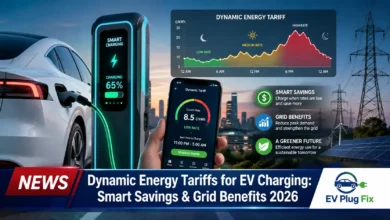
What truly sets the go-e Gemini apart is its comprehensive suite of smart features. The charger comes equipped with built-in WiFi and Bluetooth, enabling seamless integration with the go-e app. Through the app, users can access a wide range of functionalities including scheduling charging sessions, monitoring energy consumption, and adjusting the charging current. A standout feature is its ability to intelligently manage solar charging. By connecting to your home’s photovoltaic system, the Gemini can automatically adjust its output to utilize excess solar power, maximizing green energy usage and minimizing grid dependency. This can be further optimized when paired with a dynamic energy meter, which we cover in detail in our analysis on Dynamic EV Load Balancing, ensuring your home doesn’t exceed its power limits.
go-e App and Smart Tariff Integration
The go-e app acts as the brain of the charging experience. It’s one of the most polished and feature-rich mobile applications in the EV charging space. Beyond basic start/stop functions, the app offers detailed statistics, charging history, and the ability to share access with other users. Importantly, it supports integration with various energy providers for flexible tariffs. This allows you to program the charger to operate when electricity is cheapest, significantly reducing your running costs. To learn more about how you can leverage these dynamic pricing models to save money, check out our article on go-e Flexible Tariffs. Additionally, the charger’s open API makes it compatible with smart home systems, future-proofing your investment.
Installation and Mobile Use
One of the go-e Gemini’s greatest assets is its flexibility. It can be installed as a permanent wallbox using a wall mount or used as a mobile charger thanks to its compact design. For home installations, it can be hardwired or plugged into a CEE industrial socket, providing a robust and safe connection. The ease of installation makes it a favorite among DIY enthusiasts and professional electricians alike. However, given its complexity and safety requirements, professional installation is always recommended. For those interested in the specifics of setting up a mobile unit, our guide on Mobile Wallbox Charging Guide provides a wealth of information on harnessing the power of CEE sockets for flexible charging.
Safety and Protection Features
Safety is a non-negotiable priority in EV charging, and the go-e Gemini is packed with protective features. It includes 6mA DC fault current detection, which is essential for protecting your vehicle’s battery and ensuring compliance with international safety standards. Overcurrent, overvoltage, and surge protection are also integrated to safeguard both the charger and your vehicle from electrical irregularities. It’s also equipped with a temperature sensor to prevent overheating. These features make it one of the safest chargers on the market, giving users peace of mind whether charging indoors or outdoors. For more insights into general safety practices, especially concerning weather conditions, visit our post on EV Charging Rain Safety.
Connectivity and Connector Types
The Gemini’s dual-socket design is a massive advantage, but it’s also essential to understand the broader context of connector compatibility. The Type 2 connector is the standard for AC charging in Europe, while the Schuko plug caters to standard household outlets for emergency or trickle charging. This versatility makes it a fantastic option for users with different EV models. Understanding the differences between various plug types can be confusing, but our comprehensive overview on EV Charging Connectors will help clarify which standards are relevant to your vehicle and region.
Conclusion: Is the go-e Charger Worth It?
In the crowded market of EV chargers, the go-e Gemini stands tall as a versatile, intelligent, and future-ready solution. Its ability to seamlessly transition from a high-power home wallbox to a portable charger, combined with its advanced smart features and robust safety protections, makes it a top-tier choice. While its premium price point reflects its high-quality components and technology, the long-term savings from smart tariff integration and solar charging optimization can quickly offset the initial investment. Whether you are a tech-savvy driver looking to maximize your solar energy usage or a newcomer needing a simple and reliable charger, the go-e Gemini is undoubtedly one of the best options available in 2026. It embodies the future of flexible EV charging, and for many drivers, it will be the last charger they ever need to buy.