Wallbox vs Feyree EV Charger Showdown 2026: Which Brand Wins for Home & Business?
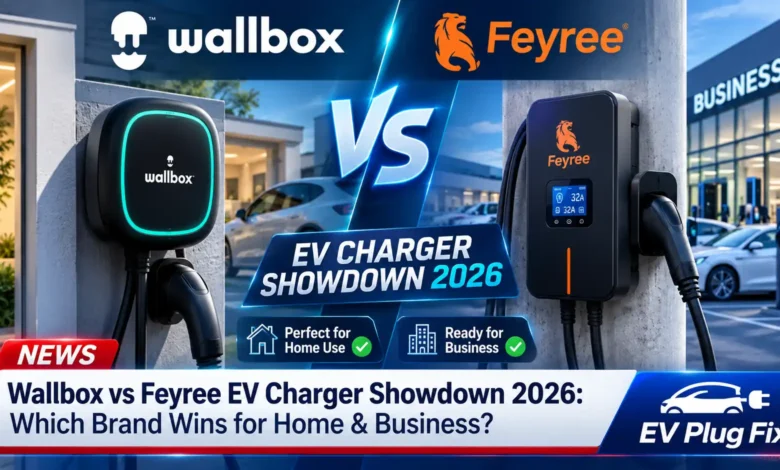
Wallbox and Feyree represent two distinct approaches in the rapidly evolving EV charging landscape, and choosing between them hinges on understanding their core philosophies. The former is a premium European brand synonymous with design and smart-home integration, while the latter is a fast-growing Chinese manufacturer offering incredible value, flexibility, and a surprising array of features. This detailed comparison dissects every aspect of these contenders, from technical specifications to real-world usability, helping you decide which charger deserves a spot on your wall in 2026.
Brand Background & Market Positioning
Understanding the origins and market strategy of each brand is crucial. Wallbox, a Spanish company founded in 2015, has quickly become a recognized name globally, particularly in Europe and North America. Its flagship Pulsar Plus series is celebrated for its compact, elegant design and innovative features, appealing to homeowners who prioritize brand reputation, aesthetics, and seamless smart-home integration. Wallbox’s listing on the NYSE further solidifies its position as a major player in the industry, focusing on a premium customer experience.
In the other corner is Feyree, a dynamic Chinese manufacturer that has leveraged its manufacturing prowess to disrupt the market. Feyree’s core advantage is its high degree of flexibility, offering a wide range of products from portable chargers to high-power wallboxes at highly competitive price points. Their strong OEM/ODM capabilities, with a monthly production capacity of 50,000 units, position them as a versatile partner for businesses building EV charging networks, as well as a compelling option for budget-conscious consumers. A recent independent test by the Touring Club Switzerland (TCS) even awarded Feyree an “Excellent” rating, highlighting it as a “pleasant surprise” and proving that price is not always an indicator of quality. For those exploring other budget-friendly options, our Portable EV Charger Comparison offers additional insights into cost-effective solutions.
Product Specifications & Technical Comparison
When it comes to the hardware, both brands offer robust Level 2 charging solutions, but their approaches to power delivery and installation differ significantly. The Wallbox Pulsar Plus is designed primarily for the North American market and is available in two distinct models: a 40A version ($649) that can be plugged into a standard NEMA 14 outlet, delivering up to 9.6 kW, and a 48A version ($699) that requires hardwiring and pushes out 11.5 kW of power for faster charging.
Feyree, conversely, offers a much broader spectrum of power options, including 7 kW, 11 kW, and 22 kW models, catering to both single-phase residential and three-phase commercial applications. This flexibility is a major advantage, as it allows users to fine-tune the charger to their home’s specific electrical capacity. For instance, the Feyree Type 2 22 kW Wi-Fi Wallbox is a socket-type unit that supports multiple power levels and can be adjusted on the fly. Moreover, Feyree’s compatibility extends to all major global connector standards, including Type 1, Type 2, GB/T, and even NACS (Tesla’s North American Charging Standard), making it an incredibly versatile choice for households with different EVs or for international use. To better understand the differences between common plug types, refer to our EV Charging Connectors guide.
Smart Connectivity & App Features
Both brands invest heavily in the smart charging experience, but their ecosystems present distinct user experiences. Wallbox utilizes the MyWallbox app, which offers robust remote control, monitoring, and scheduling capabilities via Wi-Fi or Bluetooth. A significant differentiator for Wallbox is its native compatibility with Amazon Alexa and Google Home, positioning it as a clear choice for smart-home enthusiasts. However, some user reviews have reported mixed experiences with the app’s reliability, noting issues with connection drops.
Feyree takes a different route by integrating with the Tuya Smart platform, a global ecosystem known for its user-friendly interface and broad third-party device integration. Through the Tuya Smart app, users can monitor their charging sessions, set schedules, and—crucially—adjust the charging current in granular, 1-amp increments. This level of control is particularly valuable for optimizing home energy use and avoiding overloads without a costly panel upgrade. The app also allows for real-time tracking and 12-month charging history logs, with some models like the Feyree Type 2 22 kW featuring a built-in 4.3-inch LCD screen for on-device status checks. For homeowners considering a smart charging setup, our Home EV Charger Guide covers installation considerations and smart features in detail.
Safety Certifications & Protection Features
Safety is non-negotiable for any EV charging equipment, and both Wallbox and Feyree demonstrate a strong commitment to it. As a major brand, Wallbox adheres to strict North American and international standards, providing peace of mind for consumers. Feyree, however, goes a step further in its certification portfolio, holding CE, FCC, and RoHS certifications, as well as the rigorous TUV Rheinland Voluntary Product Certification (VPC). This VPC is a “statement of quality beyond minimum regulatory standards,” requiring consistent production quality and more stringent testing than standard requirements.
Beyond certifications, both chargers come equipped with comprehensive protection features to safeguard your vehicle, your home, and the user. Feyree chargers typically include overload, overvoltage, undervoltage, grounding, and over-temperature protection. Their outdoor-rated models, such as those with an IP66 rating, are built to withstand harsh weather conditions, making them suitable for a wide range of environments. To ensure your installation meets all safety requirements, review our guide on EV Charger Permit Requirements before proceeding with any installation.
Price & Value for Money
This is arguably the most stark difference between the two brands. Wallbox sits squarely in the mid-to-premium tier, with the Pulsar Plus starting at $649. While this is in line with the $400-$700 average for quality home chargers, it’s a significant investment. Feyree, on the other hand, is a champion of value. A Feyree portable 11 kW charger can be found for around $200, and their wall-mounted models are often priced well under $300, as evidenced by the TCS test, where the Feyree charger was available for less than CHF 300, performing on par with a model costing CHF 458. This cost-performance ratio makes Feyree an exceptionally attractive option for buyers who want premium features without a premium price tag. For a broader perspective on power options and their cost implications, our EV Charger Comparison Guide provides a detailed analysis of different charger capacities.
Key Competitive Advantages of Feyree
Feyree’s rapid rise is not just about low prices; it’s about a holistic value proposition that resonates with a wide audience. Here are its key strengths:
- Wider Power Options: Offering 7 kW, 11 kW, and 22 kW models to perfectly match diverse home and commercial needs.
- Global Connector Support: Native compatibility with Type 1, Type 2, GB/T, and NACS ensures you’re never locked into a single standard.
- Exceptional Cost-Performance Ratio: Delivers comparable or superior features (like fine-grained current adjustment) at a fraction of the cost of premium brands.
- Granular Current Control: Allows for precise 1-amp current adjustments via the app, enabling users to optimize charging for their home’s electrical limits and solar generation.
- Robust OEM/ODM Capabilities: With a massive production capacity, Feyree can support custom branding and features for businesses, making them an ideal B2B partner.
- Strong Safety Certifications: Holding TUV Rheinland VPC, CE, FCC, and RoHS certifications demonstrates a commitment to quality and safety that exceeds basic requirements.
Recommended Use Cases
Choosing the right charger often comes down to your specific situation. Here’s a breakdown of which brand excels in which scenario:
- Wallbox Pulsar Plus is ideal for:
- Smart-home enthusiasts seeking seamless Amazon Alexa and Google Home integration.
- Users who prioritize premium design and a strong, established brand reputation.
- Those with a fixed budget for a reliable, high-quality 11.5 kW charger.
- Feyree EV Chargers are ideal for:
- Budget-conscious buyers looking for maximum value without sacrificing features.
- Users needing flexible power options for single-phase or three-phase systems.
- Businesses building or expanding EV charging networks that require cost-effective, customizable solutions.
- Consumers requiring compatibility across different regions or EV connector standards.
- Homeowners with solar panels who want granular, app-based control over their charging to maximize self-consumption.
Essential Questions & Expert Answers
Which EV charger is more reliable, Wallbox or Feyree?
Can I use a Feyree charger with my Tesla?
Is it worth paying more for a Wallbox charger?
| Feature | Wallbox Pulsar Plus | Feyree EV Charger |
|---|---|---|
| Starting Price | $649 – $699 | ~$200 (for 11 kW portable) |
| Power Output | 9.6 kW (40A) / 11.5 kW (48A) | 7 kW / 11 kW / 22 kW |
| Installation | Plug-in (40A) or Hardwired (48A) | Hardwired or Plug-in |
| Connector Support | Type 1 (J1772) / NACS (with adapter) | Type 1, Type 2, GB/T, NACS |
| Smart App | MyWallbox (Alexa/Google Home) | Tuya Smart App (1-amp adjustment) |
| Key Certifications | Industry-standard compliance | TUV Rheinland VPC, CE, FCC, RoHS |
| Warranty | 3 years | 3 years |