Electric Car Charging Time 2026: How Long It Really Takes to Recharge Your EV
Charging your electric car at home is the single most significant shift in convenience and cost-saving you will experience as an EV driver. For the majority of electric vehicle owners, the daily routine of plugging in overnight eliminates the need for weekly petrol station visits and dramatically slashes running costs. A dedicated home EV charger transforms your driveway or garage into a personal refueling station, ensuring you start every day with a “full tank” of electricity ready for your commute or errands. With over 70 to 80 percent of all charging sessions taking place at home, understanding the ins and outs of installation, equipment, and smart energy management is crucial for any current or prospective EV owner. This detailed analysis will guide you through every aspect of setting up your home EV charging infrastructure, from assessing your electrical system to choosing the best wallbox and maximizing your savings with off-peak tariffs.
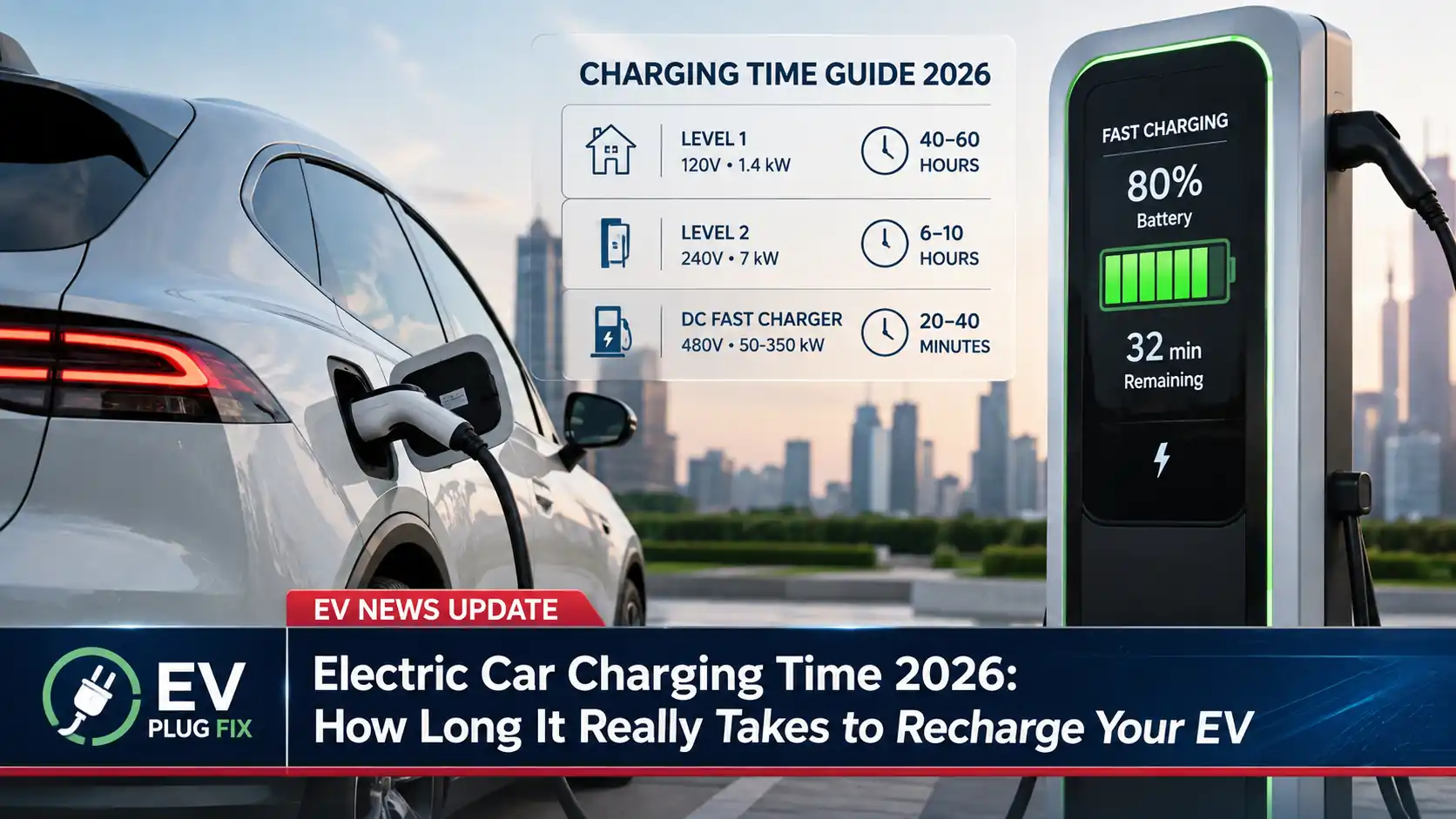
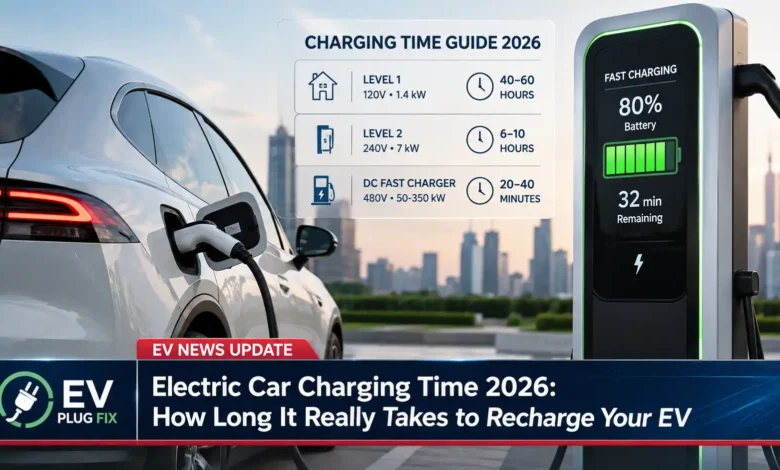
While many new EV owners are initially drawn to the simplicity of a standard three-pin socket, this method, often referred to as “trickle charging” or “granny charging,” is far from ideal for daily use. A standard 220V or 120V outlet delivers a maximum of about 2.3 kW to 2.4 kW, which means a full charge for a typical modern electric vehicle can take more than 24 hours. This slow rate makes it impractical for most drivers, especially those with longer commutes or larger battery packs. The real game-changer for home EV charging is the installation of a dedicated Level 2 wallbox charger. These devices, which operate on a 240-volt circuit similar to a clothes dryer or oven, provide significantly faster charging speeds. A 7 kW home wallbox can typically add 25 to 30 miles of range per hour, enough to fully recharge most EVs in 6 to 10 hours, perfectly suiting an overnight charging schedule. To better understand the EV Charging Losses that can occur during this process and how to minimize them, reviewing technical efficiency data is worthwhile.
What is a Home EV Charger (Wallbox) and Why You Need One
A home EV charger, commonly called a wallbox, is a dedicated electrical device hardwired to your home’s power supply. Unlike a portable charger that plugs into a standard outlet, a wallbox is a permanent or semi-permanent installation, usually mounted on an exterior wall of your house, garage wall, or a standalone post in your driveway. Its primary function is to convert the AC power from your home’s electrical grid into a form that your car’s onboard charger can use to safely and efficiently replenish the high-voltage battery pack. The Tesla Wall Connector or a comparable unit from brands like ChargePoint or Wallbox is designed to provide a sustained, high-current flow without the safety risks and heat buildup associated with standard household sockets.
The decision to install a wallbox is not just about speed; it’s about safety and long-term value. Purpose-built EV chargers come with advanced safety features like auto-shutoff, ground fault protection, and temperature monitoring that are not present in standard outlets. They are also designed to handle the constant high electrical load required for EV charging, reducing the risk of overheating or electrical fires. Furthermore, modern smart chargers offer features like scheduling, energy monitoring, and load balancing, which can lower costs and optimize your home’s energy usage. When comparing different brands, consulting a Smart EV Charger Comparison can help you identify which model best suits your specific needs.
Level 1 vs Level 2 vs Level 3 EV Charging Speeds Explained
To make an informed decision about your home charging setup, it’s crucial to understand the different “levels” of EV charging. In the automotive and energy industries, charging is categorized primarily by the voltage and power output, which directly determines charging speed. While you may encounter Level 3 or DC Fast Chargers at public stations, your home will be limited to Level 1 and Level 2 options. Understanding the technical distinction between AC vs DC Charging is fundamental, as Level 1 and 2 use AC power that your car converts to DC, whereas Level 3 delivers DC directly to the battery.
Level 1 Charging (The 3-Pin Socket)
Level 1 charging refers to the method of plugging your EV into a standard 120-volt (in North America) or 230-volt (in Europe and the UK) household outlet using a portable charging cable. This is the slowest method, offering a charging speed of around 2.4 kW in the UK or 1.4 kW in North America. For a battery-electric vehicle with a 60 kWh pack, a full charge from empty can take anywhere from 20 to over 50 hours. This method is generally recommended only for emergencies or for plug-in hybrid electric vehicles (PHEVs) with smaller batteries.
Level 2 Charging (The Dedicated Wallbox)
Level 2 charging is the gold standard for home EV charging. It requires a 240-volt circuit, similar to what powers a clothes dryer or electric stove. Level 2 chargers range in power output, with the most common home units delivering between 7 kW and 11.5 kW. This power output translates to a much faster charging experience, typically adding 25 to 60 miles of range per hour. Most electric vehicles with a 60 kWh battery can be fully charged in 6 to 10 hours, making overnight charging entirely feasible. This is the option you should prioritize for hassle-free EV ownership. For a precise understanding of how long a specific battery size takes to charge, you can reference the 66.5 kWh Charging Time calculator, which illustrates the relationship between battery capacity and charging speed.
Level 3 Charging (DC Fast Charging)
Level 3, or DC Fast Charging (DCFC), is typically found at public charging stations. These chargers bypass the car’s onboard converter to deliver high-voltage direct current directly to the battery, allowing for charging speeds of 50 kW to 350 kW. While incredibly fast, capable of adding 200 miles of range in 15 minutes, these units are not feasible for home installation due to their enormous cost, complex infrastructure requirements, and the fact that they are not designed for daily use, as they can degrade battery health over time.
Home EV Charging Comparison Table
| Charging Level | Voltage | Typical Power Output | Charge Time (0% for 60 kWh EV) | Cost/Installation |
|---|---|---|---|---|
| Level 1 (3-Pin Socket) | 120V / 230V | ~2.4 kW | 24 – 50+ hours | Low (cable often included with car) |
| Level 2 (Wallbox) | 240V | 7 kW – 19.2 kW | 6 – 10 hours | Medium-High (Unit + Installation cost) |
| Level 3 (DC Fast Charging) | 400V – 800V | 50 kW – 350 kW | 30 minutes (10%) | Very High (Not for home use) |
Types of Home EV Chargers: Tethered vs Untethered and Smart Features
Once you’ve decided to invest in a Level 2 home charger, your next decision involves the physical form and features of the unit itself. The two main design types are tethered and untethered, and the choice often comes down to personal preference and parking convenience. Additionally, you’ll want to consider the benefits of a smart charger, which can provide significant long-term savings.
Tethered vs Untethered EV Chargers
A tethered charger comes with a charging cable permanently attached to the wallbox. This is often considered the most convenient option for drivers with a single EV, as you simply park, grab the cable that is always there, and plug it into your car. This eliminates the need to handle a separate cable from your car’s boot, which is especially appreciated in rainy or cold weather. Brands like Tesla offer popular tethered options.
Untethered chargers, on the other hand, feature a standard socket on the unit. To charge, you must use your own Type 2 cable, connecting one end to the charger and the other to your car. This design is seen as more flexible, as you can switch cables if you own multiple EVs with different port types (like a J1772 and a NACS) or if you want to upgrade the cable. Untethered chargers also tend to look neater when not in use, as there’s no cable hanging down, and they reduce the risk of vandalism. It’s worth noting that Autel offers high-quality untethered options that provide great value.
- Tethered: Convenience: High (cable always attached), Aesthetics: Less neat, Flexibility: Low
- Untethered: Convenience: Moderate (need cable from boot), Aesthetics: More neat, Flexibility: High (can swap cables)
The Rise of Smart EV Chargers
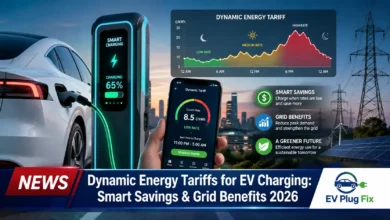
In 2026, almost all new home EV chargers are required to be “smart” in many regions, particularly the UK. A smart charger uses Wi-Fi or Bluetooth to connect to a smartphone app, allowing you to control, monitor, and schedule charging sessions remotely. This is a powerful tool for saving money, as it allows you to easily program the charger to operate only during off-peak hours when electricity is cheapest.
Some smart chargers can even integrate with a home energy monitor to prevent your EV from overloading your home’s electrical system or to charge your car only when your solar panels are producing excess energy. While the cost of a smart charger is higher upfront, the savings generated through off-peak charging and improved energy efficiency can lead to a rapid return on investment. Understanding the communication standards that make these smart features possible, such as OCPP Charging Benefits, can help you select a future-proof system that integrates seamlessly with various energy management platforms.
Home EV Charger Installation: Costs, Requirements and Certified Electricians
Installing a Level 2 EV charger is not a DIY project. It requires a certified electrician to ensure the work is safe, meets all local building codes, and protects your home and vehicle. The process begins with an assessment of your electrical panel to ensure it can handle the additional continuous load of the new charger. Most single-phase homes have a 100 to 200 amp service, and a 7 kW charger will draw about 32 amps.
The total cost for a home EV charger installation varies significantly based on hardware choice, labor, and any necessary electrical upgrades. In the UK, a standard smart 7 kW charger installation typically costs between £800 and £1,500. In the US, total costs can range from $749 to well over $2,000, with the national average hovering around $1,700 for a standard installation. Factors that increase costs include long wiring runs from the electrical panel to the charger, upgrading the main service panel, or installing a sub-panel. Before committing to any specific model, exploring an EV Charger Selection Guide can provide clarity on features and help align your choice with your budget and installation requirements.
- Rule of Thumb: Always get a quote from a certified installer before purchasing your charger.
- Pro Tip: Check with your local utility provider; many offer significant rebates for purchasing and installing a Level 2 charger.
- Important: Remember to apply for local grants (like the OZEV grant in the UK) if you are eligible to reduce installation costs.
It is essential to hire an installer approved by relevant authorities or a licensed, certified electrician with EV charging experience. This ensures not only safety but also compliance with regulations and eligibility for government grants. Attempting to install a charger yourself can void your car’s warranty, cause damage to your vehicle, or create a serious fire hazard. In regions like Germany, homeowners can further offset installation costs by leveraging Germany EV Charging Subsidies, which often provide attractive financial support for residential charging infrastructure.
Smart Charging and Off-Peak Tariffs: How to Save Money Charging at Home
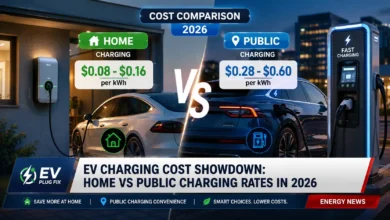
One of the primary benefits of home charging is the potential for massive savings compared to petrol or even public rapid chargers. The key to maximizing these savings lies in combining a smart charger with an off-peak electricity tariff. By charging your car when demand on the grid is lowest, typically late at night, you can reduce your cost per mile to a fraction of what you would pay elsewhere.
For example, on a standard variable tariff, electricity might cost around 27p to 30p per kWh. Charging a 77 kWh battery like that of a Volkswagen ID.4 from empty to full could cost about £23. However, by switching to a dedicated EV tariff like E.ON’s Next Drive Smart or Octopus Intelligent Go, you can access off-peak rates as low as 6.5p to 7p per kWh during a 6-hour window. This brings the cost of the same full charge down to as little as £5.
A smart charger makes this process automatic. You simply use the app to set your charging schedule to run between midnight and 6 am. You can then plug in your car as soon as you get home, and it will automatically start charging at the designated off-peak time. This “set it and forget it” approach ensures you always benefit from the cheapest rates without having to physically intervene. As the data shows, home charging at these rates can be up to 11 times cheaper per mile than driving a petrol or diesel car.