EV Charger RCD Protection: DC Fault Safety & go-e Installation 2026
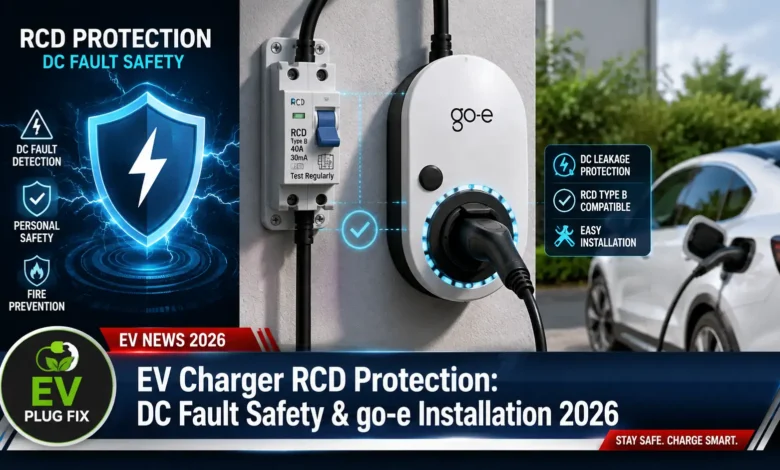
Electric vehicle charger installation requires precise electrical protection to ensure safety and compliance, and understanding the critical differences between residual current devices (RCDs) is paramount for any EV owner or installer. While a standard Type A RCD commonly found in homes is suitable for many circuits, the unique power electronics within electric vehicles and their onboard chargers introduce the risk of direct current (DC) fault currents. These smooth DC faults can effectively “blind” a Type A RCD, preventing it from tripping even during a dangerous fault. This is why advanced protection, often in the form of a Type B RCD or an integrated DC protection module like the one found in the go-e Charger, is required to ensure a safe and reliable EV charging setup.
As the adoption of electric vehicles accelerates globally, the electrical infrastructure supporting them must evolve to meet new safety challenges. The core of this challenge lies in the residual current device (RCD), an essential safety component designed to disconnect a circuit when it detects a leakage current to earth. Traditional RCDs, such as the ubiquitous Type A, are adept at detecting alternating current (AC) faults and pulsating DC faults. However, the sophisticated onboard chargers in many modern EVs, such as the Renault ZOE, can generate smooth DC fault currents. This highlights the need for a specific electrical infrastructure to maintain a safe charging process. Understanding the fundamentals of AC vs DC Charging is essential to grasp why these fault currents occur and how they impact safety systems.
Standard Type A RCDs can be rendered inoperative by DC fault currents because the continuous DC component can saturate the magnetic core of the device, blinding it to subsequent AC fault currents. This is a significant safety hazard, as the RCD would fail to protect against electric shock or fire. Therefore, standards and regulations necessitate additional protection, mandating either a Type B RCD on the building side or a DC protection module integrated within the charging station itself. For a deeper dive into the technical communication between your EV and the charger, exploring EV Charging Protocols can provide valuable context.
The go-e Charger Gemini series tackles this issue head-on. The device incorporates an integrated DC protection module that actively monitors for dangerous DC fault currents. If a fault is detected, the module immediately shuts down the charging station, preventing any potential harm to the user, the vehicle, or the property. This allows the go-e Charger to be safely protected upstream by a standard Type A RCD, simplifying installation while maintaining the highest safety standards. For those considering this versatile charger, our detailed go-e Gemini vs Wallbox comparison can help you decide if it’s the right fit for your needs.
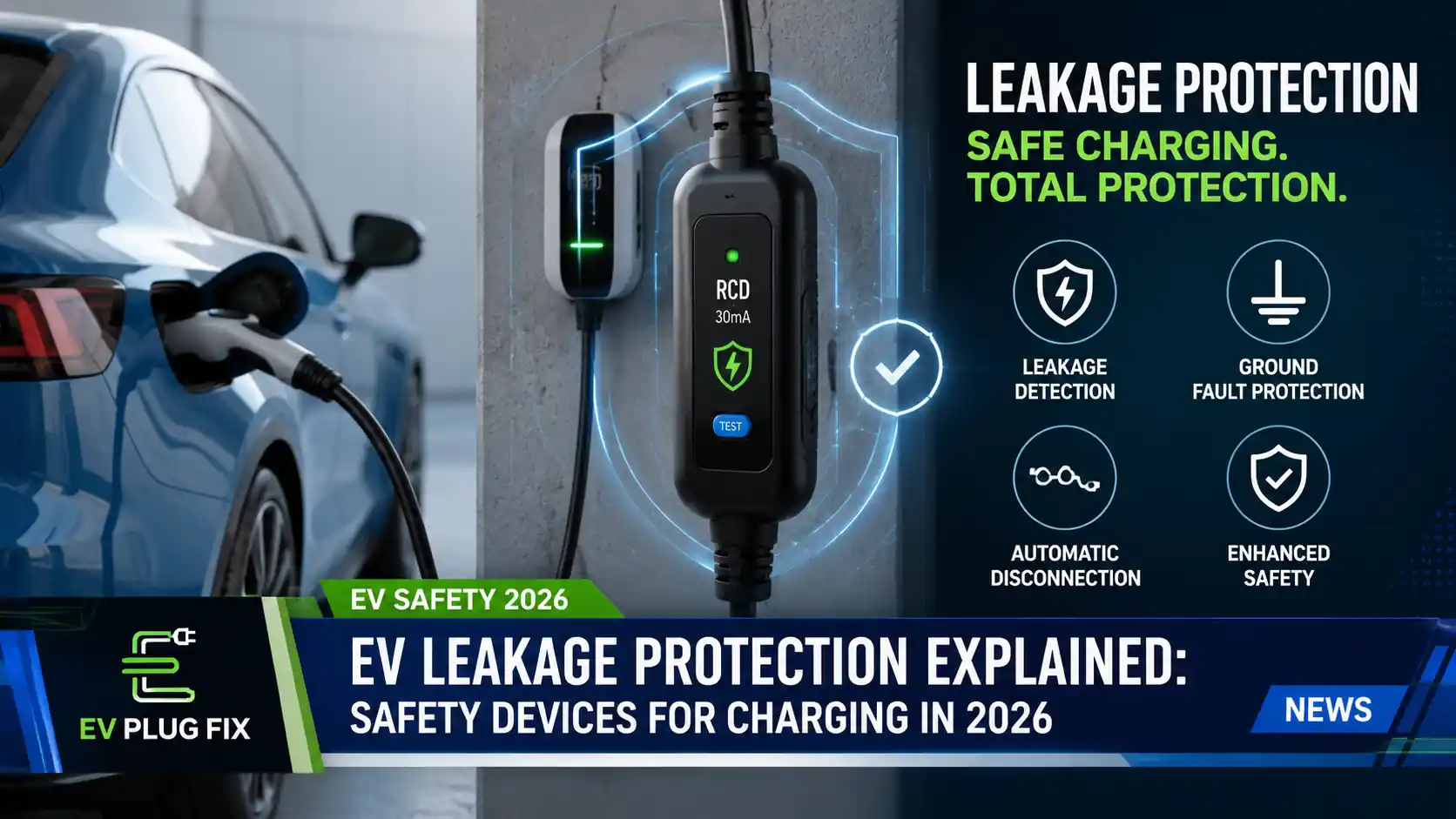
Beyond the specific RCD requirements, a standard EV charger installation involves several other key electrical components, each playing a crucial role in overall system safety and performance. In addition to the RCD, a miniature circuit breaker (MCB) must be installed upstream of the charging station to protect against overload and short circuits. For three-phase connections, a 3- or 4-pole MCB is required, while a 2-pole MCB is used for single-phase installations. The MCB’s characteristic, typically Type B or C, must be selected to handle the inrush currents of the EV charger, with 16 or 32 amperes being common ratings depending on the charger’s power output and local installation regulations. You can learn more about the broader process in our comprehensive EV Charger Installation Guide.
Another essential component for a safe and reliable charging system is a Surge Protection Device (SPD). A Type 2 SPD is often recommended to protect the charger and the vehicle’s sensitive electronics from damage caused by transient overvoltages, such as those from lightning strikes or grid switching events. These devices divert high-energy surges to earth, safeguarding the expensive electrical equipment connected downstream.
When planning the initial start-up of your go-e Charger, the process is designed to be intuitive and user-friendly. First and foremost, ensure that all electrical connections are secured and that the upstream RCD and MCB are in the correct positions. The go-e Charger can be configured via the free go-e app, which is available for both iOS and Android devices. The app allows you to set up a Wi-Fi connection, configure the maximum charging current based on your electrical panel’s capacity, and schedule charging sessions to take advantage of off-peak electricity tariffs, optimizing cost-efficiency. For a detailed walkthrough, refer to our dedicated go-e Charger Setup article.
- Always verify RCD type: A Type B RCD or an integrated DC protection module is essential for detecting smooth DC fault currents in EV charging systems.
- Use an integrated solution: The go-e Charger features a built-in DC protection module, enabling safe protection by a standard Type A RCD.
- Choose the right MCB: Install a 3- or 4-pole MCB for three-phase or a 2-pole for single-phase connections, with characteristic B or C.
- Consider surge protection: A Type 2 SPD is recommended to protect the charger and vehicle from grid surges.
- Always follow local codes: Adhere to local installation regulations and use a qualified electrician for hardwired installations.
Technical Specifications and Installation Requirements for EV Chargers
Understanding the technical requirements for installing an EV charger is crucial for a safe and compliant setup. This goes beyond simply plugging in a device; it requires a thorough evaluation of your home’s electrical system and a commitment to professional standards. The go-e Gemini Flex 2.0, a popular smart wallbox, offers a compelling combination of portability and robust safety features, making it an excellent choice for both indoor and outdoor use. It supports charging power from 1.4 kW up to 11 kW and can operate in both 1-phase and 3-phase modes, adapting to various installation scenarios. To ensure you’re selecting the best option, reviewing a EV Charger Selection Guide can be incredibly helpful.
A critical first step is evaluating your home’s electrical panel and its available capacity. Older homes may have a 100-amp service, which might be insufficient for a high-powered Level 2 charger along with other major appliances like air conditioners, dryers, and ovens. A qualified electrician should perform a load calculation to determine if your existing panel can support the additional load of a 50-amp circuit. If not, a panel upgrade to a 200-amp service may be necessary.
Proper planning for the charger’s location is also essential. The distance between the electrical panel and the charger significantly impacts installation costs, as it determines the amount of wiring required. The mounting height should be convenient and accessible, with most guidelines suggesting the bottom edge of the unit should be at least 0.9 meters from the ground. For outdoor installations, the charger must be weatherproof, with an IP65 rating or higher, to withstand exposure to rain, dust, and extreme temperatures.
- Indoor vs. Outdoor: Choose a charger with an appropriate IP rating for the installation environment.
- Mounting Height: Position the charger at a convenient height, typically with a minimum ground clearance of 0.9 meters.
- Permits and Inspections: Most jurisdictions require permits for hardwired installations. A licensed electrician can handle this process on your behalf
Finally, it’s crucial to understand the different types of RCDs and their applications to ensure compliance and safety. While Type A RCDs protect against AC and pulsating DC faults, Type B RCDs are designed for the most advanced protection, detecting smooth DC faults as well. However, as we’ve noted, a Type A RCD can be safely used upstream of an EV charger if the charger itself contains a certified DC protection module that monitors for 6mA of residual DC current. This integrated approach is a hallmark of modern chargers like the go-e Gemini, ensuring user safety without the need for a more expensive and bulky Type B RCD.
go-e Charger Initial Start-Up: A Step-by-Step Guide
Once your go-e Charger is professionally installed, the initial start-up is a straightforward process designed to get you charging as quickly as possible. The first step is to ensure that the system is ready and all electrical checks have been completed. Before turning on the charger, verify that the upstream RCD and the dedicated MCB are in the ‘ON’ position. This powers the device and prepares it for configuration.
The heart of the user experience is the go-e app, which is free to download from the Apple App Store or Google Play Store. After creating an account, you can pair the app with your charger using Bluetooth or by connecting to its built-in Wi-Fi hotspot. The app will guide you through the initial setup, which includes connecting the charger to your home Wi-Fi network to enable smart features and remote access.
- App Configuration: The go-e app allows you to set the maximum charging current to match your electrical panel’s capacity, helping to prevent overloads.
- Smart Scheduling: Schedule charging sessions during off-peak hours to reduce electricity costs.
- RFID Control: The charger supports RFID access control, allowing you to restrict usage for added security
After the initial setup, you can perform a simple test to ensure everything works correctly. Plug the Type 2 charging cable into your EV. The LED status ring on the go-e Charger will indicate its state, typically cycling through colors to show setup mode, readiness, and charging status. The app will also confirm the connection, display real-time charging data like power output and energy delivered, and allow you to stop the session manually or via a predefined schedule. This seamless integration ensures that you have full control over your charging habits from the moment you start.
Understanding RCD Types for EV Charging: A Comparison Table
To clarify the differences between the most common RCD types used in EV charging, the table below provides a concise breakdown of their capabilities and typical applications. This comparison is essential for making an informed decision about your charging infrastructure’s safety.
| RCD Type | Detects AC Faults | Detects Pulsating DC | Detects Smooth DC | Typical Application |
|---|---|---|---|---|
| Type AC | ✅ Yes | ❌ No | ❌ No | Basic general-purpose circuits (obsolete for EV charging) |
| Type A | ✅ Yes | ✅ Yes | ❌ No | Standard household circuits, EV chargers with integrated DC protection |
| Type B | ✅ Yes | ✅ Yes | ✅ Yes | High-power EV charging, PV systems, three-phase rectifiers |