go-e Charger Gemini flex vs Wallbox: Which Mobile EV Charger Wins in 2026?
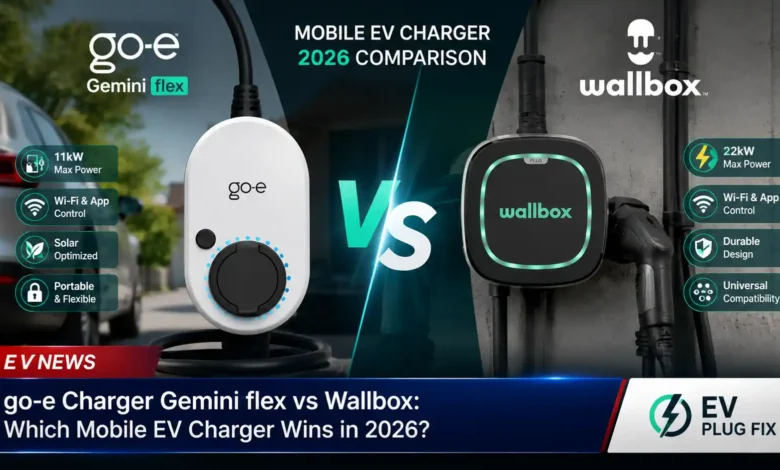
The go-e Charger Gemini flex is redefining what it means to charge an electric vehicle in 2026, offering mobile freedom that stationary wallboxes simply cannot match. But with both the Gemini flex and the fixed Gemini wallbox sharing the same intelligent app ecosystem and robust build quality, choosing between them demands a closer look at your actual driving habits, living situation, and future mobility needs. Whether you’re a daily commuter seeking home convenience or a weekend adventurer craving flexibility, this head-to-head comparison delivers the clarity you need.
go-e Charger Gemini flex vs Gemini Wallbox: Core Differences at a Glance
The fundamental distinction between these two EV charging solutions lies in their intended use cases. The go-e Charger Gemini flex is a portable, weatherproof charging station designed for maximum mobility—you can toss it in your trunk, plug it into any standard household outlet or industrial socket, and charge wherever you park. The stationary Gemini wallbox, by contrast, mounts permanently to your garage or exterior wall, delivering higher sustained power output for routine Home EV Charger Guide.
| Feature | go-e Charger Gemini flex | go-e Charger Gemini Wallbox |
|---|---|---|
| Mounting Type | Portable / Mobile | Stationary (wall-mounted) |
| Max Charging Power | Up to 22 kW (three-phase) | Up to 22 kW (three-phase) |
| Socket Compatibility | Schuko, CEE blue, CEE red, Type 2 | Fixed cable or Type 2 socket |
| App Control | Yes (go-e Charger app) | Yes (go-e Charger app) |
| Weatherproof Rating | IP54 / IK08 | IP54 / IK08 |
| Ideal Use Case | Travel, camping, rentals, flexible charging | Daily home charging, dedicated EV parking |
| Price Range (2026) | ~€599 – €799 (depending on plug bundle) | ~€499 – €699 (depending on cable option) |
Charging Performance: Power Output and Real-World Speed
Both charging stations deliver up to 22 kW of three-phase AC power, matching the onboard charger capacity of most modern EVs. That means you can add roughly 100–120 kilometers of range per hour of charging, depending on your vehicle’s efficiency and battery size. For a typical 75 kWh battery, a 22 kW wallbox can replenish from 20% to 80% in about two hours—significantly faster than the standard 7.4 kW home wallbox. For a detailed breakdown of charging times for specific battery capacities, check out our 66.5 kWh Charging Time guide.
However, the Gemini flex’s portable nature introduces a subtle trade-off: its maximum output depends entirely on the socket you connect to. While the stationary Gemini wallbox connects directly to your home’s three-phase power supply for consistent 22 kW delivery, the flex unit automatically adjusts to the available socket type. Plug into a standard Schuko outlet, and you’ll get a modest 2.3 kW—ideal for overnight top-ups. Connect to a red CEE 16A industrial socket, and you unlock the full 11 kW. For the maximum 22 kW, you’ll need a 32A CEE socket, commonly found at campsites and dedicated EV charging points.
“The Gemini flex’s intelligence lies in its automatic current adjustment—it recognizes the socket type and delivers the safest, fastest possible charge without manual configuration,” notes a go-e engineer in the product’s technical documentation. “This makes it future-proof for various charging scenarios.”
App Control and Smart Features: A Shared Digital Ecosystem
Both Gemini models leverage the feature-rich go-e Charger app, which transforms your smartphone into a comprehensive control center. From the app, you can monitor charging status in real-time, schedule charging sessions to leverage off-peak electricity tariffs, set ampere limits to avoid overloading your home’s circuit, and even integrate with smart home systems via the built-in API. The app also offers advanced EV Load Shifting Strategies to help you optimize energy consumption and reduce costs.
The app also provides detailed charging history, allowing you to track energy consumption, cost estimates, and CO₂ savings. One standout feature is the “PV surplus charging” function—when paired with a solar inverter, both Gemini units can automatically adjust charging power to match your home’s solar production, maximizing renewable energy usage. Learn more about this capability in our guide on PV Surplus Charging.
Gemini flex: On-the-Go Control
The app is essential for the flex model when charging at unfamiliar locations. You can check if the power supply is stable, adjust amperage to prevent breaker trips, and even use the “delay charging” function to start at a specific time—perfect for taking advantage of free night-time electricity at campsites or friend’s houses.
Gemini Wallbox: Home Automation
For the stationary unit, the app enables seamless integration with home energy management systems. You can set weekly schedules, monitor phase balancing, and receive alerts if the system detects irregular power draw. The stationary model also benefits from the app’s “authorized charging” feature, which can restrict access to specific users via RFID tags.
Installation and Setup: Flexibility vs Permanence
The go-e Charger Gemini flex arrives ready to use straight out of the box—no electrician required. Its weatherproof housing and robust carrying handle make it ideal for spontaneous trips. Simply select the appropriate adapter from the available bundle (Schuko, CEE blue, CEE red, or Type 2), plug into a suitable outlet, connect the charging cable to your EV, and the charging process begins automatically. This plug-and-play simplicity is the flex model’s greatest strength. For a deeper dive into mobile charging options, explore our EV Mode 2 Charging article.
In contrast, the stationary Gemini wallbox requires professional installation by a certified electrician—especially if you’re aiming for the full 22 kW output, which demands a dedicated three-phase circuit and proper RCD protection. While this upfront cost may deter some buyers, the permanent installation ensures consistent, high-speed charging without the need to set up and pack equipment each time. For a comprehensive overview of what to expect, refer to our EV Charger Installation Guide.
Both devices share the same IP54 dust and water protection and IK08 impact resistance, meaning they’re equally robust against the elements. The wallbox’s fixed mounting may offer slightly better theft deterrence, but the flex model’s portability means you can store it securely in your trunk when not in use.
Use Case Scenarios: Which Charger Matches Your Lifestyle?
When to Choose the go-e Charger Gemini flex
- You travel frequently: Camping trips, weekend getaways, or visits to remote locations with industrial sockets become charging opportunities rather than limitations.
- You rent your home: Avoid the hassle and cost of installing a permanent wallbox that you’d need to leave behind.
- You own multiple EVs: One portable charger can serve the whole household, whether it’s your daily commuter or the weekend sports car.
- You attend EV gatherings or track days: Use the flex unit to offer charging support to fellow EV owners without permanent infrastructure.
- You want a backup for emergencies: Keep the flex in your frunk as a safety net—public chargers can be out of order, but a standard wall outlet is almost always within reach.
When to Choose the Stationary go-e Charger Gemini Wallbox
- You charge exclusively at home: A dedicated wallbox offers the most convenient daily routine—just park and plug in, no setup required.
- You have a dedicated EV parking spot: Fixed installation ensures the charger is always available and ready for use.
- You want a cleaner aesthetic: The wallbox’s flush mounting and cable management system reduce clutter in your garage.
- You benefit from off-peak tariffs: The app’s scheduling feature combined with consistent home connectivity lets you maximize cheap night-time electricity.
- You’re a landlord or property owner: Installing a wallbox can increase your property’s value and appeal to eco-conscious tenants or buyers.
Safety Features and Smart Monitoring
Both Gemini models incorporate advanced safety mechanisms that go beyond basic overcurrent protection. The go-e Charger app continuously monitors temperature, voltage fluctuations, and ground fault conditions—if any anomaly is detected, the charging process immediately pauses and an alert is sent to your phone. This real-time vigilance is particularly valuable for the flex model, which may encounter diverse and unpredictable power sources during travel. For more information on maintaining safe charging practices, see our Home EV Charging Safety guide.
The devices also feature a “phase rotation detection” system that ensures your EV receives the correct power phase sequence, preventing damage to the car’s internal charger. Additionally, both units comply with all relevant EU and UK safety standards, including IEC 61851-1 for EV conductive charging systems.
Future-Proofing: Software Updates and Compatibility
go-e distinguishes itself from many competitors by delivering over-the-air firmware updates that add new features and expand compatibility. Both the flex and stationary Gemini models received a major software update in early 2026 that improved compatibility with vehicles using the new ISO 15118-20 standard, enabling plug-and-charge functionality and bidirectional charging support (V2H and V2L).
This commitment to software longevity means that whether you choose the flex or wallbox, your investment remains relevant as EV technology evolves. The modular design of the Gemini flex further enhances its future-proofing—you can swap out adapters or even the internal charging board should standards change, a luxury the fixed wallbox does not offer.
Price Analysis and Value for Money
At first glance, the stationary Gemini wallbox appears more cost-effective at €499 to €699, compared to the flex’s €599 to €799 range. However, the flex’s bundled adapters often offset the price difference—the standard flex package includes both a Schuko plug and a CEE blue socket, essential components that would cost upwards of €150 to purchase separately. For campers or frequent travelers, the flex is actually the more economical option over time, as it eliminates the need for multiple adapters.
That said, the wallbox includes a wall-mounting bracket and sometimes a fixed Type 2 cable (depending on the variant), which adds value for home installation. When factoring in professional installation costs—typically €200 to €500 for a 22 kW setup—the total cost of ownership for the wallbox can exceed the flex’s higher upfront price.
Final Verdict: Which One Deserves a Spot in Your EV Life?
Choosing between the go-e Charger Gemini flex and the stationary Gemini wallbox boils down to a single question: Do you prioritize flexibility or routine?
For the majority of urban EV owners who park in a private garage or driveway, the stationary Gemini wallbox delivers unparalleled convenience at a lower total cost. Its consistent 22 kW output and seamless app integration make daily charging effortless—you’ll never forget to pack it, and you’ll never wrestle with extension cords.
But for the growing tribe of EV adventurers, digital nomads, and multi-vehicle households, the Gemini flex is a revelation. It transforms every standard outlet into a potential charging point, liberating you from range anxiety and public charger dependency. The extra upfront cost and slightly lower maximum output from typical sockets are trivial compared to the freedom of charging anywhere—from a medieval village in Tuscany to a remote campsite in the Scottish Highlands.
Ultimately, both devices represent the best of go-e’s engineering: intelligent, robust, and app-connected. The right choice is the one that aligns with your actual driving patterns—not just today, but for the next five years of EV ownership.