How Often Should I Charge My EV to 100% in 2026? Battery Health Tips
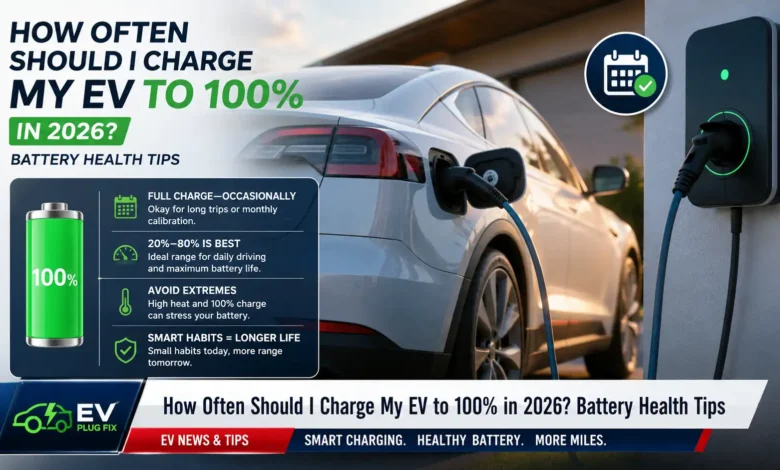
The question of how often should I charge my EV to 100% has become one of the most debated topics among electric vehicle owners in 2026. With battery packs representing a significant portion of your car’s value and replacement costs reaching thousands of dollars, understanding optimal charging habits is no longer just technical trivia—it’s financial and practical necessity. While conventional wisdom once suggested that fully charging any battery was the goal, EV lithium-ion technology operates under entirely different rules that prioritize moderation over maximum capacity for daily use.
Whether you’re a new EV owner or a seasoned driver, navigating the balance between having enough range for your daily needs and preserving your battery’s long-term health can feel like walking a tightrope. The truth is that how frequently you should charge to 100% depends on several variables including your driving patterns, your vehicle’s battery management system, and even your local climate. This article examines the science behind EV batteries, manufacturer recommendations, and real-world charging strategies to help you develop a routine that maximizes both convenience and battery longevity.
Modern Tesla, Ford, Hyundai, and Kia vehicles come equipped with sophisticated battery management software that actively monitors cell health and provides charging guidance. Yet despite these technological advancements, many drivers remain confused about whether they should plug in every night or wait until the battery drops to a certain level before charging. Understanding the fundamental chemistry of lithium-ion batteries provides the foundation for making informed decisions about your daily charging routine.
Lithium-ion batteries experience the least stress when operating within a specific state of charge window—typically between 20% and 80%. Within this range, the chemical reactions inside each cell remain stable, internal resistance stays low, and heat generation is minimized. Charging to 100% pushes the battery to its maximum voltage limit, creating additional strain on the electrolyte and cathode materials. Over time, this repeated stress accelerates the formation of dendrites and solid electrolyte interphase (SEI) layer growth, both of which contribute to permanent capacity loss.
The 80% Rule: Why Most Daily Driving Doesn’t Need a Full Charge
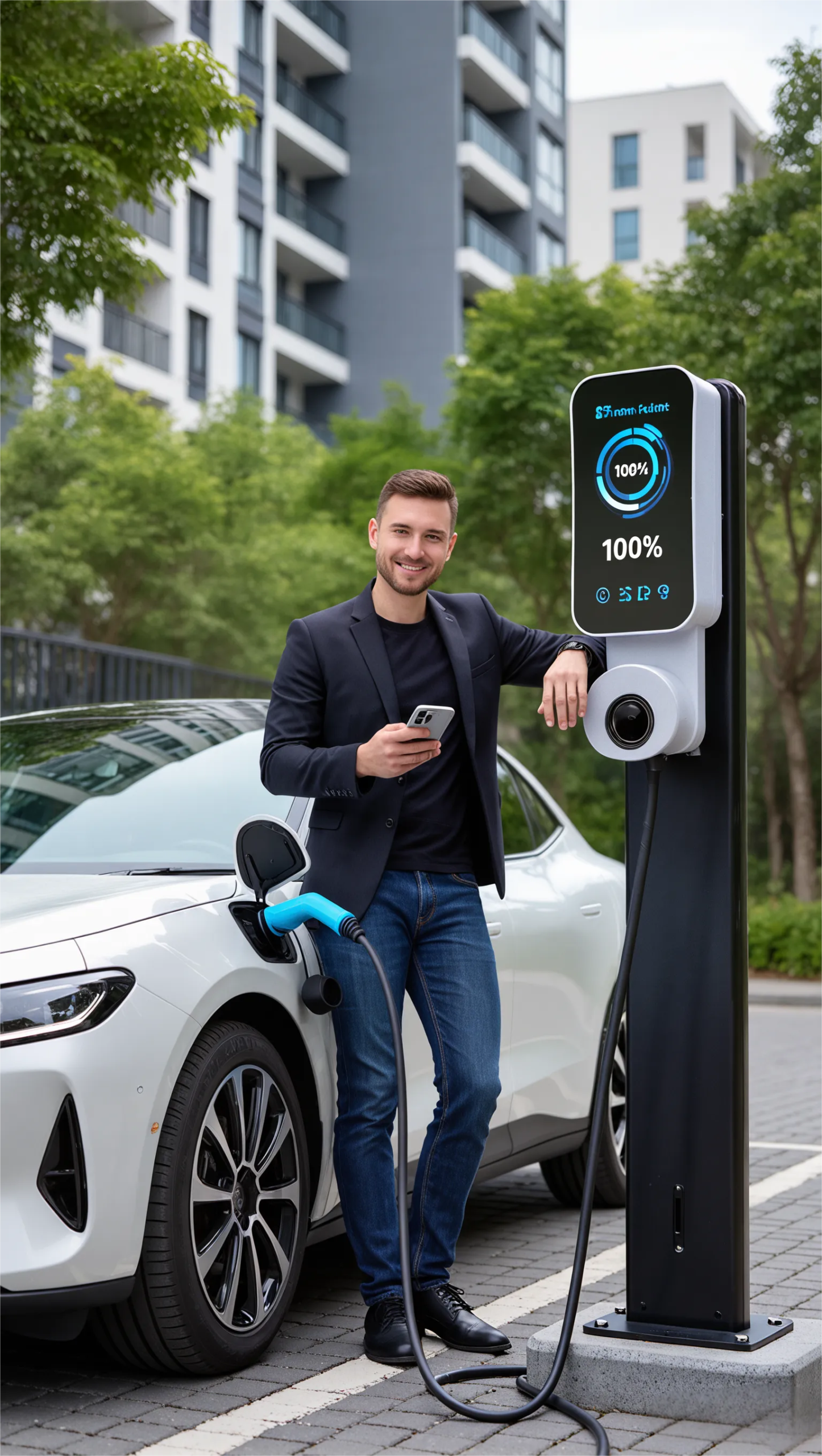
The recommendation to limit daily charging to 80% comes directly from battery engineers and has been validated by extensive research from organizations like the Idaho National Laboratory and the Department of Energy. Their studies consistently show that EV batteries charged exclusively to 100% experience significantly faster degradation compared to those maintained around the 80% mark. For the average driver covering 30 to 50 miles per day, an 80% charge provides more than sufficient range while dramatically reducing long-term wear on the battery cells.
Understanding the relationship between state of charge and battery degradation helps explain why the 80% threshold is so important. As a lithium-ion battery approaches full capacity, the voltage rises significantly, creating a more aggressive chemical environment inside the cells. This higher voltage accelerates the breakdown of the electrolyte and causes the cathode material to become structurally unstable over time. The cumulative effect of frequent high-voltage charging manifests as reduced total capacity, meaning your car simply won’t hold as much energy as it did when new.
Real-world data from fleet operators and early Tesla Model S owners confirms the benefits of the 80% charging strategy. Vehicles that spend most of their lives between 20% and 80% state of charge consistently retain 90% or more of their original capacity after 100,000 miles, while those frequently charged to 100% often see capacity drop below 80% within the same mileage. This difference translates into tangible range loss—a vehicle with 85% capacity versus 95% capacity means 30 to 40 fewer miles of driving range per charge, significantly impacting road trip convenience and overall vehicle utility.
When 100% Makes Sense: Long Trips and Special Circumstances
Despite the strong recommendation against daily 100% charging, there are legitimate situations where a full charge is both appropriate and necessary. Long-distance road trips represent the most common scenario where maximizing range becomes essential. Planning a vacation, visiting family across state lines, or any journey that exceeds your vehicle’s typical daily range requires the extra energy stored in that top 20% of capacity. The key distinction is frequency—charging to 100% once per month for a road trip causes minimal degradation compared to doing so every single day.
Modern EVs increasingly include features specifically designed to accommodate occasional full charges while minimizing associated wear. Tesla vehicles, for example, offer “Trip” mode that automatically increases the charge limit to 100% when the navigation system detects a long journey requiring maximum range. Ford and Hyundai provide similar smart charging features that learn your driving patterns and suggest optimal charge levels based on your typical routes and usage history. These technologies reduce the burden on owners to manually adjust settings while ensuring battery health remains a priority.
Another circumstance where 100% charging becomes advisable involves trips through remote areas with limited charging infrastructure. When traversing highways in rural states or driving through mountainous regions where elevation changes dramatically affect range consumption, having every kilowatt-hour available provides necessary safety margin. In these situations, the temporary stress of a full charge is far outweighed by the practical benefit of reaching the next reliable fast charger without anxiety about running out of power.
The timing of your 100% charge also influences its impact on battery health. Charging to full capacity just before departure minimizes the time the battery spends at high voltage. Leaving a fully charged EV plugged in overnight or for multiple days exposes the cells to prolonged stress, accelerating degradation unnecessarily. The ideal approach involves scheduling your charging so that the battery reaches 100% within an hour or two of your planned departure time, reducing the duration of high-voltage exposure.
Charging Frequency: How Often Should You Plug In?
Beyond the question of how often should I charge my EV to 100%, there’s the equally important consideration of overall charging frequency. The old mentality of “drive until empty, then fill to full” that served internal combustion engine vehicles doesn’t apply to EVs. In fact, lithium-ion batteries prefer frequent, shallow discharges and charges over deep cycles that drain the battery to very low levels. Rather than waiting until your range drops below 20 miles, the optimal strategy involves plugging in whenever convenient, maintaining the battery within its comfort zone.
This “always be charging” philosophy has become standard among EV owners with home charging access. By treating charging as a natural part of your parking routine—much like plugging in your smartphone overnight—you can keep your battery at an optimal state without thinking about it. For example, setting your vehicle to charge to 80% and plugging in whenever you arrive home automatically maintains the battery at a healthy level while ensuring you always leave with sufficient range for unexpected trips or emergencies.
However, charging frequency does interact with the 100% question in important ways. If you’re plugging in multiple times throughout the day—at work, during shopping trips, or at public charging stations—it’s crucial to ensure that your charge limits remain below the 80% threshold for these routine top-ups. Kia and Hyundai vehicles allow drivers to set separate charge limits for home versus public charging, offering flexibility without compromising battery health. This feature acknowledges that while frequent charging is beneficial, the maximum state of charge must be carefully controlled.
Data from battery monitoring systems reveals that cycling between 40% and 60% represents the absolute sweet spot for longevity, with degradation rates reaching their theoretical minimum in this range. While maintaining such strict limits isn’t practical for most drivers, understanding this principle helps contextualize why keeping your battery in the middle range—rather than constantly pushing to extremes—produces the best long-term outcomes. The 20% guideline strikes a pragmatic balance between battery health and daily usability, giving you meaningful range while preventing accelerated wear.
Scientific Insights into Battery Chemistry and Degradation Patterns
Understanding why charging to 100% affects battery health requires a closer look at lithium-ion chemistry. These batteries operate through the movement of lithium ions between electrodes. When the battery reaches high voltage near full capacity, the electrolyte begins to break down, and lithium plating can occur on the anode. This phenomenon permanently reduces the battery’s ability to hold a charge. Temperature compounds this issue, as elevated battery temperatures during full charges accelerate these chemical reactions exponentially.
Battery degradation follows a nonlinear pattern. Most EVs lose about 1% of total capacity per year with optimal care, but aggressive charging to 100% can increase that loss to 3% annually. The degradation curve typically steepens after the battery exceeds 80% state of charge, meaning the last 20% of charging creates disproportionately more strain. This is why manufacturers recommend limiting daily charges to 80% and only pursuing full charges when necessary for range requirements.
- Lithium-ion cells experience maximum voltage stress at 100% state of charge, accelerating electrolyte decomposition.
- High state of charge increases internal resistance, generating more heat and further chemical degradation.
- Batteries cycled between 20%% show up to 200% longer cycle life compared to those regularly charged to 100%.
- Modern battery management systems (BMS) automatically taper charging speeds above 80% to reduce stress.
- Mild hybrid and standard EV batteries share similar chemistry but differ in usable capacity buffers.
Recent studies from battery research institutions confirm that charging to 100% isn’t immediately harmful, but the cumulative effect of repeated full charges creates measurable capacity loss within 18 months. For drivers who rely heavily on their EVs daily, understanding this chemistry helps justify the extra effort to manage charge limits proactively, especially as battery replacement costs remain substantial.
Manufacturer Guidelines: What EV Brands Recommend in 2026
As of 2026, EV manufacturers have refined their recommendations based on years of real-world data and improved battery management algorithms. Most automakers now integrate smart charging features that automatically suggest optimal charge limits based on your driving patterns. These systems learn your routine and adjust the daily charge cap, allowing you to override it when preparing for a trip. The table below summarizes current official recommendations for popular EV brands:
| EV Brand | Daily Charge Limit | Recommended Full Charge Frequency | Battery Chemistry Type |
|---|---|---|---|
| Tesla | 80% (Daily), 100% (Trip) | Once per month or before long trips | NCA / LFP (Model 3 RWD) |
| Ford | 90% (Standard), 100% (Extended Range) | As needed for trips exceeding 80% daily range | NMC |
| Hyundai/Kia | 80% for daily use, 100% when required | Before road trips only | NCM |
| Volkswagen | 80% recommended, 100% possible | Long trips, then return to 80% ASAP | NMC / LFP (ID.4 Standard) |
| BMW | 80% for daily commuting, 100% for long range | Occasional 100% before extended driving | NMC / Prismatic cells |
New EV models in 2026 increasingly feature LFP (Lithium Iron Phosphate) batteries, particularly in entry-level trims. These batteries are more forgiving when charged to 100% because they have a lower voltage plateau and can withstand more full cycles. For vehicles equipped with LFP batteries, manufacturers like Tesla recommend charging to 100% at least once per week to recalibrate the battery management system. However, even with LFP, excessive time spent above 95% still contributes to degradation, making it wise to charge only when needed.
Volkswagen’s 2026 ID. series introduces an “AI Charging Assistant” that analyzes daily driving distances and automatically sets charge limits, only pushing to 100% when the next day’s commute exceeds 70% of available range. This intelligent approach mirrors the broader industry shift toward user-friendly battery care that minimizes user decision-making while maximizing longevity. Consulting your owner’s manual remains the gold standard, but these brand guidelines provide a reliable baseline for developing your own charging schedule.
Real-World Driving Patterns and Personalized Charging Schedules
No single charging recommendation fits every driver because daily mileage varies widely. The ideal approach involves analyzing your typical commute and occasional trips to create a customized schedule. For instance, if your daily round-trip distance is 40 miles and your EV has a 250-mile range, you only need about 16% of your battery per day. In this scenario, charging to 60% nightly keeps you within the optimal range without forcing the battery near full capacity unnecessarily. Conversely, drivers with 80-mile daily commutes may benefit from a 75% nightly charge, ensuring ample buffer for unexpected detours.
Analyzing seasonal patterns is equally crucial. During winter, decreased efficiency means you might need more charge to cover the same distance. Preconditioning the battery while still plugged in reduces reliance on battery power for heating, effectively preserving range. A strategic approach for winter months involves charging to 85% instead of 80% to offset efficiency losses, while still avoiding the stress of 100% unless facing extreme cold combined with a long journey. Summer heat demands extra caution because ambient temperature already stresses the battery, so sticking closer to 75% becomes even more important.
Here are actionable schedules based on common driving scenarios:
Modern EVs allow programming charge timers to finish charging just before departure, ensuring the battery doesn’t sit at a high state of charge overnight. This practice reduces the time your battery spends in a high-voltage state, even if you occasionally charge to 85%. Combining this with location-based charging limits—such as automatically limiting home charging to 80% while allowing 100% at destination chargers—offers an effortless way to balance daily convenience with battery health preservation over the long run.
The Future of Battery Technology and Charging Recommendations
Looking ahead to 2026 and beyond, battery technology is evolving to address many of today’s charging concerns. Solid-state batteries, expected to enter mainstream production by 2028, promise higher energy density, faster charging, and significantly reduced degradation even with frequent 100% charges. However, current-generation EVs will remain on the road for years, making proper charging habits still essential. In the meantime, automakers are introducing new software strategies that dynamically adjust charge limits based on factors like battery age, cell temperature, and driving history.
Artificial intelligence is increasingly used to predict driving needs with remarkable accuracy. By analyzing calendar events, GPS history, and even traffic patterns, these systems can decide when to charge beyond 80% automatically. For instance, if your car detects a long trip scheduled for the weekend, it will defer the full charge until Friday night, preventing prolonged high-charge time. This predictive capability reduces the cognitive load on drivers while maximizing battery life. By 2027, experts anticipate that most new EVs will include such intelligent energy management as standard equipment.
Another emerging trend is the expansion of vehicle-to-grid (V2G) capabilities, which rely on bidirectional charging. This technology allows EVs to supply power back to homes or the grid during peak demand. While V2G offers financial and environmental benefits, it introduces new battery wear considerations. Manufacturers are designing V2G systems to automatically limit discharge levels to prevent deep cycles that harm battery health. The recommendation for owners using V2G is to maintain a “battery reserve” setting of at least 30% before discharging, effectively safeguarding the battery’s core life while participating in grid services.
Additionally, advancements in thermal management systems are making batteries more resilient to high states of charge in extreme temperatures. Active liquid cooling and heating systems are becoming more efficient, allowing some batteries to maintain optimal temperatures even during aggressive charging sessions. Nonetheless, until these technologies are universally adopted, the prudent approach remains charging to 100% only when necessary and avoiding prolonged stays at full capacity. The intersection of better hardware and smarter software points to a future where battery worries diminish, but for now, thoughtful charging remains the owner’s best defense against premature degradation.