Wallbox Price 2026: Smart vs Simple Charger Cost Comparison
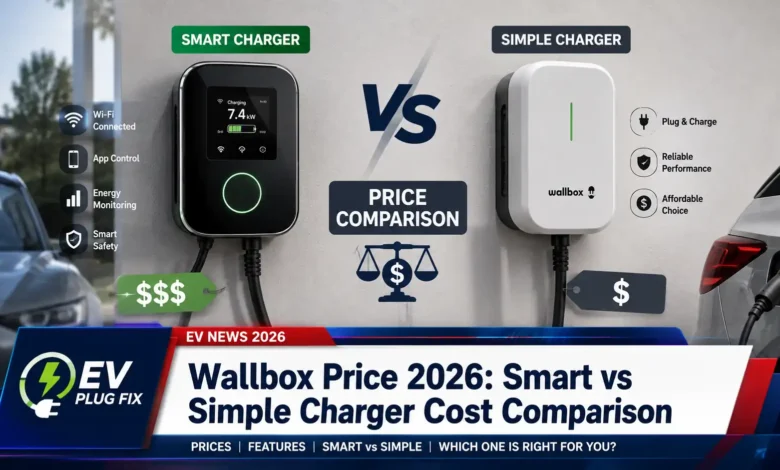
The wallbox price landscape in 2026 presents a clear divide: basic charging stations starting around €300 versus intelligent smart wallboxes beginning at approximately €700. This substantial price difference raises a crucial question for electric vehicle owners—what exactly are you paying for, and is the investment in a smart wallbox truly justified? As the EV market matures, homeowners are increasingly faced with this decision, weighing upfront costs against long-term benefits, convenience, and safety features that could significantly enhance their daily charging experience.
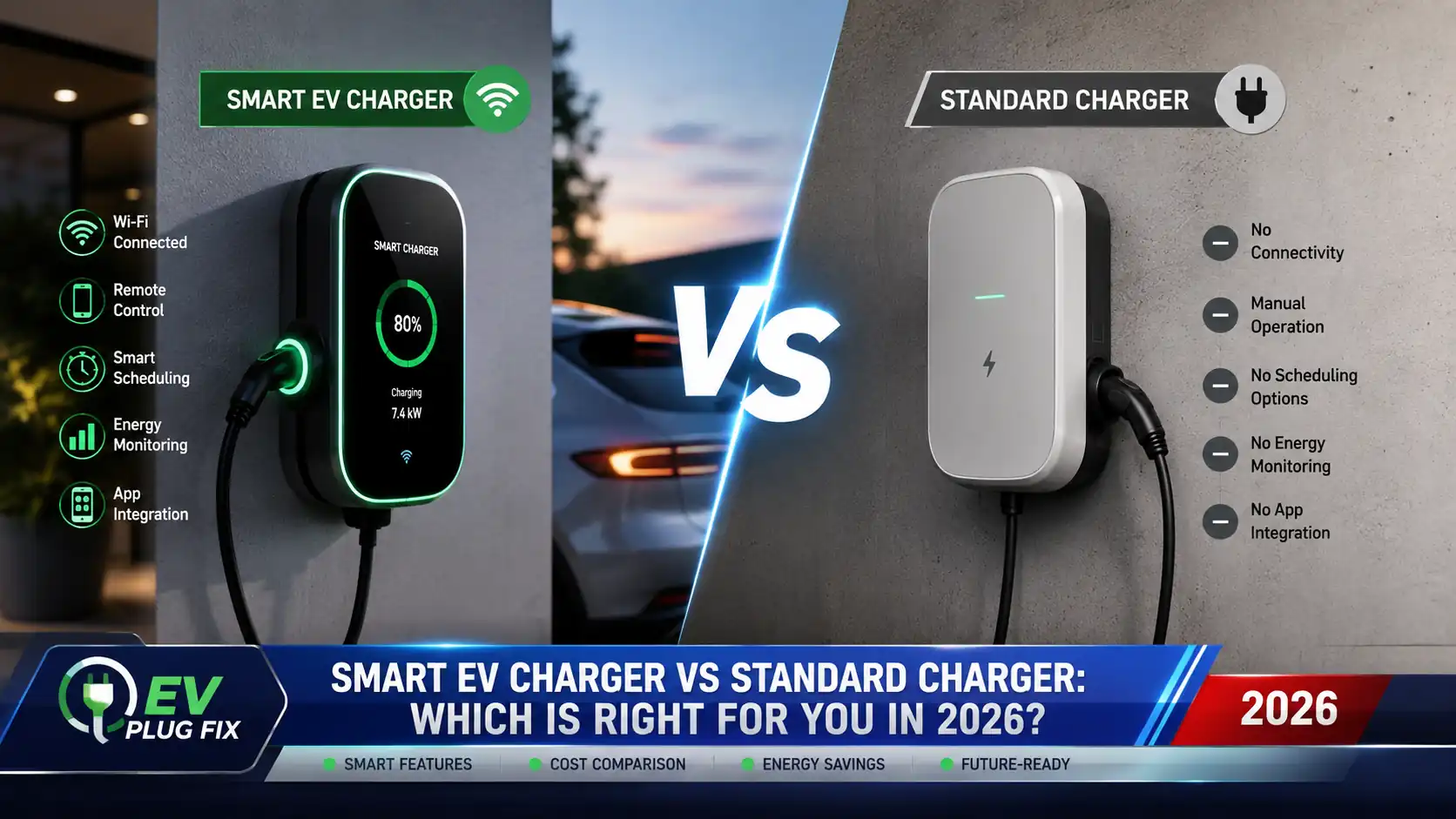
The gap between entry-level simple chargers and premium smart wallboxes extends far beyond a mere number on a price tag. Simple chargers typically function as straightforward electrical boxes that deliver a fixed charging speed without any advanced capabilities. They lack connectivity, real-time monitoring, or the ability to adjust charging based on electricity tariffs or solar panel output. On the other hand, smart wallboxes incorporate sophisticated technology that transforms your charging station from a basic power outlet into an intelligent energy management system for your electric vehicle.
For those considering a smart wallbox, the initial investment may seem steep compared to budget alternatives. However, the additional features—such as WiFi and Bluetooth connectivity, load balancing, solar integration, and mobile app control—deliver tangible value that simple chargers simply cannot match. These intelligent charging stations provide peace of mind through safety mechanisms, cost-saving opportunities through scheduled charging during off-peak hours, and the convenience of monitoring your charging sessions from anywhere in the world.
One standout example that has captured industry attention is the go-e Charger, which offers exceptional value at the €689–699 price point depending on maximum charging rate. This model gained particular recognition when it was selected as both the best and most affordable wallbox in rigorous ADAC testing, demonstrating that premium features need not always command premium prices. This achievement challenges the assumption that higher-cost options necessarily deliver superior performance.
Understanding the Wallbox Price Spectrum: From Budget to Premium
The current wallbox market offers options spanning a wide price range, each catering to different needs, budgets, and technical requirements. At the entry level, simple EV chargers typically retail between €300–400, providing basic functionality without connectivity or advanced features. These units function similarly to a heavy-duty electrical socket, delivering power at a predetermined rate without any user interaction or monitoring capabilities. While they serve the fundamental purpose of charging your electric vehicle, they offer little flexibility or insight into your charging patterns.
Moving into the mid-range segment, you’ll find wallboxes priced between €500–800 that begin incorporating smart features while maintaining reasonable affordability. This category includes the go-e Charger HOME+ and similar models that offer WiFi connectivity, mobile app control, and basic smart functionality without the premium price tag of top-tier alternatives. These chargers represent the sweet spot for many homeowners, delivering substantial benefits over simple units at a manageable cost premium.
Key Insight: The price difference between simple and smart wallboxes often reflects the technology integration rather than charging performance. Both can deliver the same kilowatts—the difference lies in how intelligently they manage that power delivery.
At the premium end, wallbox prices can reach €1,300 and beyond, offering advanced features like three-phase charging, dynamic load management, solar integration, and in-depth energy monitoring. These high-end charging stations often connect to home energy management systems, automatically optimizing charging based on real-time electricity costs, solar production, and household consumption. For environmentally conscious EV owners with solar installations or those seeking maximum control over their energy usage, these premium solutions justify their higher cost through sophisticated functionality and long-term energy savings.
What Makes Smart Wallboxes Worth the Investment?
The cost premium for smart wallboxes represents an investment in convenience, safety, and potential long-term savings that basic chargers simply cannot provide. Understanding these value-adding features helps justify the wallbox price difference and enables informed purchasing decisions. The core advantages that distinguish smart charging stations include:
The safety features incorporated into intelligent wallboxes provide additional value that often goes overlooked. These include temperature monitoring, automatic shutdown in case of faults, surge protection, and certification to stringent safety standards. When considering the substantial investment represented by your electric vehicle, the added protection offered by a quality smart wallbox represents prudent insurance against potential electrical issues that could damage your vehicle’s battery system.
Furthermore, smart wallboxes typically receive firmware updates over their lifespan, adding new features and improving performance without requiring hardware replacement. This future-proofing ensures that your charging station remains compatible with evolving EV technology and smart home ecosystems, extending its useful life and protecting your investment against obsolescence.
Comparing Wallbox Options: Features Versus Price Value
When evaluating potential wallbox purchases, the decision ultimately rests on balancing features against price to determine the optimal value proposition for your specific requirements. For many EV owners, the go-e Charger HOME+ exemplifies this balance, offering advanced smart features at a price point that undercuts many competitors while delivering performance that earned recognition in independent ADAC testing. This combination of affordability and quality demonstrates that smart wallbox technology has matured to the point where premium features are increasingly accessible to mainstream consumers.
However, the best wallbox for your situation depends on several factors including your typical driving patterns, home energy setup, budget constraints, and future requirements. For those who primarily charge overnight and have limited interest in monitoring or optimizing their charging sessions, a simple charger may prove perfectly adequate. Conversely, EV owners with solar panels, variable electricity tariffs, or multiple electric vehicles will likely find the enhanced capabilities of a smart wallbox well worth the additional investment.
Consider the total cost of ownership rather than just the initial purchase price when evaluating wallbox options. Smart chargers can reduce electricity costs through tariff-aware charging, potentially saving hundreds of euros annually compared to unoptimized charging. Over a typical 5 year lifespan, these savings can significantly offset or even exceed the initial price difference between simple and smart models.
Installation costs represent another consideration that can affect the overall wallbox price equation. Professional installation by a qualified electrician typically ranges from €200–500 depending on your home’s electrical infrastructure and the complexity of the installation. Smart wallboxes with advanced load balancing capabilities may require additional configuration but often integrate seamlessly with existing systems, minimizing additional installation costs.
When evaluating specific models, look beyond the headline price to consider features, build quality, certification, and warranty. Established manufacturers like go-e offer robust warranties and ongoing software support that add value over the product’s lifetime. The recognition from independent testing organizations like ADAC provides additional confidence in product quality and performance, helping consumers navigate the increasingly crowded wallbox market.
As the EV revolution continues accelerating, the wallbox market evolves rapidly, with prices gradually decreasing as technology matures and competition intensifies. However, the current price differential between simple and smart solutions remains significant enough to warrant careful consideration. By understanding what each price tier offers and evaluating your personal requirements, you can make an informed decision that delivers the optimal balance of cost, functionality, and future-proofing for your electric vehicle charging needs.
The True Cost of Ownership: Beyond the Sticker Price
When evaluating wallbox prices for 2026, the purchase price is merely the starting point of your financial journey. A truly in-depth cost analysis must account for installation expenses, ongoing operational costs, and potential savings that smart features unlock over the lifespan of your charging station.
Let’s break down the detailed financial picture:
The ROI calculation becomes particularly compelling when you consider that a smart wallbox priced at €699 can deliver annual energy savings of approximately €120–€180, effectively paying for the price difference versus a simple €300 model within just 2 years of regular use.
Moreover, smart chargers receive over-the-air firmware updates that add functionality over time—something impossible with simple, “dumb” chargers. This future-proofing ensures your investment remains relevant as EV technology evolves through 2026 and beyond.
Wallbox Price Breakdown: 2026 Market Segmentation
The 2026 wallbox market has matured into distinct tiers that cater to different user profiles, budgets, and technical requirements. Understanding these segments helps buyers make informed decisions aligned with their actual needs rather than marketing hype.
Here’s our in-depth segmentation analysis based on current market data:
| Category | Price Range (€) | Key Features | Ideal For |
|---|---|---|---|
| Entry Simple | 250 – 450 | Fixed amperage, no connectivity, basic LED indicators, minimal protection | Occasional users, rented properties, budget-constrained buyers |
| Premium Simple | 450 – 650 | Adjustable amperage, basic scheduling, simple app control, RFID access | Daily commuters with predictable schedules, single-EV households |
| Entry Smart | 650 – 950 | WiFi/4G connectivity, dynamic load balancing, OCPP compliance, time-of-use optimization | Tech-savvy users, multi-EV households, solar-equipped homes |
| Premium Smart | 950 – 1,500 | Bidirectional charging ready, AI-driven scheduling, advanced grid services, energy management ecosystem | Early adopters, V2G enthusiasts, energy-independent lifestyles |
| Commercial/Enterprise | 1,500 – 4,000+ | Multi-port, network management, payment terminals, high-availability design | Businesses, apartment complexes, fleet operations |
Notably, the €650–€950 sweet spot represents the value-for-money zone where users gain meaningful smart functionality without overpaying for enterprise-grade features they may never use. The go-e Charger HOME+ sits firmly in this optimal segment, explaining its ADAC “best and cheapest” recognition.
Smart Features That Justify the Premium
The price differential between simple and smart wallboxes isn’t arbitrary—it reflects genuine engineering complexity and value-adding capabilities that transform charging from a passive activity into an intelligent energy management tool.
Perhaps most significantly, smart wallboxes with OCPP (Open Charge Point Protocol) compliance—like the go-e Charger HOME+—offer vendor independence, allowing owners to switch between charging service providers without hardware replacement. This future-proofing alone justifies the price premium for forward-thinking buyers.
Wallbox Price Comparison: 2026 Top Models Analyzed
To provide actionable intelligence, we’ve analyzed the 2026 pricing and feature sets of the most prominent wallbox models available in the European market. This comparison focuses on home charging solutions suitable for single-family residences and apartments.
| Model | Type | Price (€) | Max Power | Connectivity | Smart Features |
|---|---|---|---|---|---|
| go-e Charger HOME+ | Smart | 689 – 699 | 22kW (3-phase) | WiFi, Ethernet, 4G option | Load balancing, solar, OCPP, RFID, scheduling, future-proof |
| Basic Home Charger | Simple | 299 – 349 | 11kW | None | Fixed charging, manual override only |
| SmartPro Series | Smart | 1,199 – 1,399 | 22kW | WiFi, 4G, Bluetooth | Full smart suite incl. V2G ready, AI scheduling |
| EcoCharge Basic | Simple | 399 – 449 | 11kW | Bluetooth | Basic app control, scheduled charging |
| IntelliCharge Home | Smart | 849 – 949 | 22kW | WiFi, 4G | Load balancing, solar, OCPP, energy monitoring |
| LuxuryWall advanced | Premium Smart | 1,499 – 1,799 | 22kW + V2G | Multi-connectivity | Bidirectional, AI ecosystem, grid services |
This comparison reveals that the go-e Charger HOME+ delivers 95% of the functionality found in models costing 50% more, validating its status as the value leader. The ADAC test recognition wasn’t an accident—it’s the result of exceptional engineering that prioritizes essential smart features while eliminating unnecessary complexity and cost.
For most European EV owners in 2026, the sweet spot remains the €650-€900 smart charger segment, where you gain all meaningful smart functionality without paying for enterprise or luxury branding premiums.
Frequently Asked Questions
What is the cheapest wallbox in 2026?
For budget-conscious buyers, we recommend investing in the smart category starting at €650, as the energy savings and grid incentives typically recoup the additional €350-€400 investment within 2 years of regular use.
Are smart wallboxes worth the extra cost?
Energy savings: 15% reduction in charging costs through time-of-use optimization and solar integration.
Installation savings: Dynamic load balancing can eliminate electrical panel upgrades costing €1,000+.
Grid incentives: Many utility programs offer €300-€900 rebates for smart charger installation.
Future-proofing: OTA updates and OCPP compliance ensure compatibility with evolving grid services and V2G capabilities.
For anyone charging an EV more than 2 times per week, a smart wallbox pays for itself within 3 years while delivering superior convenience and control throughout its lifespan.
What is the best wallbox for home charging in 2026?
• Full 22kW three-phase charging capability
• in-depth smart features (load balancing, solar integration, OCPP)
• Premium build quality at a mid-range price point
• Future-proof design with over-the-air updates
• Compact, weatherproof design suitable for indoor or outdoor installation
For users with specific requirements like V2G readiness, the Premium Smart category (€950+) offers additional capabilities, but the go-e Charger HOME+ covers 95% of home charging needs at 60% of the price of premium competitors.
How much does installation add to wallbox price?
• Electrical panel capacity: Upgrading from 100A to 200A service can add €1,500-€2,000
• Distance from panel to parking space: Each meter of cable adds approximately €50-€100
• Sub-panel requirements: Installing a dedicated sub-panel adds €300-€600
• Permitting and inspection: Typically €100-€300 depending on jurisdiction
Smart wallboxes with load balancing can actually reduce installation costs by avoiding panel upgrades, making the total installed cost more competitive than simple chargers in many scenarios. Always obtain multiple quotes from certified EVSE installers and check for available installation subsidies in your region.
Are there government subsidies for wallboxes in 2026?
• Germany (BAFA): Up to €900 for smart chargers with load management and solar integration
• France (Advenir): €300-€500 rebate for home charging installations
• Netherlands (SEA): Various municipal subsidies typically €400-€800
• Austria: Up to €600 for smart charging infrastructure
• United Kingdom (EVHS): £350 grant for home chargers (subject to eligibility)
These subsidies often require OCPP-compliant smart chargers with load balancing capabilities. The go-e Charger HOME+ qualifies for virtually all European subsidy programs, effectively reducing the net price to €300-€500 for eligible homeowners.
Always verify current program details and eligibility criteria, as subsidy amounts and availability can change. Your wallbox installer typically handles the subsidy application process.
What is the lifespan of a wallbox charger?
• Modular design: Replaceable components extend overall system life
• OTA updates: Smart chargers receive software improvements continually
• Durable construction: IP55/IP65 ratings ensure weather resistance
• Quality certification: Compliance with IEC 62196 and other standards ensures safety and durability
Simple chargers typically have a shorter functional lifespan (7 years) because they cannot receive updates or adapt to changing grid requirements. Smart wallboxes like the go-e Charger HOME+ are designed with modular components and software upgradability, potentially remaining relevant for 15+ years as EV technology evolves.