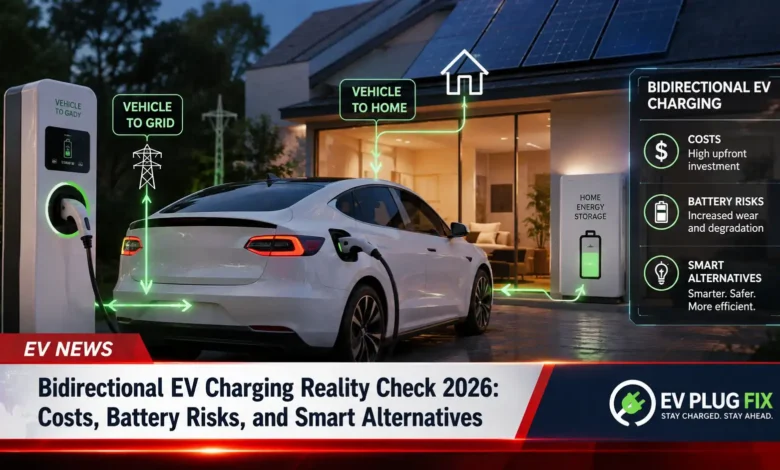
Bidirectional EV Charging Reality Check 2026: Costs, Battery Risks, and Smart Alternatives
Bidirectional EV charging development has been plagued by a persistent gap between theoretical profitability and real-world practicality, leaving early adopters to navigate a landscape of expensive hardware, unclear warranties, and legitimate concerns about accelerated battery degradation. While the promise of earning money by selling electricity back to the grid or powering your home during blackouts sounds compelling, the technology remains in its infancy, with far-reaching implications for EV owners that demand careful consideration.
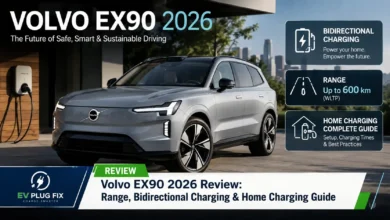
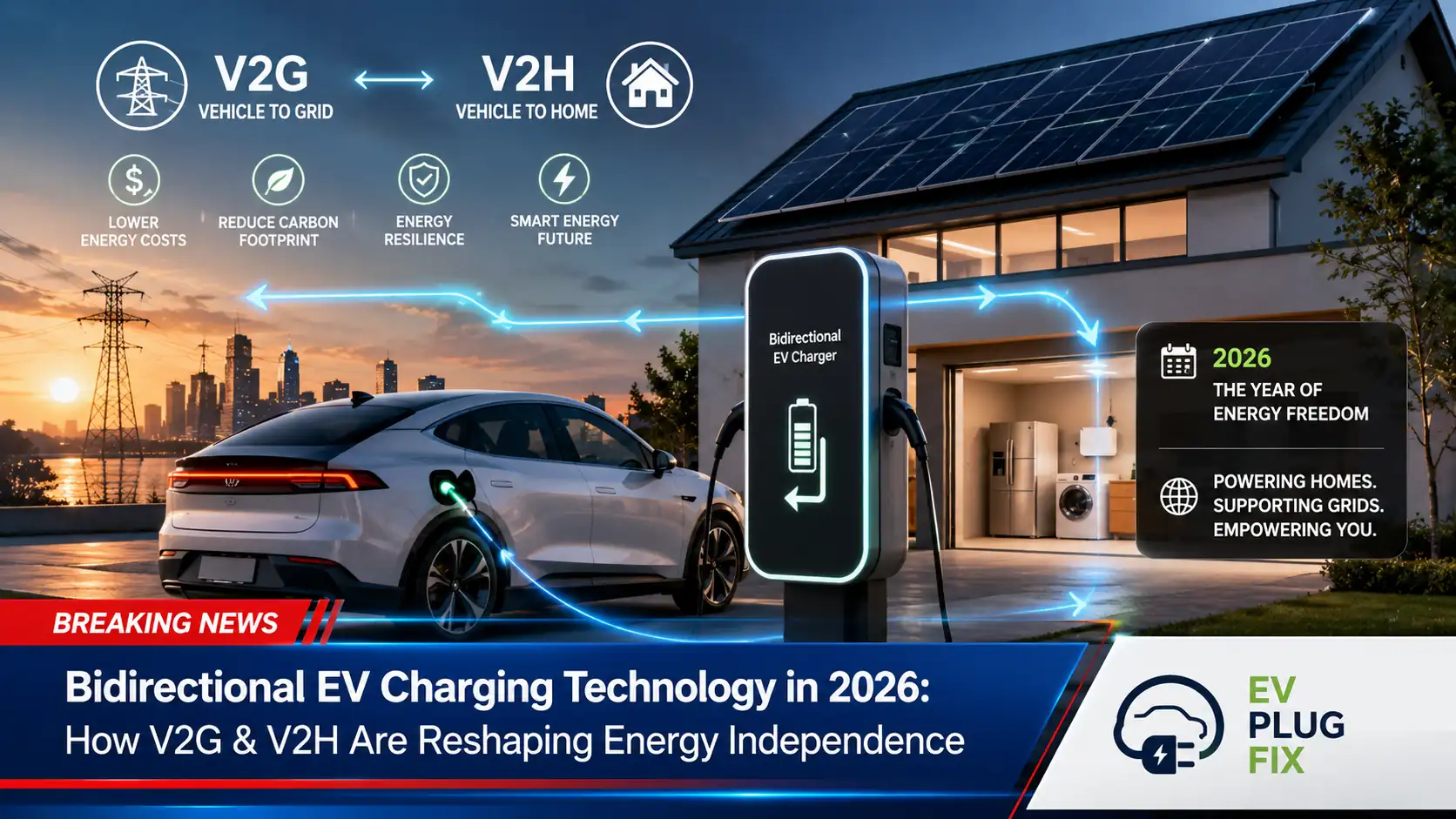
The fundamental appeal of bidirectional charging—which encompasses Vehicle-to-Grid (V2G) and Vehicle-to-Home (V2H) applications—lies in transforming your electric vehicle into a mobile power bank that can earn money while parked or serve as a safety net during outages. Yet as we progress through 2026, the path to widespread adoption remains littered with practical, financial, and technical obstacles that make this promising technology more gamble than guarantee. The market sees growing interest from major automakers, with General Motors actively working toward making bidirectional charging standard across its EV lineup, and manufacturers like Tesla, Nissan, and Volkswagen already offering various EV power export (EVPE) applications through bidirectional charging capabilities.
However, the reality check is sobering: even as Enphase Energy advances its IQ Bidirectional EV Charging Platform toward production volume in Q4 2026, and Wallbox opens pre-orders for its Quasar 2 charger at $6,440 plus installation, the question remains whether these investments will deliver lasting value or become obsolete as the technology evolves.
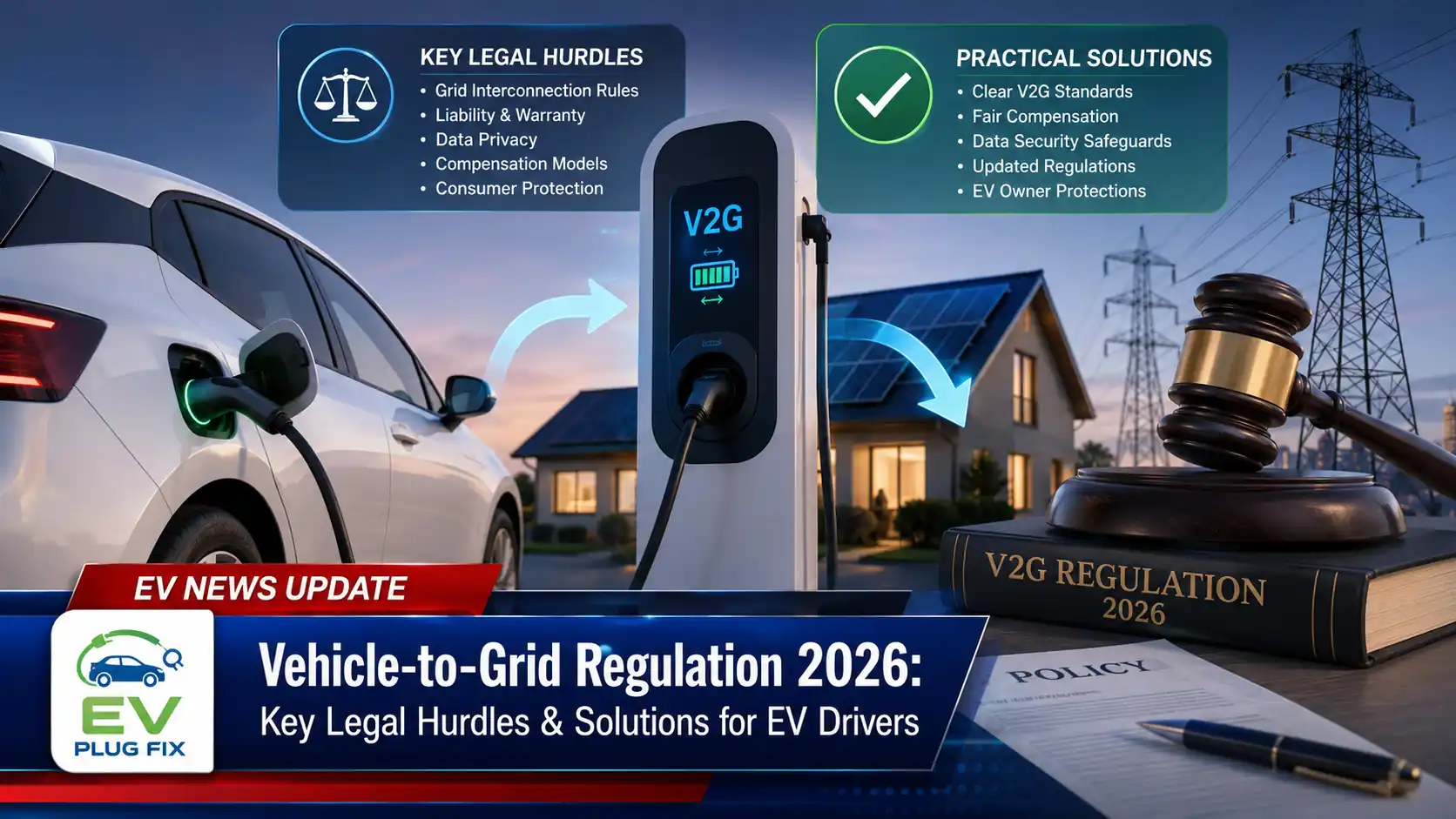
The regulatory landscape is slowly catching up to the technology. In November 2025, the German Bundestag created key prerequisites for bidirectional charging’s market launch by amending the Energy Industry Act and Electricity Tax Act to eliminate double charges for grid fees—a significant barrier removed. The VDA Managing Director Dr. Marcus Bollig confirmed that more than twenty battery-electric vehicle models in Germany are already equipped for bidirectional energy feed-in, with all German manufacturers offering bidirectional-capable EVs. Yet despite this progress, fundamental uncertainties persist around taxation, metering, and who bears responsibility for premature battery replacement.
One of the most pressing unresolved questions concerns electricity taxation when an EV owner charges at their employer’s office with tax benefits or even free electricity, then feeds that power back into the grid from home for profit. The German government’s 2025 draft bill attempts to address this by establishing clear guidelines so that EV users don’t become suppliers and tax debtors, but the practical implementation remains far from seamless. Such regulatory gaps highlight the broader theme: bidirectional charging’s theoretical benefits consistently outpace real-world readiness.
Battery Degradation: The Hidden Cost of Bidirectional Charging
The most significant concern surrounding bidirectional charging is the accelerated aging of EV batteries—the vehicle’s single most expensive component. Under V2G scenarios, onboard power batteries face substantially increased ampere-hour throughput and equivalent cycle numbers as they frequently respond to grid energy regulation demands during idle periods. This severely affects internal electrochemical kinetics and degradation mechanisms, posing a serious challenge to battery lifespan.
The science is clear: every charge-discharge cycle incrementally degrades lithium-ion battery capacity. A study published in Applied Energy found that over a 10-year period, cycle age decreased by 15% under normal EV conditions, whereas it decreased by 25% with V2G application. This translates to potentially significant capacity loss that could require battery replacement years earlier than expected—a costly proposition given that EV batteries often cost thousands of dollars to replace.
However, the degradation picture is more nuanced than simple cycle counting. Environmental factors, thermal management, and the specific conditions under which V2G operates play crucial roles in determining actual impact. Research from RWTH Aachen University indicates that while bidirectional charging does increase wear on the battery, shallow discharge cycles can significantly mitigate degradation. An IEEE study further revealed that heat is the biggest factor in battery capacity loss, suggesting that effective thermal management could reduce the negative effects of bidirectional cycling.
Emerging research into bidirectional pulse current (BPC) charging and discharging shows potential for actually extending battery life under certain conditions. A recent ScienceDirect study demonstrated that applying BPC regulation within a specific amplitude window during calendar storage effectively reduced battery capacity loss, achieving up to 11.05% improvement in calendar life and a remarkable 141.91% increase in cycle life compared to conventional calendar storage. This suggests that with appropriate control algorithms and amplitude optimization, bidirectional charging might eventually be engineered to work with batteries rather than against them.
For current EV owners, however, the takeaway remains cautious. The warranty landscape remains murky at best. Many OEM warranties don’t explicitly state coverage for bidirectional charging applications like V2G, though some manufacturers are slowly updating their language. Both Ford and Nissan have begun to support bidirectional charging under certain conditions: Ford limits application to V2H with approved hardware, while Nissan supports specific V2G pilot programs. Chinese automaker BYD has agreed to warranty batteries in a V2G trial in Australia, but such arrangements remain exceptions rather than the norm.
Cost Analysis: Bidirectional Chargers vs. Smart Wallboxes
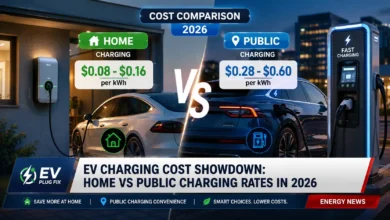
When evaluating bidirectional charging, the investment required extends far beyond a simple charger purchase. The Wallbox Quasar 2, one of the few commercially available bidirectional chargers, retails from $6,440 excluding taxes and installation fees, with the Power Recovery Unit required for backup functionality adding further expense. In European markets, some bidirectional stations have been priced upwards of 20,000 EUR, making them prohibitively expensive for most consumers [original draft].
Installation adds another layer of complexity and cost. For Quasar 2, installation must be scheduled through official providers, with initial availability limited to specific U.S. states including California, Texas, Florida, New York, Washington, New Jersey, and Illinois. The system may require permits for electrical panel upgrades, utility approval, and professional assessment of the home’s electrical system—none of which comes cheap. For a comprehensive understanding of what’s involved, consult our EV Charger Permit Requirements guide to navigate the approval process.
In stark contrast, smart wallboxes offer many of the grid management benefits of bidirectional charging at a fraction of the cost. The LG Electronics 7kW slow charger, for instance, incorporates sophisticated smart control technology that receives battery charging information from the EV and transmits it to the control system, immediately stopping charging to prevent overcharging. This establishes a dual safety net with power cut-off after charging completion—even if the EV’s communication system fails.
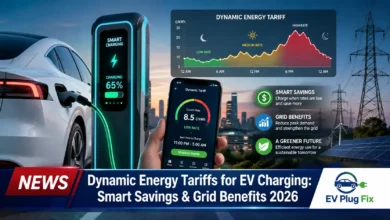
Smart wallboxes also address the key grid stability concerns that bidirectional charging proponents highlight. The eSystems MTG GhostOne wallbox implements dynamic load control through EEBUS standard communication, receiving control signals from grid operators and reducing charging power to 4.2 kilowatts when grid overload threatens. This type of smart charging infrastructure delivers many of the stability benefits without the complexity, cost, or battery degradation risks of bidirectional systems. Learn more about optimizing your home setup with our Home EV Charger Guide for practical installation advice.
- Bidirectional Charger Costs: $6,440+ for hardware, plus installation, permits, and potential electrical upgrades
- Smart Wallbox Investment: Typically $500-$1,500, delivering grid management and overcharge protection
- Earning Potential: V2G could generate $150-$3,359+ annually—but requires expensive hardware and compatible EV
- Battery Risk: Frequent cycling adds wear, potentially costing thousands in premature replacement
Battery Replacement: Who’s Picking Up the Tab?
The unanswered liability question looms largest over bidirectional charging adoption: if frequent V2G cycling prematurely kills an EV battery, who pays for replacement—the manufacturer, the grid operator, the electricity provider, or the vehicle owner? This uncertainty has prevented widespread adoption and remains one of the technology’s most significant barriers [original draft].
Current manufacturer warranties are designed around standard EV usage patterns, not the intensive cycling that V2G applications demand. When an EV owner participates in bidirectional charging, they’re effectively using their vehicle battery as a grid asset—a purpose for which the battery wasn’t originally warranted. Manufacturers reasonably argue that accelerated degradation from grid services falls outside normal usage, while vehicle owners counter that V2G capabilities were marketed as a feature.
Automakers are slowly addressing the gap. Ford has begun to support bidirectional charging under specific conditions, while Nissan supports V2G pilot programs, and BYD has agreed to warranty batteries in an Australian trial. However, these are exceptions proving the rule that most owners would be on their own if bidirectional charging caused battery failure.
The regulatory environment is beginning to address these concerns. The German Bundestag’s November 2025 decision eliminated double charges for grid fees and removed electricity tax for some key applications, but income tax simplifications and clearer metering concepts are still needed. The VDA notes that simple metering and measurement concepts for separating electricity quantities eligible for preferential treatment regarding network charges and electricity taxes remain essential prerequisites for mass adoption.
International efforts show similar themes. In the United States, GM is partnering with utility DTE Energy on a V2G pilot program involving 30 employees, while actively engaging with approximately 10 power companies to roll out the technology at scale. However, power companies remain cautious due to high infrastructure investment costs, limited user numbers, and uncertainties related to the technology. Commercialization of V2G technology in the U.S. is likely to begin initially in California and Texas within the next few months, but this represents a measured rollout rather than a revolution.
Regulatory Hurdles: Taxation and Grid Integration
The regulatory framework for bidirectional charging remains a patchwork of evolving legislation and unaddressed questions. At its core, the challenge lies in determining how to tax electricity that flows both ways—when an EV owner charges at their employer’s office with tax benefits, then feeds that power back into the grid from home for profit, the tax treatment becomes complex [original draft].
Germany has taken significant steps forward. A draft bill published by the Federal Ministry of Finance in July 2025 aims to establish clear guidelines for bidirectional charging, preventing EV users from becoming suppliers and tax debtors. The legislation also redefines electricity storage in a technology-neutral manner to prevent multiple taxation for electricity fed into and withdrawn from the grid. These changes are scheduled to take effect January 1, 2026.
However, the VDA has noted that crucial simplifications are still needed. While eliminating double taxation on electricity for V2G applications is welcome, the initial limitation to users with their own photovoltaic systems is problematic. The Finance Committee’s recommendation to examine further simplifications in electricity tax law for V2G should be implemented swiftly to avoid creating a two-tier system that disadvantages certain EV owners.
On the grid integration side, technology is advancing. Enphase’s IQ Bidirectional EV Charger is being developed with grid-support, protection, and control capabilities aligned with regional interconnection frameworks including UL 1741 and IEEE 1547 in the US, EN 50549 in Europe, VDE-AR-N 4105 in Germany, and ENA G99 in the UK. The platform is also being engineered to support open communication standards such as ISO 15118, enabling standards-based V2H and V2G functionality with compatible vehicles.
Yet the gap between regulation and reality persists. Simple metering and measurement concepts for the metrological separation of electricity quantities eligible for preferential treatment regarding network charges and electricity taxes remain underdeveloped. The distinction between electricity used for traction and electricity merely temporarily stored must be simplified before mass adoption becomes feasible. Understanding different connector standards is crucial, and our EV Charging Connectors guide provides clarity on what works with your vehicle.
The Viability of Earning Money Through V2G
Despite the hype, the reality of earning significant income through V2G is more modest than proponents suggest. A study by the University of Delaware showed a passenger EV could make as much as $3,359 per year, while other estimates report earning potential over $3,000 annually. Another study from the University of Rochester demonstrated potential savings of approximately $150 per year on electric bills while participating in V2G programs.
However, these projections come with significant caveats. The income depends heavily on utility rates, regional energy markets, and program participation terms. With compensation rates averaging €132/MWh (about $150) according to an Applied Energy study, the annual earnings may not justify the $6,440+ hardware investment plus installation costs.
There’s also the fundamental question of whether the business model works for most EV owners. To sell electricity back to the grid at peak prices, you must first charge the vehicle at lower rates—creating a speculative energy trading business with your car battery as the asset. This exposes owners to energy price fluctuations, additional battery wear, and the risk that programs will change or disappear before the investment pays off.
General Motors plans to take a portion of revenue from V2G transactions, creating an additional layer of cost. It remains unclear whether this model will be widely adopted by consumers, as many EV owners may prioritize maintaining a sufficiently high battery level for daily commuting rather than selling electricity back to the grid—particularly when the financial returns are uncertain and the battery risks are real.
Smart Wallboxes: A Practical Alternative Today
For EV owners seeking the benefits of bidirectional charging without the costs, risks, and regulatory uncertainty, smart wallboxes offer a compelling alternative. These sophisticated charging solutions deliver many of the grid management and emergency preparedness benefits at a fraction of the cost.
Modern smart chargers like the LG Electronics 7kW unit incorporate real-time battery monitoring through power line communication (PLC) modems and electric vehicle communication controllers (EVCC) that communicate through the charging cable. This enables intelligent charging control that prevents overcharging and protects battery health—addressing one of the core safety concerns of standard charging. For those considering portable options, our Portable EV Charger Comparison helps weigh the pros and cons of different solutions.
The eSystems MTG GhostOne wallbox takes grid integration further. It implements EEBUS Limitation of Power Consumption (LPC) functionality, receiving control signals from grid operators through a CLS adapter certified by the German Federal Office for Information Security (BSI). When grid overload threatens, the system can reduce charging power to 4.2 kilowatts as stipulated in Paragraph 14a of the German Energy Industry Act, providing digital grid compliance without bidirectional complexity.
Smart wallboxes also support features that bidirectional enthusiasts value. Solar charging capabilities allow EV owners to prioritize surplus solar energy for vehicle charging, reducing grid dependence and electricity costs. Enphase’s IQ EV Charger 2, for example, checks for available solar power every 30 seconds and adjusts charging rate in 1 ampere increments, ensuring EVs run on clean energy more often. Learn more about optimizing solar integration with our guide on PV Surplus Charging Modes to maximize renewable energy usage.
- Protection Against Grid Overload: Dynamic load control manages charging to prevent system strain
- Overcharge Prevention: Smart algorithms stop charging when necessary, protecting battery health
- Solar Integration: Prioritize renewable energy charging without expensive bidirectional hardware
- Cost-Effective: Typically a quarter to a tenth the price of bidirectional alternatives
- No Warranty Risk: Standard charging doesn’t void manufacturer battery warranties
The Road Ahead: Bidirectional Charging in 2026 and Beyond
Bidirectional charging technology continues to advance, with significant milestones expected in 2026. Enphase Energy is targeting volume production of its IQ Bidirectional EV Charger beginning in Q4 2026, with limited pilot deployments expected ahead of broader commercialization. The company continues participating in CharIN interoperability events, validating operation across diverse vehicle platforms, residential electrical services, and grid environments.
Wallbox has opened pre-orders for Quasar 2 with limited quantities available initially to residents of select U.S. states. The system provides up to 12 kW of power for fast EV charging and discharging, with backup power capabilities for up to three days depending on home energy consumption and battery charge level. Pre-order customers receive priority access to the initial limited release, with final payment invoiced upon availability and shipping following soon thereafter.
Microchip Technology’s release of bidirectional three-phase AC commercial EV charger reference designs demonstrates the industry’s commitment to advancing the technology. These complete hardware design files and software stacks, tested and compliant to communication protocols including OCPP, provide manufacturers with a pathway to commercialize bidirectional products more quickly. The UL2331-compliant architecture supports up to 22 kW with bidirectional capabilities, suggesting that robust commercial solutions are on the horizon.
Research continues into optimizing V2G integration. A recent Scientific Reports study on ANN-controlled bidirectional EV battery chargers with solar PV integration demonstrated charging efficiencies above 90% while maintaining stable operation for both 72V and 240V EV battery configurations. The ANN controller demonstrated faster transient response and improved current regulation compared to conventional PI control approaches, suggesting that intelligent control will be key to making bidirectional charging viable.
Yet with all this progress, the fundamental challenges remain. Vehicle compatibility depends on automaker enablement, vehicle software, applicable standards, and final product specifications. Demonstrations conducted by manufacturers represent preliminary evaluations and don’t reflect final production performance—and many are conducted without automaker authorization, implying no endorsement or approval.
The question of technical obsolescence also looms. Early adopters investing in today’s bidirectional hardware may find their systems outdated within a few years as standards evolve and features improve. The ISO 15118 standard is still being implemented, and new communication protocols or grid integration requirements could render current equipment incompatible.