Single-Phase vs Three-Phase EV Charging: Which Is Right for You in 2026?
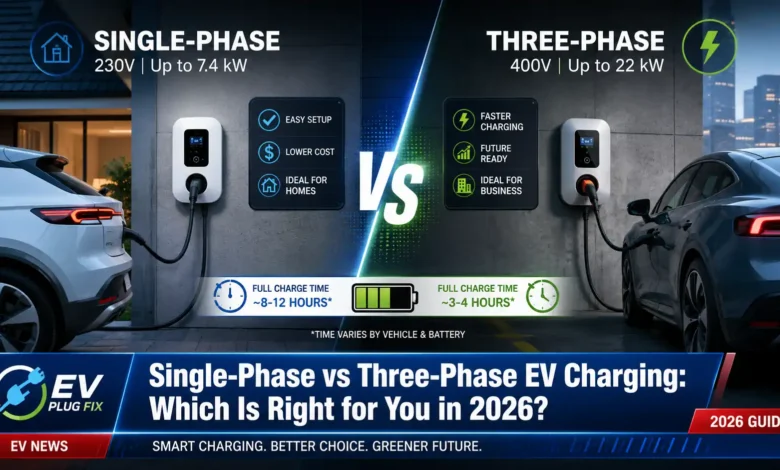
Single-phase and three-phase EV chargers represent the two primary pathways to powering electric vehicles at home and work in 2026, yet the choice between them remains one of the most critical and misunderstood decisions facing current and prospective EV owners.
Electric vehicles are rapidly becoming the dominant force in automotive markets worldwide, and with this shift comes the inevitable need for robust, convenient charging infrastructure. Whether you are a homeowner looking to install your first Level 2 charger, a business owner preparing for employee and customer EV charging, or a fleet manager optimizing depot operations, understanding the difference between single-phase and three-phase charging is non-negotiable. This choice impacts charging speed, installation complexity, future scalability, and grid compatibility. For those considering a professional setup, reviewing a comprehensive Home EV Charger Installation guide can provide valuable baseline knowledge before making a final decision.
To help you navigate this decision with confidence, we have dissected every technical and practical aspect of single-phase and three-phase EV charging. Drawing on the latest 2026 electrical standards and real-world performance data, this article delivers a comprehensive comparison so you can choose the charging solution that perfectly aligns with your lifestyle, budget, and energy needs.
The fundamental distinction lies in how electricity is delivered. Single-phase power uses a single alternating current waveform, typically operating at 230 volts in Europe and Australia or 120/240 volts in the United States MSI. This configuration is the standard for almost all residential properties worldwide. Three-phase power, however, employs three separate alternating currents offset by 120 degrees, delivering a denser, more stable power flow at around 400 volts. This system is the backbone of industrial and commercial electrical infrastructure and is becoming increasingly available in newer residential buildings across Europe and Australia.
Single-Phase EV Charging Explained
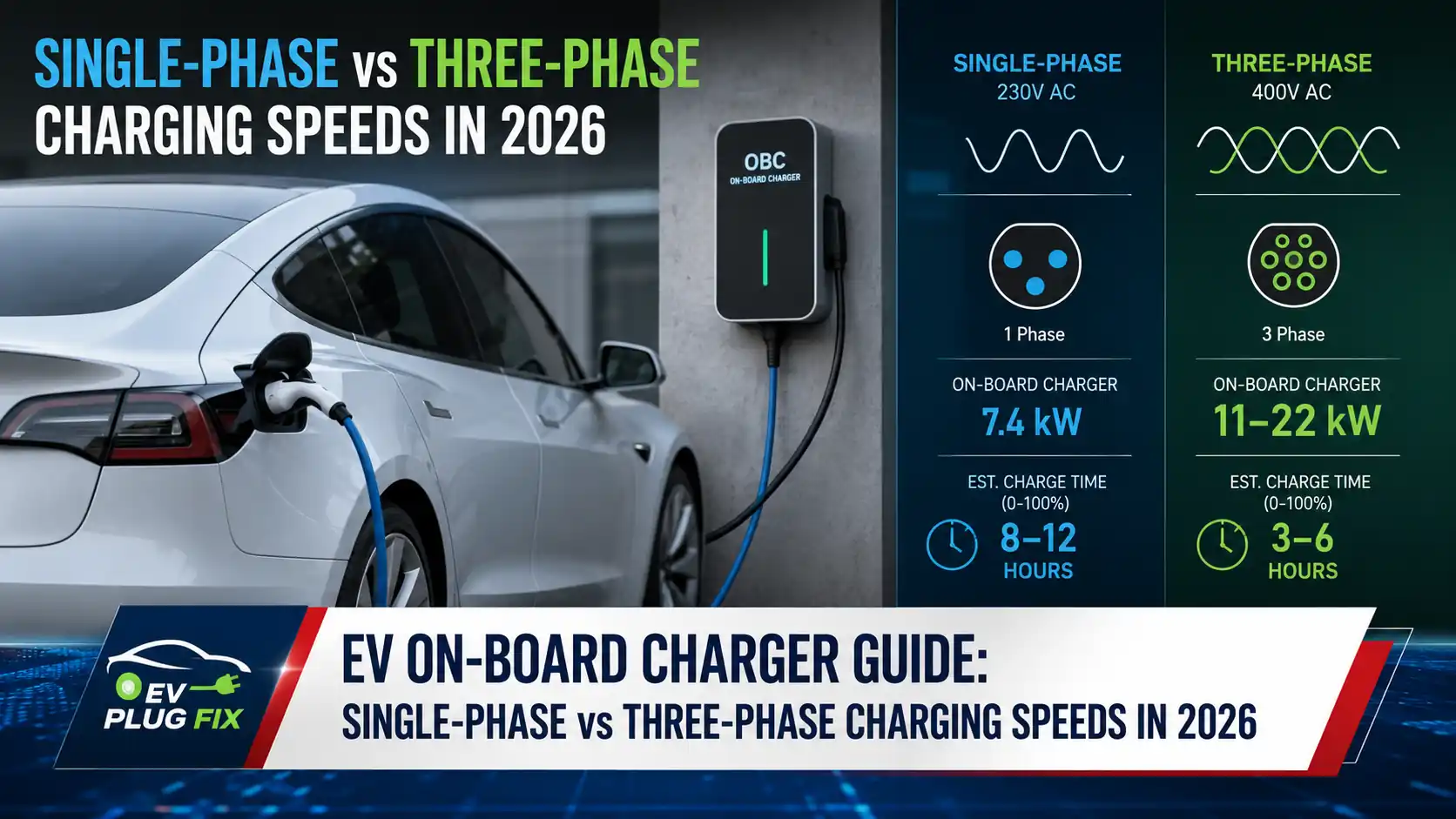
Single-phase EV charging is the workhorse of residential electric vehicle ownership. It relies on a standard electrical connection comprising one live wire and one neutral wire, making it widely accessible and straightforward to install in existing homes. The power output typically ranges from 3.6 kilowatts at 16 amps up to 7.4 kilowatts at 32 amps, with 7.2 to 7.4 kW being the most common maximum for residential single-phase installations MSI. Understanding your vehicle’s onboard capabilities is equally important; consulting an EV On-Board Charger Guide can help clarify the maximum AC input your specific EV model can accept.
- Delivers 7.4 kW of power on a standard 32A circuit
- Provides approximately 40 km (25 miles) of range per hour of charging
- Ideal for overnight charging sessions lasting 6 to 8 hours
- Installs easily in most residential settings without requiring major electrical upgrades
For the average EV driver covering typical daily distances, single-phase charging is more than sufficient. A standard 60-kilowatt-hour battery pack, for example, can be replenished from 20% to 100% overnight during off-peak electricity hours, ensuring the vehicle is ready for the next day’s commute. The simplicity of the installation process and the lower hardware costs make single-phase chargers an incredibly practical and cost-effective entry point into EV ownership. To maximize the lifespan of your battery during these overnight sessions, following recommended EV Battery Health Tips is essential for long-term ownership satisfaction.
Single-phase charging is designed for simplicity and reliability. Because it operates on the same electrical principles as most household appliances, the risk of installation complications is minimal. Homeowners can typically expect a straightforward installation that involves connecting the charger to the existing electrical panel with a dedicated circuit. This accessibility is a key reason why single-phase chargers remain the dominant choice for residential EV charging across the globe.
Think of single-phase power as a garden hose delivering a continuous stream of water. It is reliable, easy to connect, and perfectly adequate for most daily tasks MSI.
Three-Phase EV Charging Overview
Three-phase EV charging elevates the charging experience by delivering significantly more power through three separate live wires and one neutral wire. With a typical voltage of 400 volts between phases, this system unlocks charging speeds that are roughly three times faster than single-phase setups. Three-phase chargers can deliver 11 kW at 16 amps per phase or 22 kW at 32 amps per phase MSI, PandaExo. For drivers interested in the latest high-performance models, seeing how this speed compares to dedicated testing like the Audi Q4 Charging Test can provide real-world context for these theoretical outputs.
- Delivers 11 kW to 22 kW of power depending on amperage
- Provides approximately 120 km (75 miles) of range per hour at 22 kW
- Charges a 60 kWh battery in 2 to 3 hours
- Requires three-phase power supply and may involve professional installation upgrades
This enhanced power output is a game-changer for drivers with large battery EVs, households with multiple electric vehicles, or commercial operations where time is a critical factor. Consider the difference in everyday usability: a three-phase 22 kW charger can deliver enough range for a full day’s driving in less time than a typical lunch break or meeting. This capability is invaluable for fleet vehicles, workplace charging, and public charging stations where turnover speed directly impacts efficiency and customer satisfaction. For commercial sites managing multiple vehicles, implementing EV Charging Load Balancing becomes critical to ensure the electrical infrastructure can handle peak demands without costly upgrades.
Furthermore, three-phase charging offers grid balancing benefits. By drawing power evenly across three phases, these chargers reduce the risk of phase imbalance in commercial and residential buildings, contributing to overall electrical stability and potentially lowering the risk of nuisance tripping. As more homes adopt solar panels, battery storage, and heat pumps, the ability of three-phase systems to handle larger distributed energy inputs efficiently makes them a compelling choice for future-proofing modern homes Energy Star. For property owners looking to offset energy costs, pairing a three-phase charger with solar installations can be a smart strategy, especially when taking advantage of available Germany EV Charging Subsidies and similar regional programs.
Imagine three hoses running at the same time. The water comes from the same source, but more is being delivered at once. More power means more charging MSI.
Key Differences for EV Owners
The practical implications of choosing between single-phase and three-phase charging extend far beyond technical specifications. For the EV owner, this decision shapes daily routines, convenience, and the overall ownership experience. The most significant difference lies in charging speed. A single-phase 7.4 kW charger typically adds about 40 to 50 kilometers of range per hour, while a three-phase 22 kW charger delivers between 120 and 130 kilometers per hour MSI.
For the typical commuter who drives less than 50 kilometers daily, this difference may seem negligible. Overnight charging with a single-phase unit will easily replenish the battery. However, for drivers covering longer distances, who have irregular schedules, or who need to make unplanned trips, the faster charging of a three-phase system offers superior flexibility. Imagine coming home with a critically low battery at 6 PM and needing to be back on the road by 8 PM for a dinner engagement. With a three-phase charger, you could add over 200 kilometers of range in two hours; with a single-phase charger, you would add roughly 80 kilometers. This difference in “just-in-time” charging capability can significantly enhance the utility and convenience of an EV.
Households with two EVs face another dimension of the decision. Two single-phase chargers operating simultaneously could draw up to 14.8 kW on a typical 100-amp residential service. In many homes, this load combined with other appliances like ovens, air conditioners, or heat pumps could exceed the supply capacity, leading to nuisance trips or requiring expensive panel upgrades. A single three-phase charger with load management capabilities can intelligently allocate power between two vehicles, ensuring both are charged without overloading the system. This dynamic load management is a key differentiator for three-phase installations.
Installation and infrastructure costs represent another critical differentiator. Single-phase chargers are generally more affordable to purchase and install due to their simpler electrical requirements and lower component costs. Three-phase chargers, however, require a three-phase power supply, which may not exist in many homes. Upgrading a residential property from single-phase to three-phase supply can be costly and involves coordination with the local Distribution Network Operator (DNO). According to European utility data, there has been a 60% jump in three-phase upgrade applications since 2022, driven entirely by EV adoption and the desire for faster home charging SurgePV.
Installation and Infrastructure Considerations
Before committing to a charger type, property owners must evaluate their existing electrical infrastructure and understand the scope of work required. The most common mistake is assuming that because a charger is listed as “three-phase,” it will automatically work on any property. The charger is only as capable as the power supply feeding it. Installing a three-phase charger on a single-phase supply will not deliver three-phase charging speeds; the charger will simply operate as a single-phase unit MSI.
- Check your electrical panel: single-phase panels typically have one or two main breakers; three-phase panels have three.
- Review your utility bill or connection documentation; your phase type may be listed.
- Consult a licensed electrician for a formal site assessment before purchasing equipment.
For properties in Australia and much of Europe, three-phase power may already be available. In Europe, newer buildings and urban properties increasingly come with three-phase connections as standard. Australian homeowners can often request three-phase upgrades from their network distributor, although there may be connection costs. In the United States, however, three-phase power remains relatively uncommon in residential neighborhoods, making single-phase the default choice for most American EV owners. Commercial properties, on the other hand, almost always have three-phase power available MSI.
Single-Phase vs Three-Phase Comparison Table
| Feature | Single-Phase Charging | Three-Phase Charging |
|---|---|---|
| Voltage | 230V | 400V |
| Typical Amperage | 16A or 32A | 16A or 32A per phase |
| Power Output | 3.6 kW to 7.4 kW | 11 kW to 22 kW |
| Range per Hour | 40 km | 120 km |
| Best For | Residential overnight charging | Commercial, fleet, fast home charging |
| Infrastructure | Standard residential supply | Three-phase commercial or upgraded supply |
Dynamic Load Management and Future-Proofing
One of the most sophisticated advantages of modern three-phase charging installations is the ability to implement dynamic load management. This technology allows the charger to intelligently adjust its power draw based on the real-time electrical load of the property. For example, if a heat pump, oven, and EV charger are all operating simultaneously, the charger can temporarily reduce its output to prevent overloading the main supply fuse.
This capability is becoming essential as homes electrify. The integration of solar panels, battery storage, heat pumps, and multiple EVs creates complex energy demands that can easily exceed the capacity of a standard residential connection. Dynamic load management ensures that a property can accommodate all these loads safely and efficiently without requiring costly panel upgrades. Leading charger brands like Myenergi and Easee have built robust load management capabilities into their three-phase products, allowing homeowners to maximize their charging potential while staying within their supply limits SurgePV.
Future-proofing is another compelling reason to consider three-phase charging. As EV battery capacities continue to grow, the demand for faster home charging will likely increase. By installing a three-phase charger now, property owners can ensure their infrastructure can handle the higher-capacity onboard chargers that are becoming standard in new EVs. Many new electric vehicles already feature 11 kW onboard chargers, and the trend is toward higher capacity. Installing a three-phase charger today is an investment in the future of home energy management, supporting not only faster EV charging but also enhanced integration with renewable energy systems and smart home technologies.
Choosing the Right Charger for Your EV
Ultimately, the decision between single-phase and three-phase EV charging should be guided by a clear assessment of your current and future needs. This decision is not about which technology is “better” in an absolute sense, but which aligns with your specific driving habits, property infrastructure, and budget.
Single-phase charging is the clear winner for most residential users who can charge overnight and have average daily commutes under 80 kilometers. The affordability, ease of installation, and complete suitability for daily charging make it the practical, cost-effective choice. If you leave home every morning with a full battery, the speed of three-phase charging is an unnecessary expense.
Three-phase charging becomes essential when time is of the essence. If you have a long daily commute, an irregular schedule, or own a large battery EV, the faster charging of a three-phase system offers tangible convenience. For households with two or more EVs, three-phase with load management can simplify charging logistics and prevent overload issues. Commercial properties, workplace chargers, and public charging stations must adopt three-phase to meet the demands of users who cannot afford to wait hours for a charge.
Before making a purchase, property owners must determine their power supply phase. The simplest method is to check the main electrical panel. Single-phase installations typically have one or two large main breakers, whereas three-phase panels have three. Utility bills or connection documentation may also list this information. The most reliable approach, however, is to hire a licensed electrician to conduct a site assessment. They can confirm the supply type, evaluate the capacity of the cut-out fuse, and provide a realistic installation quote, helping you make an informed decision tailored to your specific property.
For EV buyers wondering about compatibility, the good news is that both single-phase and three-phase chargers will work on any EV with a standard Type 2 connector. The onboard charger in the vehicle determines the maximum AC charging speed it can accept. Installing a three-phase charger on a vehicle with a single-phase onboard charger will not increase the charging speed, but it does future-proof the infrastructure for future vehicles. Conversely, plugging a single-phase charger into a three-phase supply will only deliver single-phase speeds.
- Single-phase charging (up to 7.4 kW) is ideal for overnight residential use and is cost-effective for typical daily driving.
- Three-phase charging (11 kW) offers significantly faster speeds, ideal for commercial use, fleets, and households with high energy demands.
- Check your property’s power supply before purchasing—three-phase upgrades can be expensive and may require DNO approval.
- Dynamic load management in three-phase systems can optimize power distribution, especially in homes with solar, heat pumps, and multiple EVs.
- Both charger types provide reliable AC charging; the best choice depends on your lifestyle, budget, and future energy plans.
Frequently Asked Questions
Can I install a three-phase charger on a single-phase supply?
Yes, but with limitations. A three-phase charger can physically be installed on a single-phase supply, but it will only operate as a single-phase unit (max 7.4 kW). You cannot get three-phase charging speeds (11 kW or 22 kW) without a true three-phase grid supply. Consult a licensed electrician to evaluate your setup and grid upgrade options.
How much faster is three-phase EV charging compared to single-phase?
Three-phase charging can be up to three times faster than single-phase. A 7.4 kW single-phase charger adds roughly 40 km of range per hour and takes about 8 hours to charge a 60 kWh battery. A 22 kW three-phase charger adds up to 120 km of range per hour, fully charging the same battery in under 3 hours.
Is a three-phase EV charger worth it for home use?
It depends on your driving habits and existing electrical setup. If you have a long daily commute, own a high-capacity EV, or have multiple electric vehicles in the household, three-phase charging is a worthwhile investment. However, for drivers with average commutes charging overnight, single-phase charging is usually sufficient and more cost-effective.
Can a single-phase EV charger be upgraded to three-phase later?
Yes, but it requires replacing the charger unit and upgrading your electrical panel/supply. Upgrading from single-phase to three-phase involves upgrading your main service line from the utility provider (DNO), which requires professional electrical work and network approval. If you foresee needing faster charging in the future, it is often more economical to prepare the infrastructure from the start.
What is the difference between single-phase and three-phase power in terms of electrical supply?
Single-phase power uses two wires—one live and one neutral—to deliver alternating current at typically 230V. Three-phase power uses three live wires and one neutral, offset by 120 degrees, to deliver a smoother, denser power flow at 400V. This higher voltage and multi-wire delivery allow three-phase systems to provide up to three times more power for faster EV charging.