BMW i3 Charging Time 2026: Full Breakdown for Every Model & Charger Type
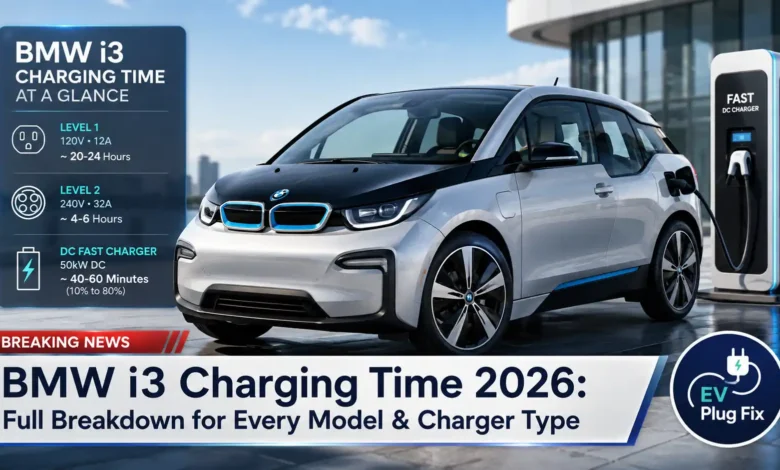
BMW i3 charging time in 2026 varies dramatically depending on whether you are plugging into a standard household outlet, a home wallbox, or one of the new generation of ultra-rapid public charging stations. The all-new, fully electric BMW i3, reborn as part of the brand’s Neue Klasse family, has redefined expectations for the executive saloon segment, offering a staggering WLTP range of up to 559 miles and a maximum charging rate of 400kW. However, not all models share the same battery specifications. Whether you are considering the entry-level eDrive35L, the long-range eDrive40L, or the range-topping i3 50 xDrive, understanding the specific charging times, costs, and technical nuances is critical for prospective owners and current EV enthusiasts. This comprehensive analysis, tailored for EVPlugFix.com readers, dissects every charging scenario for the 2026 BMW i3, offering data-driven insights into home and public charging, battery health, and the real-world economics of owning one of the most advanced electric vehicles on the market.
Understanding the BMW i3 charging time starts with recognizing the model’s battery architecture. The 2026 lineup features two primary configurations for the standard models: the eDrive35L with a 70.2 kWh battery and a CLTC range of approximately 550 km, and the eDrive40L with a larger 79.1 kWh battery offering around 625 km. The flagship Neue Klasse i3, however, raises the bar significantly with a massive usable battery capacity of approximately 108.7 kWh to 112 kWh, pushing the WLTP range to an unprecedented 559 miles and establishing a new benchmark in its class. All models benefit from BMW’s sixth-generation eDrive technology, which utilizes an 800-volt architecture, enabling the stratospheric 400kW peak charging speeds seen in the latest top-tier models. This technological leap not only minimizes time spent at public chargers but also improves overall energy efficiency, with the Neue Klasse i3 achieving figures around 4.99 miles per kWh. For owners looking to maximize their driving range, understanding EV Range Boosting Technology can provide additional insights into getting the most from every charge.
Ultra-Rapid DC Fast Charging: The 400kW Revolution for BMW i3
For drivers who frequently embark on long journeys, the DC fast-charging capability of the 2026 BMW i3 is a game-changer. The flagship Neue Klasse model, equipped with a peak charging rate of 400kW, can complete a 10% charge in just 20 minutes. To put this in perspective, this speed allows the car to add approximately 248 miles of range in only 10 minutes. This dramatically outperforms key competitors, such as the new Mercedes-Benz C-Class Electric, which maxes out at 330kW and can add 198 miles in the same 10-minute window. Understanding the underlying EV Charging Protocols that enable these incredible speeds helps demystify the technology powering the i3’s rapid charging capabilities.
It is important to note that the DC fast charging time varies depending on the specific battery pack. For the eDrive35L and eDrive40L models, which utilize BMW’s fifth-generation eDrive system, the 10% charge time is estimated between 30 and 45 minutes, depending on the power output of the charger used and the battery’s state of health. While this is still efficient for the segment, it is significantly slower than the new 800-volt architecture reserved for the Neue Klasse. Owners should look for public chargers from networks like Electrify America or EVgo that can deliver these peak speeds, but availability remains a factor in real-world usage.
The 2026 BMW i3 also supports bidirectional charging functions, including Vehicle-to-Load (V2L) and Vehicle-to-Grid (V2G), which turn the car into a mobile energy source. This feature enables owners to power home appliances during outages or even sell electricity back to the grid during peak demand, provided they have the necessary AC charging Professional package. This integration of utility with rapid charging capability places the i3 at the forefront of EV technology.
Level 2 Home Charging: The Convenience of Overnight Charging
For the vast majority of EV owners, overnight home charging remains the most practical and cost-effective solution. When using a Level 2 (240V) home charger—such as those supplied by Wallbox, go-e, or ChargePoint—the BMW i3 charging time is significantly reduced compared to a standard wall outlet. For the eDrive35L and eDrive40L models with 70.2 to 79.1 kWh batteries, a Level 2 charger with a 32A output will typically deliver a full charge (0%) in 6 to 8 hours. This timeframe perfectly aligns with typical off-peak electricity tariffs, allowing owners to wake up to a full battery every morning. For those considering installing a home charging solution, reviewing a comprehensive Home EV Charger Installation guide can ensure a safe and efficient setup.
The Neue Klasse BMW i3 benefits from a higher 22kW AC charging capacity, which could reduce the full charge time further, potentially to around 3 to 5 hours depending on the charger and electrical setup. This is particularly advantageous for users who may need a quick top-up during the day at a public AC charger. For optimal battery health, BMW recommends that owners use Level 2 charging as their primary method, as the lower current is gentler on the battery cells compared to frequent DC rapid charging, which can accelerate degradation over time. Implementing EV Charging Load Balancing can also help manage multiple EV charging needs efficiently within a home environment.
To highlight the convenience and economic benefits of Level 2 home charging, consider the following key advantages:
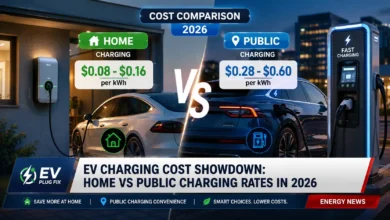
- Cost Efficiency: Home charging is the cheapest way to power your i3. At standard UK electricity rates (around 27p/kWh), an i3 costs roughly 6.6 to 7.2p per mile. This translates to significant savings compared to public rapid chargers, which can be three times more expensive.
- Battery Health: Level 2 charging produces less heat and stress on the high-voltage battery pack, preserving its long-term capacity and overall lifespan. Following proven EV Battery Health Tips can further extend the life of your i3’s battery.
- Seamless Integration: Modern Tesla and Ford EV owners have long praised the simplicity of home charging; the BMW i3 offers a similar, hassle-free ownership experience.
Level 1 Standard Charging and Full Cost Breakdown
While Level 2 and DC fast charging are the primary focus for most owners, Level 1 charging using a standard 120V household outlet remains an option, albeit an extremely slow one. For any BMW i3 battery pack, a Level 1 charger provides a paltry 1.4 kW of power, resulting in a charging time of 20 to 24 hours for a full charge. This method is impractical for daily commuting but could serve as an emergency backup at locations where no other charging infrastructure exists. It also highlights the importance of investing in a proper Level 2 home charging station if you own any current-generation EV, including the 2026 i3.
Understanding the financial aspect of owning a BMW i3 is essential. The annual charging cost for the 2026 model is estimated to be remarkably low. For the 80 kWh Neue Klasse version, covering 12,000 miles per year at the average U.S. electricity rate of 16 cents per kWh equates to an annual cost of around $545, or a mere $0.045 per mile. This results in annual savings of over $1,000 compared to a gasoline vehicle with an average fuel economy of 27 MPG. In the UK market, the cost dynamics are similar, with owners spending around £528 to £576 annually for an 8,000-mile commute using off-peak home charging.
When deciding on charging strategy, a thorough cost-benefit analysis is useful. The table below provides a comparative look at the estimated costs and times for different charging scenarios based on 2026 UK market data, though prices can vary by region and provider.
| Charging Method | Power Output | Charging Time (0%) | Cost Per Mile | Annual Cost (8,000 miles) |
|---|---|---|---|---|
| Level 1 (Household Outlet) | 1.4 kW | 20 hours | ~20p | ~£1,600 |
| Level 2 (Home Wallbox) | 7.4 kW – 22 kW | 4 hours | 6.6p – 7.2p | £528 – £576 |
| DC Fast Charging (Public) | 50kW – 400kW | 20 min (10%) | 19.5p – 21.3p | ~£1,560 – £1,704 |
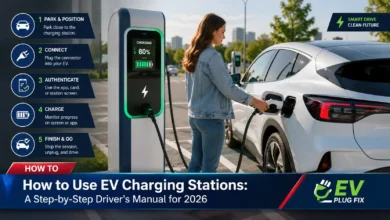
It’s also worth noting that BMW offers a Plug & Charge feature for the 2026 i3, which simplifies the charging process at compatible stations. This technology allows the driver to simply plug in and walk away; the vehicle automatically authenticates and begins the session without the need for RFID cards, apps, or payment terminals, streamlining the entire public charging experience.
BMW i3 vs. Tesla Model 3 vs. Mercedes C-Class Charging Comparison
To fully appreciate the BMW i3 charging time in 2026, it is essential to stack it against its primary rivals: the Tesla Model 3 and the new Mercedes-Benz C-Class Electric. All three represent the pinnacle of electric executive saloon engineering, but their charging performance varies significantly. Understanding the broader context of Global EV Market Share and regional trends helps contextualize why automakers are pushing these boundaries in charging technology.
The 2026 Tesla Model 3 is known for its extensive Supercharger network, but the BMW i3’s 400kW maximum charging rate comfortably eclipses the peak speeds typically offered by Tesla’s V3 Superchargers. The BMW’s ability to add 248 miles of range in 10 minutes is a standout feature, making it incredibly competitive for long-distance travel. The new Mercedes C-Class Electric, while offering a commendable 330kW charging speed, cannot match the i3’s sheer velocity, adding only 198 miles in the same ten-minute window.
In terms of range and efficiency, the BMW also leads the pack. The i3’s 559-mile WLTP range is significantly higher than both the Tesla‘s and the Mercedes figures, achieving a class-leading 4.99 miles per kWh efficiency. This means that not only does the BMW charge faster, but it also makes better use of every kilowatt-hour, maximizing the value of your time at the charger and reducing overall energy costs.
- Battery Size: BMW i3 (112 kWh) vs. Tesla Model 3 (~80 kWh) vs. Mercedes C-Class (94.5 kWh). The BMW’s larger pack gives it a massive range advantage.
- Charging Speed: BMW i3 (400kW) vs. Mercedes C-Class (330kW). The BMW wins the numbers game, charging significantly faster at peak.
- Range in 10 Minutes: BMW i3 adds 248 miles, compared to Mercedes’ 198 miles. This makes the BMW more convenient for spontaneous trips.
- Efficiency: BMW i3 (4.99 mi/kWh) vs. Mercedes C-Class (4.99 mi/kWh). Both are neck-and-neck, demonstrating the industry’s move toward exceptional efficiency.
Frequently Asked Questions
Prospective and current BMW i3 owners often have specific queries regarding charging times, battery health, and infrastructure compatibility. Below are some of the most commonly asked questions to help optimize your ownership experience.
How long does it take to fully charge a BMW i3 at home with a Level 2 charger?
What is the fastest way to charge a 2026 BMW i3?
Does cold weather affect BMW i3 charging time?
Is it cheaper to charge the BMW i3 at home or at a public station?
What is the difference between charging the eDrive35L and the eDrive40L?
The 2026 BMW i3 charging time is a testament to how far electric vehicle technology has evolved. With the ability to charge from 10% in as little as 20 minutes and add hundreds of miles of range in just ten minutes, the new i3 addresses the primary anxiety associated with EV adoption. Whether you’re relying on the cost-effectiveness of overnight Level 2 home charging or the sheer speed of a 400kW DC public charger, the BMW i3 offers a versatile and efficient solution for every scenario, solidifying its position as a frontrunner in the luxury EV market.