EV Battery Compatibility: Why Packs Are Not Interchangeable in 2026
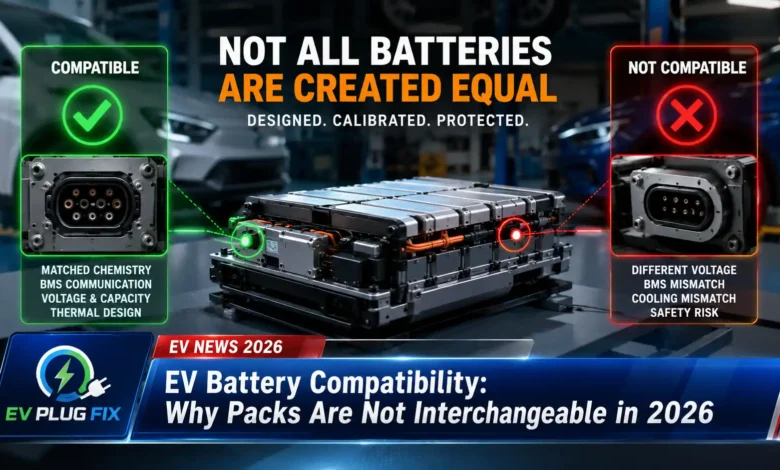
Electric vehicle (EV) batteries, despite their outwardly similar appearances, are rarely interchangeable. The reality is that modern EV battery packs are highly complex, model-specific components, with differences in chemistry, pack design, voltage platforms, cooling systems, and sophisticated Battery Management Systems (BMS) ensuring that a battery from one vehicle will almost never work in another. For owners and fleet operators, understanding these critical engineering distinctions is paramount in 2026. This is not just an academic exercise; it has a direct and significant impact on charging decisions, range expectations, and the substantial long-term costs associated with ownership and maintenance. According to an analysis from the Nickel Institute, this specialization is driven by a trade-off between cost and performance that defines the industry’s trajectory.
As the General Manager of Parwatt, a company specializing in EV Charging equipment and power modules, I work directly with charge point operators and fleet managers who face these compatibility challenges daily. The question I hear most often is deceptively simple: “Can I use a battery from one EV model in another?” The answer, as we will explore, lies deep within the engineering details that are invisible from the outside. Our charging products, like the FES-D30 DC EV Charger, are meticulously designed to communicate safely with a wide array of battery systems, yet the battery itself remains a tightly integrated component of its original vehicle. This article will dissect the real factors that dictate compatibility and what they mean for anyone investing in or operating electric vehicles in 2026.
The assumption that EV batteries are akin to universal fuel tanks is a costly mistake. Each battery pack is engineered as a complete system, harmonized with the vehicle’s chassis, weight distribution, and thermal strategy. The degree of integration is so profound that even packs with the same nominal capacity and chemistry often refuse to communicate or function when installed in a different vehicle. The BMS, acting as the pack’s brain, uses proprietary communication protocols and safety rules to verify the pack’s identity. If the system does not recognize the battery, the vehicle will simply reject it. This isn’t a bug; it’s a deliberate feature designed to ensure safety and performance, but it creates a significant barrier to interchangeability. Understanding the EV Charging Protocols involved in this handshake reveals just how tightly integrated these systems are.
Why EV Battery Compatibility Is More Complicated Than Most Buyers Expect
Many buyers assume EV batteries are like fuel tanks, expecting similar batteries to work across different models. However, each battery pack is designed as part of a complete vehicle system. Voltage platforms, cooling methods, physical shape, and control software all differ, making simple swaps difficult or impossible and raising costs when replacement is needed. According to a 2025 research study published in the Journal of Power Sources, faster charging leads to more degradation, but the magnitude of this effect varies considerably across different EV chemistries. This further complicates the compatibility picture, as a battery’s performance and degradation profile are tied to the specific vehicle’s thermal management and control systems. For those concerned about long-term battery health, exploring EV Battery Health Tips can help optimize charging habits for your specific model.
EV battery compatibility is complicated because packs are engineered for specific models. Differences in chemistry, voltage architecture, cooling design, physical dimensions, and battery management systems prevent most cross-model use. Owners face higher replacement costs and limited options when they need service or upgrades.
For example, the Tesla Model S and X Plaid high-voltage battery packs (part number 1111111-F) are explicitly listed as compatible only with specific trims and model years, from 2021 to 2026. This demonstrates the precision required in a battery replacement. Similarly, the BMW i3 battery, while popular for second-life home storage projects, has three distinct generations (22kWh, 33kWh, and 42kWh) that, despite sharing the same physical form factor, still require specific BMS controllers and inverter compatibility to function outside the car. This level of specificity is a reality across the EV landscape.
- Physical Dimensions & Mounting Points: Each pack is designed to fit a specific vehicle chassis, making a physical swap into another model nearly impossible without major modification.
- Voltage Platform: EV voltage architectures differ (e.g., 400V vs. 800V). Connecting a pack with a mismatched voltage range presents a severe safety risk and will likely damage the vehicle’s electrical system.
- Cooling System: The thermal management system is model-specific, with variations in liquid cooling, air cooling, and connector designs. A mismatch will lead to thermal failure and accelerated battery degradation.
- BMS Communication: The Battery Management System uses proprietary protocols and safety algorithms to monitor every cell group. A foreign pack will fail these checks, rendering the battery inactive.
- Chemistry & Performance Parameters: While key, chemistry is just one factor. Motor and controller tuning depends on a specific chemistry’s power curve, making cross-model use of a different chemistry a potential safety hazard.
Common Misconceptions About EV Battery Types and Cross-Model Compatibility
Many people believe all lithium-ion batteries are basically the same. They assume chemistry is the main difference and that packs with similar ratings can be swapped. Others overlook the role of the battery management system. These ideas lead to incorrect expectations about repairs, upgrades, and second-life use.
Common misconceptions include the belief that all lithium batteries are interchangeable, that chemistry alone determines compatibility, and that BMS differences are minor. In reality pack design, voltage architecture, cooling, and proprietary control systems create hard barriers. Cross-model battery swaps are rarely practical.
A prevalent myth is that an LFP pack can seamlessly replace another LFP pack of similar capacity. While chemistry is a significant factor, it is only one component of the system. The physical layout, connector types, and communication protocols still differ between manufacturers and even between models from the same brand. For instance, when comparing the BMW i3, Nissan Leaf, and Tesla for second-life applications, the BMW i3 is lauded for its ease of installation and robust construction, while the Nissan Leaf offers a better capacity-to-price ratio, and the Tesla Model S excels in scalability. Their internal systems remain fundamentally different, despite often sharing NMC or NCA chemistry.
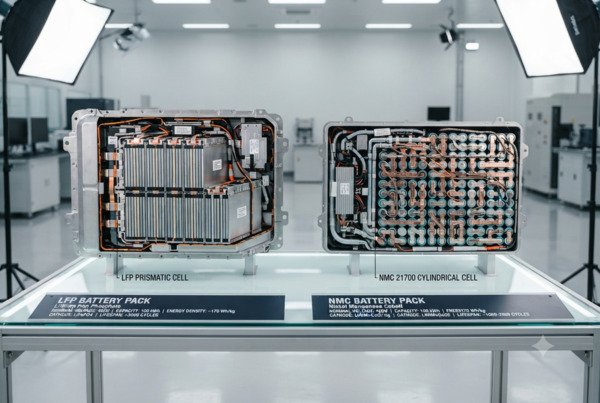
A second misconception is that higher energy density is universally superior. NMC and NCA packs offer more range for a given size and weight but come with trade-offs in thermal behavior and daily charging recommendations. LFP packs trade some energy density for greater tolerance of full charges and a longer cycle life. Neither chemistry is superior; the optimal choice depends entirely on the use case. This is a key point for fleet managers and owners to consider when planning for long-term costs.
Some owners also believe that software updates can make foreign batteries compatible. However, the BMS is only part of the equation. Hardware differences like cooling circuits, voltage limits, and safety sensors are physical components that software cannot replicate. The engineering of a battery pack is a holistic effort, and skipping one link breaks the entire chain.
How Different Battery Chemistries Affect Compatibility and Performance
Three main lithium-ion chemistries dominate passenger and light commercial EVs in 2026: LFP, NMC, and NCA. Each offers a different balance of energy density, cost, safety, cycle life, and thermal behavior. These differences influence both vehicle design and charging recommendations.
LFP, NMC, and NCA batteries differ in energy density, cycle life, safety characteristics, and cost. LFP prioritizes longevity and tolerance of full charges. NMC and NCA deliver higher energy density for longer range. These chemical differences affect charging behavior and long-term ownership but do not by themselves enable cross-model compatibility.
Tesla has famously pioneered the use of NCA in its long-range and performance models, while Ford and Hyundai have adopted both NMC and LFP in various models. A study on EV battery chemistries notes that LFP offers lower costs and higher safety, making it suitable for city cars and value-oriented models, while nickel-based chemistries are essential for long-range travel and fast charging. To understand how these chemistries interact with different charging standards, a NACS vs CCS2 Charging comparison can provide valuable context for owners of different EV brands.
- LFP (Lithium Iron Phosphate): Offers strong thermal stability and high cycle life, tolerating frequent full charges. Energy density is lower, so packs are often heavier, but their safety and longevity make them ideal for mainstream EVs and stationary storage.
- NMC (Nickel Manganese Cobalt): Provides higher energy density, enabling longer range. It has good cycle life but benefits from charging to around 80% for daily use. It requires more careful thermal management than LFP.
- NCA (Nickel Cobalt Aluminum): Offers the highest energy density among the three, common in performance and long-range models. It is sensitive to high states of charge and has high thermal management requirements.
| Chemistry | Energy Density | Cycle Life & Full-Charge Tolerance | Thermal Behavior | Typical Use in 2026 |
|---|---|---|---|---|
| LFP | Lower | High cycle life, tolerates 100% charges | Very stable | Mainstream and value models, fleet vehicles |
| NMC | Higher | Good when charge limited | Requires careful cooling | Long-range and mid-to-high end vehicles |
| NCA | Highest among the three | Sensitive to high states of charge | Needs strong thermal management | Performance and long-range models |
This table illustrates the practical trade-offs that are crucial for fleet operators and owners. At Parwatt, our charging systems are designed to interact respectfully with all three chemistries, respecting the different voltage windows and temperature limits each prefers. Understanding the chemistry in a specific vehicle sets realistic expectations for range, charging speed, and long-term costs. However, it does not imply that the pack is interchangeable with others of the same chemistry. The second-life potential is also chemistry-dependent, with LFP often retaining usable capacity longer, while nickel-based packs require more careful evaluation for stationary storage roles. When considering a home charging setup, selecting the right equipment is equally important, and a Smart EV Charger Comparison can help you choose a unit that works optimally with your vehicle’s battery type.
What Determines Real-World Compatibility Across EV Models
Chemistry is only one piece of the compatibility puzzle. Real-world compatibility depends on the complete engineering package. Pack structure, voltage platform, cooling design, and the BMS all create hard limits. Even packs with identical chemistry usually cannot move from one model to another.
Real-world battery compatibility is determined by pack design, voltage architecture, cooling system, physical interfaces, and BMS communication protocols. These elements are model-specific. Matching chemistry alone is almost never enough for a successful cross-model installation.
As noted by industry experts on LinkedIn, EV battery standardization is a significant challenge, especially for 2-wheelers and 3-wheelers, due to differences in form factor, non-standard electrical interfaces, and proprietary BMS software lock-ins. This principle scales to passenger vehicles, where the difficulty is even more pronounced. Furthermore, mixing different battery brands in a single system, such as a home solar setup, can lead to inverter incompatibility, different charge/discharge curves, and a voided warranty. The same principle applies to automotive applications.
Open-source battery emulator projects, like the one from dalathegreat, support communication with over 50 different battery pack types, including models from Tesla, Nissan, and BMW. This highlights the sheer diversity of protocols and the specialized knowledge required to bridge them. It is not a simple “plug-and-play” situation.
As the European standardization initiative Stan4SWAP shows, there is a strong push towards creating standardized battery systems, particularly for light-category EVs, to support a more circular economy and reduce costs. However, for the majority of current EV models, this interoperability does not exist. Therefore, the safest and most practical approach for owners is to adhere to the manufacturer’s specifications and avoid cross-model swaps. If you are planning a new EV purchase or upgrading your home charging infrastructure, understanding Home EV Charger Installation requirements will ensure your system is compatible with your specific vehicle’s power needs.
Ready to Choose or Maintain the Right Battery Setup? Here’s What Matters Most
Owners and fleet operators make better decisions when they start with accurate information about their specific battery system. Knowing the chemistry, understanding charging recommendations, and planning for eventual replacement all reduce long-term costs and surprises.
Confirm the exact battery chemistry and pack design for your vehicle. Follow manufacturer charging and thermal guidelines. Plan for model-specific replacement costs. Work with qualified service providers when maintenance or second-life options are considered. These steps protect performance and safety.
The journey of EV battery ownership is a marathon, not a sprint. A 2025 study found that for the most extreme scenario of >90% fast charging, the average pack replacement cost over a vehicle’s lifetime varied from $0 for LFP (no replacements) to a staggering $210,000 for NCA, which required 20 replacements. This data underscores the importance of chemistry choice and charging habits on total cost of ownership. It also highlights that while LFP can be more robust under extreme fast-charging conditions, NMC and NCA require more careful daily management. Understanding the 66.5 kWh Charging Time for a typical long-range EV can help you plan charging schedules that maximize battery longevity.
For fleets, it is critical to track battery health data and monitor degradation. While standardizing batteries is a goal for the future, the reality today is that most packs are designed for specific models. Therefore, planning for model-specific replacement costs is the only way to ensure operational continuity.
- Know Your Chemistry: Identify if your vehicle uses LFP, NMC, or NCA. This will inform your charging habits and expectations.
- Optimize Charging: Follow manufacturer recommendations. For NMC and NCA, this typically means limiting daily charges to ~80% to preserve battery longevity.
- Plan for Replacement: Recognize that replacement usually requires the exact pack specified for that model. Aftermarket or cross-model solutions are rarely successful and can be a safety risk.
- Monitor Fleet Health: Track battery health metrics to predict replacement timing and plan for eventual second-life use or recycling.
- Consult Professionals: For any pack-level work, always consult qualified technicians who have the expertise to safely handle high-voltage systems.