RFID EV Charger Access Control: How It Works & Why You Need It in 2026
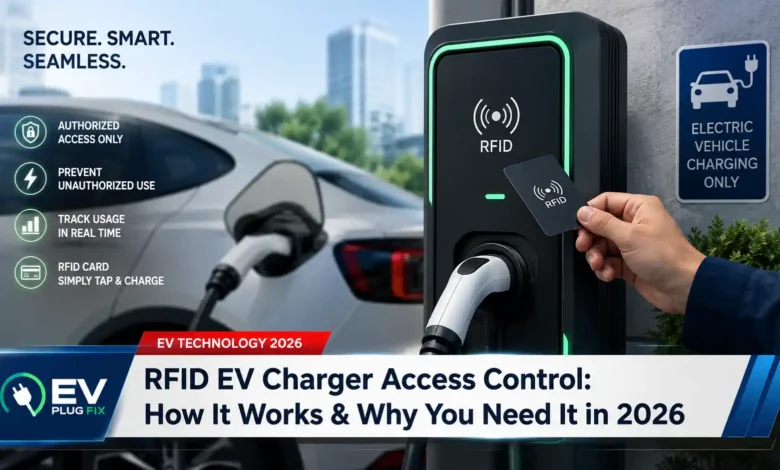
RFID EV charger access control has become an essential feature for modern electric vehicle charging infrastructure, offering a secure and convenient way to manage who can use your wallbox and when. Whether you have installed a charging station at your home, in a shared residential parking area, or at your workplace, the ability to restrict access is crucial for preventing unauthorized use, managing electricity costs, and ensuring security. An RFID (Radio-Frequency Identification) card or key fob serves as your digital key, enabling seamless authentication with a simple tap against the charging unit. This technology not only safeguards your investment but also provides valuable data on charging sessions, making it indispensable for both private and semi-public charging environments in 2026.
As the adoption of electric vehicles accelerates globally, with estimates suggesting that by 2030, 10% of all vehicles will be electric, the demand for smart and secure charging solutions has never been higher. The days of relying solely on physical keys or leaving a wallbox open for anyone to use are fading. EV owners, property managers, and fleet operators are increasingly turning to RFID technology to implement robust access control, ensuring that their charging infrastructure is used efficiently and only by those with explicit permission. For those considering a new installation, consulting a professional EV Charger Installation Guide can help ensure your system is set up correctly with the right access features from the start.
This in-depth article explores everything you need to know about RFID access control for EV chargers in 2026. We will delve into the technical workings of RFID cards and readers, explain the critical difference between authentication and authorization, and guide you through the various use cases where this technology shines. From preventing energy theft to enabling detailed usage tracking and billing, RFID is a cornerstone of the modern EV ecosystem. Understanding the broader context of Global EV Market Share trends helps illustrate why such security features are becoming increasingly vital as more vehicles go electric.
What is RFID EV Charger Access Control?
At its core, RFID EV charger access control is a security system that uses radio-frequency identification to authenticate users before allowing a charging session to begin. If your wallbox is installed in a freely accessible location, like a driveway, carport, or shared garage, you probably don’t want everyone to be able to use your charging station. This is where access restriction becomes vital. An RFID-based system ensures that only individuals in possession of a valid RFID credential—be it a card, a sticker, or a key fob—can activate the charger.
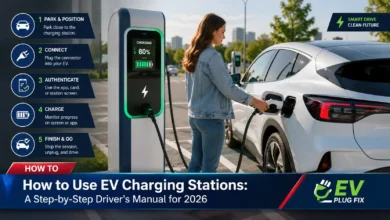
When you hold your RFID card near the wallbox’s reader, the system reads the unique identification number stored on the card’s chip. It then checks this number against an internal whitelist of approved users or communicates with a backend system for verification. Upon successful validation, the charging station unlocks and allows the flow of electricity to your EV. This process is almost instantaneous, taking less than a second, making it a user-friendly and frictionless experience.
This access management system can be configured in several ways, from a simple local whitelist to a more complex setup integrated with an OCPP (Open Charge Point Protocol) backend. For instance, the Enphase IQ EV Charger 2 uses RFID-based access control where a session starts when a valid RFID tag is authenticated. Similarly, Bender‘s Charge Controller supports local authorization, which allows registered users to initiate charging sessions through an RFID token without relying on a constant internet connection for every authentication check. When comparing different charger options, many users find the Smart EV Charger Comparison helpful to understand which models offer the most robust RFID and security features.
How RFID Authentication Works for EV Charging Stations
RFID technology enables contactless identification and authentication by using electromagnetic waves to transmit data between an RFID tag (the card or fob) and a reader. This makes the process of verifying a user’s identity incredibly quick and efficient. When an EV driver wishes to start a charging session, they present their RFID card to the reader installed on the wallbox. The reader captures the card’s unique identifier and sends it to a control unit, such as a microcontroller or a central management system, for verification.
This verification process can be either local or remote:
- Local Authorization: The charger stores a list of authorized RFID card IDs internally. When a card is presented, the charger checks its internal whitelist. If the ID is found and is not on a blacklist, the session begins. This method is fast and reliable, even without an internet connection.
- Remote Authorization: The charger communicates with a cloud-based backend system via protocols like OCPP. The RFID card ID is sent to the backend, which checks its database for the user’s credentials, billing status, and permissions. This approach is more flexible, enabling features like centralized billing, user management, and the ability to remotely block lost or stolen cards.
Modern RFID readers in EV chargers are becoming increasingly versatile. Leading manufacturers like ELATEC provide universal readers that can support a wide array of transponder technologies, from the common MIFARE Classic and DESFire to Near-field Communication (NFC) credentials from smartphones. This flexibility allows charging station operators to deploy a single hardware platform that works with different card types and mobile-based credentials, streamlining inventory and after-sales support. Understanding the communication standards behind these systems is easier with resources on EV Charging Protocols, which explain how data flows between your car, the charger, and the backend network.
Authentication vs. Authorization: What’s the Difference?
While the terms “authentication” and “authorization” are often used interchangeably, they represent two distinct and critical steps in the access control process. Understanding this difference is key to appreciating how RFID systems secure your EV charger.
Authentication is the process of verifying the user’s identity. When you tap your RFID card on a wallbox, the system is authenticating you. It’s asking, “Is this card valid and who does it belong to?” This is done by reading the card’s unique ID and ensuring it’s recognized by the system.
Authorization, on the other hand, determines the rights and permissions of the authenticated user. Once the system knows who you are, it checks whether you are allowed to charge. Are you on the whitelist? Is your account in good standing? Do you have the permission to start a session at this specific charger, or at this specific time of day?.
An example can help clarify this: You present your RFID card to the wallbox (authentication). The system checks your status and sees that, although you are a registered user, your billing account is overdue. The system therefore authorizes the charger to remain locked (authorization). You are authenticated but not authorized.
This distinction is crucial for environments with multiple users, such as workplaces or multi-tenant residential buildings. An authentication method like a simple key switch might allow anyone with a physical key to charge, but it provides no authentication or data about who is actually consuming the energy. As a result, it is unsuitable for scenarios that require detailed billing or usage tracking. For homeowners, understanding EV Charger Selection Guide can help in choosing a system that offers the right balance of authentication and authorization features for their specific needs.
Top Benefits of Implementing RFID EV Charger Access Control
Integrating RFID technology into your wallbox offers a host of advantages that go beyond simple security. For both private homeowners and commercial operators, RFID provides a more intelligent and manageable way to control an EV charging station.
Here are the key benefits of using RFID for EV charger access control in 2026:
- Prevents Unauthorized Use and Energy Theft: This is the most obvious benefit. By ensuring that only individuals with valid RFID credentials can activate the charger, you prevent strangers or unauthorized individuals from leeching electricity. This is particularly important for wallboxes installed in driveways, carports, or semi-public locations.
- Accurate Usage Tracking and Cost Allocation: RFID systems can log exactly when a session started, who started it, how much energy was consumed, and when it ended. This data is invaluable for billing, especially in scenarios where multiple users share a single charger, such as in a multi-tenant building or a workplace. It allows for fair and transparent allocation of electricity costs.
- Simplified User Management: Administrators can easily add or remove users from the system. If an employee leaves the company or a tenant moves out, their RFID card can be deactivated or blacklisted instantly, removing their access without needing to replace physical keys or locks.
- Seamless Integration with Smart Billing Systems: For commercial charging stations, RFID is a key enabler for automated payment processing. Users can be billed directly for their consumption, creating a revenue stream for the station operator. This is a fundamental component of public and semi-public charging networks.
- Enhanced Convenience and User Experience: Tapping an RFID card to start a session is much more convenient than navigating a mobile app or entering a password, especially in adverse weather conditions. This contactless experience is fast, easy, and reliable for all users.
Beyond these direct benefits, RFID access control also supports security and fraud prevention. For example, in an IoT-enabled hybrid power charging station, RFID ensures secure access and automated billing, minimizing manual intervention. This combination of security, data, and convenience makes RFID an indispensable feature for modern EV charging. When evaluating different charger brands, reviews like the go-e Gemini vs Wallbox comparison often highlight RFID capabilities as a key differentiator between entry-level and premium models.
Common Use Cases for RFID-Controlled EV Charging
RFID EV charger access control is remarkably versatile and can be applied across a wide spectrum of environments. Its ability to manage users, track data, and enforce security makes it an ideal solution for any setting where charging access needs to be regulated.
- Residential Homes with Shared Parking: If you live in an apartment or condo with a shared parking area, you don’t want other residents using your private charging station. RFID cards can be issued to family members or approved neighbors, ensuring that only they can activate your specific wallbox.
- Workplace Charging for Employees: Many companies provide EV charging as an employee benefit. RFID systems allow them to manage access for employees only, and potentially restrict usage to specific times or for a set number of hours per day. This is also key for cost allocation if the company reimburses employees for electricity.
- Fleet Operations and Depots: For businesses with a fleet of electric vehicles, controlling access to chargers is paramount. RFID ensures that only authorized vehicles and drivers can use the depot’s chargers. It also enables accurate tracking of energy consumption for each vehicle, aiding in operational cost analysis and driver accountability.
- Semi-Public and Public Charging Stations: In locations like hotel parking lots, shopping centers, or public garages, RFID is often used for access control. These systems can be integrated with an OCPP backend to support online billing, tariff negotiation, and secure transactions, providing a seamless experience for users.
- Battery Swapping Stations: An innovative use case is in battery swapping for EVs. RFID technology is used to authenticate the user and the battery pack, ensuring compatibility and securely releasing a fully charged battery. This automated identification process streamlines what would otherwise be a complex and manual transaction.
| Use Case | Key Benefit | RFID Function |
|---|---|---|
| Residential (Shared) | Prevent energy theft and allocate costs among housemates/neighbors | Local whitelist/blacklist of user cards |
| Workplace | Limit access to employees and manage energy costs | Integration with employee databases for access control |
| Fleet Depot | Monitor individual vehicle energy usage and ensure chargers are available for fleet vehicles | Session tracking for each authorized driver/vehicle |
| Semi-Public (e.g., Hotel) | Provide secure, controlled charging for guests and enable billing | Backend OCPP integration for payment and remote management |
Managing Access: Whitelisting and Blacklisting
At the heart of any RFID EV charger access control system are the concepts of whitelisting and blacklisting. These permission lists determine exactly who is allowed to use a charging station and who is explicitly denied.
Whitelisting is the process of creating an explicit list of approved entities—in this case, RFID card IDs. When a card is presented at the charger, the system checks this list. If the card’s ID is found on the whitelist, access is granted according to the defined rules. If it’s not found, the session is denied. This is the most common and secure method for access control, as it assumes by default that everyone is blocked until explicitly added.
Blacklisting is the opposite. A blacklist contains identifiers that are explicitly forbidden from accessing the system. This is a powerful tool for quickly revoking access. For example, if an employee leaves a company and forgets to return their RFID card, their card ID can be added to the blacklist. Even though the card is still physically valid, it will be blocked from starting any new charging sessions. This immediate response to a security risk is a major advantage of digital access systems.
These lists can be managed locally on the charger or centrally through a cloud-based management platform (CPMS). For example, a smart wireless EV charging station prototype from IEEE Xplore integrates an Arduino microcontroller to coordinate RFID authentication with a central whitelist, showcasing how this process is managed at a fundamental hardware level. Centralized management is essential for larger networks where dozens or hundreds of chargers need to have consistent and up-to-date access rules. For anyone concerned about electrical safety alongside access control, understanding EV Charger RCD Protection is equally important to ensure your installation is fully protected.
Can RFID Work Without Wi-Fi? Offline vs. Online Authorization
A common question for EV owners is whether RFID access control still works when the internet is down. The answer depends on how the wallbox is configured. Most modern chargers support both online and offline authorization modes, offering flexibility and reliability.
Online Authorization: In this mode, the charger relies on a constant internet connection to communicate with a backend server. When you tap your RFID card, the charger sends your card’s ID to the server, which authenticates you, checks your authorization, and sends a signal back to start the session. This mode allows for advanced features like real-time billing, remote user management, and dynamic pricing.
Offline Authorization: Many chargers, like the Enphase IQ EV Charger 2, are designed to function offline. Once the charger has been commissioned and the RFID cards have been added via an app (requiring an initial internet connection), the system stores this whitelist locally. Subsequently, even without an internet connection, the charger can still authenticate a user by checking the card against its local whitelist.
A key limitation, however, is that session data cannot be accessed via Bluetooth alone when offline, although the charger’s primary function of providing secure, authorized charging remains intact.
The Bender Charge Controller also provides different “Free Charging” modes that illustrate this. Some modes allow charging to start immediately without an RFID scan (Free Charging), while others require any RFID tag to be scanned, but still authorize the session without needing to contact a backend server. The ability to operate offline is a significant benefit for residential users or operators in areas with unreliable internet access, providing a robust and resilient charging infrastructure. For those interested in the practical aspects of charger setup, the go-e Charger Setup guide offers a real-world example of how RFID configuration works in a popular consumer device.
Frequently Asked Questions About RFID EV Chargers
Can I use any RFID card with my EV charger?
Is RFID access control necessary for a home wallbox?
How do I add or remove a user from my RFID charging system?
What is the range of an RFID reader on a charging station?
”Can
RFID EV charger access control is more than just a security feature; it is a foundational technology for managing the future of electric mobility. In 2026, as EV adoption continues to surge, the ability to control, monitor, and bill for electricity consumption in a secure and seamless manner is paramount. Whether you are a homeowner looking to protect your investment, a business providing employee benefits, or a fleet manager optimizing operational efficiency, integrating RFID access into your wallbox is a smart and essential step.