Wall-Mounted vs Pedestal EV Chargers 2026: Which Installation Wins?
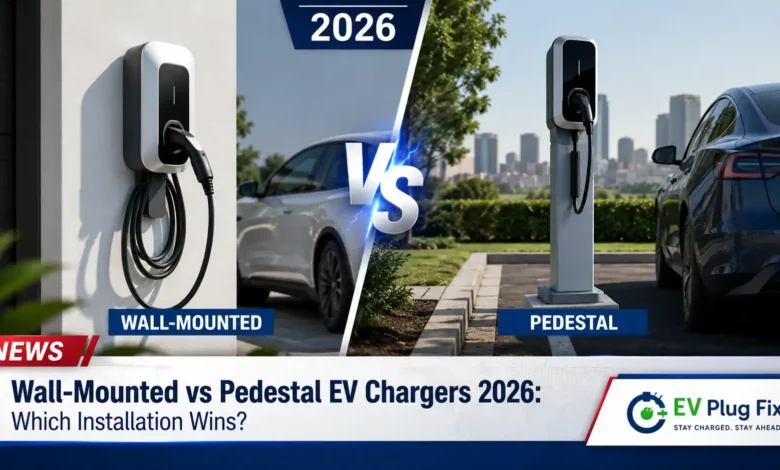
Choosing between a wall-mounted and pedestal EV charger is one of the most critical decisions for any electric vehicle owner, property manager, or business planning to install charging infrastructure in 2026. While both devices serve the same core function of delivering electricity to an electric vehicle, their design, installation process, costs, and ideal applications differ significantly, impacting everything from your upfront budget to long-term convenience. For those evaluating different hardware approaches, exploring Modular EV Charging Systems can provide additional perspective on future-proofing your installation.
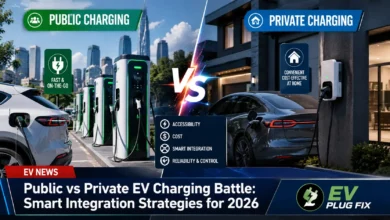
With the global stock of public charging points exceeding 7 million at the end of 2025 and private home chargers surpassing 43 million, the infrastructure supporting EVs is expanding rapidly . As this network grows, making the right choice between a wall-mounted and a pedestal charger is essential for ensuring efficient, reliable, and cost-effective charging that meets your specific needs. Understanding EV Charging Speed Factors can also help you determine which charger type aligns with your daily driving requirements. This guide provides an authoritative, journalist-style comparison to help you navigate this pivotal decision in 2026.
What Exactly Are Wall-Mounted and Pedestal EV Chargers?
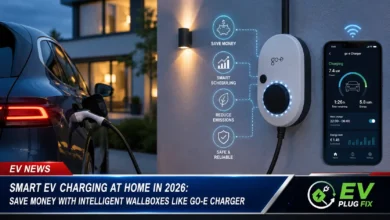
Before diving into the comparison, it’s crucial to understand the fundamental structure of each charger type. A wall-mounted EV charger is a compact unit designed to be fixed directly onto a vertical surface—typically a garage wall, an exterior wall of a house, or a wall inside a parking structure. These chargers are prized for their space-saving design and are usually hardwired into the building’s electrical system. They offer a clean, organized solution for residential settings and smaller commercial applications, often featuring integrated cable management to keep the charging area tidy . Effective EV Cable Management Systems are particularly important in residential installations to prevent tripping hazards and cable damage.
In contrast, a pedestal EV charger, also known as a floor-mounted charger, is a freestanding unit mounted on a vertical post or column that is securely anchored to the ground. These self-supporting structures are ideal for open parking lots, curbside installations, and areas where a wall is not available. Pedestal chargers often provide greater visibility and can support multiple vehicles with dual connectors, making them the preferred choice for commercial and public charging networks .
Installation, Cost, and Site Considerations
The most significant differences between wall-mounted and pedestal chargers often lie in their installation requirements and associated costs.
Wall-Mounted Chargers: Simple and Cost-Effective
For most homeowners with off-street parking, a wall-mounted charger is the most straightforward and economical choice. Installation typically involves mounting the unit to a structurally sound wall and connecting it to a nearby electrical panel. This process is generally less invasive and cheaper, as it avoids extensive trenching and foundation work. In the UK, a standard installation for a 7.2kW wall-mounted charger typically costs around £1,000, including the unit . In the US, a quality home charger like the Emporia EV Charger offers 11.5 kW of power for around $429, with installation costs adding a few hundred to a thousand dollars depending on local electrician rates and the distance to your electrical panel . The proximity to your home’s power supply is a key factor; keeping the charger within 20 metres of the fuse box helps minimize installation expenses . Before proceeding with any installation, reviewing Home EV Charger Permits requirements in your area is essential to ensure compliance with local regulations.
Pedestal Chargers: Higher Costs for Greater Flexibility
The installation of a pedestal charger is a more complex and costly affair. Because these units are freestanding, they require a stable, level foundation, which often means digging and pouring concrete. Additionally, if the pedestal is not located near an existing power source, electrical conduit must be trenched underground from the building to the charger’s site. This can significantly drive up labor and material costs. A commercial-grade pedestal charger, such as a dual-outlet 2×22 kW unit, is designed for outdoor public installations and comes with a robust IP55 or IK10 rating for weather and impact resistance. While the unit itself is an investment, the total project cost for a pedestal installation can range from $3,000 to over $10,000, reflecting the extra groundwork and materials required . Despite the higher upfront cost, pedestal chargers offer unmatched placement flexibility in open areas where wall access is impossible.
Space, Aesthetics, and User Experience
How each charger type interacts with your environment is another crucial factor in the decision-making process.
Wall-Mounted: Maximizing Space in Tight Areas
Wall-mounted EV chargers are the undisputed champions of space efficiency. By utilizing vertical wall space, they keep floors and driveways clear of obstructions. This is a major advantage in residential garages where every square foot counts. Their sleek, compact profiles can be chosen to blend with a home’s architecture, making them a popular choice for homeowners concerned about aesthetics. However, their location is tied to the wall, so you must park your vehicle within reach of the charging cable. Tethered models come with a fixed cable, while untethered units allow you to use your own Type 2 cable, offering a bit more flexibility in parking arrangements .
Pedestal: Visibility and Versatility
While pedestal chargers occupy floor space by their nature, they bring significant advantages in visibility and user experience. In large commercial or public parking lots, their elevated and standalone design makes them easy for drivers to spot, reducing the time spent searching for an available charging point. Their versatility is a key benefit, as they can be positioned between two parking spaces or in the middle of a lot to serve multiple vehicles. Modern pedestal units are built with durable, weather-resistant materials like powder-coated metals to withstand harsh outdoor conditions, from heavy rain and snow to extreme heat and UV exposure .
Durability and Smart Features: Built to Last
Both charger types are designed to be robust, but their durability considerations differ based on their typical deployment environments.
Wall-mounted chargers installed in garages often benefit from natural protection against the elements. However, those placed on exterior walls are built to withstand weather with high IP ratings. For instance, MSI’s new EV Life wall charger is rated for outdoor use and can operate in extreme temperatures, protecting sensitive electronics from dust and water . Many modern chargers also integrate smart features. A charger like the ChargePoint Home Flex allows users to schedule charging, track energy usage, and monitor costs via a smartphone app, adding a layer of convenience and control . Familiarizing yourself with EV Charging Apps can help you leverage these smart capabilities for maximum efficiency and savings.
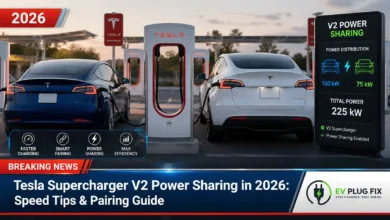
Pedestal chargers are engineered from the ground up for continuous outdoor exposure and public use. They typically feature the highest durability standards, such as IP55/IP67 weather sealing and IK10 impact protection to guard against vandalism or accidental vehicle bumps . Smart features are equally prevalent in pedestal units, often including OCPP (Open Charge Point Protocol) compatibility for easy integration into commercial charging networks, RFID authentication for user billing, and even 4G connectivity for remote monitoring .
| Feature | Wall-Mounted EV Charger | Pedestal EV Charger |
|---|---|---|
| Installation Complexity & Cost | Simple & lower cost (£1,000 – $2,500). Minimal electrical work. | Complex & higher cost ($3,000 – $10,000+). Requires concrete base and trenching. |
| Ideal Use Case | Residential garages, small businesses, or sites with existing wall access. | Public parking lots, commercial fleets, apartment complexes, curbside. |
| Space & Aesthetics | Space-saving, compact, can blend with building architecture. | Occupies floor space, highly visible, acts as a landmark for EV drivers. |
| Durability & Protection | Often partially sheltered. IP54 to IP67 ratings common . | Fully exposed. Built with robust IP55/IP67 and IK10 ratings . |
| Smart Features | Wi-Fi, Bluetooth, mobile apps for scheduling and cost tracking . | OCPP 1.6/2.0, RFID, 4G, load management for multi-user environments . |
Making the Right Choice for Your Needs
Ultimately, the decision between a wall-mounted and pedestal EV charger boils down to your specific environment, budget, and future needs. Understanding the fundamental differences between AC vs DC Charging can also influence your decision, as most home and commercial pedestal installations utilize AC charging technology.
Opt for a wall-mounted charger if:
- You own a home with a garage or driveway and can park near a wall.
- You want to minimize upfront costs and prefer a simple installation.
- You have a single EV and don’t expect your parking arrangements to change.
- You value a space-saving solution that seamlessly integrates with your home.
Choose a pedestal charger if:
- You manage a commercial property or public parking facility.
- Your parking area is an open lot without suitable walls or structures.
- You plan to offer public or employee charging and need high visibility.
- You anticipate needing to serve multiple vehicles or expand your charging network in the future .
“Charged at home, an EV can cost as little as 2p per mile to ‘fuel’, compared with around 15p per mile for a petrol car.”
Conclusion: Powering the Future of Mobility
As the EV revolution accelerates, the choice between wall-mounted and pedestal chargers is a foundational step in building the necessary infrastructure for a sustainable future . Wall-mounted chargers are a fantastic, cost-effective solution for the majority of homeowners, offering convenience and efficiency for daily charging. On the other hand, pedestal chargers are the backbone of public and commercial EV networks, providing the visibility, durability, and flexibility needed to serve a growing number of electric vehicles on the road.
By carefully evaluating your site’s physical characteristics, your charging demands, and your budget, you can select the charger type that best supports your needs today and positions you for success in the evolving landscape of electric mobility. For more guidance on optimizing your charging setup, explore resources on EV Charging Efficiency to maximize the performance of your chosen installation.