AC vs DC Charging: Key Differences for EV Owners in 2026
AC vs DC Charging
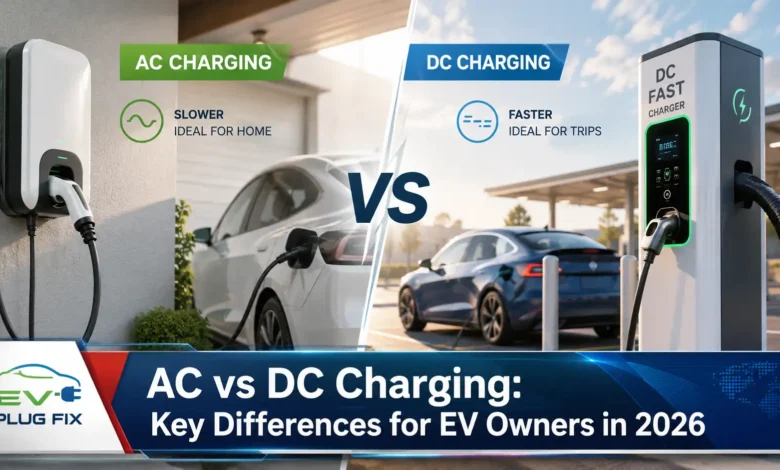
The fundamental difference between AC and DC charging for electric vehicles lies in where the power conversion takes place: AC charging uses your car’s onboard charger to convert alternating current from the grid into direct current for the battery, while DC fast charging bypasses this built-in converter and sends high-voltage direct current straight to the battery from the charging station itself . This core distinction determines everything from how fast you can charge to where you should plug in, and understanding it is essential for every EV owner in 2026 as the European EV Charging Standards landscape continues to evolve.
How AC Charging Works: The Everyday Solution
AC charging is the backbone of most EV owners’ daily routines. When you plug your car into a standard home outlet or a dedicated Level 2 charger, the electricity flowing through the cable is AC power—the same type that powers your refrigerator and television. Your vehicle’s onboard charger, a relatively small converter built directly into the car, handles the job of rectifying this AC power into DC power that the battery can store.
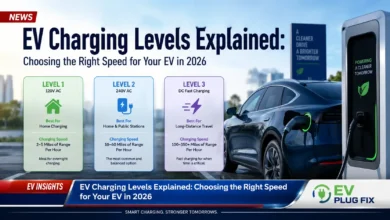
This method is perfect for situations where your vehicle will be parked for several hours. Home and workplace charging fall squarely into this category. Most Level 2 AC chargers deliver between 7 kW and 22 kW of power, although the actual speed is ultimately capped by your car’s onboard charger, which often maxes out at 7.2 kW or 11 kW . For the average driver covering around 50-60 km daily, an overnight AC charge is more than sufficient, with most home units adding roughly 30-50 km of range per hour . For those installing at home, understanding EV Charging Time considerations is crucial for planning your daily routine.
DC Fast Charging: The Road Trip Companion
DC fast charging represents the high-speed solution for electric vehicle travel. These powerful charging stations, often found along highways and at key travel hubs, contain large, industrial-grade converters that transform AC grid power into DC electricity right at the source . This converted DC power is then fed directly to the vehicle’s battery, completely bypassing the onboard charger’s limitations.
The result is a dramatic reduction in charging time. A typical DC fast charger operating at 50 kW can take a 60 kWh EV battery from 10% to 80% charge in about 45 minutes to an hour . More powerful ultra-fast chargers, offering 150 kW to 350 kW or more, can achieve this 10-80% top-up in 20 to 30 minutes, with some cutting-edge 800V vehicles like the Hyundai Ioniq 6 or Porsche Taycan completing the task in around 18 minutes . To better understand the range of options available, explore this EV Fast Charger Types comparison guide.
| Feature | AC Charging (Level 2) | DC Fast Charging (Level 3) |
|---|---|---|
| Power Conversion Location | Inside vehicle (Onboard Charger) | Inside charging station |
| Typical Power Output | 7 kW – 22 kW | 50 kW – 350+ kW |
| 10% to 80% Charge Time (60 kWh Battery) | 4 to 10 hours | 20 to 60 minutes |
| Best Use Case | Home, workplace, overnight | Highways, long trips, quick top-ups |
| Equipment & Installation Cost | Lower ($1,000 – $5,000 per port + install) | Much higher ($25,000 – $170,000 per unit + install) |
| Impact on Battery Health | Gentler (~1.5% annual degradation) | Slightly faster degradation (2-3% annually with heavy use) |
The Real-World Cost of AC vs DC Charging
For business owners and infrastructure planners, the cost disparity between AC and DC charging is immense. A commercial Level 2 AC charger might cost between $1,000 and $5,000 per port, with installation costs ranging from $2,000 to $6,600 . While not inexpensive, this is manageable for most businesses. In stark contrast, a 50 kW DC fast charger starts at around $25,000, while a 350 kW ultra-fast unit can cost upwards of $115,000 before installation . The installation of a DC charger is also a major construction project, often requiring dedicated transformers, high-voltage switchgear, and coordination with the local utility—a process that can take many months and add over $100,000 to the final bill . For property owners considering installation, reviewing Austria Wallbox Installation guidelines can provide valuable insights into regional requirements and best practices.
⚡ Pro Tip: For most business cases, a mix of AC and DC is ideal. Install several AC chargers for employees or customers who will be parked for hours, and supplement with one or two DC fast chargers to attract travelers or serve as a premium service. This strategy balances cost with appeal, a key insight for optimizing Modular EV Charging Systems infrastructure .
Does Fast Charging Damage Your Battery?
This is perhaps the most common concern for EV owners. The short answer is yes, frequent DC fast charging can contribute to slightly faster battery degradation over time—but the effect is often smaller than many fear. Modern Battery Management Systems (BMS) are sophisticated, using liquid cooling and intelligent charge curve management to protect cells. A comprehensive study from telematics provider Geotab, analyzing data from over 22,700 EVs, found that vehicles predominantly charged with DC fast charging showed an annual battery capacity loss of roughly 2-3%, compared to about 1.5% for those primarily using Level 2 AC charging .
⚡ Important Notice: To maximize battery longevity, experts recommend using AC slow charging for your daily needs and reserving DC fast charging for road trips and quick turnarounds. This simple habit is one of the best practices for preserving EV battery health . For a deeper dive into charger specifications, check out this MID Wallbox Requirements guide for commercial applications.
“Use AC for daily charging—it’s gentler on the battery, cheaper per kilowatt-hour, and perfectly matched to overnight parking. Use DC for road trips, quick turnarounds, and operational necessities. Occasional fast charging will not meaningfully shorten your battery’s useful life.”
Which Charger Should You Choose?
The decision of whether to use an AC or DC charger comes down to a simple question of dwell time: how long will your car be parked? The answer determines the most efficient and economical charging method. For most EV owners, a mix of both AC and DC charging will be the most practical solution to meet all their driving needs.
AC charging is best for:
- Overnight charging at home: The most convenient and cost-effective way to start each day with a full battery .
- Workplace charging: An ideal solution for employees who park for 8+ hours, allowing them to easily top up during the workday .
- Destination charging: When you’re spending time at a hotel, shopping mall, or restaurant, an AC charger is more than adequate to add significant range.
DC fast charging is best for:
- Long-distance road trips: The only practical way to quickly recharge and minimize travel time .
- Emergency top-ups: A quick session during errands when your battery is running low.
- Fleet operations: Keeping commercial vehicles on the road with minimal downtime.
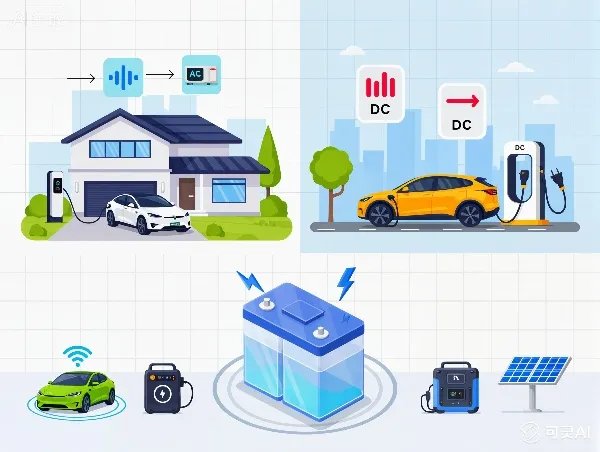
DC fast chargers are becoming increasingly common along highways, enabling convenient long-distance EV travel.
Connector Types: Knowing Your Plugs
Understanding the hardware is also important. The most common connector for AC charging in Australia and Europe is the Type 2 plug. For DC fast charging, the industry standard is the CCS2 (Combined Charging System Combo 2) connector, which adds two extra DC pins at the bottom of a Type 2 socket . Some older vehicles may still use the CHAdeMO standard for DC fast charging, though its popularity is waning . The advantage of the CCS2 system is its simplicity: your car has a single port that accepts both AC and DC plugs, and you’ll need your own cable for AC charging, while DC stations always have a cable attached . For more information on keeping your charging setup organized, explore EV Cable Management Systems to ensure safety and convenience.
Future Trends: The Charging Landscape is Evolving
As we move through 2026, the EV charging ecosystem is rapidly advancing. The adoption of 800-volt vehicle architectures is enabling even faster charging speeds, with some vehicles like the Zeekr 7X achieving 10% to 80% charge times in under 10 minutes . Additionally, innovations like liquid-cooled cables are making ultra-fast charging safer and more efficient . For the average driver, this means range anxiety is becoming less of a concern, and charging is increasingly becoming an afterthought rather than a major decision. Whether you’re a daily commuter or a long-distance traveler, understanding the strengths of both AC and DC charging empowers you to make the smartest choice for your driving habits and your EV’s long-term health.