EV Cable Management Systems 2026: Best Practices for High-Traffic Charging Stations
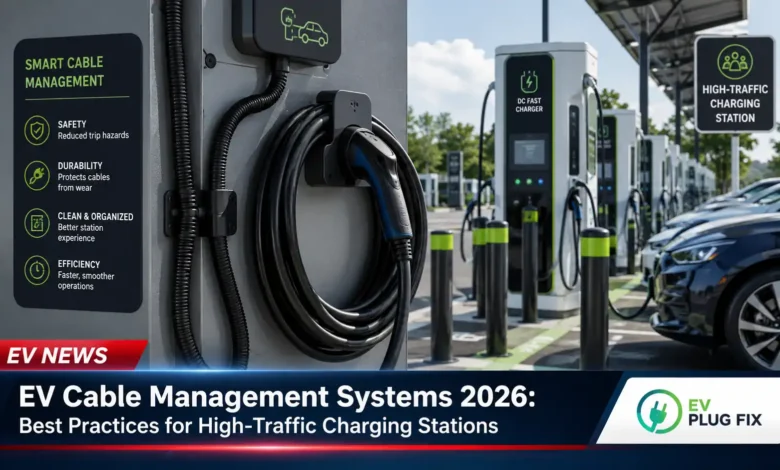
EV cable management at busy charging stations determines whether operators profit or lose thousands in preventable damage, repairs, and lost customers each year. High-traffic sites with tangled, dragging cables suffer frequent failures, safety incidents, and declining utilization rates that directly impact revenue. In 2026, as EV adoption accelerates and station density increases, proper cable organization has become a non-negotiable operational requirement rather than an optional upgrade.
At Parwatt New Energy, we supply DC fast chargers and power modules for demanding public and commercial environments. Our equipment, including the FES-D30 DC EV Charger and Battery Buffered Ultra Rapid EV Charger, handles heavy daily use, but even the most robust hardware fails to deliver full value without effective cable management. This article examines the real costs of poor organization, common mistakes operators make, and proven solutions that protect equipment, enhance safety, and improve the bottom line.
Proper cable management systems keep charging cables organized, protected, and easy to use at high-traffic EV stations. They reduce cable damage, improve safety, lower maintenance costs, and create a better experience for drivers. In 2026 proper cable management is a practical necessity for busy commercial and public charging locations.
The Hidden Costs of Poor Cable Management at Busy Charging Stations
High-traffic EV charging stations handle dozens or hundreds of charging sessions daily. Cables dragged across pavement, left on the ground, or improperly stored suffer rapid wear that drives up operational expenses and degrades the user experience.
I witnessed this firsthand during an inspection at a major retail charging site last year. Cables were routinely abandoned on the ground after each session. Within months, multiple cables showed severe abrasion and connector damage. The operator faced costly replacement cycles, a messy station appearance, and mounting driver complaints about dirty, heavy cables. The site lost revenue and reputation simultaneously.
Poor cable management causes frequent cable damage, safety hazards, higher maintenance costs, and reduced customer satisfaction at high-traffic EV charging stations. Tangled or dragging cables lead to downtime and lost revenue. Proper systems keep cables protected and easy to handle, delivering clear savings and better driver experiences.
Understanding the Financial Impact
Cable replacement represents one of the highest ongoing expenses at public and commercial stations. High-quality DC fast charging cables carry substantial price tags. When dragged across asphalt, run over by vehicles, or subjected to repeated bending stress, their service life shortens dramatically. Operators then face unplanned downtime while awaiting replacements, losing revenue from every offline charger.
Safety risks add another layer of cost exposure. Cables left on the ground create trip hazards for drivers and pedestrians, particularly in wet conditions or low light. Some stations have faced liability claims or regulatory scrutiny due to poorly managed cables. The reputational damage from safety incidents can be equally costly.
User experience suffers measurably when drivers encounter heavy, tangled, or dirty cables. Wasted time struggling with connectors or navigating messy cable layouts frustrates customers. Many simply choose alternative stations in the future, a significant problem for high-traffic locations dependent on repeat business.
| Problem | What Happens | Financial or Operational Impact | Who Feels It Most |
|---|---|---|---|
| Cable abrasion and damage | Frequent replacement needed | High parts and labor costs | Public and retail stations |
| Trip hazards | Safety incidents or complaints | Potential liability and reputation damage | High-footfall locations |
| Messy appearance | Drivers avoid or complain | Lower utilization and repeat visits | Commercial and hospitality sites |
| Longer session times | Drivers struggle with cables | Reduced throughput during peak hours | Busy urban hubs |
| Unplanned downtime | Station offline for repairs | Lost revenue per session | Charge point operators |
Expert Analysis: Stations with organized cable management typically reduce cable replacement frequency by 40-60% compared to sites with free-handling cables. The investment in proper systems typically pays back within 12-18 months through reduced maintenance costs alone.
Fleet depots and workplace stations face similar challenges. Multiple vehicles charging throughout the day create constant cable movement. Cables left on the ground get stepped on or driven over repeatedly. Maintenance teams divert attention from productive work to cable-related issues. The cumulative cost of poor management becomes apparent only after several months of operation, often appearing as a steady drain on profitability that operators struggle to identify.
In 2026, with EV adoption continuing to surge and station layouts becoming denser, these problems grow more expensive. Operators who ignore cable organization pay continuously through higher maintenance, lower satisfaction, and reduced revenue. Addressing the problem early delivers measurable returns and competitive advantage.
Five Costly Mistakes in EV Charger Cable Management
Operators frequently make predictable errors when managing cables at busy stations. They treat cable organization as an afterthought. They select systems unsuited to actual traffic levels. They neglect durability requirements. They skip maintenance. Each mistake accelerates cable wear, creates safety hazards, and increases operational costs.
Common cable management mistakes include leaving cables on the ground, selecting systems that cannot handle daily volume, ignoring durability needs, and failing to maintain the management hardware. These errors accelerate cable wear, create safety risks, and increase downtime. Busy stations need robust, well-maintained systems matched to actual traffic levels.
Mistakes That Drain Profits
The most common error is treating cable management as an afterthought. Operators install chargers, connect power, and leave cables completely free. Drivers then hang cables on charger bodies, drape them over equipment, or drop them on pavement. The result is rapid abrasion, internal conductor kinking, and connector damage that leads to early failure.
Choosing lightweight systems for high-traffic sites ranks as another frequent problem. A cable management solution that works adequately for a low-volume workplace station often fails under continuous public use. Retraction springs wear out prematurely. Guide mechanisms break. Cables still end up on the ground despite the system being present.
Ignoring environmental durability creates additional failures. Stations in outdoor, coastal, or high-UV environments need materials that resist weather, salt spray, and solar degradation. Indoor-rated components fail rapidly when exposed to rain, temperature swings, or corrosive conditions.
Maintenance neglect is particularly common. Retractable systems require periodic checks of springs, cables, and guide components. When operators skip this work, systems gradually lose function, and cables return to ground contact. The management system becomes decorative rather than functional.
| Mistake | Why It Happens | Result | Better Practice |
|---|---|---|---|
| Leaving cables free | Focus only on charger installation | Rapid cable wear and trip hazards | Install proper management from day one |
| Under-specified systems | Choosing cheapest option | Early failure under heavy use | Match system capacity to traffic volume |
| Ignoring environment | Using indoor-rated hardware outdoors | Corrosion and breakdown | Select weather-resistant materials |
| No maintenance schedule | Assuming systems are maintenance-free | Gradual loss of function | Inspect and service regularly |
| Inconsistent driver behavior | No clear guidance or design | Cables left in different positions | Design systems that guide correct use |
These patterns emerge consistently when reviewing underperforming stations. At Parwatt, we encourage clients to plan cable management at the same time they select chargers. Our META Mobile EV Charger with Battery and fixed units both benefit from organized cable handling when deployed at temporary or permanent high-use sites. Smart planning from the beginning prevents costly retrofits.
Cheap temporary solutions usually fail within months. The better approach is selecting a system designed for expected daily session volume and maintaining it properly. Stations that do this report fewer cable failures and cleaner operations.
Top Cable Management Systems for High-Traffic Stations
Several cable management approaches deliver excellent results at busy EV stations. Retractable systems pull cables upward after each use. Guided systems keep cables within defined paths. Overhead hanging designs suspend cables from above. Each system type offers distinct advantages depending on station layout, traffic volume, and physical constraints.
The most effective cable management solutions for high-traffic stations include retractable reels, guided cable systems, and overhead hanging designs. These keep cables off the ground, reduce wear, improve safety, and create a cleaner appearance. In 2026 heavy-duty versions designed for continuous public use deliver the best long-term results.
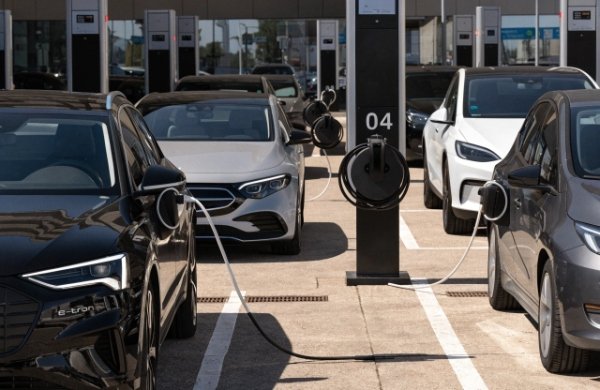
Quality retractable systems use heavy-duty springs and guides designed for hundreds of daily charging cycles
Comparing System Types and Applications
Retractable cable systems are widely deployed at public stations. After charging, the cable automatically or manually retracts into a housing or up a post. This keeps cables off pavement and minimizes dragging. Quality retractable units use robust springs or motor-assisted mechanisms that withstand frequent cycles without failure.
Guided systems use channels, rails, or floor guides to control cable movement. The cable stays within a defined path as it extends and retracts. These systems work particularly well in space-constrained locations or when cables must follow specific routes around islands, bollards, or parking layout features.
Overhead hanging systems utilize ceiling or gantry tracks. Cables suspend from above and move along tracks as needed. This approach keeps ground surfaces completely clear and presents a professional appearance. It requires adequate overhead structure and careful planning for cable length and movement range, making it most suitable for covered or indoor installations.
| System Type | Key Advantage | Best For | Limitation to Consider |
|---|---|---|---|
| Retractable reel or post | Automatic or easy return of cable | Most public and retail stations | Mechanism needs regular inspection |
| Guided channel or rail | Controlled path and ground clearance | Sites with defined parking layouts | Installation requires careful alignment |
| Overhead hanging track | Fully clear floor space | Indoor or covered high-end sites | Needs suitable overhead structure |
| Hybrid designs | Combines retraction and guidance | Complex multi-charger islands | Higher initial cost |
| Simple hanging hooks | Low cost | Very low-traffic sites only | Not suitable for high volume |
This comparison helps operators match solutions to their specific site conditions. At Parwatt, we observe retractable and guided systems used most frequently with our DC fast chargers because they balance cost, durability, and ease of use effectively. Stations using our equipment report better cable life when management systems are properly specified and installed.
Important Update 2026: New heavy-duty cable management systems now feature cycle ratings exceeding 500 operations per day, smart tension monitoring, and corrosion-resistant materials specifically engineered for public EV charging applications. Operators should specify systems meeting these enhanced durability standards for new installations.
Practical Selection Considerations
High-traffic sites need systems rated for hundreds of cycles daily. Light-duty office systems fail quickly under continuous public use. Materials must resist UV, moisture, and temperature extremes for outdoor locations. Cable length and connector type must match the management system so the cable can fully retract or travel freely without strain or binding.
I have reviewed stations where the management system was undersized for cable weight and daily volume. The result was incomplete retraction and continued ground contact. Matching system capacity to actual use prevents this problem. In 2026, more manufacturers offer heavy-duty options specifically designed for public EV charging, making reliable solutions easier to source.
How to Select and Deploy the Right System
Choosing the correct cable management system begins with understanding station traffic, layout, and environmental conditions. Implementation requires careful installation and a simple maintenance plan. The goal is a system drivers use correctly without effort and that lasts under continuous operation.
Select a cable management system based on daily session volume, site layout, and environmental conditions. Prioritize heavy-duty retractable or guided designs for high-traffic locations. Proper installation and regular maintenance keep the system working and protect cable life over the long term.
Step-by-Step Selection Process
Start by measuring actual or projected daily sessions per charger. A station with 30 or more sessions daily needs a significantly more robust system than one with only occasional use. Observe how drivers currently handle cables and identify where problems appear most frequently.
Evaluate the physical layout thoroughly. Consider parking space dimensions, charger placement, overhead clearance, and typical vehicle approach angles. Retractable posts work well in many open layouts. Guided systems suit tighter or more structured parking configurations. Overhead systems need suitable mounting points and clearance.
Choose materials and mechanisms rated for the specific environment. Outdoor stations need weather-resistant housings and corrosion-resistant components. High-cycle mechanisms should be designed for continuous public use rather than occasional office duty. Request specifications that include cycle life ratings and environmental test results.
Install carefully with attention to the complete cable travel path. The system must allow full cable extension without binding or excessive force. Connectors should reach vehicle ports easily and return cleanly when finished. Test the complete motion path before finalizing installation.
Establish a maintenance routine from the beginning. Check retraction force, guide condition, and cable wear at regular intervals. Address small issues before they become failures. Keep spare parts for high-wear components if the station is critical to operations.
Implementation Checklist
- Measure current or projected daily sessions per charger
- Review parking layout, overhead space, and vehicle approach paths
- Select system type and capacity matched to traffic volume
- Confirm weather and durability ratings for the location
- Ensure cable length and connector compatibility with the management system
- Install and test full extension and retraction paths
- Create a simple inspection and service schedule
- Train staff to notice and correct improper cable handling
- Monitor results through reduced cable failures and user feedback
At Parwatt, we support clients through charger selection and encourage cable management planning at the same time. Our power modules and chargers, including the 30kW Power Module, perform best when the complete station is designed for reliable daily operation. The combination of good hardware and good cable management creates professional, profitable charging experiences.
Action Steps to Improve Your Station Today
Improving cable management begins with clear assessment of current problems and traffic patterns. From there, operators can select and install systems that match their specific site conditions. Taking action now reduces ongoing costs and improves driver satisfaction.
Assess your current cable condition, daily traffic volume, and layout constraints first. Then choose a heavy-duty retractable, guided, or overhead system suited to those conditions. Proper installation and simple maintenance deliver longer cable life, better safety, and higher customer satisfaction at busy stations.
Immediate Actions to Take
Start by walking the station during peak charging hours. Note how drivers handle cables, where cables rest when not in use, and any visible wear or trip hazards. Count approximate daily sessions if exact data is unavailable.
Review recent maintenance records for cable replacements or repairs. High frequency of cable issues is a strong signal that management needs improvement. Look for patterns in cable failures, connector damage, or user complaints.
Compare available system types against site layout and expected volume. Request specifications that include cycle ratings and environmental resistance. Prefer systems designed specifically for public EV charging rather than light-duty alternatives.
Plan installation with attention to full cable travel and ease of use. After installation, test the system with real vehicles and different driver approaches. Make small adjustments if cables bind or fail to retract cleanly.
Set a simple maintenance calendar with clear inspection points. Regular checks of mechanisms and cable condition prevent most failures. Keep basic spare parts on hand for critical stations.
Essential Action Checklist
- Inspect current cable condition and handling during busy periods
- Review cable replacement history and downtime records
- Match system capacity and type to measured traffic and layout
- Select durable, weather-appropriate hardware
- Install and fully test the complete cable path
- Establish a routine inspection schedule
- Monitor results through reduced cable failures and user feedback
At Parwatt, we help operators select chargers that perform reliably under high use. Combining those chargers with proper cable management protects the investment and improves daily operations. Stations that address both hardware quality and cable organization report smoother service and lower long-term costs.
Taking these steps transforms messy, high-maintenance cable areas into organized, professional charging zones. Drivers notice the difference and operators see the benefits in reduced expenses and better utilization.
Conclusion
Effective EV cable management is essential for high-traffic charging stations in 2026. It protects expensive cables, improves user safety and experience, reduces downtime, and extends the overall life of charging equipment. At Parwatt, we design our chargers for demanding public and commercial use and encourage operators to pair them with proper cable management systems.
With growing EV adoption and busier stations, investing in the right solution delivers clear returns through lower maintenance costs and higher customer satisfaction. The right system depends on your station’s traffic level, layout, and usage patterns. Quality retractable, hanging, or guided systems can transform chaotic cable areas into organized, professional charging zones.
Don’t let tangled cables hurt your business. Upgrade your cable management today for safer, more efficient, and more profitable charging operations. The investment in proper systems pays back through reduced cable replacements, improved driver satisfaction, and better station utilization over the long term.