EV Off-Peak Charging: Save Money with Smart Tariffs in 2026
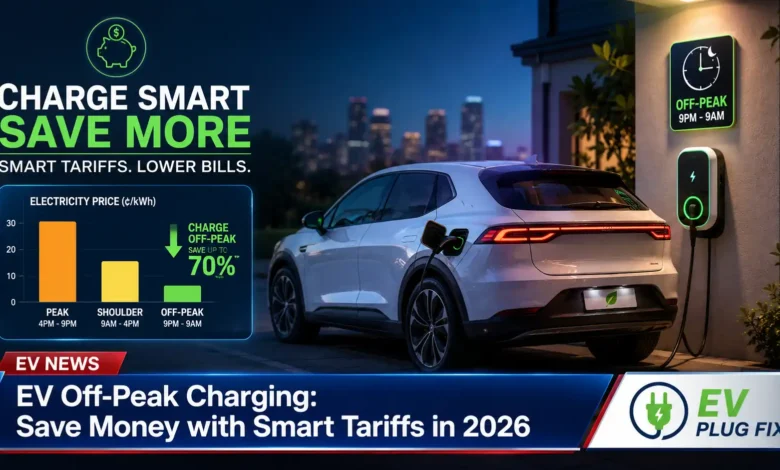
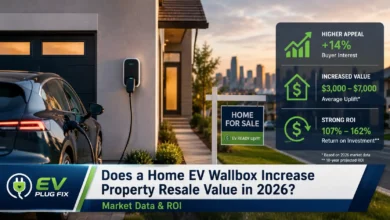
EV off-peak charging is the single most effective way to reduce your electric vehicle’s running costs, turning a standard home charge from around £15 to under £5 for a typical 60kWh battery . The reason lies in flexible electricity tariffs now offered by most European energy providers. Unlike a flat rate, these dynamic tariffs fluctuate throughout the day, with prices dropping significantly when demand is low—primarily during the night and daytime hours. For savvy EV owners, understanding and leveraging these price swings is the key to unlocking substantial savings on every charge. Home EV Wallbox Value can significantly increase your property’s appeal while enabling these smart charging strategies.
Understanding Peak and Off-Peak Electricity Rates for EVs
Today, all energy providers in Europe offer flexible electricity tariffs. This means the price per kWh fluctuates during the day, being low when demand is low and high when demand is high. A 2025 study by E.ON found that about 1 in 3 home wallbox owners are interested in predictable tariffs with lower prices for nighttime charging. These predictable off-peak windows make EV ownership far more economical. For those considering a switch, Smart EV Charging Europe offers comprehensive insights into the latest grid-integrated solutions.
These times can often be roughly predicted:
High price (peak) – when demand and costs surge:
- Morning (7:00 am – 11:00 am): People are waking up, making breakfast, taking showers, using kettles — lots of devices on at once.
- Evening (5:00 pm – 9:00 pm): Everyone’s home from work or school, cooking dinner, watching TV, doing laundry — demand goes up.
Low price (off-peak) – your prime charging windows:
- Daytime (11:00 am – 5:00 pm): Most people are out, so fewer appliances are running at home.
- Nighttime (9:00 pm – 7:00 am): Everyone’s asleep, barely any electricity is being used.
In addition, prices normally drop when the sun is shining or the wind is strong because that’s when the most renewable energy is being generated. This abundance of green energy often coincides with off-peak periods, making your charge both cheaper and cleaner.
How Smart Wallboxes Automate Off-Peak Charging
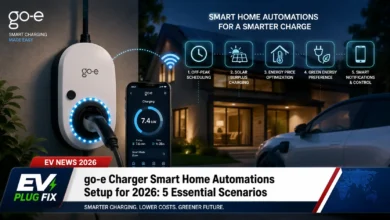
While some wallboxes let you set charging times manually in the app, the smartest solutions go far beyond basic scheduling. A modern smart charger can automatically detect the cheapest energy periods with pinpoint accuracy. Take the go-e Charger as a prime example: its advanced ECO mode allows you to set a price cap (e.g., €0.10/kWh) in the app. The charger then ensures your car only charges when the price falls at or below your chosen limit, completely automating the cost-saving process. EV Wallbox Installation by certified professionals ensures these advanced features work flawlessly with your home’s electrical system.
The financial logic is compelling. The average UK driver covering 7,000 miles annually uses about 2,000 kWh for charging. On a standard price cap, that costs roughly £490 a year. Switch to a 7p off-peak EV tariff, and the same annual mileage drops to about £140. The off-peak saving of around £350 a year is usually larger than any saving from switching the car itself. Understanding Used EV Ownership Costs reveals that charging strategy often has a greater financial impact than the vehicle’s purchase price.
“The charger and the tariff matter more than the car.” — Selectra Energy Expert
Beyond Time-of-Use: Solar Integration and Smart Home Synergy
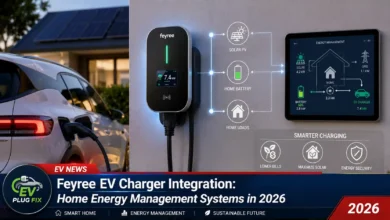
The go-e Charger’s ECO mode can be enhanced further by combining cheap electricity tariffs with photovoltaic (PV) surplus charging. In this setup, the charger first attempts to use as much solar power as possible and then seamlessly continues charging with cheap electricity rates. This holistic approach to smart charging is becoming increasingly vital as more households adopt solar panels and energy storage systems. Feyree EV Integration demonstrates how modern home energy management systems can orchestrate solar, battery storage, and EV charging for maximum efficiency.
EV Charging Cost Comparison: UK 2026
| Where You Charge | Rate (p/kWh) | Full Charge (60 kWh) | Cost Per Mile (approx.) |
|---|---|---|---|
| Off-Peak EV Tariff | 7p | ~£4.20 | ~2p |
| Home (Standard Price Cap) | 24.67p | ~£15 | ~7p |
| Public Rapid/Ultra-Rapid | 79p | ~£47 | ~23p |
Costs are based on a 60 kWh usable battery and 3.5 mi/kWh efficiency. Real-world charging losses of about 10% are not included. Public rate: RAC Charge Watch weighted average, May 2026 .
The table above highlights the massive cost difference between charging methods. Off-peak home charging is not just cheaper; it is a game-changer for EV affordability. When comparing with public infrastructure, Public EV Fast Charging remains convenient but significantly more expensive than optimized home charging solutions.
Setting Up Your go-e Charger for ECO Mode
Activating the ECO mode on your go-e Charger to automate off-peak charging is a straightforward process designed for user convenience. The powerful go-e app serves as your central command center, whether you are at home or away. The EV Charging Handshake protocol ensures seamless communication between your charger and vehicle for reliable automated sessions.
How to activate ECO mode and set a price cap:
- Download the go-e App: Available for free on iOS and Android. Connect your go-e Charger to the app via Wi-Fi or LTE.
- Navigate to Settings: Open the app and go to the main settings menu where you can find the options for “ECO Mode”.
- Activate “Charge with PV surplus”: If you have solar panels, you can combine cheap electricity tariffs and PV surplus charging.
- Set Your Price Cap: Enter your maximum price limit (e.g., €0.10/kWh or your local equivalent). The charger will then only operate when the electricity price is at or below this threshold.
- Select the Mode in “Charging” Tab: Once you have configured the settings, make sure to select the respective “ECO Mode” in the main “Charging” tab to begin using your smart schedule.
💡 Expert Tip: For maximum savings, combine the ECO mode price cap with a dedicated off-peak EV electricity tariff from your provider. This creates a powerful double-layered defense against high charging costs.
The Future of Smart EV Charging: V2X and Plug&Charge
The go-e Charger is built to be future-proof. Its hardware is ready for Vehicle-to-Everything (V2X) technology, including Vehicle-to-Grid (V2G) and Vehicle-to-Home (V2H), in accordance with ISO 15118. It is also Plug&Charge-ready, which will enable automatic authorisation, activation, and billing of charging sessions in the future, eliminating the need for RFID cards or mobile apps. Understanding Plug & Charge Pricing helps owners prepare for this streamlined billing ecosystem.
“The go-e Charger CORE is ready for V2X according to ISO 15118. This means that in the future, once the technology is available, EV owners can use their car battery to power their home or contribute to the grid.”
Research indicates that HEMS leveraging bidirectional chargers can achieve an average cost reduction of 14.57% by exploiting time-of-use tariffs (which lead to average savings of 22.23%).