Smart EV Charging Europe 2026: Grid Integration and Benefits for EV Owners
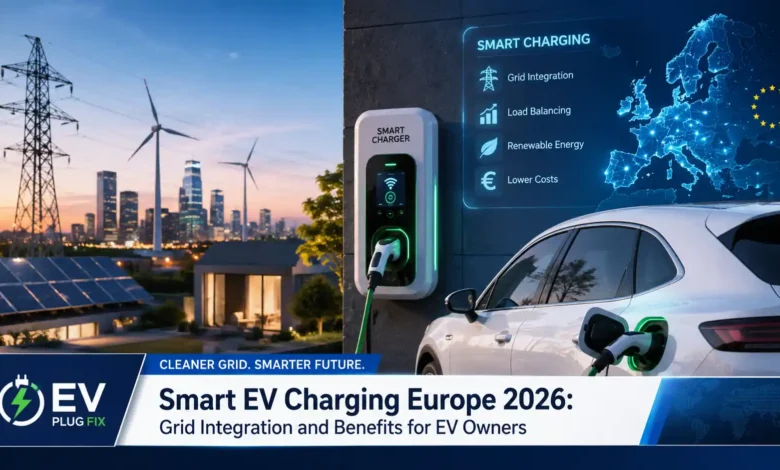
Smart EV charging technology is rapidly transforming Europe’s transportation landscape, delivering unprecedented benefits for electric vehicle owners while providing essential grid stability services across the continent. As Europe accelerates toward its ambitious climate targets, intelligent charging infrastructure has emerged as the critical enabler for seamless EV adoption and renewable energy integration.
The European Union’s commitment to ban new petrol and diesel car sales by 2035, coupled with the European Green Deal’s aggressive decarbonization goals, has created an urgent need for sophisticated charging solutions. Smart EV chargers—advanced digital nodes connecting vehicles, users, and the electricity grid—are now being deployed across the continent at an unprecedented pace. For homeowners considering installation, understanding the Home EV Wallbox Value proposition is essential for maximizing property investment returns.
Recent breakthroughs in bidirectional charging technology, grid integration frameworks, and user-centric solutions are positioning Europe at the forefront of the global e-mobility revolution. From the historic streets of Paris to the renewable-energy-powered grids of Denmark, smart charging is solving the continent’s unique energy challenges while creating new opportunities for EV owners and grid operators alike.
Understanding Smart Charging Technology: Beyond Basic Power Delivery
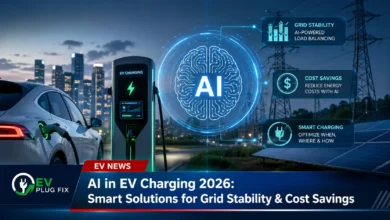
Smart EV chargers represent a fundamental evolution from conventional charging points through their advanced connectivity, controllability, and intelligence. These sophisticated devices feature built-in communication modules enabling real-time data exchange with the electricity grid, vehicles, and cloud-based management platforms. This connectivity allows chargers to respond dynamically to grid conditions, electricity prices, and user preferences. Modern smart chargers increasingly leverage AI EV Charging Solutions to optimize energy distribution and predict usage patterns with remarkable accuracy.
Key Features of Modern Smart Chargers
- Load Balancing: Intelligent power distribution among multiple vehicles prevents grid overload and optimizes energy usage
- Remote Diagnostics: Predictive maintenance capabilities reduce downtime and service costs
- Integrated Payment Systems: Support for various payment methods from RFID cards to contactless solutions
- Over-the-Air Updates: Firmware updates ensure compliance with evolving regulations and standards
- Bidirectional Capability: V2G and V2H functionality enabling power flow both to and from the vehicle
Grid Integration: Europe’s Energy Challenge and Smart Solution
Europe’s electricity infrastructure varies significantly, from cutting-edge smart grids in Nordic countries to century-old networks in historic city centres. Smart charging technology offers elegant solutions to these constraints, enabling efficient load management without massive grid reinforcement investments. The integration of advanced Feyree EV Integration systems demonstrates how home energy management can synchronize with grid demands for optimal efficiency.
“Smart EV charging is not merely a convenience—it’s a necessity for Europe’s energy transition. The intelligence embedded in charging infrastructure is critical for system stability, economic efficiency, and environmental effectiveness.”
Renewable Energy Integration
Europe leads the world in renewable energy deployment, with wind and solar accounting for an increasing share of electricity generation. Smart EV charging offers a powerful solution to address renewable output variability.
Intelligent charging systems can shift demand to periods of high renewable generation. On windy nights, when offshore wind farms produce abundant electricity, smart chargers across Northern Europe can ramp up charging rates, absorbing surplus clean energy. Conversely, during calm periods, charging can be reduced or shifted to times when other low-carbon sources are available.
Recent research demonstrates that smart charging can reduce charging-related emissions by 30-40% compared to uncontrolled charging in markets with substantial renewable capacity. The Plug & Charge Pricing models increasingly reflect these renewable integration benefits, offering lower rates during periods of high clean energy availability.
Demand Response and Grid Services
European transmission system operators face growing challenges balancing supply and demand as conventional power plants retire and variable renewables expand. Smart EV charging aggregated across thousands or millions of vehicles represents a substantial flexible load that can support grid balancing.
Through demand response programmes, charging infrastructure operators can adjust charging rates in response to grid signals. Vehicle owners typically don’t notice these adjustments—their cars still charge to the required level by their specified time—but the aggregated effect provides valuable grid services.
The UK’s electric vehicle smart charging regulations, which came into force in 2022, require all new home and workplace chargers to have smart functionality including randomised delay functions to prevent simultaneous charging spikes.
Vehicle-to-Grid: Europe’s Energy Reservoir on Wheels
Vehicle-to-Grid (V2G) technology represents the most advanced form of smart charging, enabling bidirectional power flow between vehicles and the grid. European countries are global leaders in V2G trials and deployment, with the Netherlands, Denmark, Germany, and the UK running extensive pilots demonstrating how parked EVs can provide grid services whilst earning revenue for owners.
Recent findings from the EV4EU project, presented at the Transport Research Arena (TRA 2026) in Budapest, validated the technical viability of smart and bidirectional charging across multiple European pilots. For Tesla owners specifically, understanding Tesla Model X Supercharging capabilities provides valuable context for how premium vehicles integrate with advanced charging ecosystems.
| Pilot Location | Key Achievement | Benefit Demonstrated |
|---|---|---|
| Portugal (São Miguel Island) | 8.6% reduction in household charging costs | Boosted renewable energy integration by up to 21.9% |
| Slovenia | Virtual Power Plant functionality validated | V2X delivers concrete added value over standard smart charging |
| Greece (Athens) | Peak shaving verified in public spaces | High user satisfaction with dynamic pricing |
| Denmark | Distributed control architecture validated | Pricing schemes must mitigate greedy user requests |
V2G Benefits and Revenue Streams
According to the International Energy Agency, EV owners participating in V2G programmes can earn between several hundred to over $1,000 annually through various grid services. Current commercial offerings promise customer benefits of up to $770 through free charging or remuneration for every hour the EV is plugged in.
Key V2G revenue streams include:
- Energy Arbitrage: Charging when electricity prices are low and discharging when prices are high
- Ancillary Services: Participating in frequency regulation and voltage support
- Distribution Level Services: Alleviating local network congestion
- Capacity Market Participation: Providing grid reliability services
Economic Considerations and Business Models
Total Cost of Ownership Benefits
While smart chargers have higher upfront costs than basic equipment, their total cost of ownership is typically lower. Remote monitoring reduces site visits for maintenance, predictive diagnostics identify issues before they cause failures, and over-the-air updates extend equipment lifespan without hardware replacement. For budget-conscious buyers, understanding Used EV Ownership Costs helps contextualize the long-term savings enabled by smart charging infrastructure.
Enabling New Revenue Streams
Europe’s evolving energy markets create significant opportunities for smart charging operators. The EIC-funded VPPofEVs project, coordinated by Deftpower, is developing a plug-and-play virtual power plant platform connecting EVs to energy markets. This platform enables demand response and peak-shaving, optimising grid management for distribution and transmission system operators.
“By ensuring that EVs are not only a cleaner mode of transportation but also a key player in providing flexibility to the grid, we’re helping accelerate the transition to a more sustainable future.”
User Experience in the European Market
Cross-Border Interoperability
European EV drivers frequently cross national borders, making seamless charging access essential. Smart charging networks using open standards like OCPI enable eRoaming agreements, allowing users to charge across multiple networks with a single account or app.
The recently established Spark Alliance (comprising Atlante, Electra, Fastned, and IONITY) connects over 1,700 charging stations with 11,000 high-power charging points across 25 European countries, all powered by 100% renewable energy.
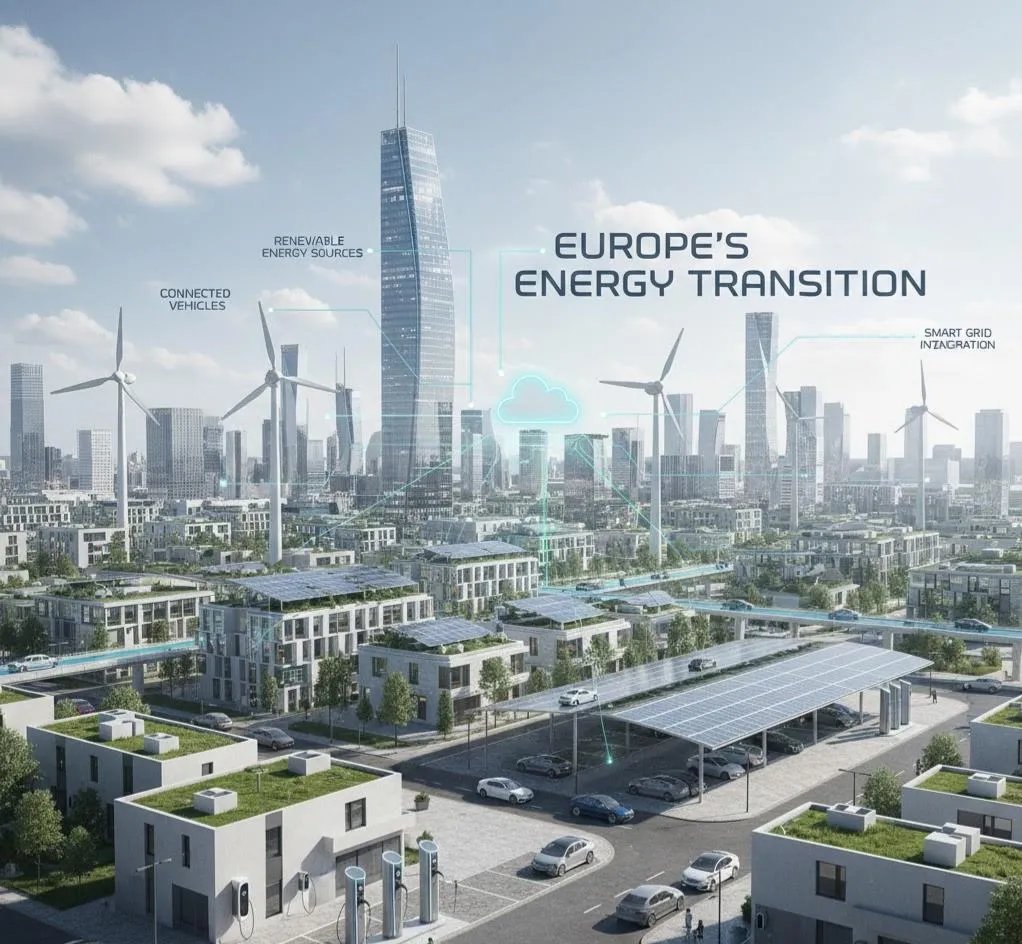
Smartphone connectivity puts real-time charging data and grid optimization at drivers’ fingertips.
Enhancing the Charging Experience
Smartphone apps connected to smart chargers provide users with comprehensive functionality including locating available chargers with real-time status updates, reserving charging points in advance, remote monitoring of charging sessions, push notifications, detailed energy consumption and cost breakdowns, and integration with vehicle apps for seamless experiences.
Policy and Regulatory Framework
The EU has established a comprehensive regulatory framework supporting smart charging through several key initiatives:
- Alternative Fuels Infrastructure Regulation (AFIR): Sets binding targets for charging infrastructure deployment and requires newly installed chargers to have smart charging capabilities
- Energy Performance of Buildings Directive: Mandates ducting and smart charging readiness in new buildings with parking facilities
- Electricity Market Design Reform: Enables demand response and aggregation, creating market mechanisms for smart charging services
- Grids Package: Aims to accelerate grid modernisation and digitalisation, with specific provisions for EV charging integration
Technical Challenges and Solutions
Cybersecurity
As critical infrastructure connected to both vehicles and the electricity grid, smart chargers present cybersecurity challenges. European standards like IEC 62443 provide frameworks for securing industrial control systems, including charging infrastructure. Manufacturers implement multiple security layers including encrypted communications, secure boot processes, regular security updates, and authentication protocols.
Battery Degradation Concerns
Concerns over battery degradation remain a barrier to V2G adoption. The EV4EU project identified the need to “overcome and remove this weight from end-users’ shoulders” through improved battery management systems and user education. Advanced charging techniques, including multi-stage constant current (MSCC) charging, can enhance battery health by using varying current based on the battery’s state of charge.
Future Developments and Innovations
AI and Machine Learning Integration
Artificial intelligence and machine learning are being applied to optimise charging networks through demand forecasting, predictive maintenance, dynamic pricing optimisation, and energy arbitrage strategies. The NEVERFLAT project is developing low-cost bidirectional charging infrastructure leveraging ML predictive models to improve grid stability and renewable energy usage.
Ultra-Fast Charging
Next-generation charging infrastructure will deliver higher power levels, with 350 kW chargers being deployed along major European motorways. Smart technology becomes even more critical at these power levels, managing grid impact, power quality, and cooling requirements through sophisticated control systems.
Building Integration
Research demonstrates that integrating EV charging with building energy systems can enhance energy flexibility significantly. Studies show intelligent charging can reduce grid supply to charging stations by up to 60% during peak building load periods, substantially improving grid stability.
Conclusion
Smart EV charging infrastructure has evolved from a convenience to a necessity for Europe’s energy transition. As the continent electrifies transport whilst increasing renewable energy penetration, the intelligence embedded in charging infrastructure becomes critical for system stability, economic efficiency, and environmental effectiveness.
Europe’s combination of ambitious climate targets, renewable energy leadership, regulatory sophistication, and dense urban populations has created the ideal context for smart charging deployment. The technology addresses multiple challenges simultaneously: managing grid constraints without massive infrastructure investment, integrating variable renewable energy, providing flexibility services to electricity systems, offering superior user experiences, and supporting the economic viability of EV adoption.
Recent pilot projects across Portugal, Slovenia, Greece, and Denmark have validated the technical feasibility and economic benefits of smart and bidirectional charging, achieving significant cost savings and renewable energy integration improvements. The emergence of cross-border alliances like the Spark Alliance demonstrates the power of collaborative approaches to charging infrastructure development.
For policymakers, continued support for smart charging through regulations, incentives, and market design remains essential. For industry, ongoing innovation in technology, business models, and user interfaces will determine competitive success. For consumers, smart charging promises lower costs, greater convenience, and the satisfaction of supporting a sustainable energy system.
The transition to electric mobility is inevitable; the question is how smoothly and efficiently it occurs. Smart charging infrastructure—connecting vehicles, users, and grids in an intelligent ecosystem—is the key to ensuring this transition succeeds, benefiting Europe’s economy, environment, and energy security.