EV Charging Time 2026: How Long to Charge an Electric Vehicle?
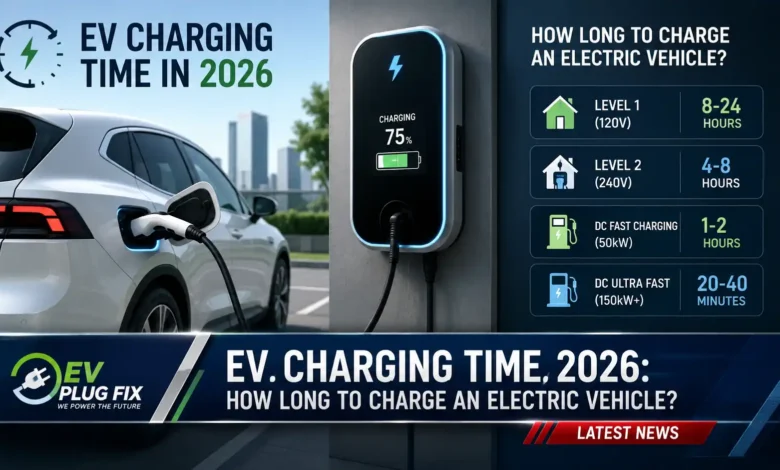
Electric vehicle charging time in 2026 can range from under 20 minutes to over 40 hours depending on the charger type, battery size, and environmental conditions. Unlike filling a gas tank in five minutes, EV charging involves multiple technical variables that determine how long you’ll wait. Understanding these factors is crucial for daily commutes, long road trips, and making informed decisions about your next electric car purchase.
The global shift toward electric mobility continues accelerating, with market projections indicating nearly 20% of all vehicles in the United States and European Union will be electric by 2030. This growth is driven by substantial advancements in battery technology and charging infrastructure. Contemporary EVs now feature higher-voltage systems and improved energy density, significantly reducing the time needed to charge an electric vehicle compared to earlier models .
Whether you’re a current EV owner or considering your first electric vehicle, mastering the factors that influence charging duration will help you plan efficiently and maximize your driving experience. The Smart EV Charging Benefits extend beyond just speed, offering greater control and efficiency for daily use.
Factors Affecting EV Charging Duration
The time required to charge an electric vehicle varies significantly based on several critical elements. Here’s what determines your EV charging speed:
Battery Capacity and Size
The size of an EV’s battery, measured in kilowatt-hours (kWh), fundamentally determines charging duration. Larger batteries store more energy and consequently take longer to charge. A vehicle with a 30 kWh battery will charge substantially faster than one with a 100 kWh battery under identical conditions . For instance, compact EVs with smaller battery packs can fully recharge in just a few hours on a Level 2 charger, while long-range luxury models require extended charging sessions .
Battery Voltage Systems
Modern EVs utilize either 400-volt or 800-volt battery architectures. Vehicles with 800-volt systems, such as the Tesla Cybertruck and Porsche Taycan, can accept higher charging rates. A 400-volt EV might peak around 150 kW, while an 800-volt vehicle can manage up to 360 kW or more, dramatically reducing charging time at compatible stations . For example, understanding the Tesla Model 3 Charging Time can help you appreciate how voltage systems impact real-world charging sessions.
State of Charge (SOC)
The initial battery percentage significantly impacts charging speed. EVs charge much faster when the battery is low and slow down as they approach full capacity. DC fast charging stations achieve peak speeds when the battery is between 20% and 60%, with the rate tapering considerably from 80% to 100% to protect battery health . This phenomenon, known as the charging curve, explains why most EV drivers charge to 80% during road trips and only fully charge when necessary .
Maximum Charge Acceptance Rate
Every electric vehicle has a maximum charging rate it can handle, determined by the onboard charging hardware and battery management system. If your EV’s maximum acceptance rate is 100 kW, connecting to a 180 kW charger won’t charge it any faster. All-electric vehicles typically have two acceptance rates: one for AC charging and a higher one for DC fast charging .
Charging Station Power Output
The station’s power delivery capability plays a pivotal role. Even if your vehicle can accept high power, charging duration depends on whether the station can deliver it. Stations are classified into three levels, each with distinct power outputs and charging speeds . When selecting a charging solution for your home, reviewing Wallbox Installation Costs can help you make an informed decision about the right power output for your needs.
Environmental Conditions
Extreme temperatures affect battery performance and charging speed. Cold weather may require battery preconditioning using charger energy, slowing the process. Similarly, cooling systems operate in hot conditions to maintain optimal battery temperature, impacting overall efficiency . Modern EVs with thermal management systems can mitigate these effects, but charging times still vary with weather conditions . Regular Home EV Charger Maintenance ensures your equipment performs optimally regardless of environmental factors.
Understanding the Three Charging Levels
With the factors affecting charging time in mind, the choice of charging station plays a crucial role. Each level offers different power outputs and charging speeds, enabling you to select the right infrastructure for your lifestyle.
| Charger Level | Power Output | Time to 80% (BEV) | Range Added Per Hour | Best For |
|---|---|---|---|---|
| Level 1 | 1–2.4 kW | 40–50+ hours | 2–5 miles | Overnight charging for PHEVs, emergency backup |
| Level 2 | 7–19.2 kW | 4–10 hours | 10–25+ miles | Daily home and workplace charging |
| DC Fast Charging | 50–350+ kW | 20–60 minutes | 180–240 miles in ~30 min | Road trips, quick top-ups on highways |
Level 1 Charging: The Slow and Steady Option
Level 1 charging uses a standard 120-volt household outlet, delivering the slowest charging speed at approximately 1–2.4 kW. A battery electric vehicle can take 40–50+ hours to reach 80% from empty using this method, though plug-in hybrids may charge in 5–6 hours due to smaller batteries .
This level is best suited for drivers with short commutes or plug-in hybrid owners who can rely on overnight charging daily. While technically adequate for the average 30–40 mile daily commute, Level 1 lacks the speed for quick refuels before long trips . Most new EVs include a Level 1 portable charger, making it the most accessible option for new owners .
Level 2 Charging: The Residential Standard
Level 2 charging uses 240-volt service (or 208V in commercial settings) and is the most common home and workplace charging solution. With power output ranging from 7 kW to 19.2 kW, it can charge most battery electric vehicles to 80% in 4–10 hours and plug-in hybrids in 1–2 hours .
A dedicated 7 kW home charging unit adds approximately 35–40 kilometers of range per hour, providing a full overnight recharge for most daily driving needs . For homes with three-phase power, 11 kW or 22 kW chargers can significantly reduce charging times, though the vehicle’s onboard charger must support these higher rates . Learning about Home EV Wallbox Charging can help you select the ideal Level 2 solution for your residence.
DC Fast Charging: The Road Trip Essential
DC fast charging delivers the fastest EV charging available, bypassing the onboard charger to send direct current straight to the battery. With power output ranging from 50 kW to over 350 kW, these stations can charge most modern EVs to 80% in 20–60 minutes .
Ultra-fast chargers reaching 350 kW can provide 180–240 miles of range in approximately 30 minutes for compatible vehicles . These stations are strategically located along highways, major travel routes, and urban areas at grocery stores, coffee shops, and dedicated charging plazas . The expanding EU EV Charging Network is making DC fast charging increasingly accessible across Europe.
How to Calculate EV Charging Time
Understanding the formula for calculating charging time helps you plan your charging sessions effectively. The basic calculation is:
Charging Time (hours) = (Battery Capacity – Remaining Capacity) / Charging Power (kW) or Charge Acceptance Rate (whichever is lower)
Follow these steps for accurate calculations:
- Determine Battery Capacity: Check your EV’s total battery capacity in kWh. For example, an 80 kWh battery.
- Assess Current Battery State of Charge: Check your vehicle display for the current charge level. If the battery is 50% full with an 80 kWh capacity, 40 kWh remains, so you need 40 kWh to reach full charge.
- Identify Charger Power Output: Determine the charging station’s maximum power delivery rate in kW.
- Know Your Vehicle’s Charge Acceptance Rate: Find your EV’s maximum acceptance rate in kW for both AC and DC charging. DC acceptance rates are generally higher than AC rates.
- Calculate the Time: Subtract the current battery level from the total capacity, then divide by the charger’s output power or your vehicle’s charge acceptance rate—whichever is lower.
Example Calculation
AC Charging Scenario: An EV with an 80 kWh battery, 50% charged (40 kWh remaining), an 11 kW charge acceptance rate, using a 7.6 kW Level 2 charger:
- Charge needed = 80 kWh – 40 kWh = 40 kWh
- Charging time = 40 kWh / 7.6 kW = 5.26 hours
In this example, we use the charger’s output power (7.6 kW) because it’s lower than the vehicle’s acceptance rate (11 kW) .
Optimizing Your EV Charging in 2026
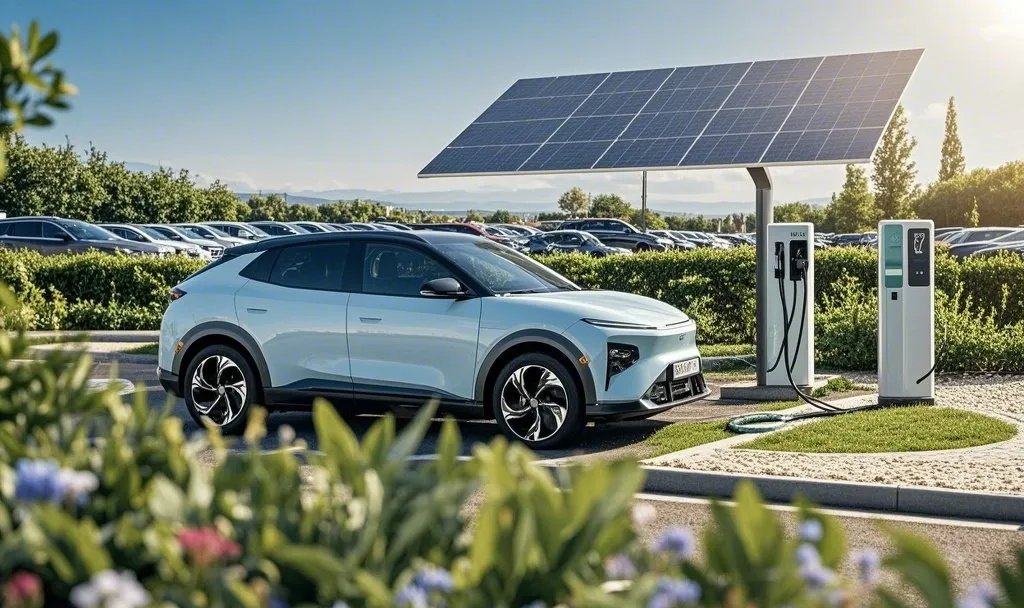
Level 2 home charging stations provide the perfect balance of speed and convenience for daily EV use
With the latest advancements in battery technology, charging times continue to improve. Companies like SK On have demonstrated Hyper Fast Battery technology capable of charging from 10% to 80% in under seven minutes at InterBattery 2026 . While these innovations are still in development for mass production, current EV owners can optimize charging with these strategies:
- Charge Between 20% and 80%: This range provides the fastest charging speeds and best battery health preservation. DC fast charging is most efficient in this window.
- Install a Level 2 Home Charger: For daily commuting, a 7 kW home charger offers the best balance of speed and convenience, providing a full charge overnight.
- Precondition Your Battery: Use your EV’s preconditioning feature before fast charging in cold weather to optimize battery temperature and reduce charging time.
- Choose DC Fast Chargers for Road Trips: For long-distance travel, plan stops at high-power DC stations to minimize waiting time.
- Use Smart Charging Features: Many home chargers offer app connectivity for scheduling during off-peak electricity rates, saving both time and money .
Frequently Asked Questions
Frequently Asked Questions
How long does it take to charge an electric car at a public charging station?
Charging time at a public station depends on the charger type and your EV’s battery capacity. Level 2 public chargers typically take 4–8 hours for a full charge, while DC fast chargers can reach 80% in 20 minutes to an hour. Ultra-fast 350 kW stations can add 180–240 miles of range in about 30 minutes for compatible vehicles .
How long does it take to charge an EV from a standard household outlet?
Charging from a standard 120-volt household outlet (Level 1) typically takes 40–50+ hours to charge a battery electric vehicle to 80% from empty. For plug-in hybrids with smaller batteries, this reduces to 5–6 hours. Level 1 adds approximately 2–5 miles of range per hour of charging .
How long does a 100 kWh battery take to charge?
A 100 kWh battery takes approximately 4–10 hours to charge to 80% on a Level 2 charger (depending on power output) and 20–60 minutes on a DC fast charger. Full charge from empty can take 6–15 hours with Level 2, but DC fast charging typically stops at 80% for optimal efficiency .
Can I charge my EV to 100% at a DC fast charger?
While technically possible, charging to 100% at a DC fast charger is not recommended or efficient. Charging speed slows dramatically after 80% to protect battery health, making the last 20% take as long as the first 80%. Most EV drivers charge to 80% at DC fast chargers and complete the top-up at home using Level 2 charging .
How far can an EV travel after 30 minutes of charging?
Distance after 30 minutes of charging depends on the charger type and your EV’s efficiency. DC fast charging can provide 180–240 miles of range in about 30 minutes for compatible vehicles. Level 2 charging adds approximately 5–12 miles in the same period, while Level 1 adds only 1–2.5 miles .
“EV charging time in 2026 is more predictable and faster than ever, but understanding your vehicle’s specific capabilities remains essential for maximizing efficiency. The key is matching the right charger level to your driving needs.”